Maharnavami Significance: Durga's Navaratri Alankarams and the Mahishasura Mardini Story
A Telugu devotional article on Maharnavami: why Navami is the main puja day of Sharannavaratri, the ten alankarams of the Goddess from Bala Tripurasundari to Mahishasura Mardini and Aparajita, and the Devi Mahatmya story of Madhu-Kaitabha, Mahishasura, Shumbha-Nishumbha and the Matrikas.
A Telugu devotional article on Maharnavami: why Navami is the main puja day of Sharannavaratri, the ten alankarams of the Goddess from Bala Tripurasundari to Mahishasura Mardini and Aparajita, and the Devi Mahatmya story of Madhu-Kaitabha, Mahishasura, Shumbha-Nishumbha and the Matrikas.
Maharnavami 2026: In India, Maha Navami is Monday 19 October 2026 and Vijayadashami is Tuesday 20 October 2026 (Drik Panchang). In Bengal, Maha Navami of Durga Puja falls on Tuesday 20 October. For the puja timings and both dates explained, see Maha Navami 2026: date, puja and significance.
Dasara and Sharannavaratri
Dasara is the festival in which Goddess Durga is worshipped in a different alankaram (adornment) each day for nine days, from Ashvayuja Shuddha Padyami to Navami. Dasara is one of the important festivals celebrated by Hindus across the country. It is a nine-day festival, a festival of spiritual practice that strengthens inner spiritual power, and of worship of the Divine. Because it is a festival of worship of the Mother Goddess, it is called Sharannavaratri or Devi Navaratri. The tenth day is Vijayadashami. The name Sharannavaratri comes from the festival falling at the start of Sharad Ritu, the autumn season. Some families worship Goddess Parvati for the first three days, Goddess Lakshmi for the next three days and Goddess Saraswati for the last three days. Setting up a display of dolls (Bommala Koluvu) during Dasara is also a long-standing custom.
Why Navami is the main puja day
The ninth tithi is called Maharnavami or Maha Navami. This day holds the highest place in Devi worship. According to tradition, the main puja of Navaratri is all performed on Navami; on the tenth day, Vijayadashami, only the punah puja (concluding worship) and udvasana (ceremonial farewell) are done. The number nine is a symbol of completeness, so worshipping during the nine nights means worshipping the Supreme in full. Navaratri means a new night, a fresh night. Through the nine-day observance (deeksha), victory comes on the tenth day; that is, the nine-day deeksha bears its fruit. That is why we celebrate the tenth day as the festival of Vijayadashami.
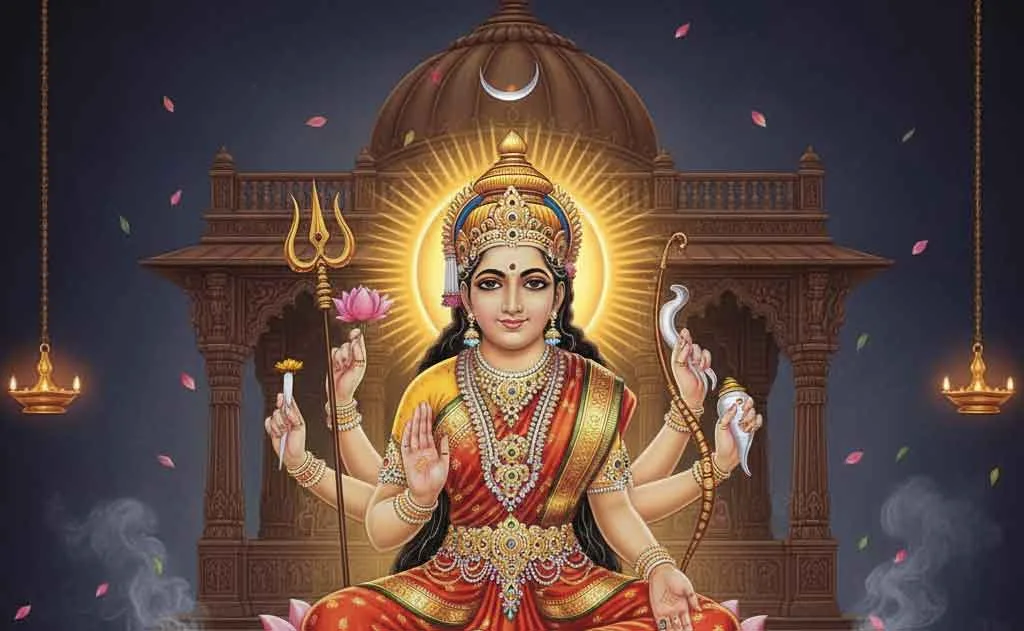
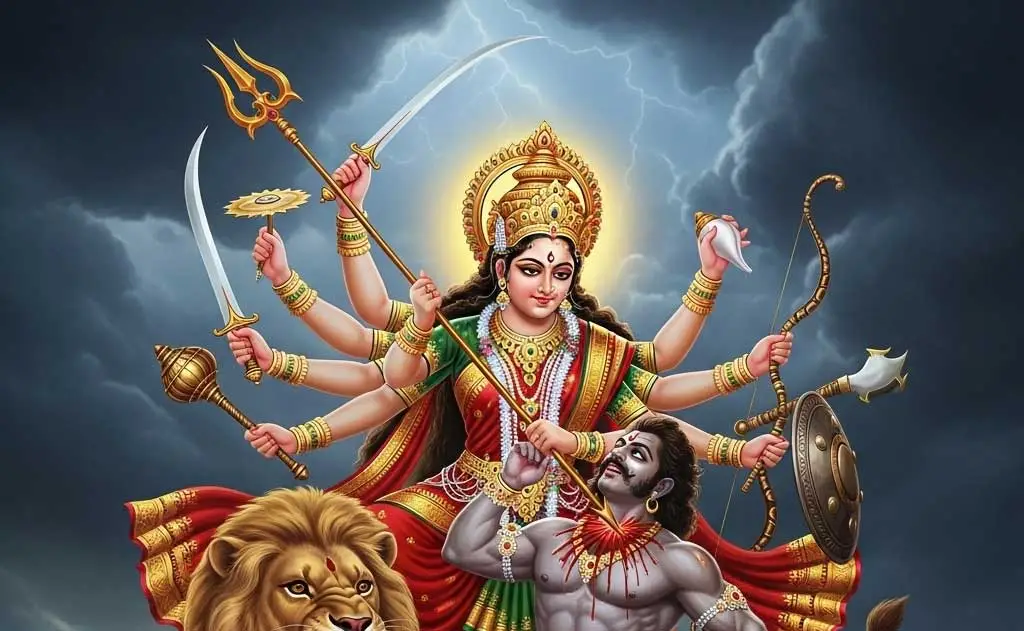
On Navami the Goddess is adorned and worshipped in the form of Mahishasura Mardini. The Mother fought a long battle for nine nights with the demon Mahishasura, the tormentor of the worlds, and on this very Navami she slew him and won victory. That is why devotees believe the Mother's power reaches its highest point on this day.
The many names of the Mother of the world
The greatness and glory of Jaganmata Adi Parashakti are described in the Devi Bhagavatam, the Markandeya Purana and many other Puranas and Upanishads, and the Tripura Rahasya explains it in detail. Jaganmata Durgamma, worshipped as the Mother of all mothers and the original Mother of the three Mothers, receives worship under countless names: Mahakali, Mahalakshmi, Mahasaraswati, Durga, Parvati, Haimavati, Aparajita, Bhavani, Lalita, Jayanti, Mangala, Bhadrakali, Kapalini, Kshama, Shivaduti, Svaha, Svadha, Chamundi, Vishnupatni, Ishvari and many more.
The Navaratri vow and the ten alankarams of the Goddess
The Navaratri vrata is a vow that awakens the power within us, our physical, mental and spiritual strength, through divine grace, the power of mantra and a disciplined life. That is why, during Dasara Navaratri, for the ten days from Ashvayuja Shuddha Padyami to Dashami, we worship the Mother of the world as Bala Tripurasundari, as Gayatri Mata, as Annapurna Devi, as Sri Mahalakshmi Devi, as Sri Lalita Tripurasundari Devi, as Sri Rajarajeshwari Devi, on Saptami as Sri Mahasaraswati Devi, on Ashtami as Durga Mata, on Navami as Mahishasura Mardini, and on Dashami as Aparajita Devi accompanied by Jaya and Vijaya, and as Rajarajeshwari Devi.
| Day (tithi) | Alankaram of the Goddess |
|---|---|
| Day 1 (Padyami) | Sri Bala Tripurasundari |
| Day 2 (Vidiya) | Sri Gayatri Devi |
| Day 3 (Tadiya) | Sri Annapurna Devi |
| Day 4 (Chavithi) | Sri Mahalakshmi Devi |
| Day 5 (Panchami) | Sri Lalita Tripurasundari Devi |
| Day 6 (Shashthi) | Sri Rajarajeshwari Devi |
| Day 7 (Saptami) | Sri Mahasaraswati Devi |
| Day 8 (Ashtami) | Durga Mata |
| Day 9 (Navami) | Mahishasura Mardini |
| Day 10 (Dashami) | Aparajita Devi with Jaya and Vijaya; Rajarajeshwari Devi |
Note: The sequence of alankarams varies by temple and by region, and some days can shift when a tithi is added or dropped. On Indrakeeladri in Vijayawada, the Kanaka Durga temple announces its alankaram schedule every year; see our Kanaka Durga temple guide.
Shiva and Shakti are one
The Mother of the world is the sankalpa shakti, the power of resolve, of Parameshvara. It is through that resolve that creation, preservation and dissolution all take place. If Adi Parashakti is Prakriti, the Supreme is Purusha. Creation arises from the union of Prakriti and Purusha; that is, the whole universe is the playful manifestation of Shiva and Parvati. Whether we worship him as Ishvara, as Vishnu or as Jaganmata Ambika, the power is one, as the Upanishads teach us. That one power, the power of pure consciousness (chit-shakti), is what we worship as the Mother, as Jaganmata. In the Chandi Saptashati, the Mother is praised for destroying the wicked demons as Mahakali, as Mahalakshmi and as Mahasaraswati.
Devi Mahatmya: Madhu-Kaitabha and Mahishasura Mardini
The Mother assured the gods that whenever they suffered at the hands of wicked demons, she would incarnate and punish the wicked. The Mother awakened Sri Mahavishnu from his yogic sleep and had the demons Madhu and Kaitabha slain. When the demon Mahishasura conquered the gods and seized heaven, the gods went with Lord Brahma to Sri Mahavishnu and Rudra and told them of Mahishasura's atrocities. On hearing this, Shiva and Keshava were filled with righteous anger. That anger took shape and came forth as light. Radiance came out from the faces of all the gods, and that combined radiance took a wondrous form, shining as Mahalakshmi Devi with eight arms, as Adi Parashakti.
The gods praised this Mother: "Amma! You alone are the cause of everything; you are the form of cause and effect, the form of action; without you nothing exists; everything is within you, Mother." Without Shakti, even Shiva can do nothing; it is said he cannot even stir. Without Shakti there is no movement and no response: so Jagadguru Sri Adi Shankara Bhagavatpada praised the Mother in the Soundarya Lahari. She slew the demon Mahishasura and was glorified as Mahishasura Mardini.
To recite her praise on Navami, see the Mahishasura Mardini Stotram with meaning and our Devi Mahatmya guide.
Shumbha-Nishumbha and the Matrikas
It was the Mother of the world who also slew the demons Dhumraksha, Raktabija, Chanda and Munda, and Shumbha and Nishumbha. All these demons had performed penance to Lord Brahma and to Parameshvara and obtained boons. They had won boons that freed them from any fear of the gods. But they looked down on women: "What can women do to us!" was their contemptuous attitude towards women. That is why the Mother brought forth from within herself hosts of goddesses such as Brahmi, Vaishnavi, Maheshvari, Kaumari, Aindri, Varahi, Narasimhi, Chamunda, Shyamala and Kali, fought the demons together with them, and destroyed all the demons. Because the Mother destroyed all these wicked demons during these Navaratri days, we praise and worship her many forms and incarnations during Navaratri.
Before the Navami puja, many families say the Durgashtami, Maha Navami and Vijayadashami puja sankalpam.
Frequently asked questions
What is the significance of Maharnavami?
Maharnavami (Maha Navami) is the ninth tithi of Sharannavaratri and holds the highest place in Devi worship. By tradition the main puja of Navaratri is done on Navami, and the Goddess is worshipped as Mahishasura Mardini, remembering her victory over the demon Mahishasura. Vijayadashami, the tenth day, celebrates the fruit of the nine-day observance.
When is Maha Navami in 2026?
In India, Maha Navami is Monday 19 October 2026 and Vijayadashami is Tuesday 20 October 2026 (Drik Panchang). In Bengal, Drik's Durga Puja calendar keeps Maha Navami on Tuesday 20 October. In the USA, Canada and the UK, Maha Navami is also Monday 19 October.
In which alankaram is the Goddess worshipped on Navami?
In the Telugu tradition described here, the Goddess is adorned and worshipped as Mahishasura Mardini on Navami. The sequence of alankarams varies by temple and region, so check your temple's schedule.
What are the ten Navaratri alankarams of the Goddess?
As listed in this article: Bala Tripurasundari, Gayatri, Annapurna, Sri Mahalakshmi, Sri Lalita Tripurasundari, Sri Rajarajeshwari, Sri Mahasaraswati on Saptami, Durga on Ashtami, Mahishasura Mardini on Navami, and Aparajita Devi with Jaya and Vijaya, also worshipped as Rajarajeshwari, on Dashami.
Why is the main puja done on Navami rather than on Vijayadashami?
According to tradition, the main puja of Navaratri is completed on Navami, and on Vijayadashami only the punah puja (concluding worship) and udvasana (ceremonial farewell to the Goddess) are performed. The number nine stands for completeness, so the nine nights are seen as worship of the Supreme in full.
Editor's note (19 October 2026)
This article was contributed in Telugu to HinduTone. The Telugu version is the original; this English page is a faithful translation of it. We made only light edits: a spelling correction, one superlative softened to "important festivals", statements "according to the Hindu shastras" framed as tradition, section headings, the 2026 dates, a table of the alankarams and a note that their sequence varies by temple and region. Dates are from Drik Panchang.
Last updated: 19 October 2026.
Related guides
- Maha Navami 2026: date, puja and significance
- Durgashtami, Maha Navami and Vijayadashami puja sankalpam
- Navaratri 2026: dates, the nine Devi forms and puja rituals
- Mahishasura Mardini Stotram lyrics with English meaning
- Devi Mahatmya: a complete guide
- Kanaka Durga temple, Vijayawada: Indrakeeladri guide
- Sri Durga Devi alankaram on Durgashtami
- Vijaya Dasami at Kanaka Durga temple, Vijayawada (20 October 2026)
- Vijayadashami 2026 mantras, Aparajita and Shami puja vidhi
You might also like
Durga Ashtami 2026 in the UK: Sunday 18 October, Sandhi Puja Time and How to Celebrate
Why Is Ayudha Puja Done During Navaratri? Stories, Traditions and Meaning
Sri Durga Devi Alankaram on Durgashtami: Kanaka Durga Day 8, Puja Vidhi, Anga Puja and Apaduddharaka Stotram