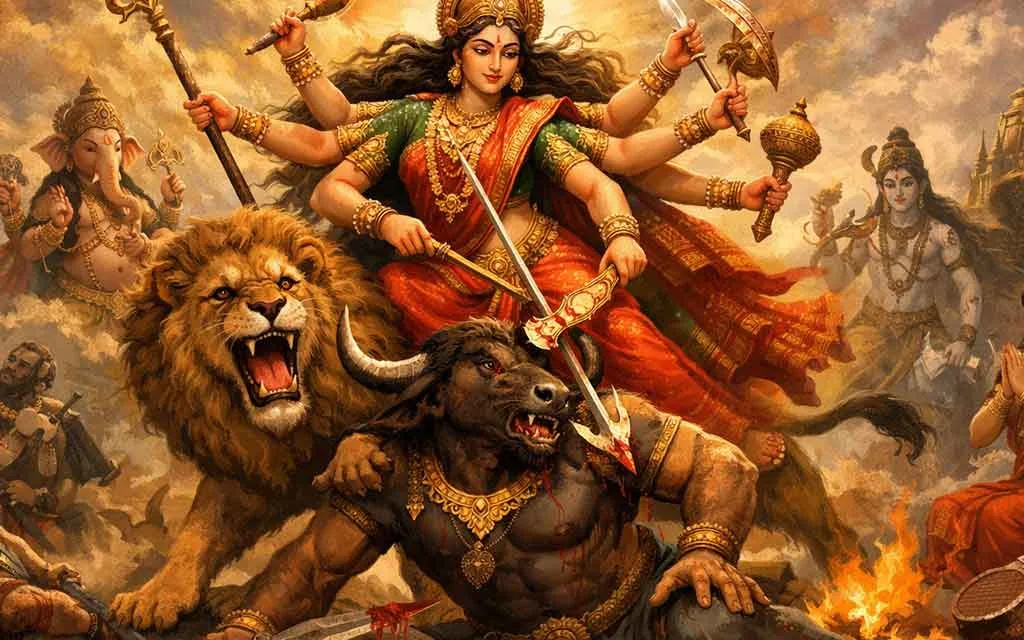
Sankatanashana Ganesha Stotram (Pranamya Shirasa Devam): Full Text with Meaning
The Sankatanashana Ganesha Stotram ('Pranamya shirasa devam') is Narada's short hymn of the twelve names of Ganesha, recited to remove obstacles. Here are all 8 verses in Devanagari and IAST from sanskritdocuments.org, our own verse-by-verse meaning, and how to recite it on Wednesdays and Sankashti Chaturthi.
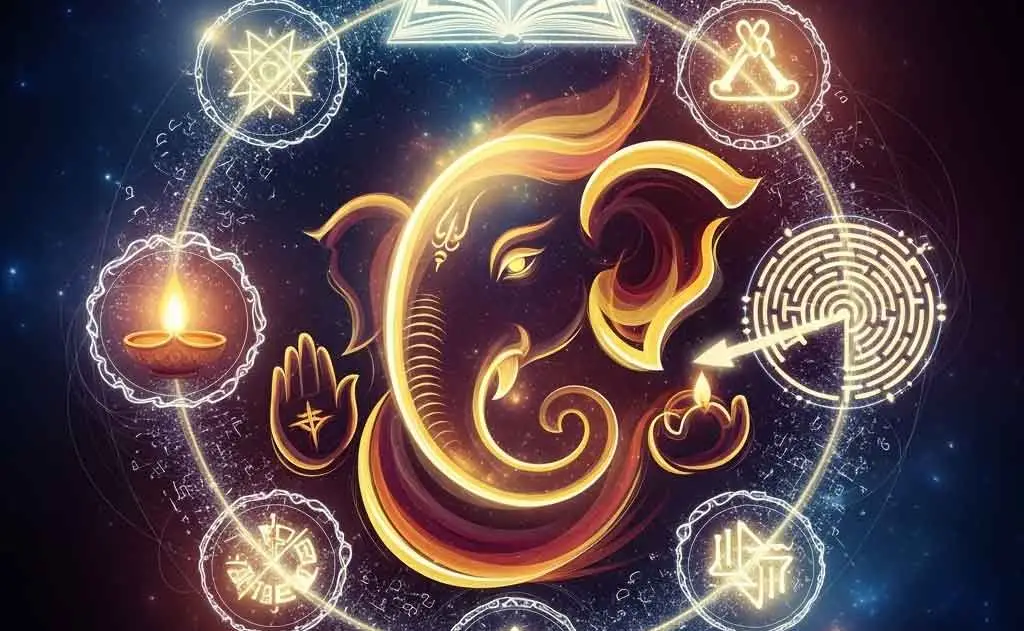
The Sankatanashana Ganesha Stotram ('Pranamya shirasa devam') is Narada's short hymn of the twelve names of Ganesha, recited to remove obstacles. Here are all 8 verses in Devanagari and IAST from sanskritdocuments.
Quick answer: The Sankatanashana Ganesha Stotram, which begins "pranamya shirasa devam gauriputram vinayakam", is a short Sanskrit hymn of 8 verses spoken by the sage Narada. At its heart are the twelve names of Ganesha, from Vakratunda to Gajanana, which the hymn asks us to recite at dawn, noon and dusk to remove obstacles. It is loved on Wednesdays and on Sankashti Chaturthi; the next Sankashti is Friday 27 November 2026.
Last updated: 20 October 2026. The Sanskrit below is the complete text published by sanskritdocuments.org (file ganesha8.itx), converted to Devanagari and IAST by software from the source, with no word typed by hand. Our own plain-English meaning follows every verse.
Sankatanashana Ganesha Stotram: full text with meaning
Verse 1 is the invocation, verses 2 to 4 give the twelve names in order, and verses 5 to 8 state the merit of reciting them. Each verse appears in Devanagari and then in IAST transliteration, followed by its meaning.
Invocation
श्रीगणेशाय नमः । नारद उवाच ।
śrīgaṇeśāya namaḥ | nārada uvāca |
Meaning: Salutations to Shri Ganesha. Narada said:
Narada's invocation (verse 1)
Verse 1
प्रणम्य शिरसा देवं गौरीपुत्रं विनायकम् ।
भक्तावासं स्मरेन्नित्यमायुःकामार्थसिद्धये ॥ १॥
praṇamya śirasā devaṃ gaurīputraṃ vināyakam |
bhaktāvāsaṃ smarennityamāyuḥkāmārthasiddhaye || 1||
Meaning: Bowing my head to the god Vinayaka, son of Gauri, the home of his devotees, one should remember him every day for long life, for one's wishes and for prosperity.
The twelve names of Ganesha (verses 2 to 4)
Verse 2
प्रथमं वक्रतुण्डं च एकदन्तं द्वितीयकम् ।
तृतीयं कृष्णपिङ्गाक्षं गजवक्त्रं चतुर्थकम् ॥ २॥
prathamaṃ vakratuṇḍaṃ ca ekadantaṃ dvitīyakam |
tṛtīyaṃ kṛṣṇapiṅgākṣaṃ gajavaktraṃ caturthakam || 2||
Meaning: First, Vakratunda, the one with the curved trunk; second, Ekadanta, the one with a single tusk; third, Krishnapingaksha, the one with dark and tawny eyes; fourth, Gajavaktra, the one with the face of an elephant.
Verse 3
लम्बोदरं पञ्चमं च षष्ठं विकटमेव च ।
सप्तमं विघ्नराजेन्द्रं धूम्रवर्णं तथाष्टमम् ॥ ३॥
lambodaraṃ pañcamaṃ ca ṣaṣṭhaṃ vikaṭameva ca |
saptamaṃ vighnarājendraṃ dhūmravarṇaṃ tathāṣṭamam || 3||
Meaning: Fifth, Lambodara, the one with the large belly; sixth, Vikata, the one of striking form; seventh, Vighnarajendra, king of all obstacles; and eighth, Dhumravarna, the smoke-coloured one.
Verse 4
नवमं भालचन्द्रं च दशमं तु विनायकम् ।
एकादशं गणपतिं द्वादशं तु गजाननम् ॥ ४॥
navamaṃ bhālacandraṃ ca daśamaṃ tu vināyakam |
ekādaśaṃ gaṇapatiṃ dvādaśaṃ tu gajānanam || 4||
Meaning: Ninth, Bhalachandra, who wears the moon on his forehead; tenth, Vinayaka, the supreme leader; eleventh, Ganapati, lord of the ganas; and twelfth, Gajanana, the elephant-faced one.
The merit of reciting the names (verses 5 to 8)
Verse 5
द्वादशैतानि नामानि त्रिसन्ध्यं यः पठेन्नरः ।
न च विघ्नभयं तस्य सर्वसिद्धिकरः प्रभुः ॥ ५॥
dvādaśaitāni nāmāni trisandhyaṃ yaḥ paṭhennaraḥ |
na ca vighnabhayaṃ tasya sarvasiddhikaraḥ prabhuḥ || 5||
Meaning: Whoever recites these twelve names at the three junctions of the day (dawn, noon and dusk) has no fear of obstacles; the Lord brings every undertaking to success.
Verse 6
विद्यार्थी लभते विद्यां धनार्थी लभते धनम् ।
पुत्रार्थी लभते पुत्रान्मोक्षार्थी लभते गतिम् ॥ ६॥
vidyārthī labhate vidyāṃ dhanārthī labhate dhanam |
putrārthī labhate putrānmokṣārthī labhate gatim || 6||
Meaning: The seeker of learning gains learning, the seeker of wealth gains wealth, the one who longs for children is blessed with children, and the seeker of liberation attains the highest goal.
Verse 7
जपेद्गणपतिस्तोत्रं षड्भिर्मासैः फलं लभेत् ।
संवत्सरेण सिद्धिं च लभते नात्र संशयः ॥ ७॥
japedgaṇapatistotraṃ ṣaḍbhirmāsaiḥ phalaṃ labhet |
saṃvatsareṇa siddhiṃ ca labhate nātra saṃśayaḥ || 7||
Meaning: One who recites this hymn to Ganapati gains its fruit in six months, and in a year attains fulfilment; of this there is no doubt.
Verse 8
अष्टभ्यो ब्राह्मणेभ्यश्च लिखित्वा यः समर्पयेत् ।
तस्य विद्या भवेत्सर्वा गणेशस्य प्रसादतः ॥ ८॥
aṣṭabhyo brāhmaṇebhyaśca likhitvā yaḥ samarpayet |
tasya vidyā bhavetsarvā gaṇeśasya prasādataḥ || 8||
Meaning: One who writes it out and gives it to eight learned people becomes accomplished in every kind of learning, through the grace of Ganesha.
Colophon
॥ इति श्रीनारदपुराणे संकटनाशनं गणेशस्तोत्रं सम्पूर्णम् ॥
|| iti śrīnāradapurāṇe saṃkaṭanāśanaṃ gaṇeśastotraṃ sampūrṇam ||
Meaning: Thus ends the Ganesha Stotra that destroys difficulties, in the Shri Narada Purana.
The twelve names at a glance
| No. | Name | Meaning |
|---|---|---|
| 1 | Vakratunda | The one with the curved trunk |
| 2 | Ekadanta | The one with a single tusk |
| 3 | Krishnapingaksha | The one with dark and tawny eyes |
| 4 | Gajavaktra | The one with an elephant's face |
| 5 | Lambodara | The one with the large belly, who holds the universe within |
| 6 | Vikata | The one of striking, unusual form |
| 7 | Vighnarajendra | The king of obstacles, who places and removes them |
| 8 | Dhumravarna | The smoke-coloured one |
| 9 | Bhalachandra | The one who wears the moon on his forehead |
| 10 | Vinayaka | The supreme leader, who needs no other leader |
| 11 | Ganapati | The lord of the ganas, Shiva's attendants |
| 12 | Gajanana | The elephant-faced one |
Several of these names carry stories of their own. Ekadanta recalls the tusk Ganesha broke, in a well-known telling, to write down the Mahabharata as Vyasa dictated it; Bhalachandra recalls the moon he wears, linked with the story of why the moon is not seen on Ganesh Chaturthi night. For the fuller list of names, see the 108 names of Lord Ganesha.
When to recite it
- Every day, at the three sandhyas: verse 5 asks for the names to be recited at dawn, noon and dusk ('trisandhyam'). Even once a day, in the morning, is a good beginning.
- Wednesdays: Ganesha's weekly day in many families; see the Wednesday (Budhvar) rituals guide and Lord Ganesha and Wednesday.
- Sankashti Chaturthi: the fourth day after the full moon, kept as a fast until moonrise. Karwa Chauth (Thursday 29 October 2026 in India) falls on the Sankashti of Kartik; the next Sankashti after that is Ganadhipa Sankashti on Friday 27 November 2026. See Ganadhipa Sankashti Chaturthi 2026, Sankashti moonrise rules, Karwa Chauth 2026 moonrise times and the November 2026 vrat calendar.
- Before a new beginning: an exam, a journey, a move or a new job, in keeping with why Ganesha is worshipped first.
How to recite it at home
- Sit facing a picture or small murti of Ganesha, with a lamp lit. Offer a flower, a few blades of durva grass or a little sweet if you have them.
- Begin with the invocation "shri ganeshaya namah", then recite verse 1 slowly, bowing your head as its first word (pranamya) says.
- Recite verses 2 to 4 as a list, counting the names on your fingers: twelve names, one for each joint of the four fingers of the right hand, counted with the thumb.
- Finish with verses 5 to 8 and a short silence. On Sankashti, recite it again after seeing the moon, before breaking the fast.
- If you have time, follow it with the Ganesha Pancharatnam Stotram or the Ganesha Gayatri mantra.
Pronunciation help
- In the IAST, a line over a vowel (ā, ī, ū) means it is held twice as long, as in the long final 'aa' of shirasaa in verse 1.
- ṇ and ṭ are made with the tongue curled back; ś and ṣ are both 'sh' sounds; ṅ in piṅgākṣa is the 'ng' of 'sing'.
- The words of verse 7 for 'in six months' are read 'shad-bhir-maa-saih'.
Traditional beliefs about the stotra
Verses 5 to 8 state the merit of the hymn in the language of the Puranas: freedom from fear of obstacles, success in what one sets out to do, learning for the student, wealth for the one who seeks it, children for those who long for them, and liberation for the seeker. Devotees traditionally believe that reciting the twelve names with faith:
- steadies the mind before an important task and gives courage in difficulty;
- is especially helpful for students, as verses 6 and 8 single out learning;
- keeps Ganesha, the remover of obstacles, at the start of every day;
- on Sankashti, completes the fast with prayer as well as abstinence.
These are traditional beliefs. The hymn's promises, including the 'six months' and 'one year' of verse 7, are words of devotion and encouragement, not guarantees of particular results.
Tips for NRI families
- Use your local moonrise on Sankashti. The fast ends when the moon rises where you live, not in India; see the Sankashti moonrise rules.
- Make it a Wednesday habit. Eight verses take about three minutes; recite them together before school or work on Wednesdays.
- Teach the names with stories. Pick one name a week and tell its story; our Lord Ganesha hub has the stories behind Ekadanta, Lambodara and Gajanana.
- Verse 8 as a family project. Writing the stotra out by hand and giving copies to teachers and friends is a lovely way to keep the tradition of verse 8.
- On pilgrimage. Devotees visiting the Ashtavinayak temples of Maharashtra often recite it at each shrine.
Frequently asked questions
Who composed the Sankatanashana Ganesha Stotram?
The stotra is spoken by the sage Narada: it opens with 'Narada said', and its closing line places it in the Narada Purana. Our source adds an honest note: although the stotra is popularly attributed to the Narada Purana, it is not readily found in the printed Purana.
What are the twelve names of Ganesha in this stotra?
Vakratunda (curved trunk), Ekadanta (one tusk), Krishnapingaksha (dark and tawny eyes), Gajavaktra (elephant mouth), Lambodara (large belly), Vikata (of striking form), Vighnarajendra (king of obstacles), Dhumravarna (smoke-coloured), Bhalachandra (moon on the forehead), Vinayaka (the supreme leader), Ganapati (lord of the ganas) and Gajanana (elephant face).
When should it be recited?
The stotra itself says 'trisandhyam': at dawn, noon and dusk. Many families recite it every morning, and especially on Wednesdays, on Sankashti Chaturthi (the next one is Friday 27 November 2026) and before starting something new.
What does 'sankatanashana' mean?
Sankata means difficulty or distress, and nashana means destroying. The colophon of the text calls it the 'sankatanashanam Ganeshastotram', the hymn to Ganesha that removes difficulties.
What benefits does the stotra describe?
Verses 5 to 8 say that one who recites the twelve names has no fear of obstacles, that seekers of learning, wealth, children or liberation gain what they seek, and that results come in six months and in a year. These are the hymn's own traditional words of praise; they are matters of faith, not guaranteed outcomes.
Can children learn it?
Yes. It has only 8 short verses, and verses 2 to 4 are simply a list of twelve names, numbered 'first, second, third'. Many children learn it as their first Sanskrit hymn.
Editor's note (20 October 2026)
This page was published on 20 October 2026. The Sanskrit is the full text of the Sankatanashana Ganesha Stotram on sanskritdocuments.org (file ganesha8.itx), converted from ITRANS to Devanagari and IAST by software; no word has been changed. The source gives the Narada Purana as its source and its colophon says the same, but it also notes that the stotra, though popularly attributed to that Purana, is not readily found in the printed Purana; we have kept that caution. The source notes that the word bhaktavasam in verse 1 appears in other prints as bhaktyavasam or bhaktya vyasah; we print the source's main reading. The file includes an English translation, which we have not reproduced; the meanings here are our own. In verse 8 we have rendered the Sanskrit word for the eight recipients, which names a hereditary community, as 'eight learned people', which keeps the verse's point of sharing the hymn with those who value learning. Sankashti dates are from Drik Panchang (New Delhi) as used across HinduTone's vrat pages; moonrise abroad differs, so please check your city.
Related guides
You might also like
Argala Stotram (Durga Saptashati): Full Text with Meaning
Dattatreya Stotram (Jatadharam Pandurangam), Narada Purana: Full Text with Meaning

Tulasi Stotram (Jagaddhatri Namastubhyam): Full Text with Meaning, for Kartik and Tulsi Vivah