Can Householders Keep a Shiva Lingam at Home? Worship Shiva's Murti or Photo with Om Namah Shivaya
Many elders advise grihasthas not to keep a Shiva Lingam at home because it needs daily abhishekam and strict rules. Here is why, what the traditions really say (Bana Lingam, ishtalinga, Parthiva Lingam), how to worship a Shiva murti or photo with Om Namah Shivaya, and what to do if you already have a Lingam at home.
Many elders advise grihasthas not to keep a Shiva Lingam at home because it needs daily abhishekam and strict rules. Here is why, what the traditions really say (Bana Lingam, ishtalinga, Parthiva Lingam), how to worship a Shiva murti or photo with Om Namah Shivaya, and what to do if you already have a Lingam at home.
Quick answer: Many elders advise married householders (grihasthas) not to keep a Shiva Lingam at home, because it needs daily abhishekam and strict discipline. A Shiva murti or photo worshipped with Om Namah Shivaya is the simple alternative. This is a widely followed custom rather than a universal rule: many families keep a small Bana Lingam and worship it daily.
Lord Shiva is Adi Yogi and Adi Guru, the lord of all the worlds, and worshipping him is a lifelong aim for many devotees. A question that comes up again and again in Telugu and other Hindu families is: can grihasthas (married householders) keep a Shiva Lingam at home and worship it? Many elders say no, and suggest a murti or photo of Shiva instead. This guide explains why that advice is given, what the traditions actually say, and how a householder can worship Shiva at home simply and correctly.
Why many elders say householders should not keep a Shiva Lingam
The Shiva Lingam is the formless (*nirakara*) symbol of Shiva, regarded as a centre of immense spiritual power. In temples and ashrams it receives daily abhishekam and worship with strict discipline.
A householder's day is full of family duties, work and travel. The traditional view is that a Lingam kept at home must receive:
- daily abhishekam with water (jalabhishekam), and never be left without worship;
- strict cleanliness of the shrine and of the person worshipping;
- regular, disciplined puja according to fixed rules.
If these cannot be kept up, many families believe a *dosha* (fault) arises. That is why many acharyas and elders advise householders not to keep a Lingam at home, and why large Lingams in particular are said to belong in temples.
What the traditions actually say
This is a widely followed custom, not a single rule found in every scripture, and Hindu traditions differ:
- Many households do keep a small Lingam. In Smarta homes that follow *panchayatana puja* (worship of Shiva, Vishnu, Devi, Ganesha and Surya), Shiva is often worshipped as a small Bana Lingam, a natural stone from the Narmada river (also called Narmadeshwar). The common guidance is that a home Lingam should be small, roughly no bigger than the thumb.
- Lingayat (Veerashaiva) devotees wear a small *ishtalinga* on the body and worship it daily.
- Parthiva Lingam puja, in which a Lingam is made of clay for a single puja and then immersed, is a well-known practice for householders, especially in Shravana and Karthika masam.
- Temples and ashrams are where large, consecrated (*pratishthita*) Lingams belong, with priests to keep the full daily worship.
So the honest answer is this. If you can keep daily worship and cleanliness, follow your family tradition and your guru's or priest's advice. If you cannot, worshipping a murti or picture of Shiva at home is completely acceptable and is what many elders recommend.
Worshipping a murti or photo of Shiva at home
A saakara (with-form) image of Shiva is easy and appropriate for a family home:
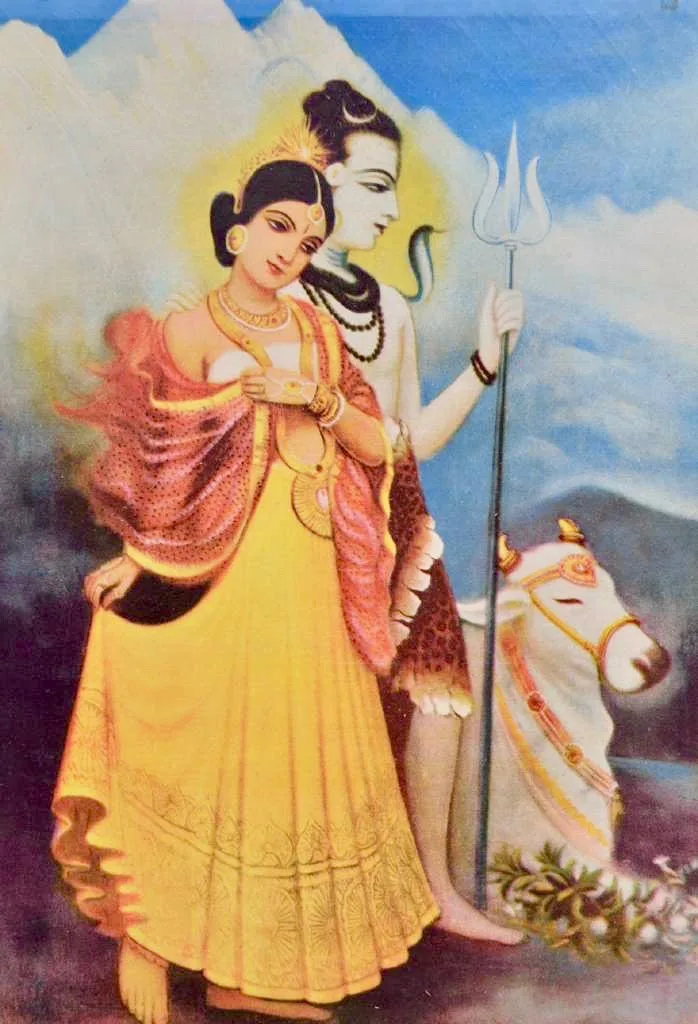
- a Shiva–Parvati murti or picture, often with Ganesha and Kumaraswamy (the Shiva family);
- Nataraja, Shiva as the cosmic dancer;
- Shiva in dhyana mudra, seated in meditation on Kailasa.
A simple daily puja with dhoopam (incense), deepam (lamp), flowers and naivedyam is enough for a murti or picture. The strict abhishekam rules of a Lingam do not apply. Many families believe such worship brings peace, harmony and happiness to the home.
Om Namah Shivaya: the mantra for everyone
You do not need a Lingam to receive Shiva's grace. The Panchakshari mantra is the heart of Shiva worship:
ॐ नमः शिवाय ఓం నమః శివాయ
*Om Namah Shivaya*: "Salutations to Shiva, the auspicious one."
- Chant it 108 times in the morning or evening; a rudraksha or tulasi mala helps you keep count.
- Sit before the Shiva murti or picture and chant with devotion.
- Chant with the feeling, "I offer myself to Shiva."
Devotees believe the mantra removes fear, calms the mind and brings harmony at home. See our Om Namah Shivaya 108-times chanting guide for the full method.
How a householder can worship Shiva at home
1. Place the Shiva murti or picture in the puja room, ideally in the north or north-east (eshanya) part of the home. 2. Light a lamp and incense every day and offer fresh flowers. 3. Chant Om Namah Shivaya, 11, 21 or 108 times. 4. Do a special puja on Mondays (Somavaram) and during Pradosha evenings. In Karthika Masam, see our Karthika Somavaram 2026 guide. 5. Offer bilva (maredu) leaves if you can get them; they are most dear to Shiva. 6. Recite the Lingashtakam or other Shiva stotras on Mondays if you wish.
For abhishekam, go to a Shiva temple, where the Lingam is worshipped daily. Our list of items needed for Lingam abhishekam will help you prepare.
If you already have a Shiva Lingam at home
There is no need for fear. Many families have a small Lingam received as a gift or brought from a pilgrimage.
- Keep it small and clean, on a plate or small *panavattam* (base), in the puja room.
- Offer water daily, even a few drops with a short prayer.
- If daily worship is not possible, ask your family priest. Common advice is to give a large Lingam to a temple, or to keep a small one wrapped and worship it on Mondays and festival days.
- Never throw away or discard a Lingam carelessly. Take it to a temple or immerse it respectfully, as your priest advises.
In the end, devotion matters most
The shastras are not meant to frighten devotees but to guide and protect them. Each householder should worship according to their capacity. Even without a Lingam, if you chant Om Namah Shivaya before a Shiva murti or picture with a sincere heart, Mahadeva's grace is with you.
Live with the feeling of *Shivoham* (I am of Shiva), and your home becomes a Shivalayam.
Om Namah Shivaya. Hara Hara Mahadeva!
Frequently asked questions
Can we keep a Shiva Lingam at home?
Many elders advise householders not to keep one, because a Lingam needs daily abhishekam and strict cleanliness. But many families, especially in Smarta panchayatana puja, do keep a small Bana (Narmadeshwar) Lingam and worship it daily. Follow your family tradition; if you cannot keep daily worship, worship a Shiva murti or picture instead.
Is it okay to worship a photo of Shiva at home?
Yes. A picture or murti of Shiva, Shiva–Parvati or Nataraja can be worshipped daily with a lamp, incense, flowers and Om Namah Shivaya. The strict abhishekam rules of a Lingam do not apply.
What size of Shiva Lingam can be kept at home?
Where families do keep one, the common guidance is a small Lingam, roughly no bigger than the thumb. Large Lingams belong in temples.
Which direction should the Shiva picture face at home?
Many families keep the puja shrine in the north or north-east (eshanya) part of the home. Follow your family custom and the layout of your home.
What should I do with a Shiva Lingam I cannot worship daily?
Ask your family priest. Common advice is to give a large Lingam to a temple, or to keep a small one wrapped and worship it on Mondays and festival days. Never throw a Lingam away carelessly.
Editor's note
Editor's note (20 October 2026): Customs about keeping a Shiva Lingam at home differ between families, regions and sampradayas. This guide describes common practice and is not a ruling; follow your family tradition and consult your guru or family priest.
Related guides
- Om Namah Shivaya 108 times: chanting method
- How to chant Lingashtakam on Monday
- Karthika Somavaram 2026
Image credit: Raja Ravi Varma, Shiva, Parvati and Nandi (oleograph), public domain, via Wikimedia Commons (https://commons.wikimedia.org/wiki/File:An_Oleograph_of_Shiva,_Parvati_and_Nandi_by_Raja_Ravi_Varma.jpg).
You might also like
El Niño 2026: Hindu Mantras for Rain and Protection (Varuna, Indra, Shiva, Durga, Rama)
Lalita Pancharatnam (Pratah Smarami Lalita): Full Text with Meaning

Gajendra Moksha Stotram (Srimad Bhagavatam 8.3): Full Text with Meaning