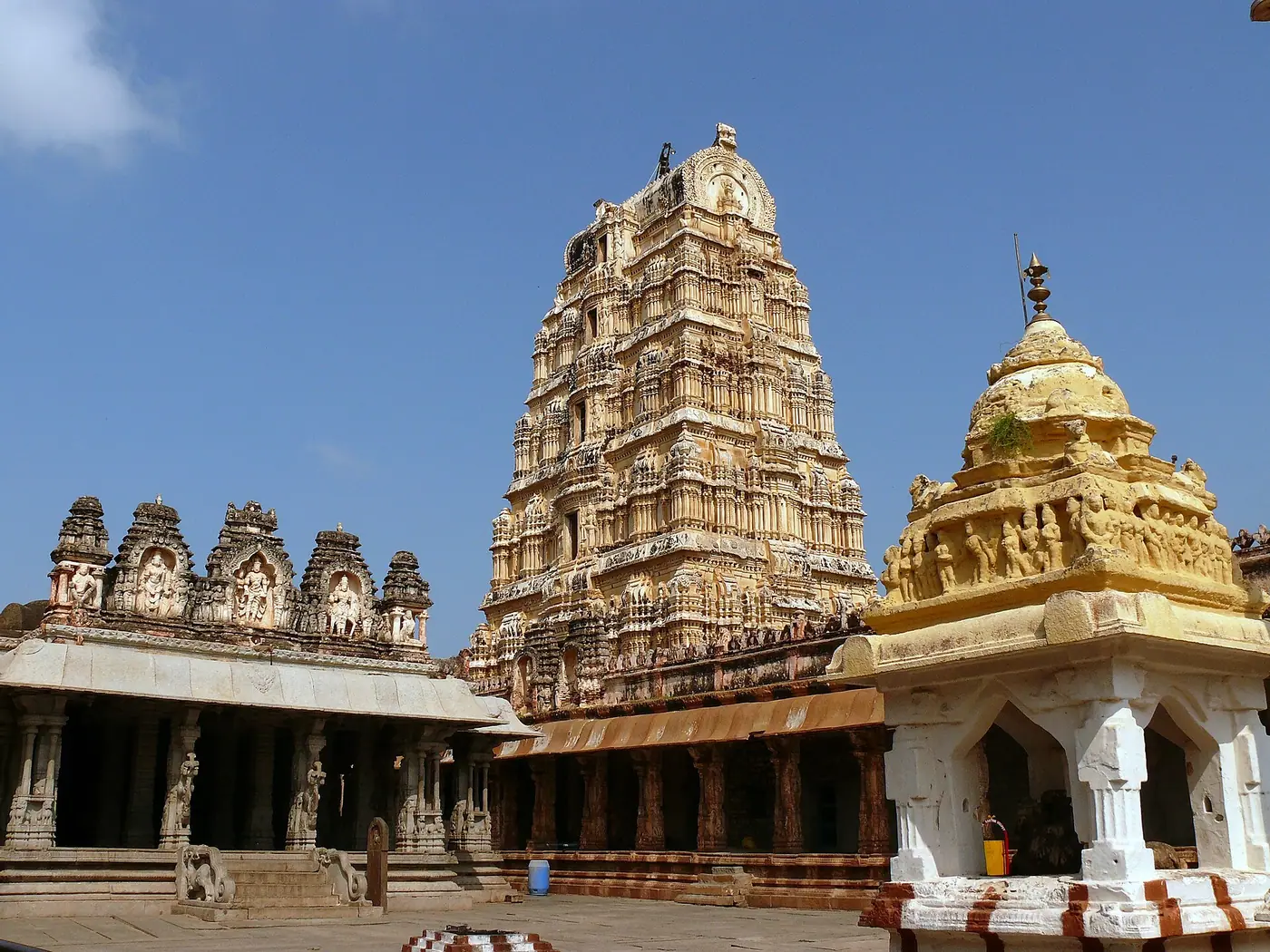
Famous Temples in Andhra Pradesh: A Source-Checked Guide from Tirumala and Simhachalam to Srikurmam, Lepakshi and Kanipakam
A guide to the famous temples of Andhra Pradesh built only from HinduTone's source-checked temple records. It links all 32 verified temples in the state, grouped by deity: Venkateswara and the Tirumala hills, Narasimha and other Vishnu shrines, Shiva temples including the Amaravati and Samalkot Pancharamas, the goddess at Indrakeeladri and Vizianagaram, Kanipakam Vinayaka, Subrahmanya at Mopidevi and Attili, and Hanuman at Gandi. It adds a summary table, pilgrimage circuits by region, advice for visitors from abroad and FAQs.
A guide to the famous temples of Andhra Pradesh built only from HinduTone's source-checked temple records. It links all 32 verified temples in the state, grouped by deity: Venkateswara and the Tirumala hills, Narasimha and other Vishnu shrines, Shiva temples including the Amaravati and Samalkot Pancharamas, the goddess at Indrakeeladri and Vizianagaram, Kanipakam Vinayaka, Subrahmanya at Mopidevi and Attili, and Hanuman at Gandi.
Quick answer: HinduTone's source-checked records hold 32 temples in Andhra Pradesh, and this guide links every one, grouped by deity: Venkateswara and the Tirumala hills (Tirumala, Bhu Varaha Swamy, Tiruchanur, Nagalapuram); Narasimha and Vishnu (Simhachalam, Ahobilam, Antarvedi, Kadiri, Mangalagiri, Srikurmam); Shiva (the Amaravati and Samalkot Pancharamas, Kotappakonda, Mahanandi, Yaganti, Srimukhalingam, Lepakshi, Gudimallam); Devi (Kanaka Durga, Pydithalli); and Kanipakam Vinayaka, Mopidevi, Attili and Gandi.
Last updated: 20 October 2026. Built from HinduTone's source-checked temple records (checked on 11 October 2026). Timings are not given; confirm them with each temple before you travel.
Venkateswara and the Tirumala hills
See also our Venkateswara and Balaji temples guide and our Thursday guide to Vishnu worship.
Tirumala Venkateswara Temple, Tirupati district
On Venkatadri, one of the Seshachalam (Seven) Hills above Tirupati, Venkateswara (Srinivasa, Balaji) is worshipped as a form of Vishnu under the Vaikhanasa Agama. The temple is managed by Tirumala Tirupati Devasthanams (TTD) and is one of the 108 Divya Desams. TTD's legend tells how Srinivasa married Padmavati with a loan from Kubera, which many devotees say their offerings help repay. TTD calls the nine-day Srivari Salakatla Brahmotsavam (usually September to October) its most important festival; Vaikuntha Ekadasi opens the Vaikuntha Dwaram. TTD asks for traditional dress and books all darshan through official channels. Pilgrims use the ghat road or the Alipiri and Srivari Mettu footpaths. Tirumala temple page.
Sri Bhu Varaha Swamy Temple, Tirumala
Beside Swami Pushkarini, north of the main temple, Vishnu is worshipped as Varaha, the boar avatar. According to the legend recorded by TTD, Varaha granted land on the hills to Venkateswara, who gave him the first darshan and first naivedyam in return, so pilgrims traditionally visit here first. Varaha Jayanti brings a special abhishekam, and on the last Brahmotsavam day the processional deities come here before the Chakrasnanam. Bhu Varaha Swamy temple page.
Sri Padmavathi Ammavari Temple, Tiruchanur
About 5 km from Tirupati, this TTD shrine is home to Goddess Padmavathi, Venkateswara's consort, worshipped as a form of Lakshmi; a Tirumala pilgrimage is traditionally considered incomplete without her blessings. Devotees believe she emerged from a lotus in Padma Sarovaram. The nine-day Karthika Brahmotsavam ends with Panchami Theertham, when very large numbers bathe in the tank. Tiruchanur temple page.
Sri Vedanarayana Swamy Temple, Nagalapuram
Under TTD since 1967, this temple worships Vishnu in his Matsya (fish) form, with the goddess Vedavalli. According to tradition, Vishnu killed the demon Somakasura here and restored the Vedas to Brahma. It is attributed to the reign of Krishnadevaraya and is known for its March Surya Puja, when the setting sun's rays touch the deity's feet, navel and head on successive days. Nagalapuram temple page.
Narasimha and other Vishnu temples
Five verified shrines worship Narasimha, the man-lion form of Vishnu; see the Vishnu hub.
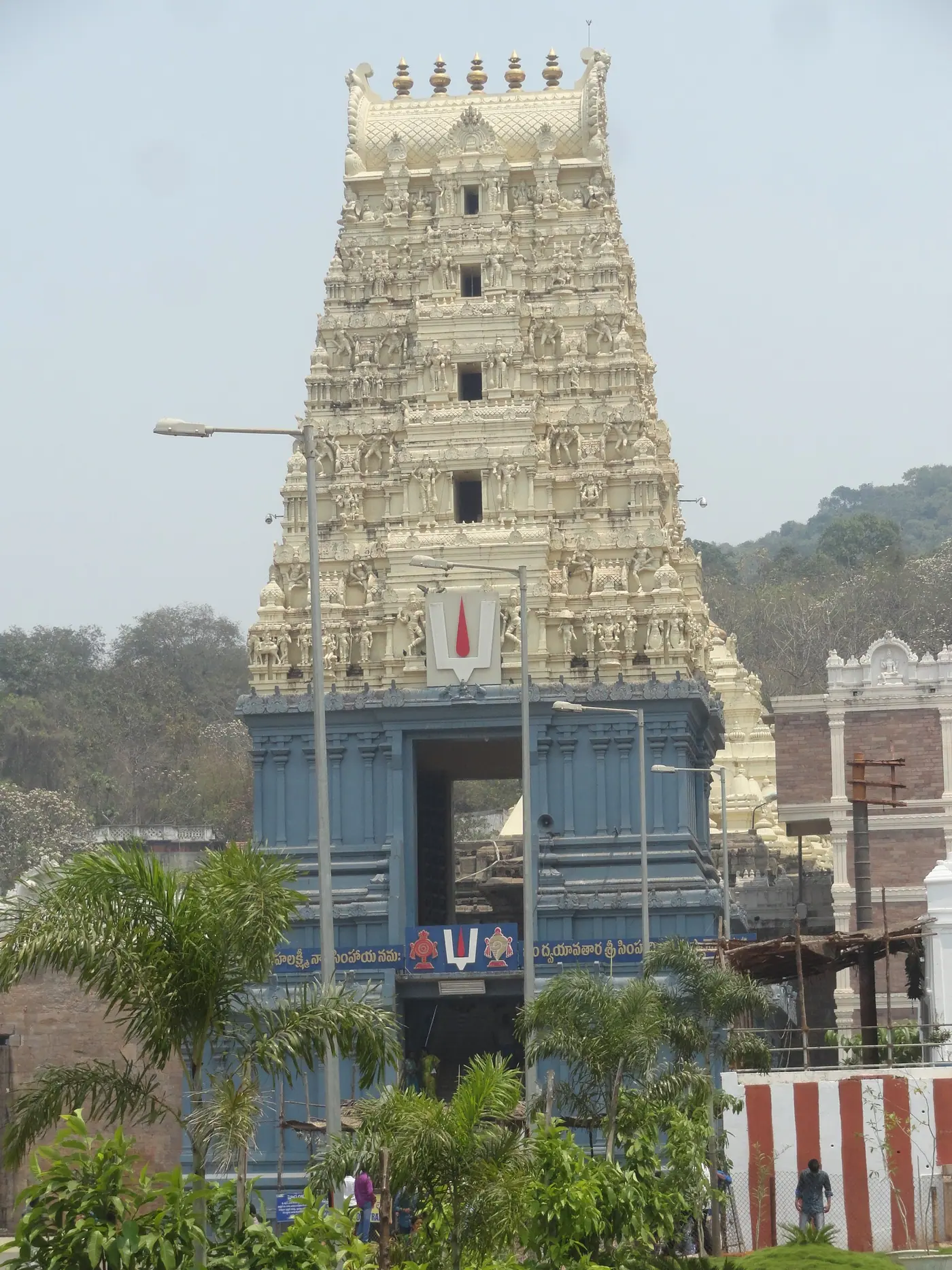
Simhachalam (Sri Varaha Lakshmi Narasimha), Visakhapatnam
On the hill about 16 km from Visakhapatnam, the deity is worshipped in a combined Varaha-Narasimha form. The image stays covered in sandalwood paste, removed only at Chandanotsavam on Vaishakha Shuddha Tadiya (April to May). Temple tradition says the deity came here to rescue Prahlada. Incredible India says the temple is believed to date to around 1098 CE and notes Chola inscriptions and Krishnadevaraya's visits. Simhachalam temple page.
Upper Ahobilam (Sri Ahobila Narasimha Swamy), Nandyal district
In the Nallamala hills, about 68 km from Nandyal, Narasimha is worshipped in his fierce Ugra form, believed to be self-manifest, in a low cave sanctum. Ahobilam is one of the 108 Divya Desams and is known for the Nava Narasimha, nine forms of the deity. According to tradition, Narasimha killed Hiranyakashipu here. Sri Ahobila Mutt is hereditary trustee; the Brahmotsavam falls in February to March. Forest trails to the outlying shrines are rough and slippery. Ahobilam temple page.
Antarvedi Lakshmi Narasimha, Konaseema
Near where the Vasishta Godavari meets the Bay of Bengal, Narasimha is worshipped with Lakshmi. According to the temple legend, he came at the sage Vasishta's prayer to destroy the demon Raktavilochana and agreed to stay. Pilgrims call Antarvedi a Mukti Kshetra. The Kalyana Mahotsavam and Rathotsavam in Magha (January to February) is the main event; many cross by ferry from Narsapur, so check crossings locally. Antarvedi temple page.
Kadiri Lakshmi Narasimha, Sri Sathya Sai district
The district administration lists this walled temple with four gopurams among the well-known shrines of Rayalaseema. Tradition says the gods worshipped Narasimha on the nearby Stotradri hill after he destroyed Hiranyakashyap. The February to March Brahmotsavam ends in a chariot procession through Kadiri that drew more than five lakh devotees in 2022, Deccan Chronicle reported. Kadiri temple page.
Mangalagiri: Panakala Narasimha and the foothill temple, Guntur district
Mangalagiri, about 10 km from Vijayawada, has two separate Narasimha shrines. On the hill, Panakala Narasimha Swamy receives panakam (jaggery water) poured into his mouth; devotees believe he accepts about half and the rest returns as prasada. At the foot, the Lakshmi Narasimha temple, with the goddess Rajyalakshmi and an eleven-storey gopuram, holds its Brahmotsavam in February to March. See the Panakala Narasimha page and the foothill temple page.
Srikurmam (Sri Kurmanatha Swamy), Srikakulam
About 20 km from Srikakulam town, Vishnu is worshipped as Kurmanatha, the tortoise avatar. The temple keeps star tortoises, which devotees regard as a form of the deity. It is associated with the Eastern Ganga rulers, and its pillar inscriptions date from the 11th to the 19th century. Festivals include Dolotsavam in March and Vaikuntha Ekadashi. Srikurmam temple page.
Shiva temples, the Pancharamas and the Karthika circuit
Two of the five Pancharamas are in our verified set; see our Pancharama Kshetras guide and Karthika Masam Shiva temples in Andhra Pradesh. Srisailam is also a major pilgrimage site; it is not yet in our source-checked set (see our Srisailam guide). Our Monday guide covers Somavaram worship.
Amareswara Swamy (Amararama), Amaravathi
On the Krishna in old Amaravathi, Palnadu district, Shiva is worshipped as Amareswara (Amaralingeswara Swamy), one of the Pancharamas. According to tradition, Indra installed the linga; sources differ on the temple's date. Devotees bathe in the Krishna before darshan. Maha Shivaratri draws the heaviest crowds, and Karthika Mondays bring Ekadasa Rudrabhishekam and Laksha Bilwarchana. Amaravathi temple page.
Kumararama Bhimeswara Swamy, Samalkot
Beside Samalkot railway station, about 12 km from Kakinada, Shiva is worshipped as Bhimeswara in a tall linga rising through two storeys, seen from the upper floor. It is the Kumararama among the five Pancharamas, and was built by the Eastern Chalukya king Chalukya Bhima I towards the end of the 9th century CE. Maha Shivaratri and Karthika draw crowds. Samalkot temple page.
Kotappakonda (Sri Trikoteswara Swamy), Palnadu
On a three-peaked hill about 13 km south-west of Narasaraopet, Shiva is worshipped as Trikoteswara. According to the sthala purana, Shiva sat in penance here as a young Dakshinamurthy, so weddings are not held and there is no flagstaff. Inscriptions show it was well known by 1172 CE. On Maha Shivaratri, villages bring huge decorated prabhas to the hill. Visitors take the ghat road or about 740 steps. Kotappakonda temple page.
Mahanandi (Sri Mahanandiswara Swamy), Nandyal
About 14 km from Nandyal on the eastern side of the Nallamala hills, Shiva is worshipped with Kameshwari Devi. The perennial spring-fed pool is so clear, the district says, that a pin on the bottom can be seen. Pilgrims often begin the nine-temple Navanandi Pradakshinalu with a dip here on Karthika Purnima, and Karthika Mondays are crowded. Mahanandi temple page.
Yaganti (Sri Uma Maheswara), Nandyal
About 11 km from Banaganapalle, Shiva and Parvati are worshipped together in a single stone image. According to tradition, the sage Agastya first planned a Venkateswara temple here. The temple is known for its very large stone Nandi, which devotees believe is slowly growing, and for hill caves linked to Agastya and Potuluri Veerabrahmendra Swamy, reached by steep steps. Yaganti temple page.
Srimukhalingam (Srimukhalingeswara), Srikakulam
On the Vamsadhara in Jalumuru mandal, Shiva is worshipped as Srimukhalingeswara (Madhukeswara). Popularly called Dakshina Kashi, the village was once Kalinganagara, capital of the Eastern Ganga dynasty, whose kings are credited with its temples. Maha Shivaratri runs over several days with a ritual bath of the deities in the river. Srimukhalingam temple page.
Lepakshi (Sri Veerabhadra), Sri Sathya Sai district
Shiva is worshipped here as Veerabhadra, his fiery form. The temple and its monolithic Nandi are on UNESCO's tentative list for Vijayanagara sculpture and painting; UNESCO notes the complex grew mainly under King Achyutaraya (1529 to 1542 CE). Its ceiling murals include a Veerabhadra of about 24 by 18 feet. Confirm visiting hours locally. Lepakshi temple page.
Gudimallam (Sri Parasurameswara), Tirupati district
On the Swarnamukhi river, about seven miles from Renigunta, this ASI-protected temple holds an ancient linga with a figure of Shiva carved on its front. Its age is debated, from the 3rd century BCE to the 1st century CE. After ASI conservation, an April 2026 Maha Kumbhabhishekam reopened it for regular worship. Gudimallam temple page.
Devi temples
See our Friday guide and the Durga hub.
Kanaka Durga Temple, Indrakeeladri, Vijayawada
On Indrakeeladri above the Krishna, Kanaka Durga is revered as swayambhu, with a Sri Chakram worshipped beside her. According to tradition, she settled here as Mahishasura Mardini. At Dasara she takes a different alankaram each day, with the heaviest crowds on Moola Nakshatram, and the festival ends with Teppotsavam on the Krishna. See the Kanaka Durga temple page and our Kanaka Durga visit guide.
Sri Pydithalli Ammavari Temple, Vizianagaram
The goddess Pydithalli Ammavaru (Pydimamba) is regarded as Vizianagaram's village deity. According to local tradition, Pydimamba merged with the goddess after the Battle of Bobbili in 1757. At the Sirimanu Utsavam, on the first Tuesday after Vijayadashami, the priest is carried atop a long wooden pole three times between the fort and the temple, watched by lakhs. Pydithalli temple page.
Ganesha, Subrahmanya and Hanuman
Kanipakam (Sri Varasiddhi Vinayaka), Chittoor
About 11 km from Chittoor, Kanipakam's Ganesha is revered as self-manifested and, according to the temple's legend, sits in a well that always holds water. Popularly called 'pramanala devudu', the god of oaths, he is believed to make promises binding. The 21-day Brahmotsavam begins on Vinayaka Chavithi. See the Kanipakam temple page, our Ganesh temples guide and the Wednesday guide.
Mopidevi Subrahmanyeswara Swamy, Krishna district
Subrahmanya is worshipped here in the form of a Shiva lingam, and the temple is known for the Sarpa Dosha Nivarana Pooja. Tradition says he did penance here as a serpent. Nagula Chavithi (see Nagula Chavithi 2026) and Subrahmanya Shashti are major festivals. See the Mopidevi temple page and our Murugan temples guide.
Attili Subrahmanyeswara Swamy, West Godavari
Subrahmanya is worshipped with Valli and Devasena in a small monolithic image that devotees regard as swayambhu. Tradition says it was found where an anthill stood beside the village pond; the temple was built in 1929. Abhishekams are offered on Tuesdays and Shashti days (see our Tuesday guide), and the Shashti festival includes the deity's kalyanam. Attili temple page.
Gandi Veeranjaneya Swamy, YSR Kadapa
On the Papagni river, about 55 km from Kadapa, Hanuman is worshipped as Veeranjaneya at Gandi Kshetram. Local tradition says Rama drew Anjaneya's figure on a rock here on his way back from Lanka. TTD took over the temple in 2019, and a Maha Kumbhabhishekam followed its redevelopment in May 2026. Sravana Saturdays are very crowded (see our Saturday guide). Gandi temple page; Hanuman temples guide.
More source-checked temples in Andhra Pradesh
- Undavalli caves: ASI-protected rock-cut temple near Vijayawada with a colossal reclining Vishnu.
- Madhavaraya Temple, Gandikota: Vishnu temple in the ASI-protected fort, now a heritage monument.
- Bhairavakona: eight ASI-protected rock-cut temples in the Nallamala hills.
- Ayyappa Swamy Temple, Dwarapudi: the Andhra Sabarimala, where devotees end Ayyappa vows; see our Ayyappa guide.
- ISKCON Radha Govinda Mandir, Tirupati: very large Janmashtami crowds; see our Krishna temples guide.
- Ramanarayanam, Vizianagaram: Ramayana-themed Rama temple complex in a bow-and-arrow plan.
- Ramakrishna Mission Ashrama, Visakhapatnam: Universal Temple of Sri Ramakrishna, open to every faith.
Andhra Pradesh temples at a glance
| Temple | District/City | Deity | Known for |
|---|---|---|---|
| Tirumala | Tirupati | Venkateswara | Brahmotsavam |
| Bhu Varaha Swamy | Tirupati | Varaha | Visited before Tirumala |
| Tiruchanur | Tirupati | Padmavathi | Panchami Theertham |
| Nagalapuram | Tirupati | Matsya | Surya Puja |
| Simhachalam | Visakhapatnam | Varaha-Narasimha | Chandanotsavam |
| Upper Ahobilam | Nandyal | Narasimha | Nava Narasimha |
| Antarvedi | Konaseema | Narasimha | Magha Kalyanam |
| Kadiri | Sri Sathya Sai | Narasimha | Chariot festival |
| Panakala Narasimha | Guntur | Narasimha | Panakam |
| Mangalagiri foothill | Guntur | Narasimha | Tall gopuram |
| Srikurmam | Srikakulam | Kurma | Star tortoises |
| Amaravathi | Palnadu | Shiva | Pancharama |
| Samalkot | Kakinada | Shiva | Pancharama |
| Kotappakonda | Palnadu | Shiva | Prabhas |
| Mahanandi | Nandyal | Shiva | Spring pool |
| Yaganti | Nandyal | Uma Maheswara | Great Nandi |
| Srimukhalingam | Srikakulam | Shiva | Dakshina Kashi |
| Lepakshi | Sri Sathya Sai | Veerabhadra | Murals |
| Gudimallam | Tirupati | Shiva | Carved linga |
| Kanaka Durga | Vijayawada | Durga | Dasara |
| Pydithalli | Vizianagaram | Village goddess | Sirimanu |
| Kanipakam | Chittoor | Ganesha | Well shrine |
| Mopidevi | Krishna | Subrahmanya | Sarpa Dosha pooja |
| Attili | West Godavari | Subrahmanya | Shashti |
| Gandi | YSR Kadapa | Hanuman | Sravana |
Pilgrimage circuits in Andhra Pradesh
- Tirupati and Chittoor: Tiruchanur, Tirumala and Bhu Varaha Swamy, Kanipakam, Gudimallam, Nagalapuram.
- Krishna and Guntur: Kanaka Durga, Undavalli, Mangalagiri, Amaravathi, Kotappakonda, Mopidevi.
- Godavari delta: Samalkot, Antarvedi, Dwarapudi, Attili.
- North coastal: Simhachalam, Ramanarayanam and Pydithalli, Srikurmam, Srimukhalingam.
- Rayalaseema: Mahanandi, Yaganti and Ahobilam (Nandyal); Gandi and Gandikota (Kadapa); Kadiri and Lepakshi.
The records do not name a single best season for the state; Incredible India suggests October to March for Srikurmam, and festival days bring heavy crowds.
Visiting from abroad
The records name Tirupati (Renigunta), Vijayawada (Gannavaram), Visakhapatnam, Rajahmundry and Kurnool (Orvakal) airports, and Bengaluru for Kadiri. Rest a day after a long flight before hill climbs, book darshan and rooms only through official temple or TTD channels, wear traditional dress, and carry cash for footwear counters. See our temple visit guide and temple safety tips.
Also read: Temples in Telangana: source-checked guide.
Frequently asked questions
How many Andhra Pradesh temples does this guide cover?
All 32 Andhra Pradesh temples in HinduTone's source-checked records are linked here: 25 with their own sections and seven listed briefly, including the Undavalli caves, Gandikota, Bhairavakona and the Andhra Sabarimala at Dwarapudi.
Which shrines do pilgrims visit before darshan at Tirumala?
By long tradition, recorded by TTD, pilgrims visit Sri Bhu Varaha Swamy before Lord Venkateswara. A Tirumala pilgrimage is also traditionally considered incomplete without Goddess Padmavathi's blessings at Tiruchanur.
Which Pancharama Kshetras are in the source-checked set?
Two of the five: Amararama at Amaravathi and Kumararama at Samalkot. Draksharamam, Palakollu and Bhimavaram are not yet verified; our Pancharama guide covers all five.
Do I need to book darshan in advance?
At Tirumala every darshan type is booked through TTD's official channels, and Tiruchanur sevas through TTD's online portal. The other records list no booking rule; confirm with the temple and use only official websites.
Is a visit to Mopidevi or Attili a guaranteed remedy for sarpa dosha or childlessness?
No. Devotees come to these Subrahmanya temples for the Sarpa Dosha Nivarana Pooja and vows for children or marriage. These are matters of faith, and no outcome is guaranteed.
Editor's note (20 October 2026)
Every temple fact here comes from HinduTone's source-checked temple records, researched against district administrations, state tourism and endowment departments, newspapers and temple directories, and checked on 11 October 2026. Claims resting on a single source, and temples not yet verified, such as Srisailam, are left out. Confirm timings and seva rules with the temple before travelling.
Related guides
You might also like
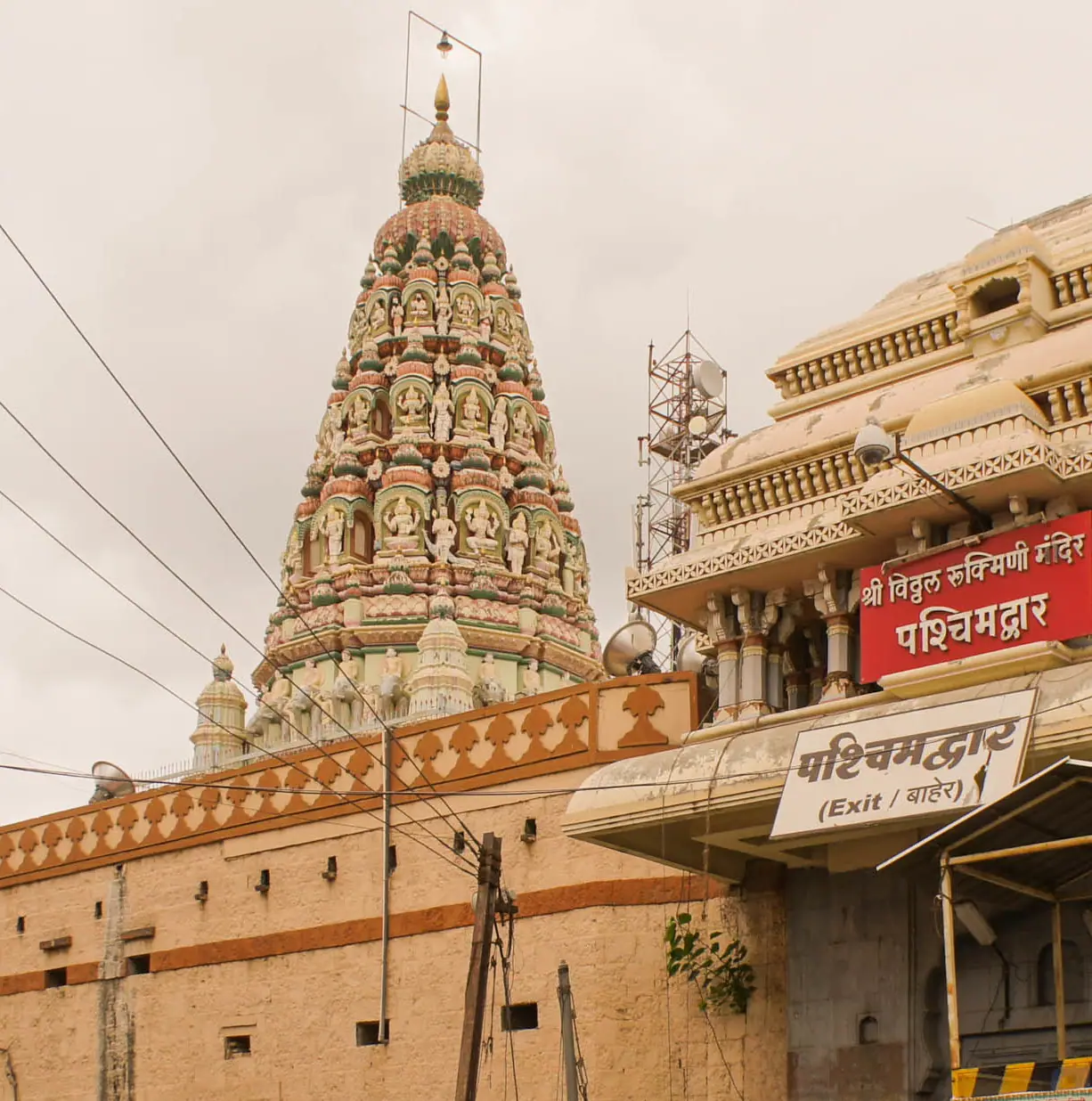
Famous Temples in Maharashtra: A Source-Checked Guide to Ashtavinayak, Jyotirlingas, Pandharpur, Kolhapur and More
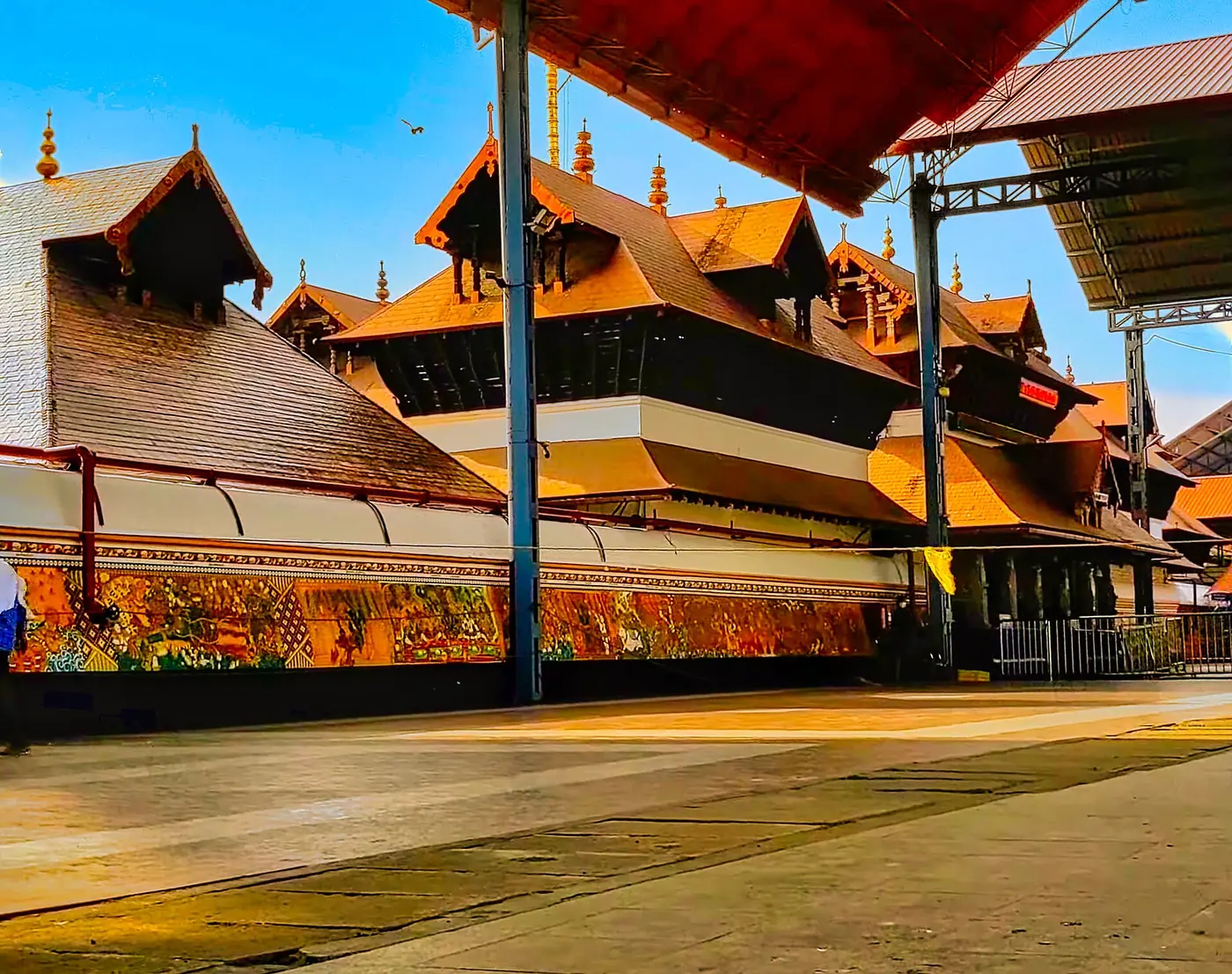
Famous Krishna Temples in India: 13 Source-Checked Temples from Guruvayur to Mathura, Vrindavan, Dakor and Pandharpur
Famous Temples in Kerala: A Source-Checked Guide to Guruvayur, Padmanabhaswamy, Vadakkunnathan, Attukal, Sabarimala and 70 More