Wednesday Hindu Puja: Budhvar Vrat, Ganesh Mantras and Rituals
Wednesday, Budhavara, is the day of Budha (Mercury) and, in most Hindu homes, of Lord Ganesha. Some families keep it for Vishnu, Krishna or Vitthal instead. This guide explains why, then walks through a simple home puja, verified mantras with meaning, the Budhvar vrat and food customs, Ganesha temples, and ways to involve children.
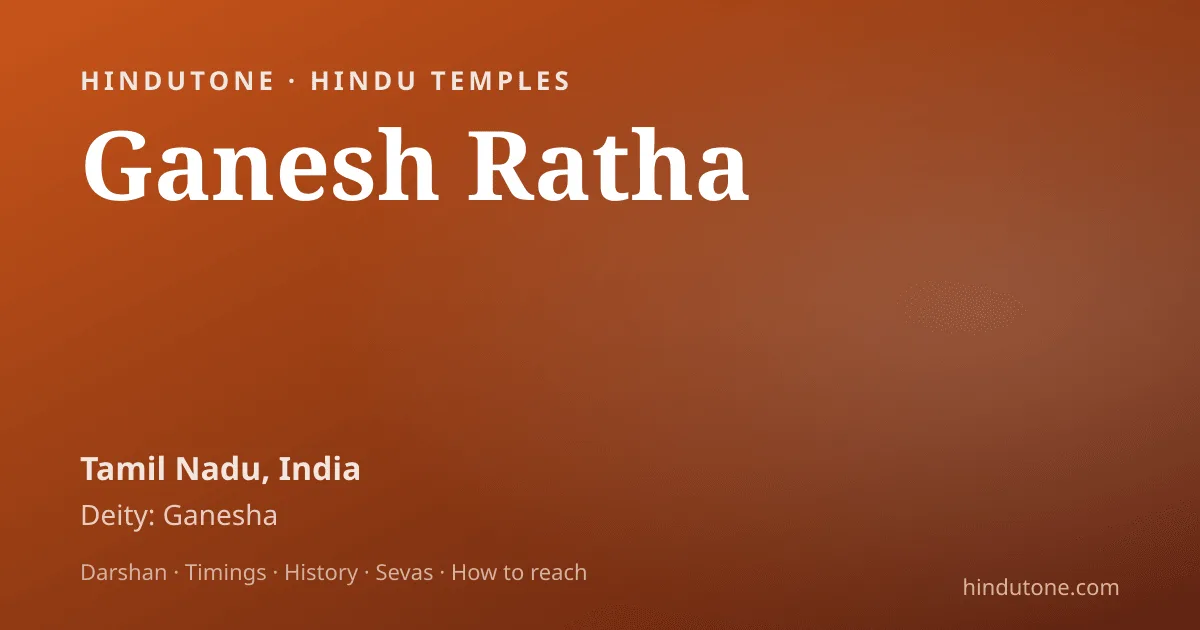
Quick answer: Wednesday is Budhavara, the day of Budha (the planet Mercury), and in most Hindu homes it is Lord Ganesha's day. Families light a lamp, offer durva grass, red flowers and a modak or laddu to Ganesha, chant a short mantra such as Om Gam Ganapataye Namah, and sometimes keep a light fast called the Budhvar vrat. Some traditions honour Vishnu, Krishna or Vitthal on Wednesday instead, and both approaches are valid.
Last updated: 10 October 2026. This page is part of our guide to the Hindu days of the week and their deities, which explains how each day of the week came to have its own planet and deity.
This guide covers who is worshipped on Wednesday and why, a step-by-step home puja, verified Sanskrit and Hindi texts with meaning, fasting and food customs, things to keep in mind, Ganesha temples, ideas for children and the regional variations you will meet in different families.
Who is worshipped on Wednesday, and why
Budha, the graha of the day
The Sanskrit weekday names follow the seven visible grahas, so Wednesday is named after Budha. In Puranic storytelling Budha is the son of Chandra, the Moon, and he is listed among the nine grahas honoured in Navagraha worship. Jyotisha, Hindu astrology, links Budha with intelligence, speech, writing, trade, mathematics and the ability to learn quickly. Green is his colour, emerald his traditional gem, and whole green gram (moong) his grain in the Navagraha offerings. These associations are part of a belief system that many families follow; you do not have to hold astrological views to keep Wednesday as a day of prayer.
The Navagraha Stotram attributed to Vyasa gives Budha this verse, which many people recite on Wednesdays:
प्रियङ्गुकलिकाश्यामं रूपेणाप्रतिमं बुधम् ।
सौम्यं सौम्यगुणोपेतं तं बुधं प्रणमाम्यहम् ॥ ४॥
priyaṅgukalikāśyāmaṃ rūpeṇāpratimaṃ budham |
saumyaṃ saumyaguṇopetaṃ taṃ budhaṃ praṇamāmyaham || 4||
Meaning: I bow to Budha, dark like the bud of the priyangu creeper, matchless in form, gentle and full of gentle qualities.
The verse says nothing about fear or punishment. Budha is described as saumya, mild and pleasant, which is a good mood in which to approach the day.
Ganesha, lord of understanding
Why does a day named after Budha belong to Ganesha in so many homes? The link most families give is buddhi. Budha governs the intellect in Jyotisha, and Ganesha is praised everywhere as the giver of wisdom and the remover of obstacles. The Ganesh Chalisa calls him buddhi vidhata, the one who grants understanding, and in some traditions Ganesha's consorts are named Siddhi and Buddhi. So a Wednesday prayer to Ganesha is, in effect, a prayer for clear thinking, good speech and a smooth path for the week's work.
Ganesha is also worshipped first in almost every Hindu ritual, so Wednesday, falling in the middle of the working week, feels like a natural point to pause and ask for obstacles to be cleared. Read more about his forms and stories on our Lord Ganesha deity page.
Vishnu, Krishna and Vitthal: the other Wednesday tradition
Not every family gives Wednesday to Ganesha. In Navagraha worship, Vishnu is commonly named as the presiding deity of Budha, and some Vaishnava households therefore worship Vishnu or Krishna on Wednesday, often with tulsi leaves and a recitation of Vishnu's names. In Maharashtra some devotees of Vitthal (Vithoba) of Pandharpur keep a Wednesday observance as well. Older HinduTone articles, such as our earlier Wednesday poojas and vratas article, reflect this Vishnu-first view.
There is no contradiction here. Hindu practice is shaped by family lineage, region and the guru tradition a household follows. If your grandparents kept Wednesday for Vishnu, carry that on; if they kept it for Ganesha, do that. Many families simply begin with a Ganesha prayer, as at the start of any puja, and then turn to their chosen deity. For Vishnu-focused worship, see the Lord Vishnu deity page, the Krishna page and our Thursday Vishnu puja guide, since Thursday is Vishnu's main day in most regions.
Step-by-step Wednesday puja at home
A complete Wednesday puja takes 15 to 25 minutes. If you have only five minutes, do steps 1, 3, 6 and 9. The order below follows the common shodashopachara pattern (sixteen offerings) in a shortened, home-friendly form.
- Prepare. Bathe, wear clean clothes (green or yellow is a popular Wednesday choice, though any clean clothes are fine) and wipe the puja shelf. Place a Ganesha image or murti on a clean cloth facing east or north if your space allows.
- Sankalpa. Sit quietly, hold a little water or a flower in your right hand, and state in your own words what you are doing: "Today, Wednesday, I offer this puja to Lord Ganesha for the well-being of my family." Release the water or place the flower at the altar.
- Light the lamp. Light a ghee or oil diya and an incense stick. The lamp is the witness of the puja.
- Invoke and welcome. Offer a pinch of rice (akshata) and say Om Gam Ganapataye Namah, inviting Ganesha to accept your worship.
- Offer water and tilak. Sprinkle water for washing (padya, arghya, achamana), then apply a little kumkum or sandalwood paste to the murti.
- Offer durva and flowers. Durva grass is Ganesha's signature offering. Many families offer 21 blades, tied in small bunches of three or five. Red flowers such as hibiscus are traditional. Tulsi is usually not offered to Ganesha, although it is central to Vishnu worship.
- Naivedya. Offer a modak, a laddu, jaggery with roasted chana, a banana or simply a few raisins. Sprinkle water around the plate and pause for a moment of gratitude.
- Chant. Recite one of the texts in the next section: the Ganesha mantra 11 or 108 times, the Budha verse, or a stanza of the Ganesha Pancharatnam.
- Aarti. Wave the lamp clockwise while singing an aarti such as Jai Ganesh Deva. Offer the flame to the family.
- Close. Ask forgiveness for any mistakes, take prasad and share it.
Wednesday offerings at a glance
| Offering | Why it is used | Simple substitute |
|---|---|---|
| Durva grass | Traditional favourite of Ganesha in Puranic stories | Any fresh green leaf or herb from the garden |
| Red flowers (hibiscus) | Associated with Ganesha's worship | Any fresh flower |
| Modak or laddu | Ganesha's favourite sweet in stories and images | Jaggery, dates or a piece of fruit |
| Green moong, green fruit | Budha's colour and grain in Navagraha offerings | Any green vegetable given to a food bank |
| Ghee or oil lamp | Light as witness and offering | A tea light in a safe holder |
If you are worshipping Vishnu or Krishna on Wednesday, swap durva for tulsi and offer a little butter, milk sweet or fruit.
Verified Wednesday mantras with meaning
Every Sanskrit and Hindi text below is reproduced from our checked source files (sanskritdocuments.org editions), not retyped. Learn one well rather than rushing through all of them.
1. Ganesha mula mantra
ॐ गं गणपतये नमः॥
oṃ gaṃ gaṇapataye namaḥ||
Meaning: Om, salutations to Ganapati. "Gam" is the seed syllable traditionally associated with Ganesha. This is the easiest mantra to repeat 11, 21 or 108 times with a mala.
2. Budha verse from the Navagraha Stotram
This is the verse quoted above. Recite it once or three times after the Ganesha mantra if you also wish to honour the graha of the day. Our Navagraha Stotram guide gives all nine verses.
3. Ganesha Pancharatnam, first verse (Adi Shankaracharya)
श्रीगणेशाय नमः ॥
śrīgaṇeśāya namaḥ ||
मुदाकरात्तमोदकं सदाविमुक्तिसाधकं
कलाधरावतंसकं विलासिलोकरक्षकम् ।
अनायकैकनायकं विनाशितेभदैत्यकं
नताशुभाशुनाशकं नमामि तं विनायकम् ॥ १॥
mudākarāttamodakaṃ sadāvimuktisādhakaṃ
kalādharāvataṃsakaṃ vilāsilokarakṣakam |
anāyakaikanāyakaṃ vināśitebhadaityakaṃ
natāśubhāśunāśakaṃ namāmi taṃ vināyakam || 1||
Meaning: I bow to Vinayaka, who joyfully holds the modaka in his hand, who always leads devotees toward liberation, who wears the crescent moon as an ornament and protects those who delight in the world; the one leader of those who have no leader, who destroyed the elephant-demon, and who quickly removes the misfortunes of those who bow to him.
The full five verses with meaning are on our Ganesha Pancharatnam page.
4. Ganesh Chalisa, opening lines (Hindi)
जय गणपति सद्गुणसदन कविवर बदन कृपाल ।
विघ्न हरण मंगल करण जय जय गिरिजालाल ॥
jaya gaṇapati sadguṇasadana kavivara badana kṛpāla |
vighna haraṇa maṃgala karaṇa jaya jaya girijālāla ||
जय गजबदन सदन सुखदाता । विश्व विनायक बुद्धि विधाता ॥
jaya gajabadana sadana sukhadātā | viśva vināyaka buddhi vidhātā ||
Meaning: Victory to Ganapati, home of good qualities, kind and eloquent of face, remover of obstacles and maker of auspiciousness, son of Girija (Parvati). Victory to the elephant-faced one, the abode and giver of happiness, Vinayaka of the world and bestower of understanding.
Families in North India often sing the whole Chalisa on Wednesdays; the complete text and aarti are on our Ganesh Chalisa page.
5. For Vishnu-tradition households
ॐ नमो नारायणाय॥
oṃ namo nārāyaṇāya||
Meaning: Om, salutations to Narayana. Repeat it 108 times if your family keeps Wednesday for Vishnu.
Other Ganesha texts readers ask about include the Ganapati Atharvashirsha, the Ganesha Gayatri mantra and the 108 names of Ganesha. Use those pages for the full texts.
The Budhvar vrat: how families keep it
A Budhvar vrat is a personal vow of worship and restraint on Wednesdays. It is usually begun on a Wednesday in the bright half of the lunar month (shukla paksha), although many people simply start on the next Wednesday. Common patterns are:
- Weekly worship without a count: a puja every Wednesday, with or without fasting.
- A fixed number of Wednesdays: 7 or 21 is common in many homes; some vrat booklets give other numbers. The vow ends with a small udyapan (closing puja), food or books given to others, and a family meal.
- Partial fast: one meal after the evening puja, or fruit and milk during the day.
A widely told Budhvar vrat katha
North Indian vrat booklets usually include a short story read during the Wednesday puja. In the most common version, a man sets out on a Wednesday to bring his wife back from her parents' home, though the family advise him to wait. On the way back his wife becomes thirsty; while he fetches water, a figure who looks exactly like him appears beside her, and the villagers cannot tell which is the real husband. The man prays to Budha, the double disappears, and the couple return home resolved to honour Wednesday. Details differ between booklets and families, and some read a Ganesha story instead. The point most tellers draw from it is respect for the day and for elders' advice, not fear.
Food customs and alternatives
| Common custom | Gentler alternative |
|---|---|
| One satvik meal after evening puja | Two light meals with no onion or garlic |
| Green moong dal khichdi or moong sprouts | Any simple dal and rice cooked at home |
| Some avoid salt for the day | Use rock salt (sendha namak) or keep normal salt |
| Giving green moong or green vegetables to others | Donating to a food bank or temple kitchen |
| No non-vegetarian food or alcohol | The same, kept just for Wednesday |
A health note on fasting: a vrat is meant to steady the mind, not harm the body. If you are pregnant or breastfeeding, diabetic, on regular medication, recovering from illness, elderly, or have a history of eating disorders, do not fast without advice from your doctor. Choose prayer, a simple vegetarian meal or an act of charity instead; tradition has always allowed for this. Children should not keep strict fasts. Drink water through the day unless your doctor approves otherwise.
Do's and don'ts for Wednesday
These are customs many families follow. None of them is a rule whose breach will bring harm; they are ways of keeping the day attentive.
Do
- Begin the day with a short Ganesha prayer, even 11 repetitions of the mantra on the way to work or school.
- Start study, writing, new learning or a business task on a Wednesday if you like the symbolism of Budha's day.
- Speak carefully. Since Budha is linked with speech, many people treat Wednesday as a day for kind and truthful words.
- Give something green or something that supports learning: vegetables to a food bank, notebooks or books to a school.
- Clean your desk or study area along with the puja shelf.
Don't
- Don't offer tulsi leaves to Ganesha; most traditions reserve tulsi for Vishnu and Krishna.
- Don't let a fast become a show of endurance. Stop if you feel unwell.
- Don't use Wednesday rules to judge others in the family who keep different customs.
- Don't buy expensive gemstones or remedies sold with promises of guaranteed results. A sincere prayer needs no purchase.
Common mistakes
- Chanting too fast. Ten slow, clear repetitions are better than 108 mumbled ones.
- Using stale offerings. Fresh durva or a single fresh flower is better than a large wilted garland.
- Mixing up Sankashti with every Wednesday. Sankashti Chaturthi is a monthly lunar observance that can fall on any weekday; it is different from the weekly Wednesday puja. See our Sankashti Chaturthi moonrise rules.
- Copying mantra text from forwarded messages. Many circulating versions contain errors. Use a checked source such as the texts on this page.
Ganesha temples for a Wednesday visit
Temple visits are especially popular on Wednesdays and on Sankashti and Vinayaka Chaturthi days. The temples below have HinduTone pages whose facts have been checked against official or published sources. Check each temple's official website for current timings before you travel.
- Sri Varasiddhi Vinayaka Swamy Temple, Kanipakam: in Chittoor district, Andhra Pradesh, one of South India's most visited Ganesha shrines; devotees revere the image as self-manifested.
- Karpaga Vinayagar Temple, Pillayarpatti: a rock-cut cave shrine in Sivaganga district, Tamil Nadu, with a rare two-armed Ganesha carved from the rock.
- Shri Mayureshwar Temple, Morgaon: in Pune district, the most important shrine of the Ashtavinayak circuit, where Ganesha rides a peacock.
- Ballaleshwar Temple, Pali: in Raigad district, the only Ashtavinayak temple named after a devotee, the boy Ballal.
- Kasba Ganpati, Pune: Pune's presiding village deity, linked with Jijabai, mother of Chhatrapati Shivaji Maharaj.
- Sri Karpaga Vinayakar Temple, Sydney: a Tamil Ganesha temple in Homebush West, in Sydney's inner west.
Finding a Ganesha shrine abroad
Almost every large Hindu temple outside India has a Ganesha shrine near the entrance, because Ganesha is worshipped first. If there is no Ganesha temple near you, any community temple will do. Look up temples on your local Hindu temple society's directory or ask at an Indian grocery store, and check the temple's own website for opening hours, which often differ on weekdays. Our Wednesday NRI guide has practical tips for keeping Wednesday around a work schedule abroad, and our temple visit etiquette guide covers what to wear and how to behave.
Wednesday with children and the family
Ganesha is usually the first deity children love: the elephant head, the mouse vehicle and the sweets make him easy to talk about. Wednesday is a good day to build small habits.
- Let a child do one step. Placing the durva, ringing the bell or carrying the prasad gives a sense of ownership.
- Teach one line a month. Start with Om Gam Ganapataye Namah, then the morning verse below.
- Tell one story. The race around the world, in which Ganesha circles his parents, is short and memorable. Tell it in your own words and ask what it teaches about respecting parents.
- Homework blessing. Before Wednesday homework, a 30-second prayer for focus links Budha's day with learning in a practical way.
- Craft time. Make a clay Ganesha or draw one with the family, then use it in the puja.
A morning verse many families teach young children, looking at their open palms on waking:
कराग्रे वसते लक्ष्मीः करमध्ये सरस्वती ।
करमूले तु गोविन्दः प्रभाते करदर्शनम् ॥
karāgre vasate lakṣmīḥ karamadhye sarasvatī |
karamūle tu govindaḥ prabhāte karadarśanam ||
Meaning: Lakshmi dwells at the tips of the fingers, Saraswati in the middle of the palm, and Govinda at the base of the hand; so look at your hands at dawn.
For more ideas, see our guide to raising children with Hindu values.
Regional Wednesday traditions
- Maharashtra: Ganesha worship is strong everywhere, from the Ashtavinayak temples to neighbourhood shrines. Some Varkari and Vaishnava families also honour Vitthal; our Sant Tukaram article introduces that devotional world, and our Kartiki Ekadashi at Pandharpur guide covers its great pilgrimage.
- North India: the Budhvar vrat katha is read at home, often with the Ganesh Chalisa. Green clothes and green moong offerings are common, and some families give green items in charity.
- Andhra Pradesh and Telangana: Vinayaka worship begins most rituals, and Wednesday visits to Ganesha shrines are popular; Kanipakam draws pilgrims from across the region.
- Tamil Nadu: Pillaiyar (Ganesha) shrines stand at street corners and under peepal trees, and a quick Wednesday darshan on the way to work is part of daily life for many.
- Astrology-minded households: some families also worship Budha at a Navagraha shrine on Wednesday. Our guide to the nine planetary deities explains how Navagraha worship works, treating it as a matter of belief.
Wednesday in the Hindu calendar
Wednesday's weekly rhythm sits alongside Ganesha's lunar observances. Sankashti Chaturthi (the fourth day after the full moon) and Vinayaka Chaturthi (the fourth day after the new moon) come every month, and when one of them falls on a Wednesday many devotees treat it as doubly special. The great annual festival is Ganesh Chaturthi. Our guide to Ganesha vrats explains how the monthly fasts are kept.
Also read: 10 famous Ganesh temples in India.
Also read: Sankatanashana Ganesha Stotram with meaning.
Related reading on HinduTone
- Lord Ganesha and Wednesday: the special connection
- Wednesday rituals: Budhvar puja NRI and temple guide
- Which god to pray to for a job, marriage, health or money
- Navagraha Stotram with meaning
- Hindu days of the week and their deities
Frequently asked questions
Which god is worshipped on Wednesday in Hinduism?
Most Hindu families worship Lord Ganesha on Wednesday, and many also honour Budha, the planet Mercury, whose day it is. Some Vaishnava homes keep Wednesday for Vishnu or Krishna, and in parts of Maharashtra for Vitthal. Follow your own family custom; all of these are accepted.
Why is Wednesday linked with Ganesha?
Wednesday is Budhavara, the day of Budha, who is associated in Jyotisha with intellect, speech and learning. Ganesha is honoured as the giver of buddhi (understanding) and the remover of obstacles, so the two ideas sit naturally together. The pairing is a matter of tradition rather than a single scriptural rule.
What should I eat during a Budhvar vrat?
Many people take one simple satvik meal, often with green moong dal, green vegetables, fruit and milk. Some avoid salt or grains for the day; others only skip non-vegetarian food. Choose the level that suits your health, and drink enough water.
How many Wednesdays should the Budhvar vrat be kept?
Customs differ. Some families keep it for 7 or 21 consecutive Wednesdays, others for a set number of months, and many simply worship every Wednesday without a count. If you take a vow, decide the number at the start and close it with a small puja and charity.
Can I do Wednesday puja in the evening?
Yes. Morning after a bath is the common choice, but an evening lamp and a short Ganesha prayer are equally valid if work or school fills your morning. Consistency matters more than the clock.
Do I need a priest for Wednesday Ganesha puja?
No. A home Wednesday puja is simple enough for anyone to do: a clean space, a lamp, durva grass or a flower, a sweet and a mantra. A priest is only needed if your family wants a formal ritual such as a homa.
Editor's note (10 October 2026)
We rewrote this guide on 10 October 2026 as part of our Hindu days of the week series. Sanskrit and Hindi texts now come only from checked source files, the temple list is limited to temples whose details we have verified, and we have removed outcome promises. Customs vary widely by family and region; where they differ, follow your own tradition or ask your family priest.
Continue through the week
Previous day: Tuesday: Hanuman and Mangalwar vrat | Next day: Thursday: Vishnu, Brihaspati and Guruvar vrat
Share this with family and friends
Send it on WhatsApp, post it, or copy the link.
More from Pooja, Slokas and Mantras
- Sri Venkatesa Vijayarya Saptavibhakti Stotram: Full Text in Telugu, Sanskrit and IAST with Meaning
- Deeparadhana: Significance of Lighting the Lamp, Deepam Jyoti Parabrahma Meaning, Oil and Wicks
- Narmadashtakam (Sabindu Sindhu) by Adi Shankaracharya: Full Text in Sanskrit with Meaning
- Hari Stotram (Jagajjalapalam) by Swami Brahmananda: Full Text in Sanskrit with Meaning
- Ganeshashtakam (Yato Anantashakteh) from the Ganesha Purana: Full Text with Meaning
You might also like
Thursday Vishnu Puja: Guruvar Vrat Katha, Mantras, Food and Rituals
Ganesh Mantra Benefits — The Complete Guide for NRIs in USA, UK & Canada
Friday Lakshmi Puja: Shukravar Vrat, Lakshmi Mantra and Rituals