10 Famous Ganesh Temples in India: Kanipakam, Pillayarpatti, Ashtavinayak Shrines and More, From Source-Checked Records
Ten Ganesha temples in India, each described only from HinduTone's source-checked temple records: Kanipakam in Andhra Pradesh, Pillayarpatti and the white Ganesha of Thiruvalanchuzhi in Tamil Nadu, Eachanari in Coimbatore, Pazhavangadi in Thiruvananthapuram, Dodda Ganapathi in Bengaluru, Kasba Ganpati in Pune and the Ashtavinayak shrines of Morgaon, Siddhatek and Pali. Location, form of Ganesha, recorded history, festivals and a link to each temple page.
Quick answer: Ten Ganesha temples in India described from HinduTone's source-checked records are Kanipakam (Andhra Pradesh), Pillayarpatti, Eachanari and the white Ganesha of Thiruvalanchuzhi (Tamil Nadu), Pazhavangadi (Kerala), Dodda Ganapathi (Bengaluru), Kasba Ganpati (Pune), and the Ashtavinayak temples of Morgaon, Siddhatek and Pali in Maharashtra. Each section below uses only that temple's verified record and links to its full temple page.
Last updated: 18 October 2026. This page has been rewritten from HinduTone's source-checked temple records. It replaces an earlier, longer list that did not cite sources.
Why devotees visit Ganesha temples
Ganesha, also called Vinayaka, Ganapati and Pillaiyar, is the remover of obstacles and the deity invoked at the start of any undertaking (see why Ganesha is worshipped first). Families visit his temples before exams, journeys, weddings and new ventures, and on Wednesdays, Sankashti Chaturthi and Ganesh Chaturthi. Our Wednesday (Budhwar) guide explains the weekly practice, and the Ganesha deity page covers his stories and forms.
The ten temples below range from an early rock-cut cave in Tamil Nadu to a city temple in Pune, a shrine maintained by the Indian Army in Kerala and three of the eight Ashtavinayak temples of Maharashtra.
The ten temples at a glance
| Temple | State | Known for | Best time (per record) |
|---|---|---|---|
| Sri Varasiddhi Vinayaka, Kanipakam | Andhra Pradesh | Swayambhu image in a water-filled well; 'god of oaths' | 21-day Brahmotsavam from Vinayaka Chavithi |
| Karpaga Vinayagar, Pillayarpatti | Tamil Nadu | Rock-cut cave; two-armed Ganesha, trunk to the right | 10-day Vinayaka Chaturthi festival |
| Shri Mayureshwar, Morgaon | Maharashtra | Ashtavinayak; start and end of the yatra | Ganesh Chaturthi; Maghi Ganesh Jayanti |
| Siddhivinayak, Siddhatek | Maharashtra | Ashtavinayak; right-turned trunk; hill pradakshina | Ganesh Chaturthi; Maghi Chaturthi |
| Ballaleshwar, Pali | Maharashtra | Ashtavinayak named after the boy devotee Ballal | Sankashti Chaturthi (crowded); Bhadrapada and Maghi utsavs |
| Kasba Ganpati, Pune | Maharashtra | Pune's gramdaivat; first of the manache Ganpatis | Ganeshotsav |
| Sri Dodda Ganapathi, Bengaluru | Karnataka | Monolithic image decorated with butter | Ganesh Chaturthi; Kadalekai Parishe |
| Eachanari Vinayagar | Tamil Nadu | Daily golden chariot; 27 birth-star pujas | Vinayagar Chaturthi (two days in Aavani) |
| Pazhavangadi Maha Ganapathy | Kerala | Maintained by the Indian Army; coconut offering | Vinayaka Chathurthi |
| Swetha Vinayagar, Thiruvalanchuzhi | Tamil Nadu | White Ganesha worshipped without touch | Vinayaka Chaturthi |
Sri Varasiddhi Vinayaka Swamy Temple, Kanipakam (Andhra Pradesh)
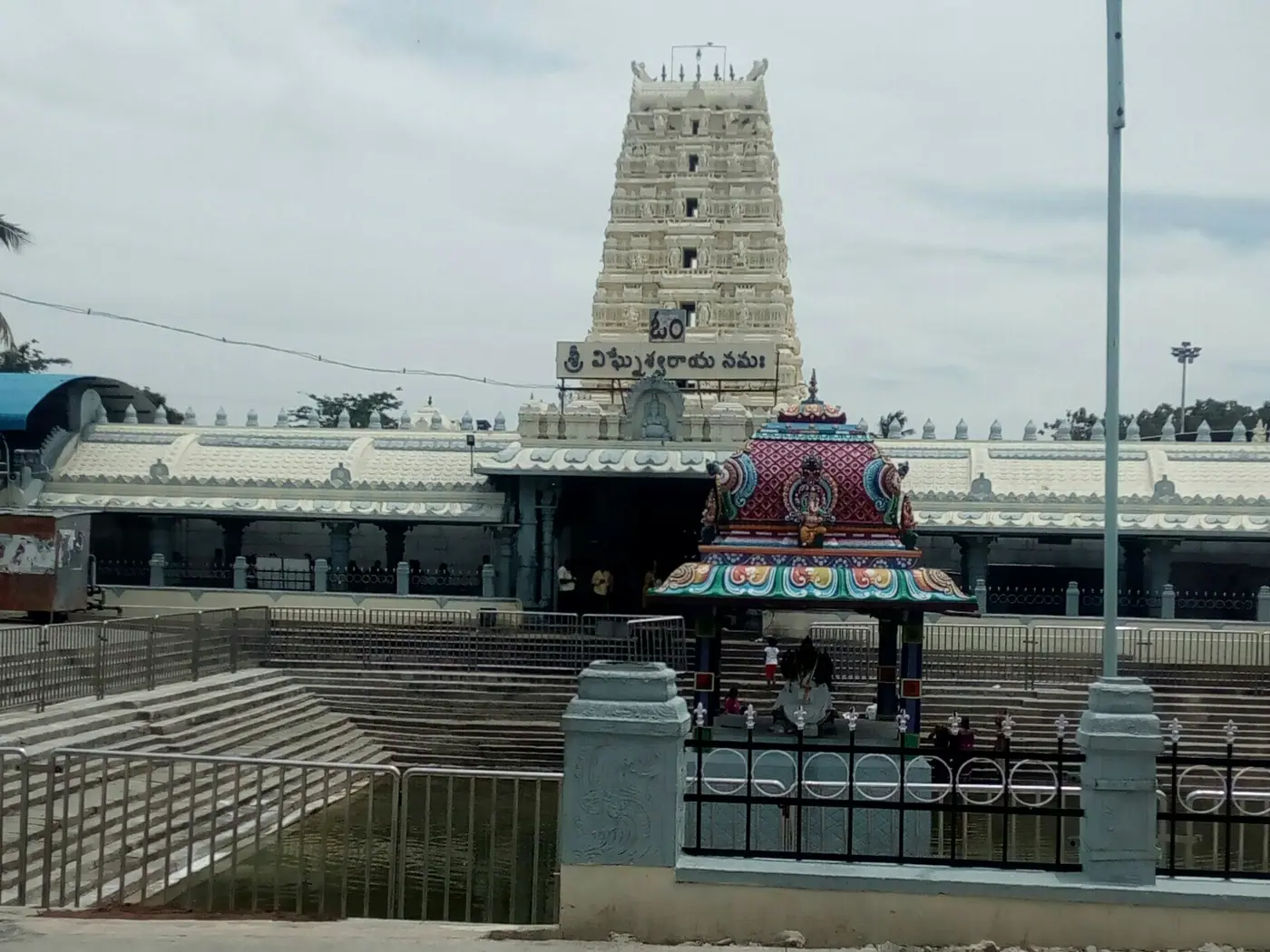
Kanipakam is in Irala mandal of Chittoor district, about 11 km from Chittoor and 68 km from Tirupati, according to the district administration. Devotees revere the image as swayambhu. The temple legend tells of three brothers, one mute, one deaf and one blind, whose digging tool struck a stone while they dug a well; blood flowed, they were cured, and villagers found an image of Ganesha whose base they could not reach. The deity is said to rest in a well that always holds water.
The Hindu has reported that the Kanipakam Vinayaka is popularly known as 'pramanala devudu', the god of oaths, and devotees believe a promise made before him is binding. Published accounts credit Kulottunga Chola I in the early 11th century, but this has not been confirmed by an official record. The annual Brahmotsavam begins on Vinayaka Chavithi and lasts 21 days. Full Kanipakam temple page.
Karpaga Vinayagar Temple, Pillayarpatti (Tamil Nadu)
This rock-cut cave shrine is in Tiruppathur taluk of Sivaganga district, about 12 km from Karaikudi and 71 km from Madurai. The presiding image, cut from the rock face, shows a seated two-armed Ganesha about six feet tall, facing north, with the trunk turned to the right (Valampuri). The name Karpaga Vinayagar refers to the wish-granting karpaga tree.
The cave is generally assigned to the early Pandya period, commonly given as around the 7th century CE, though the date is debated. The Sivaganga district administration records more than 15 inscriptions, and an early one names the sculptor. Lingas worshipped as Thiruveesar, Marudheesar and Senchadeswarar and three goddess shrines are also housed here. The main festival is a ten-day Vinayaka Chaturthi with a chariot procession, and the temple trust maintains cottages for pilgrims. Full Pillayarpatti temple page.
Shri Mayureshwar Temple, Morgaon (Maharashtra)
At Morgaon in Pune district, Ganesha is worshipped as Mayureshwar, riding a peacock. Maharashtra Tourism describes it as the first and last stop of the Ashtavinayak yatra and calls it the spiritual headquarters of the Ganapatya tradition. Tradition places Mayureshwar's victory over the demon Sindhu here. The 1885 Poona District Gazetteer describes 'a large handsome temple of Ganpati' whose floor stones form the shape of a tortoise.
The temple is built of black basalt with four corner towers, and a Nandi stands at the shrine. Maharashtra Tourism notes that devotees may perform abhishekam directly on the image. Ganesh Chaturthi and Maghi Ganesh Jayanti are the main festivals, and on Shashti in Bhadrapada and Magha the deity is carried through the village in a silver palanquin. Jejuri (about 17 km) is the nearest station. Full Morgaon temple page.
Siddhivinayak Temple, Siddhatek (Maharashtra)
This Siddhivinayak stands on a hillock above the Bhima river in Karjat taluka of Ahilyanagar district, and is a different temple from the one in Mumbai. The seated image has its trunk turned to the right. On the Ashtavinayak yatra it is usually the second shrine after Morgaon. Tradition says Vishnu worshipped Ganesha on this hill and gained siddhi before defeating the demons Madhu and Kaitabha.
Maharashtra Tourism and Sakal credit Ahilyabai Holkar with building the present black-stone temple. Many devotees walk around the whole hill on a rough path, and one source advises keeping age, health and weather in mind. Daund Junction (about 19 km) is the nearest station, and a bridge from Shirapur now gives access. Full Siddhatek temple page.
Ballaleshwar Temple, Pali (Maharashtra)
Pali in Raigad district is about 60 km from Karjat. Maharashtra Tourism notes that this Ashtavinayak temple is named after a devotee, the boy Ballal, who, tradition says, was tied to a tree by his father for his devotion and freed by Ganesha, who then agreed to stay at Pali. Devotees first visit Dhundi Vinayak before the main shrine.
The Raigad district administration dates the first temple to 1640 CE and its rebuilding in stone to 1760, laid out in the shape of the Devanagari letter 'Shri'. Thousands come on Sankashti Chaturthi, and the Bhadrapada and Maghi utsavs are major festivals. Full Pali Ballaleshwar page.
Kasba Ganpati, Pune (Maharashtra)
Kasba Ganpati in Kasba Peth, near the Lal Mahal, is described by the Pune district administration as the city's gramdaivat, or presiding deity, and the Ganpati given first honour. The district records that Jijabai, mother of Chhatrapati Shivaji Maharaj, commissioned the installation of the deity, with Dadoji Kondadev overseeing the work; other traditions are also reported.
Kasba Ganpati is first among Pune's five 'manache' Ganpatis during Ganeshotsav, and the city's immersion procession begins here, so those days bring heavy crowds and traffic restrictions. Full Kasba Ganpati page.
Sri Dodda Ganapathi Temple, Bengaluru (Karnataka)
Dodda Ganapathi, meaning 'big Ganesha', stands on Bull Temple Road in Basavanagudi, at the foot of the hill crowned by the Bull Temple. Its monolithic image is regularly covered in butter, which Karnataka Tourism puts at more than a hundred kilograms. Published measurements of the image differ. Local tradition links it to Kempe Gowda, founder of Bengaluru, but no dated record of construction was found.
On Ganesh Chaturthi devotees queue from early morning, and visitors to the Kadalekai Parishe (groundnut fair) on the last Monday of Kartika also stop here. Karnataka Tourism suggests the metro Green Line to National College station, as parking is limited. Full Dodda Ganapathi page.
Eachanari Vinayagar Temple, Coimbatore (Tamil Nadu)
Eachanari Vinayagar stands on the Coimbatore–Pollachi road. It is known for a daily golden chariot procession in the morning and for special worship for each of the 27 nakshatras, so devotees often visit on their birth-star day. Local tradition says the idol was being taken from Madurai to Perur when the cart's axle broke here. Common offerings include coconuts, kozhukattai, arugampul garlands and milk abhishekam.
The main festival is Vinayagar Chaturthi, celebrated over two days in Aavani, with a two-day festival in Chithirai as well. Published timings differ, so confirm with the temple. Full Eachanari temple page.
Pazhavangadi Sree Maha Ganapathy Temple, Thiruvananthapuram (Kerala)
This shrine at East Fort, close to the Sree Padmanabhaswamy Temple, is maintained by the Indian Army (the Madras Regiment, per Kerala Kaumudi and Outlook Traveller), a link that goes back to soldiers of the old Travancore army. Tradition says a soldier found the idol on a riverbed near Padmanabhapuram; it was brought here after the capital moved in 1795, and Kerala Tourism dates the present building to 1860.
Breaking coconuts is the main offering. Sculptures show 32 forms of Ganesha, and Vinayaka Chathurthi is the main festival; since 2016 the deity has been taken out in an open vehicle instead of on an elephant. A 2017 report noted that men were expected to be bare-chested in the inner prakaram, so check current dress rules. Full Pazhavangadi temple page.
Swetha Vinayagar, Thiruvalanchuzhi (Tamil Nadu)
The white Ganesha (Vellai Pillaiyar) is enshrined in the second enclosure of the Kapardeeswarar Shiva temple at Thiruvalanchuzhi, about 1 km from Swamimalai on the Kumbakonam–Thanjavur road. Tradition says the image was shaped from the foam of the churned ocean, so it is not touched: powdered green camphor is sprinkled on it instead of abhishekam or flowers. Devotees pray here to remove obstacles to marriage.
Inscriptions from the reign of Rajaraja III record lands belonging to the Vellai Pillaiyar. The Shiva temple was sung in the Thevaram hymns. Full Thiruvalanchuzhi Swetha Vinayagar page.
More source-checked Ganesha temples
- Varadvinayak Temple, Mahad (Khalapur): another Ashtavinayak temple near Khopoli in Raigad district, where devotees may enter the sanctum; busiest on Maghi Chaturthi.
- Shri Ganesh Mandir Tekdi, Nagpur: a swayambhu Ganesha on the Sitabuldi hillock, crowded at Ganesh Chaturthi.
Other famous temples, such as Siddhivinayak in Mumbai, Dagdusheth Halwai Ganpati in Pune and the remaining Ashtavinayak shrines, are not yet in our source-checked set. For the full circuit, see our Ashtavinayak yatra guide.
Planning a Ganesha temple pilgrimage
- Group by region: Morgaon, Siddhatek and Pali fit an Ashtavinayak circuit from Pune; Pillayarpatti pairs with Madurai or Karaikudi; Thiruvalanchuzhi is next to Swamimalai near Kumbakonam.
- Mind the calendar: Ganesh Chaturthi, Maghi Chaturthi and Sankashti days bring the longest queues. See our Ganesh Chaturthi hub and Sankashti Chaturthi guide.
- Confirm timings: none of these records gives fixed darshan hours, so check with the temple or state endowments department a day or two ahead.
- Follow local rules: touch and offering rules differ, from abhishekam by devotees at Morgaon to no-touch worship at Thiruvalanchuzhi.
- Etiquette: dress modestly and follow photography rules. Our temple visit guide covers darshan, dress code and etiquette.
Visiting from abroad
- Pick a cluster: with limited leave, choose one region, such as Pune for Kasba Ganpati and the Ashtavinayak temples, or Chennai and Madurai for the Tamil Nadu shrines.
- Festival trips: if you plan to be in India for Ganesh Chaturthi, book stays early and expect road closures in Pune and Bengaluru.
- Carry ID: keep your passport or OCI card handy for accommodation and any special queues.
- Elderly parents: Siddhatek's hill path and crowded festival queues can be tiring; ask about assistance in advance.
- At home: keep the Wednesday and Sankashti rhythm at your local temple; the Wednesday guide has simple home worship steps.
Also read: Famous temples in Maharashtra.
Frequently asked questions
Which Ganesh temples are in this list?
Kanipakam (Andhra Pradesh), Pillayarpatti, Eachanari and the Swetha Vinayagar shrine at Thiruvalanchuzhi (Tamil Nadu), Pazhavangadi (Kerala), Dodda Ganapathi (Bengaluru), Kasba Ganpati (Pune) and the Ashtavinayak temples of Morgaon, Siddhatek and Pali (Maharashtra). Each record has been checked against independent published sources.
Why isn't Siddhivinayak in Mumbai on the list?
This guide only includes temples whose records have passed HinduTone's source check. The Siddhatek Siddhivinayak listed here is a different temple, one of the Ashtavinayak shrines on the Bhima river. Other well-known Ganesha temples will be added once verified.
Which day is best for a Ganesha temple visit?
Wednesday is widely associated with Ganesha, and Sankashti Chaturthi each month draws large crowds at Pali, Morgaon and Pillayarpatti. Ganesh Chaturthi in Bhadrapada and Maghi Chaturthi (Ganesh Jayanti) are the busiest festival days at most of these temples.
Can devotees touch the idol at any of these temples?
Maharashtra Tourism notes that devotees may perform abhishekam directly on the Mayureshwar image at Morgaon. The opposite applies at Thiruvalanchuzhi, where the white Ganesha is not touched and only powdered green camphor is sprinkled on it. Always follow the rules at each temple.
Do these temples publish darshan timings?
The records do not give fixed timings for these ten temples, and arrangements change around festivals. Confirm with the temple office or the state endowments department shortly before you travel.
What should I offer at a Ganesha temple?
The records mention coconuts (central at Pazhavangadi and Kanipakam), kozhukattai, arugampul (durva grass) garlands and milk abhishekam at Eachanari, and modaks at Morgaon on Sankashti. Follow each temple's rules on what may be taken inside.
Editor's note (18 October 2026)
This post was upgraded in place on 18 October 2026. Every fact about the temples comes from HinduTone's source-checked temple records, which draw on independent published sources such as district administrations, state tourism departments, gazetteers and newspapers; a temple's own website is not counted as an independent source. Where a record gives no timing, founding date or best season, we have not added one. Please confirm current arrangements with each temple before travelling.
Related guides
Share this with family and friends
Send it on WhatsApp, post it, or copy the link.
More from Temples
- Hindu Temples in London: Visitor Guide, Nov-Dec 2026 Dates
- Hindu Temples in Toronto and the GTA: Nov-Dec 2026 Guide
- Hindu Temples in New Jersey: Guide and Nov-Dec 2026 Dates
- Famous Temples in Uttarakhand: A Source-Checked Guide to Kedarnath, Badrinath, Tungnath, Haridwar, Almora and More
- Famous Temples in Odisha: A Source-Checked Guide to Puri, Bhubaneswar, Biraja, Tara Tarini and Western Odisha
You might also like
Ganesh Temple Flushing 2026: Darshan Timings, History & Spiritual Significance
Kanipakam Varasiddi Vinayaka Temple: The Self-Growing Ganesha Shrine
Shree Siddhivinayak Temple (Mumbai) to Go Fully Digital: A New Era for Donations and Darshan?