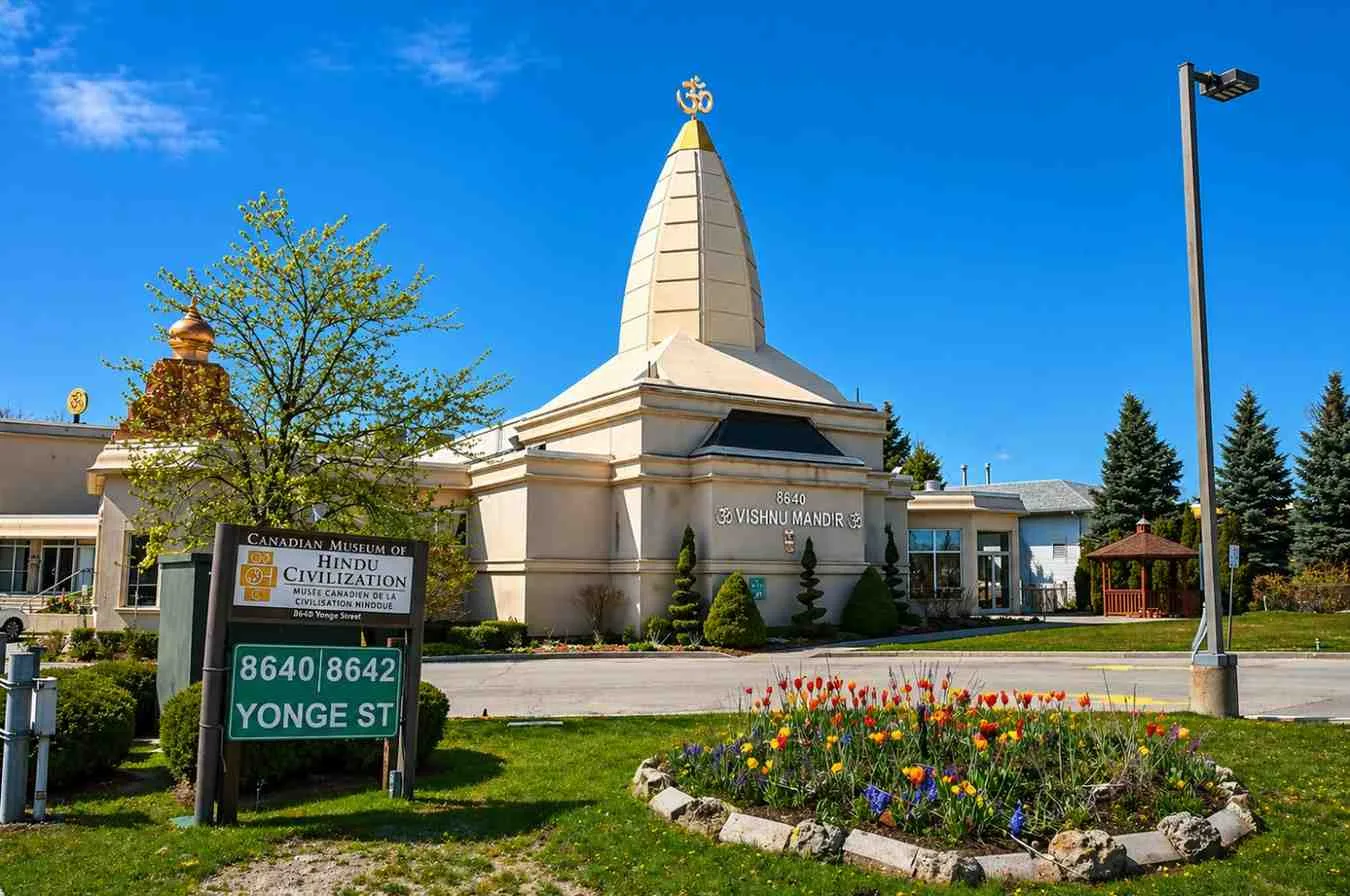
Thursday Vishnu Puja: Guruvar Vrat Katha, Mantras, Food and Rituals
Thursday, Guruvara, is the day of Brihaspati, the guru of the gods, and in most Hindu homes a day for Lord Vishnu. Here is why yellow dominates the day, how to do a home Vishnu puja, verified mantras with meaning, the Guruvar vrat and its katha, food customs, banana plant worship where it is followed, and Vishnu temples to visit.
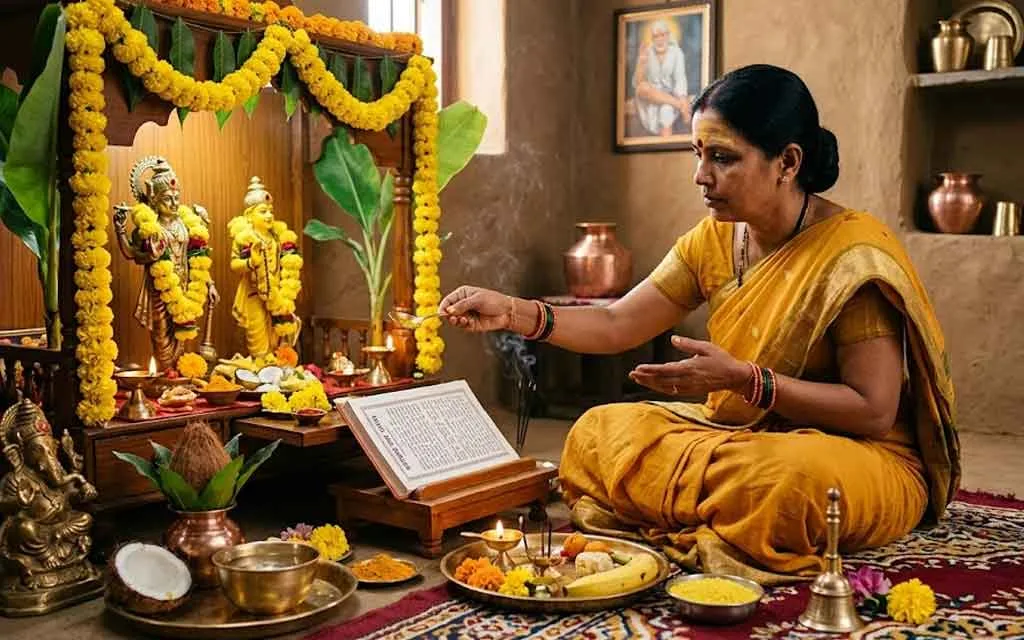
Quick answer: Thursday is Guruvara or Brihaspativara, the day of Brihaspati (Jupiter), teacher of the devas, and in most Hindu homes it is Lord Vishnu's day. Devotees wear or offer yellow, worship Vishnu with tulsi, turmeric, chana dal, bananas and yellow sweets, chant Om Namo Bhagavate Vasudevaya, and many keep the Guruvar vrat with one yellow, salt-light meal. Some families also worship the banana plant on Thursdays.
Last updated: 10 October 2026. Thursday is one of seven days in our Hindu days of the week guide, which sets out each day's graha, deity, colour and offering in a single table.
Below you will find why Thursday belongs to Vishnu and Brihaspati, a full home puja, verified mantras with meaning, the vrat and its story, food customs, temples, children's activities and regional customs from Bengal to Tamil Nadu.
Why Thursday belongs to Vishnu and Brihaspati
Brihaspati, the teacher of the gods
Thursday takes its name from Brihaspati, also called Guru. In the Rigveda Brihaspati is a deity of sacred speech and prayer; in later Puranic tradition he is the preceptor of the devas, their counsellor in every crisis, and one of the nine grahas. In Jyotisha he is associated with wisdom, teaching, dharma, children, wealth and good judgement, and he is considered the most benevolent of the grahas. Whether or not you follow astrology, the idea of a weekly day set aside to honour wisdom and teachers is a meaningful one.
Vyasa's Navagraha Stotram describes him in this verse:
देवानां च ऋषीणां च गुरुं काञ्चनसंनिभम् ।
बुद्धिभूतं त्रिलोकेशं तं नमामि बृहस्पतिम् ॥ ५॥
devānāṃ ca ṛṣīṇāṃ ca guruṃ kāñcanasaṃnibham |
buddhibhūtaṃ trilokeśaṃ taṃ namāmi bṛhaspatim || 5||
Meaning: I bow to Brihaspati, teacher of the gods and of the sages, shining like gold, the very embodiment of intelligence, lord of the three worlds.
Our Brihaspati mantra guide explains other Brihaspati mantras and how they are chanted, and our article on Jupiter and Thursday covers the astrological view.
Vishnu, the preserver
Most families worship Vishnu on Thursday. The usual explanation is that Brihaspati represents the guru principle and Vishnu is the supreme teacher and sustainer, and that both share the colour yellow: Vishnu is Pitambara, the one dressed in yellow silk. In practice, Thursday worship is addressed to whichever form of Vishnu the family loves: Narayana, Venkateswara (Balaji), Krishna, Rama, Satyanarayana, Ranganatha or Jagannath. Lakshmi is often worshipped alongside him as Lakshmi-Narayana.
For Vishnu's avatars and iconography, visit the Lord Vishnu deity page. Krishna and Rama devotees will find more on the Krishna and Rama pages.
Thursday home puja, step by step
Allow about 20 minutes for the full sequence. On a busy weekday, steps 2, 4, 6 and 8 make a meaningful five-minute version.
- Bath and yellow. Bathe early, and if you like, wear something yellow. Add a pinch of turmeric to your bath water if that is your family custom.
- Lamp first. Light a ghee lamp before the Vishnu image or a Lakshmi-Narayana picture. Ghee is preferred on Thursday, but oil is fine.
- Sankalpa. With a little water and rice in your palm, state your intention: the day, your name and family, and that you are offering this worship to Lord Vishnu and Brihaspati.
- Tilak. Apply turmeric or sandalwood paste to the image and a small tilak to your own forehead.
- Tulsi and flowers. Offer tulsi leaves to Vishnu (never to Ganesha) and yellow flowers such as marigold or chrysanthemum.
- Yellow naivedya. Offer soaked chana dal with jaggery, bananas, besan laddu, kesari or sweet pongal, or any yellow sweet. Add a tulsi leaf to the plate before offering.
- Chant. Recite Om Namo Bhagavate Vasudevaya 108 times, or the verses below, or the Vishnu Sahasranama if your family reads it.
- Katha and aarti. If you keep the vrat, read the katha (see below). Then wave the lamp while singing Om Jai Jagdish Hare or your family's Vishnu aarti.
- Prasad and giving. Share the prasad. Many families also give something yellow, such as chana dal, turmeric or bananas, to a temple, a teacher or someone in need.
Banana plant puja, where it is followed
In many North Indian homes, especially in Uttar Pradesh, Bihar and Madhya Pradesh, Thursday includes worship of a banana plant (kele ka ped). Devotees pour water mixed with turmeric at its roots, apply turmeric and kumkum to the trunk, offer chana dal and jaggery, light a lamp beside it and walk around it. The plant is regarded as sacred to Vishnu and Brihaspati. Families who do this usually avoid eating bananas that day. If you have no banana plant, many people use a potted plant, or simply offer bananas at the altar. This is a regional custom; it is not part of every Thursday puja.
Thursday offerings at a glance
| Offering | Traditional link | If you cannot get it |
|---|---|---|
| Tulsi leaves | Dearest to Vishnu | A single fresh flower |
| Turmeric and yellow flowers | Brihaspati's colour; Vishnu's yellow garment | Any yellow or orange flower |
| Chana dal with jaggery | Brihaspati's grain in Navagraha offerings | Any cooked dal or roasted chana |
| Bananas | Linked with Vishnu and Thursday puja | Any seasonal fruit |
| Ghee lamp | Traditional Vishnu offering | Oil lamp or a safe tea light |
Verified Thursday mantras with meaning
The Sanskrit below is reproduced from our checked source files (sanskritdocuments.org editions). Pick one and chant it slowly; the meaning matters as much as the sound.
1. Dvadashakshara mantra (twelve syllables)
ॐ नमो भगवते वासुदेवाय॥
oṃ namo bhagavate vāsudevāya||
Meaning: Om, salutations to the Lord Vasudeva. This twelve-syllable mantra is central to Bhagavata worship and is the most common Thursday japa.
2. Ashtakshara mantra (eight syllables)
ॐ नमो नारायणाय॥
oṃ namo nārāyaṇāya||
Meaning: Om, salutations to Narayana. Especially loved in South Indian Vaishnava traditions.
3. Brihaspati verse from the Navagraha Stotram
Quoted above in the section on Brihaspati. Recite it once or three times after your Vishnu mantra if you also wish to honour the graha. All nine verses are on our Navagraha Stotram page.
4. Achyutashtakam, first verse (Adi Shankaracharya)
अच्युतं केशवं रामनारायणं कृष्णदामोदरं वासुदेवं हरिम् ।
श्रीधरं माधवं गोपिकावल्लभं जानकीनायकं रामचन्द्रं भजे ॥ १॥
acyutaṃ keśavaṃ rāmanārāyaṇaṃ kṛṣṇadāmodaraṃ vāsudevaṃ harim |
śrīdharaṃ mādhavaṃ gopikāvallabhaṃ jānakīnāyakaṃ rāmacandraṃ bhaje || 1||
Meaning: I worship Achyuta, Keshava, Rama, Narayana, Krishna, Damodara, Vasudeva and Hari; Shridhara, Madhava, beloved of the gopis, lord of Janaki, Ramachandra. The verse is a garland of Vishnu's names and is easy to sing to a simple tune.
5. Govindashtakam, first verse (Adi Shankaracharya)
सत्यं ज्ञानमनन्तं नित्यमनाकाशं परमाकाशं
गोष्ठप्राङ्गणरिङ्खणलोलमनायासं परमायासम् ।
मायाकल्पितनानाकारमनाकारं भुवनाकारं
क्ष्मामानाथमनाथं प्रणमत गोविन्दं परमानन्दम् ॥ १॥
satyaṃ jñānamanantaṃ nityamanākāśaṃ paramākāśaṃ
goṣṭhaprāṅgaṇariṅkhaṇalolamanāyāsaṃ paramāyāsam |
māyākalpitanānākāramanākāraṃ bhuvanākāraṃ
kṣmāmānāthamanāthaṃ praṇamata govindaṃ paramānandam || 1||
Meaning (summary): Bow to Govinda, the supreme bliss: he is truth, knowledge and the infinite, eternal, beyond space yet the highest space; the child who crawled playfully in the cowherds' courtyard; formless, yet appearing in many forms through his power and taking the form of the universe; lord of the Earth and of Lakshmi, who himself has no master.
The Vishnu Sahasranama
The Vishnu Sahasranama, the thousand names of Vishnu, comes from the Anushasana Parva of the Mahabharata, where Bhishma teaches it to Yudhishthira. Many families recite it every Thursday; a full recitation takes about 25 to 40 minutes at a steady pace. We have not yet verified a full text for this page, so we do not reproduce it here. Use our Vishnu Sahasranama complete guide and our Vishnu Sahasranamam article, or learn it from a printed edition or your family's teacher.
The Guruvar vrat and its katha
The Guruvar or Brihaspativar vrat is a weekly vow kept for wisdom, family harmony and prosperity. Many families keep it for 16 Thursdays, then close with an udyapan in which they feed others and give yellow items in charity. It is common to begin on a Thursday in the shukla paksha (waxing moon), and families often ask their priest or an elder for a suitable starting week, since customs vary.
The katha, as commonly told
HinduTone does not have a standalone published Guruvar vrat katha, so here is a summary of the version found in many North Indian vrat booklets. Details change from booklet to booklet, and some families read a different story altogether.
A prosperous king had a queen who disliked giving alms. One Thursday Brihaspati came to the palace disguised as a holy man. When the queen told him she was tired of wealth and of the duty of charity that came with it, he told her how wealth is lost: by washing hair, cutting hair and doing heavy washing on Thursdays, and by ignoring the day. She followed his words, and within a few weeks the family's fortune was gone. The king left to find work, while the queen and her maid went hungry. When the holy man returned, the queen begged forgiveness. He taught them to keep the Thursday vrat: worship Vishnu, offer yellow food, read the story and give to others. As they did so, the household's prosperity returned and the king came home.
Families take different lessons from the story. The one most often drawn is that wealth carries a duty of generosity and that the guru's advice deserves respect. The katha is also the origin of the household customs of not washing hair or cutting nails on Thursday. Treat these as a mark of respect if your family keeps them, not as rules that cause misfortune if broken.
Maharashtra has a different Thursday story: the Mahalakshmi vrat katha read on the Thursdays of Margashirsha. Our Margashirsha Guruvar vrat 2026 guide covers its dates, ghata sthapana and katha.
What to eat on a Guruvar vrat
| Common practice | Lighter or more flexible option |
|---|---|
| One meal of yellow food after the puja: chana dal, besan, kesari, khichdi with turmeric | Two simple satvik meals with some yellow food included |
| Food without salt, or with rock salt only | Normal salt, less of it |
| No bananas, if the family worships the banana plant | Bananas eaten freely where there is no banana puja |
| Milk, curd, fruit through the day | The same, plus water as needed |
| No non-vegetarian food, onion or garlic | Only non-vegetarian food avoided |
Before you fast: salt-free and one-meal fasts can be hard on people with low blood pressure, diabetes, kidney problems or those on regular medication. Pregnant or breastfeeding women, the elderly and anyone recovering from illness should speak to a doctor first and may prefer to keep the vrat through prayer and charity alone. Never give children a strict fast. Keep drinking water.
Thursday do's and don'ts
Customs below are widely followed, but they are expressions of respect, not conditions for divine favour.
Good practices
- Thank a teacher, mentor or elder on Thursday; it honours the guru principle at the heart of the day.
- Begin something educational: a course, a music lesson, reading a scripture.
- Give food, books or yellow items to students, teachers or a temple.
- Keep the home calm in the evening; read a chapter of the Bhagavad Gita or the Bhagavata as a family.
- If you visit a temple, take a tulsi garland or yellow flowers for Vishnu.
Things many families avoid
- Washing hair, cutting hair or nails, and heavy laundry, in homes that follow the katha customs.
- Non-vegetarian food and alcohol.
- Harsh words toward teachers, elders or anyone who has guided you.
- Lending or borrowing money, in some households; others see no problem with it.
Common mistakes
- Offering tulsi to the wrong deity. Tulsi is for Vishnu and his avatars; it is traditionally not offered to Ganesha or Shiva.
- Treating customs as threats. If you wash your hair on a Thursday, nothing bad follows. Customs are a way to stay mindful.
- Rushing the Sahasranama. A slow recitation of a few names is better than racing through all thousand.
- Paying for guaranteed Jupiter remedies. No yellow sapphire or paid ritual can guarantee results; sincere worship and good conduct are what tradition actually stresses.
Vishnu temples for a Thursday darshan
Each temple below has a HinduTone page whose facts have been checked against official or published sources. Timings change, so check the official website before visiting.
In India
- Tirumala Venkateswara Temple: on the Seven Hills above Tirupati, where Venkateswara (Srinivasa, Balaji) is worshipped as a form of Vishnu.
- Sri Ranganathaswamy Temple, Srirangam: on an island between the Cauvery and Kollidam, ranked first among the 108 Divya Desams.
- Sree Padmanabhaswamy Temple, Thiruvananthapuram: Vishnu reclining as Padmanabha, closely linked with the former Travancore royal family.
- Jagannath Temple, Puri: Jagannath worshipped with Balabhadra, Subhadra and the Sudarshana chakra as carved wooden images.
- Badrinath Temple: Badrinarayan on the Alaknanda in Chamoli district, one of the 108 Divya Desams.
- Guruvayur Sree Krishna Temple: Guruvayurappan, worshipped as Krishna, in Thrissur district, Kerala.
- Chilkur Balaji Temple: Venkateswara with Sridevi and Bhudevi beside Osman Sagar on Hyderabad's western edge.
Outside India
- Sri Venkateswara Temple, Pittsburgh: in Penn Hills, Pennsylvania, built in the 1970s with support from Tirumala Tirupati Devasthanams.
- Malibu Hindu Temple: a South Indian-style Venkateswara temple in Calabasas, California.
- Sri Venkateswara Temple, Helensburgh: on a hilltop on Sydney's southern fringe.
Finding a Vishnu temple near you
Outside India, most large community temples have a Vishnu, Venkateswara or Krishna shrine, and many hold extra worship on Thursday evenings. Search your city's Hindu temple society website, check the temple's own calendar for Thursday programmes, and ask local families. If there is no temple nearby, a Thursday puja at home is entirely complete. Our Thursday NRI guide has tips for doing it around office hours, and our Thursday temple guide lists temples by city.
Thursday for children and families
Because Thursday is the guru's day, it is a natural time to talk to children about teachers and learning.
- Teacher thank-you. Help your child make a small card or drawing for a teacher on a Thursday.
- Avatar of the week. Tell one of Vishnu's ten avatar stories each Thursday: the fish, the tortoise, the boar, Narasimha, Vamana and so on.
- Yellow cooking. Let children help make a simple yellow dish such as kesari or turmeric rice for the naivedya.
- One name a week. Teach one name from the Achyutashtakam verse and its meaning; within two months they will know the whole line.
- Gita minute. Older children can read one verse of the Bhagavad Gita and talk about it at dinner.
Keep it joyful. A child who enjoys the Thursday story will remember it longer than one made to sit through a long recitation.
Regional Thursday traditions
- Uttar Pradesh, Bihar, Madhya Pradesh, Rajasthan: Brihaspativar vrat with yellow food, banana plant worship and the katha; many women keep it for the family's prosperity.
- Maharashtra and Karnataka: Thursday is also Dattatreya's day in many homes, with readings from the Guru Charitra. In Margashirsha, Marathi women keep the Mahalakshmi Guruvar vrat.
- Bengal and Odisha: weekly Lakshmi puja is traditionally done on Thursday (Lakshmibar), with the Lakshmir Panchali read aloud; see our Kojagari Lakshmi Puja guide for the Bengali tradition.
- Andhra Pradesh and Telangana: Venkateswara and Lakshmi worship; in Margasira month, the Lakshmivara vratam is kept on Thursdays.
- Tamil Nadu: Thursday is the day for Guru, often worshipped as Dakshinamurthy in Shiva temples with yellow cloth and chana garlands, as well as for Perumal (Vishnu).
- Karnataka and Andhra: devotees of Sri Raghavendra Swamy treat Thursday as his special day.
- Across India and abroad: Thursday is the main day of worship for devotees of Sai Baba of Shirdi, and many Sai temples hold Thursday evening aarti.
Thursday in the festival year
Several festivals deepen the meaning of Thursday. Guru Purnima honours teachers on the full moon of Ashadha. Ekadashi, the eleventh lunar day, is Vishnu's monthly fast and is explained in our Ekadashi vrat guide. The Thursdays of Margashirsha are especially sacred in Maharashtra and the Telugu states.
Also read: famous Krishna temples in India and Venkateswara (Balaji) temples in India and abroad.
Also read: Madhurashtakam (Adharam Madhuram) with meaning.
Also read: Lakshmi Narasimha Karavalamba Stotram with meaning and Dattatreya Stotram with meaning.
Also read: Narayana Kavacham (Bhagavatam 6.8) with meaning and Gajendra Moksha Stotram with meaning.
Related reading on HinduTone
- Thursday rituals: Guruvar pooja guide
- Thursday rituals: Guruvara Vishnu puja NRI guide
- Vishnu Sahasranama complete guide
- Which god to pray to for a job, marriage, health or money
- Hindu days of the week and their deities
Frequently asked questions
Why is yellow worn and offered on Thursday?
Yellow is the colour traditionally given to Brihaspati, the graha of Thursday, and it is also linked with Vishnu, who is pictured in yellow silk (pitambara). Turmeric, chana dal, bananas, yellow flowers and yellow sweets therefore became the standard Thursday offerings.
Is Thursday for Vishnu or for Brihaspati?
Both, and the two are usually honoured together. Brihaspati gives the day its name, as the guru of the devas, while Vishnu is the deity most families actually worship. Some homes also honour Dattatreya, Dakshinamurthy, Sri Raghavendra or Sai Baba on Thursday, depending on their tradition.
Can I eat bananas on Thursday?
Most people can. The custom of not eating bananas belongs to families who worship the banana plant on Thursday; they avoid eating the fruit that day out of respect for the plant they have just honoured. If your family does not do banana puja, there is no general rule against it.
Why do some families avoid washing hair or cutting nails on Thursday?
These customs are linked to the popular Brihaspativar vrat katha, in which a queen who disregards the day loses her wealth. Many North Indian families keep them as a mark of respect. They are household customs, not scriptural commands, and many devout families do not follow them.
What is the best mantra for Thursday?
Om Namo Bhagavate Vasudevaya and Om Namo Narayanaya are the simplest and most widely used. Those who want to honour the graha add the Brihaspati verse of the Navagraha Stotram. Families who know it recite the Vishnu Sahasranama.
How long should the Guruvar vrat be kept?
Many families keep it for 16 consecutive Thursdays and then perform an udyapan; others keep 5, 7 or 11, or simply worship every Thursday. Begin on a Thursday in the bright half of the month if you can, and decide the count before you start.
Is Thursday a good day to start studies or meet a teacher?
Many families think so, because Brihaspati is the teacher of the gods. Thursday is a popular day to begin a course, start learning music or scripture, or visit a guru. It is a matter of tradition and symbolism, not a requirement.
Editor's note (10 October 2026)
This guide was rewritten on 10 October 2026 for our days of the week series. The earlier version told a Thursday vrat story we could not trace to a published source; it has been replaced by a clearly labelled summary of the widely printed Brihaspativar katha. Mantras now come only from checked texts, temples only from our verified list, and promised outcomes have been removed. Customs differ from family to family; your own tradition takes precedence.
Continue through the week
Previous day: Wednesday: Ganesha, Budha and Budhvar vrat | Next day: Friday: Lakshmi, Devi and Shukravar vrat
Share this with family and friends
Send it on WhatsApp, post it, or copy the link.
More from Pooja, Slokas and Mantras
- Sri Venkatesa Vijayarya Saptavibhakti Stotram: Full Text in Telugu, Sanskrit and IAST with Meaning
- Deeparadhana: Significance of Lighting the Lamp, Deepam Jyoti Parabrahma Meaning, Oil and Wicks
- Narmadashtakam (Sabindu Sindhu) by Adi Shankaracharya: Full Text in Sanskrit with Meaning
- Hari Stotram (Jagajjalapalam) by Swami Brahmananda: Full Text in Sanskrit with Meaning
- Ganeshashtakam (Yato Anantashakteh) from the Ganesha Purana: Full Text with Meaning
You might also like
Thursday Rituals in Hinduism: Complete Guide to Guruvar Pooja, Temples & Sacred Foods
Friday Lakshmi Puja: Shukravar Vrat, Lakshmi Mantra and Rituals
Wednesday Hindu Puja: Budhvar Vrat, Ganesh Mantras and Rituals