Planet Jupiter (Brihaspati) and Its Influence on Thursday
Astrological Significance, Remedies, and the Auspicious Power of Yellow In Hindu astrology, each day of the week is ruled by a specific planet.
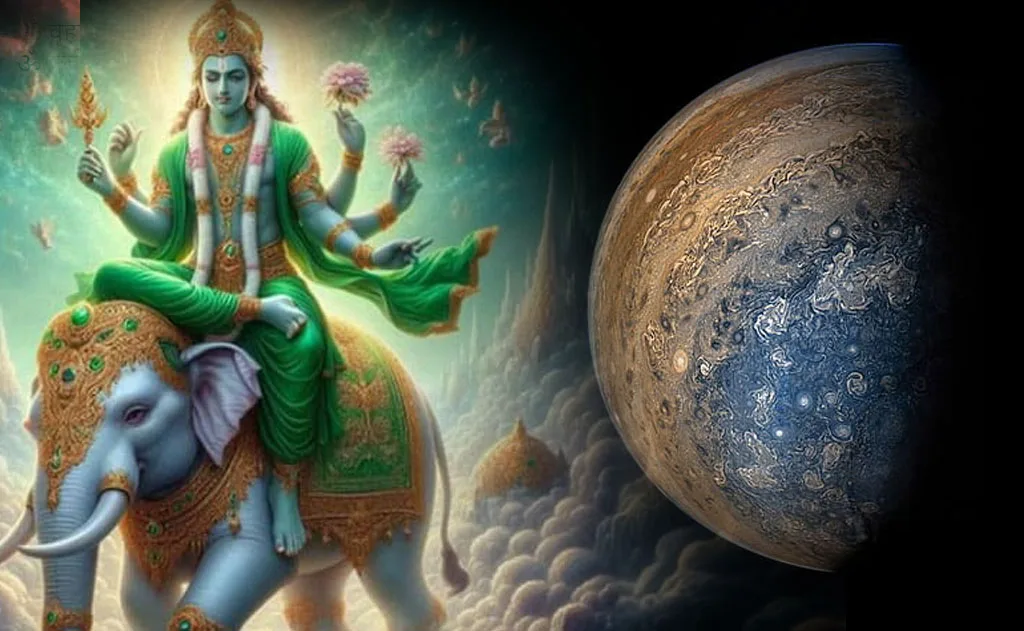
Astrological Significance, Remedies, and the Auspicious Power of Yellow
In Hindu astrology, each day of the week is ruled by a specific planet. Thursday (Guruwar) is governed by Planet Jupiter (Brihaspati) — revered as the Guru of the Devas (celestial beings). Jupiter symbolizes wisdom, knowledge, prosperity, and spirituality.
Let us explore the astrological significance of Thursday, Jupiter’s influence on life, remedies for a weak Jupiter in the Kundli (birth chart), and why wearing yellow on this day is considered auspicious.
The Influence of Planet Jupiter (Brihaspati)
Jupiter, the largest planet in the solar system, holds an equally significant position in astrology. It is known as the most benevolent and generous among all planets.
Key traits governed by Jupiter:
- Wisdom and higher learning
- Spiritual growth
- Morality and ethics
- Wealth and fortune
- Guru-disciple relationship
- Marriage and progeny (especially for women)
A strong Jupiter in one’s horoscope bestows intelligence, faith, optimism, societal respect, and a natural inclination toward spirituality and righteousness.
Astrological Significance of Thursday
Thursday is ruled by Jupiter, representing Dharma (righteousness) and Guru Tattva (spiritual wisdom). It is an ideal day for beginning spiritual practices, learning, or engaging in charitable activities.
Recommended Activities on Thursday:
- Performing puja and observing fasts
- Donating yellow food items like bananas, chana dal, or turmeric
- Offering prayers to Gurus and teachers
- Wearing yellow or golden-colored clothing
Worship of Lord Vishnu, Sai Baba, or Brihaspati Dev on Thursdays is believed to bring blessings of wisdom and prosperity.
Remedies for a Weak Jupiter in the Kundli
A weak or malefic Jupiter may cause lack of guidance, financial challenges, delayed marriage, educational setbacks, or spiritual confusion.
Effective Remedies:
- Chant the Guru Beej Mantra:
“Om Graam Greem Graum Sah Gurave Namah”
Recite this mantra 108 times every Thursday. - Observe a Thursday Fast:
Consume yellow food and avoid salt throughout the day. - Donate Yellow Items:
Give turmeric, yellow cloth, sweets, or chana dal to Brahmins or the underprivileged. - Respect and Serve Teachers and Elders:
Honoring mentors in life appeases Jupiter’s energy. - Wear a Yellow Sapphire (Pukhraj):
Only after seeking guidance from a qualified astrologer.
Why Wearing Yellow on Thursday Is Considered Auspicious
Yellow, the color of Jupiter, represents clarity, wisdom, and abundance. Wearing yellow enhances positive vibrations and aligns the body and mind with Jupiter’s beneficent influence.
Spiritual and Psychological Benefits of Yellow:
- Enhances mental clarity and learning abilities
- Attracts prosperity and good fortune
- Uplifts mood and strengthens the solar plexus chakra
- Promotes calmness and emotional balance
In many Hindu households, it is customary to wear yellow clothes, prepare yellow-colored food, and use yellow flowers for worship on Thursdays.
Final Thoughts
Jupiter (Brihaspati) is not just a planetary force — it embodies wisdom, expansion, and divine grace. Honoring Jupiter on Thursdays through fasting, chanting, charity, and wearing yellow can bring peace, growth, and spiritual balance into one’s life.
By aligning with Jupiter’s energy, we walk the path of truth, righteousness, and higher purpose — the very essence of Hindu spiritual philosophy.
Who Is Brihaspati? His Role in Vedic Scripture and Mythology
Brihaspati is celebrated throughout the Rigveda as Brahmanaspati — the Lord of Sacred Speech and the divine priest of the celestial realm. He is described in the Rigveda (Book II, Hymn 23) as the one who dispels darkness with the light of wisdom and who guards the cosmic order by guiding the Devas against adharma. His name literally means 'Lord of Vast Prayer or Expansion,' and his domain encompasses all Vedic knowledge, ritual, philosophy, and righteous governance.
In the Puranas, particularly the Vishnu Purana and the Devi Bhagavata Purana, Brihaspati is identified as the son of the great sage Angiras and the preceptor (Acharya) of Indra and all the thirty-three Devas. His role as Deva-Guru places him in direct narrative tension with Shukracharya (Venus), the guru of the Asuras — a cosmic duality that underscores the perpetual conflict between dharmic and adharmic forces. This rivalry shapes many foundational stories in the Mahabharata and the Srimad Bhagavatam.
Brihaspati is also associated with the Brihaspati Smriti, an ancient Dharmashastra text dealing with jurisprudence and civil law, reinforcing the idea that Jupiter's domain extends from personal wisdom to societal justice and ethical governance.
Brihaspati's Position in Jyotisha: Which Houses and Signs Does He Rule?
In classical Jyotisha (Vedic astrology), Brihaspati is the ruling graha of two zodiac signs: Dhanus (Sagittarius) and Meena (Pisces). Dhanus represents philosophical inquiry, higher learning, and long-distance travel of the mind and body, while Meena is associated with liberation (Moksha), compassion, and the dissolution of ego — both deeply Jupiterian themes. Jupiter reaches its highest dignity, called exaltation (Uccha), in Karka (Cancer) and is weakened in its debilitation sign, Makara (Capricorn).
Jupiter is considered the natural significator (Karaka) for several vital life areas: wisdom (Jnana), wealth (Dhana), children (Putra), husband in a woman's chart (Pati), and spiritual teacher (Guru). The fifth and ninth houses of the natal chart — both dharma-trikona houses — are especially associated with Brihaspati's blessings. A strong, well-placed Jupiter in these houses is among the most auspicious indicators a Jyotishi can observe in a Kundli.
Jupiter takes approximately twelve years to complete one orbit of the sun, spending roughly one year in each rashi. The transit of Jupiter (Guru Gochar) from one sign to the next is therefore considered a major astrological event, and its entry into a new sign is observed and celebrated in many Hindu households as it reshapes the fortune of different ascendants and moon signs.
Guru Mantra, Stotra, and the Sacred Number 108: Deeper Practices for Thursday
Beyond the Guru Beej Mantra, the tradition offers several layers of mantra sadhana for propitiating Brihaspati. The Brihaspati Ashtottara Shatanamavali — a garland of 108 names of Brihaspati — is widely recited on Thursdays to seek the graha's grace. Each name illuminates a specific quality: Suracharyaya (preceptor of the gods), Jnanadhikaya (lord of supreme knowledge), Dharmatattvajnaya (knower of the truth of dharma), and others drawn from Graha-related stotras compiled in the Skanda Purana.
The Guru Graha Stotra, found in several Navagraha hymn collections, praises Brihaspati as golden-complexioned (Peetavarna), wearing yellow garments, mounted on a golden chariot, and holding a staff and prayer beads (aksha-mala). Devotees are advised to light a ghee lamp with a yellow wick, offer yellow flowers such as marigold or yellow chrysanthemum, and place a banana or yellow-colored fruit before the image or yantra of Brihaspati while reciting these stotras.
The number 108 holds special significance in this context. It is derived from the product of 12 rashis and 9 grahas (12 × 9 = 108), representing the complete cosmological framework of Jyotisha. Chanting the Beej Mantra 108 times with a tulsi or turmeric-dyed rosary (mala) on a Thursday morning, ideally in the Brahma Muhurta between 4–6 AM, is considered the most efficacious form of this sadhana.
Brihaspati Vrat Katha: The Story Behind Thursday Fasting
The observance of Guruvar Vrat (Thursday fast) is accompanied by the recitation of the Brihaspati Vrat Katha, a devotional narrative preserved in Vrat-Katha literature and popular puja manuals across North and Central India. The story most commonly told centres on a king who, due to pride and neglect of dharmic duties, loses his kingdom, wealth, and family. A wise Brahmana instructs him to observe the Thursday fast with sincerity, after which Brihaspati Dev restores his prosperity — underlining the twin themes of repentance and divine grace.
The fast itself typically involves consuming one meal of yellow food — commonly chana dal (split Bengal gram), rice cooked with turmeric, or banana — before sunset. Devotees avoid cutting hair and shaving on Thursdays, as these acts are believed to diminish Jupiterian energy. Married women undertaking the vrat for the welfare and long life of their husbands often tie a yellow thread around a banana tree, which is itself considered a living symbol of Brihaspati and Lord Vishnu.
The Katha concludes with a dakshina (offering) to a Brahmin or a guru, reinforcing the Guru-Shishya dimension of Brihaspati worship. This act of honoring one's teacher is considered a direct form of Guru-puja that pleases the graha.
Key Temples of Brihaspati and Navagraha Shrines Across India
Among the nine Navagraha shrines of Tamil Nadu, the temple dedicated to Brihaspati is the Alangudi Sri Apatsahayesvarar Temple, located in Alangudi near Kumbakonam in the Thanjavur district. Alangudi is known as the Guru Kshetra — the sacred seat of Jupiter — and devotees from across India visit on Thursdays and during Guru transits (Guru Gochar) to propitiate the graha and seek relief from the adverse effects of a weak Jupiter. The presiding deity is Lord Shiva as Apatsahayesvarar, with Dakshinamurthy — himself an embodiment of the supreme Guru — prominently worshipped here.
In North India, the Navagraha temples at Ujjain (Madhya Pradesh) — particularly within the ancient Mahakaleshwar complex and at the Triveni Sangam in Prayagraj — include shrines where Brihaspati is propitiated as part of full Navagraha puja. Varanasi's Kashi Vishwanath corridor also contains Navagraha installations where Brihaspati is offered yellow sandalwood paste and yellow flowers as part of daily archana.
Devotees who cannot visit these temples in person are advised in traditional texts to face the northeast direction (Ishanya kona) — associated with divine wisdom and the Guru principle — while performing home puja to Brihaspati, as this direction amplifies the positive vibration of Jupiterian energy according to Vastu Shastra principles.
Frequently Asked Questions
What is the Planet Jupiter (Brihaspati) and Its Influence?
Astrological Significance, Remedies, and the Auspicious Power of Yellow In Hindu astrology, each day of the week is ruled by a specific planet. Thursday (Guruwar) is governed by Planet Jupiter (Brihaspati) — revered as the Guru of the Devas (celestial beings).
How many times should the Planet Jupiter (Brihaspati) and Its Influence be chanted?
It is traditionally chanted 108 times using a rudraksha or tulsi mala. Even 11 or 21 sincere repetitions daily are considered beneficial — steady, focused practice matters more than the count.
What is the best time to chant the Planet Jupiter (Brihaspati) and Its Influence?
Dawn (Brahma Muhurta) after a bath is considered ideal, though it may be chanted any time with a calm, focused mind. Many devotees keep a fixed daily time to build consistency.
Who can chant the Planet Jupiter (Brihaspati) and Its Influence?
Anyone may chant it with faith and a pure mind, regardless of age, gender or background. Beginners benefit from first hearing the correct pronunciation and understanding its meaning.
What are the benefits of chanting the Planet Jupiter (Brihaspati) and Its Influence?
It is believed to calm the mind, dissolve negativity, and draw divine grace, protection and clarity to the devotee.
Share this with family and friends
Send it on WhatsApp, post it, or copy the link.
More from Pooja, Slokas and Mantras
- Hari Stotram (Jagajjalapalam) by Swami Brahmananda: Full Text in Sanskrit with Meaning
- Ganeshashtakam (Yato Anantashakteh) from the Ganesha Purana: Full Text with Meaning
- Kashi Vishwanath Ashtakam (Gangataranga Ramaniya Jatakalapam): Full Text with Meaning
- Shivashtakam (Prabhum Prananatham Vibhum Vishvanatham): Full Text with Meaning
- Vishnu Ashtottara Shatanamavali: 108 Names of Lord Vishnu with Meaning
You might also like

Pushya Masam: Hindu Astrology's Auspicious Month and Planetary Influences

Sri Venkatesa Vijayarya Saptavibhakti Stotram: Full Text in Telugu, Sanskrit and IAST with Meaning

Deeparadhana: Significance of Lighting the Lamp, Deepam Jyoti Parabrahma Meaning, Oil and Wicks