
Gayatrirahito Vipro Na Sprushet Tulasi Dalam – Meaning and Importance of Gayatri Mantra Japa
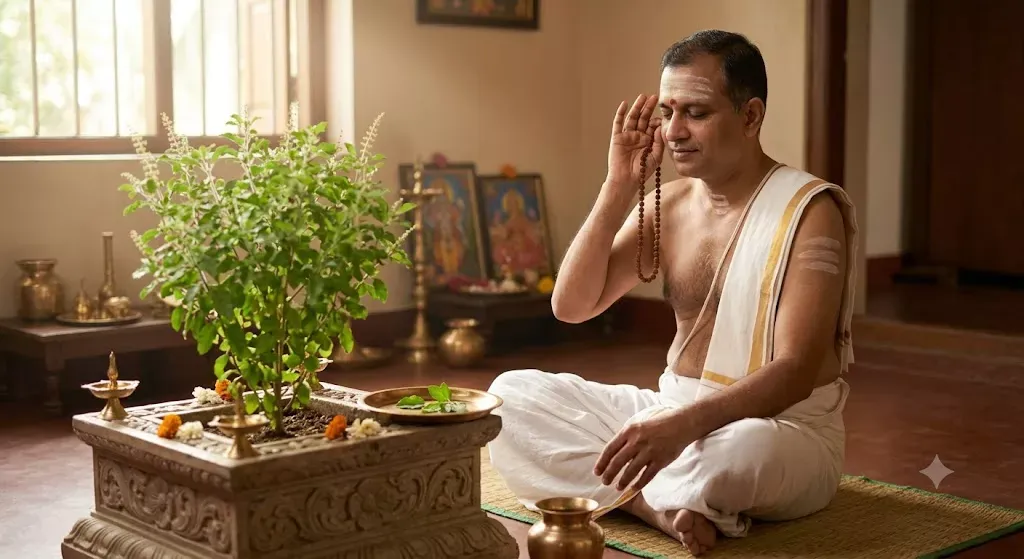
Importance of Gayatri Mantra Japa – Verse and Meaning Verse Gayatrirahito Vipro Na Sprushet Tulasi Dalam |Harernama Na Gruhniyat Gayatrirahito Dvijah ||Mahachandalasadrushastasya Vishnupoojane || Meaning Gayatrirahito Vipro Na Sprushet Tulasi Dalam: A Brahmin who does not practice or chant the Gayatri Mantra is not even worthy of touching the sacred Tulasi leaf (Holy Basil). Harernama Na Gruhniyat Gayatrirahito Dvijah: A Dvija (Brahmin) who does not regularly chant the Gayatri Mantra should not utter the name of Hari (Lord Vishnu).
Importance of Gayatri Mantra Japa – Verse and Meaning
Verse
Gayatrirahito Vipro Na Sprushet Tulasi Dalam |
Harernama Na Gruhniyat Gayatrirahito Dvijah ||
Mahachandalasadrushastasya Vishnupoojane ||
Meaning
Gayatrirahito Vipro Na Sprushet Tulasi Dalam:
A Brahmin who does not practice or chant the Gayatri Mantra is not even worthy of touching the sacred Tulasi leaf (Holy Basil).
Harernama Na Gruhniyat Gayatrirahito Dvijah:
A Dvija (Brahmin) who does not regularly chant the Gayatri Mantra should not utter the name of Hari (Lord Vishnu).
Mahachandalasadrushastasya Kim Vishnupoojane:
A person devoid of Gayatri Mantra practice is considered equal to a “Mahachandala” (an extremely fallen person). Therefore, what benefit can be obtained from the Vishnu worship performed by such a person? (In other words, such worship becomes fruitless.)
Main Purpose:
According to this verse, Gayatri Mantra Japa is the most essential duty for every person born as a Brahmin. The verse clearly emphasizes that neglecting the daily obligation of Gayatri Sandhyavandanam and engaging in various other rituals or acts of worship will not yield any spiritual benefit.
Frequently asked questions
What does Gayatrirahito Vipro Na Sprushet Tulasi Dalam mean?
It says that a Brahmin who does not practice or chant the Gayatri Mantra is not worthy even of touching the sacred Tulasi leaf (Holy Basil).
What does the verse say about uttering the name of Hari?
Harernama Na Gruhniyat Gayatrirahito Dvijah means a Dvija who does not regularly chant the Gayatri Mantra should not utter the name of Hari (Lord Vishnu).
Why is a person without Gayatri Mantra practice called a Mahachandala?
The verse calls a person devoid of Gayatri Mantra practice equal to a Mahachandala, an extremely fallen person. It therefore asks what benefit such a person's Vishnu worship can bring, implying it becomes fruitless.
What is the main purpose of this verse?
It presents Gayatri Mantra Japa as the most essential duty of every person born as a Brahmin. Neglecting the daily Gayatri Sandhyavandanam while performing other rituals is said to yield no spiritual benefit.
How is Sandhyavandanam connected to Vishnu worship?
The verse links the two by saying Vishnu worship performed without Gayatri practice becomes fruitless. Daily Gayatri Sandhyavandanam is treated as the foundation for other rituals and acts of worship.
Share this with family and friends
Send it on WhatsApp, post it, or copy the link.
More from Pooja, Slokas and Mantras
- Sri Durga Parameshwari Stotram: Sanskrit Verses, Meaning and Devotional Significance
- Sri Venkatesa Vijayarya Saptavibhakti Stotram: Full Text in Telugu, Sanskrit and IAST with Meaning
- Deeparadhana: Significance of Lighting the Lamp, Deepam Jyoti Parabrahma Meaning, Oil and Wicks
- Narmadashtakam (Sabindu Sindhu) by Adi Shankaracharya: Full Text in Sanskrit with Meaning
- Hari Stotram (Jagajjalapalam) by Swami Brahmananda: Full Text in Sanskrit with Meaning
You might also like

Gayatri Mantra — Complete Meaning, 24-Syllable Vedic Breakdown, Sandhya Vandanam & 30-Day NRI Practice Guide for 2026

Gayatri Mantra: The Divine Light That Transformed My Darkness
Vishwamitra and the Birth of the Gayatri Mantra: A Divine Revelation
