The Dasa Mahavidyas
A Devotional Journey into the Ten Divine Wisdom Goddesses In the heart of Hindu spirituality, the Dasa Mahavidyas, or the Ten Divine Wisdom Goddesses, stand as…
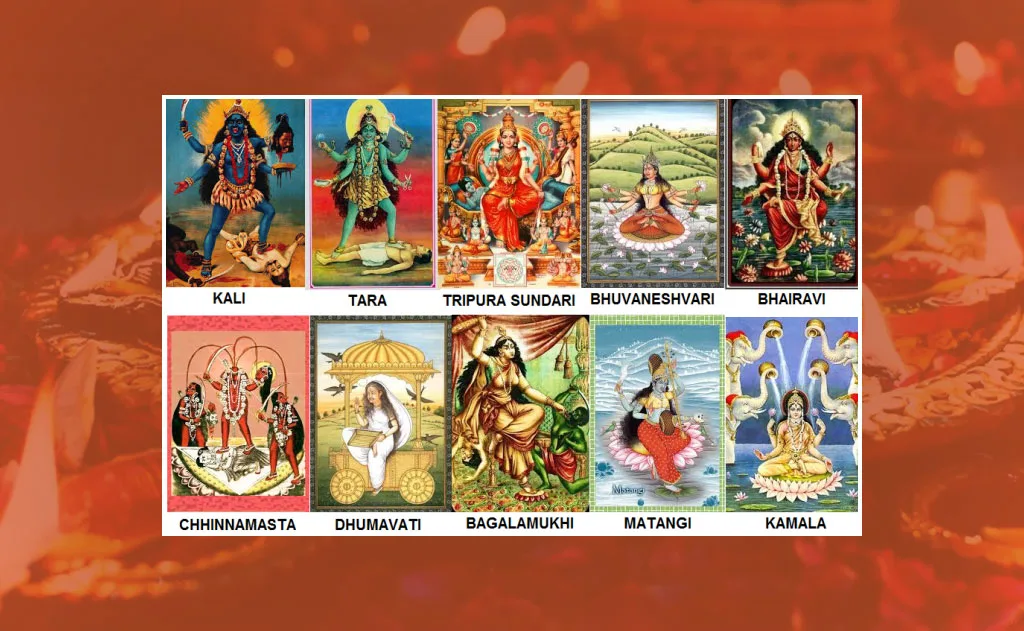
A Devotional Journey into the Ten Divine Wisdom Goddesses
In the heart of Hindu spirituality, the Dasa Mahavidyas, or the Ten Divine Wisdom Goddesses, stand as radiant embodiments of Adi Shakti, the primal cosmic energy. These fierce yet benevolent forms of the Divine Mother weave a tapestry of creation, preservation, and destruction, guiding devotees toward liberation (moksha) through devotion (bhakti) and knowledge (jnana). Rooted in ancient texts like the Devi Bhagavatam and Puranas, their origin story is a profound narrative of divine power, love, and cosmic balance. This devotional story, crafted for www.hindutone.com, invites you to immerse yourself in the sacred saga of the Dasa Mahavidyas, their divine manifestations, and their eternal significance.
The Divine Conflict: The Birth of the Dasa Mahavidyas
Long ago, in the celestial realms, a cosmic drama unfolded that gave rise to the ten awe-inspiring forms of the Divine Mother. Goddess Sati, the beloved consort of Bhagwan Shiva, was the daughter of Daksha Prajapati, a descendant of Brahma. Though Sati’s heart was bound to Shiva in divine love, her father harbored disdain for the ascetic Lord, whose unconventional ways clashed with Daksha’s prideful worldview.
Daksha, in his arrogance, organized a grand Yajna, inviting all the gods and goddesses of the cosmos—except Shiva, whom he sought to insult. When Narad Muni brought news of this grand sacrifice to Kailasa, Sati’s heart stirred with a daughter’s longing to visit her father’s home. She approached Shiva, her eyes gleaming with hope, and said, “My father has arranged a great Yajna. As his daughter, I need no invitation to attend. Please, allow me to go.”
Shiva, the omniscient Mahadev, saw through Daksha’s intentions. With a calm yet firm voice, he cautioned Sati, “Your father seeks to humiliate me. If you go, no good will come of it. His heart is clouded by ego, and this Yajna is a stage for his pride.” But Sati, embodying the fierce independence of Shakti, felt a surge of divine resolve. She was not merely a daughter or a consort—she was Adi Shakti, the Mother of the Universe, the source of all creation.
Her eyes blazed with divine fire as she declared, “Do you doubt my power, Mahadev? Do you think I am merely a mortal bound by worldly ties? I am the eternal Shakti, and I shall show you my true form!” The heavens trembled, the oceans roared, and the mountains quaked as Sati’s divine energy surged forth. To assert her cosmic supremacy and prevent Shiva from dissuading her, she multiplied herself into ten formidable forms, each guarding one of the ten directions—north, south, east, west, northeast, northwest, southeast, southwest, upward, and downward.
Shiva, the eternal witness, stood in awe as these ten radiant and terrifying manifestations surrounded him. Each form was unique, embodying a facet of the Divine Mother’s infinite power. These were the Dasa Mahavidyas—the Ten Great Wisdoms—each a gateway to liberation, each a mirror of the universe’s complexity.
The Ten Mahavidyas: Forms and Divine Significance
The Dasa Mahavidyas are not merely deities but profound symbols of existence, bridging the material and spiritual realms. Their forms, attributes, and mantras guide devotees through the cycles of life, death, and transcendence. Below is a devotional exploration of each Mahavidya, their divine essence, and their significance for seekers.
1. Goddess Kali (काली): The Eternal Consciousness
Kali, the first to emerge, is the fierce embodiment of time (Kala) and transformation. Her dark form, adorned with a garland of skulls and wielding a blood-dripping sword, stands triumphantly upon Shiva’s chest, symbolizing the dance of consciousness over inertia. Her wild hair flows like the untamed cosmos, and her four hands offer fearlessness and blessings alongside destruction and liberation.
Kali is the destroyer of ignorance, the one who slays demons like Chanda, Munda, and Raktabija, as described in the Devi Mahatmya. By drinking Raktabija’s blood, she stills the restless mind, embodying Chitta Vritti Nirodha (cessation of mental fluctuations). Devotees revere her as Dakshinakali, the compassionate mother who unites light and dark, beauty and terror, guiding them toward non-duality (Brahman).
Devotional Chant:
Om Krim Kalikayai Namah
O Kali, grant me liberation from the bonds of time and ego.
2. Goddess Tara (तारा): The Savior Across the Ocean of Existence
Tara, the compassionate guide, emerged during the Samudra Manthan, when Shiva drank the poison Halahala to save the universe. Placing him on her lap, Tara nurtured him with divine nectar, neutralizing the poison. Known as Samsaratarini (She who ferries across the ocean of worldly existence), Tara is the star of wisdom, guiding seekers through life’s tempests.
Her serene yet fierce form, often depicted with a blue hue, resonates with Tibetan Buddhism, where she is revered as the ultimate protector. Tara’s grace protects travelers—both physical and spiritual—leading them to enlightenment.
Devotional Chant:
Om Tare Tuttare Ture Svaha
O Tara, guide me across the ocean of samsara to divine truth.
3. Goddess Tripura Sundari (त्रिपुरा सुंदरी): The Beauty of the Three Worlds
Radiant as the dawn, Tripura Sundari, also known as Shodashi, is the embodiment of cosmic beauty and joy. Her rosy complexion and four arms—holding flower arrows (senses), a noose (attachment), a goad (repulsion), and a sugarcane bow (mind)—symbolize the interplay of creation and consciousness. She is the realization of Aham Idam (I am this), the unity of the self with the universe.
Devotees worship her as the source of divine bliss, whose beauty transcends the three worlds—earth, atmosphere, and heavens. Her grace awakens the heart to love and the mind to higher realization.
Devotional Chant:
Om Aim Hreem Shreem Tripura Sundariyai Namah
O Tripura Sundari, fill my heart with divine beauty and wisdom.
4. Goddess Bhuvaneshvari (भुवनेश्वरी): The Mistress of the Universe
Bhuvaneshvari, the ruler of the cosmos, holds sway over the heavens, earth, and atmosphere. Seated on a lotus, adorned with radiant jewels, she wields a noose (control) and a goad (discipline), offering blessings to her devotees. Known as Mahamaya, she weaves the illusion of the universe, inviting seekers to recognize the divine consciousness beneath it.
Her red hue symbolizes vitality and creation, and her presence reminds us that the world is a manifestation of her divine play. Bhuvaneshvari teaches devotees to embrace the universe as a sacred expression of the Divine Mother.
Devotional Chant:
Om Hreem Bhuvaneshvaryai Namah
O Bhuvaneshvari, reveal the unity beneath the world’s illusion.
5. Goddess Chinnamasta (छिन्नमस्ता): The Liberator from Ego
Chinnamasta’s form is both awe-inspiring and profound. To satiate the hunger of her companions Dakini and Varnini, Parvati severed her own head, letting streams of blood nourish them. Her severed head symbolizes liberation from ego, while the blood represents the life force (prana) sustaining existence. Her nudity signifies absolute freedom from worldly bonds.
Chinnamasta is the goddess of radical transformation, teaching devotees to transcend the self and embrace the flow of divine energy. Her worship requires courage, for she demands surrender of the ego to attain true liberation.
Devotional Chant:
Om Shreem Hreem Kleem Chinnamastayai Namah
O Chinnamasta, free me from the shackles of ego and illusion.
6. Goddess Bhairavi (भैरवी): The Radiant Warrior
Bhairavi, the terrifying yet radiant goddess, shines like ten thousand suns. Known as Chandi in the Devi Mahatmya, she slays demons and grants siddhis (spiritual powers) to her devotees. Her sword cuts through ignorance, her mala signifies devotion, and her book represents wisdom.
Bhairavi is the fierce protector of her devotees, guiding them through challenges with courage and grace. Her worship kindles the inner fire of transformation, leading seekers to divine strength and realization.
Devotional Chant:
Om Hreem Bhairavyai Namah
O Bhairavi, ignite my inner fire and destroy my ignorance.
7. Goddess Dhumavati (धूमावती): The Wisdom of Detachment
Dhumavati, the goddess of smoke, embodies the stark realities of suffering, decay, and death. Depicted as an elderly widow in tattered rags, accompanied by crows, she represents the impermanence of worldly life. Her stark form teaches detachment, urging devotees to look beyond material illusions to the eternal truth.
Dhumavati’s grace lies in her ability to guide seekers through loss and despair, revealing the unchanging reality beneath life’s transience. She is the wisdom of surrender and acceptance.
Devotional Chant:
Om Dhum Dhum Dhumavatyai Namah
O Dhumavati, teach me the wisdom of detachment and truth.
8. Goddess Bagalamukhi (बगलामुखी): The Paralyzer of Negativity
Bagalamukhi, the goddess who paralyzes enemies, wields the power to control speech and mind. Her golden form, holding a bridle, symbolizes her ability to restrain negativity and harmful forces. Associated with pranayama (breath control), she grants mastery over the mind and senses.
Devotees invoke Bagalamukhi for protection and victory over adversaries, both external and internal. Her worship empowers seekers to silence the chaos of the mind and align with divine clarity.
Devotional Chant:
Om Hlreem Bagalamukhyai Namah
O Bagalamukhi, silence my enemies and grant me inner peace.
9. Goddess Matangi (मातंगी): The Goddess of Primal Wisdom
Born from the ucchishta (leftover food) of Vishnu, Lakshmi, Shiva, and Parvati, Matangi is the tantric Saraswati, embodying forbidden knowledge and primal energy. She is the goddess of outcasts, representing the raw, unrefined power of creation. Her green hue and association with speech make her the patron of wisdom and creativity.
Matangi’s worship empowers devotees to embrace their uniqueness and tap into the primal energy of the universe, finding divinity in the unconventional.
Devotional Chant:
Om Hreem Matangyai Namah
O Matangi, awaken my inner wisdom and creative power.
10. Goddess Kamala (कमला): The Lotus of Abundance
Kamala, the tantric form of Lakshmi, radiates prosperity and abundance. Seated on a lotus, flanked by elephants showering nectar, she grants both material wealth and spiritual fulfillment. Her golden form embodies the harmony of worldly and divine aspirations, guiding devotees to a life of balance and gratitude.
Kamala’s worship opens the heart to gratitude, teaching that true wealth lies in aligning with the divine flow of abundance.
Devotional Chant:
Om Shreem Mahalakshmyai Namah
O Kamala, shower me with the abundance of your divine grace.
The Eternal Path of the Dasa Mahavidyas
The Dasa Mahavidyas are not merely deities but cosmic principles, encompassing the full spectrum of existence—from creation to destruction, beauty to terror, wealth to detachment. They are the divine feminine in her myriad forms, guiding devotees through the cycles of life and beyond. For the bhakta, they are the loving Mother, nurturing and protecting with boundless compassion. For the jnani, they are the embodiment of wisdom, revealing the non-dual truth of Brahman.
Their origin in the divine interplay between Sati and Shiva reminds us that the universe is a dance of love, power, and transformation. Each Mahavidya guards a direction, a facet of life, and a path to liberation. Together, they form a mandala of divine wisdom, inviting devotees to embrace the totality of existence.
A Devotional Prayer to the Dasa Mahavidyas
O Divine Mothers, radiant forms of Adi Shakti,
Guardians of the ten directions, embodiments of infinite wisdom,
Kali, Tara, Tripura Sundari, Bhuvaneshvari, Chinnamasta,
Bhairavi, Dhumavati, Bagalamukhi, Matangi, Kamala—
Guide us through the cycles of life and death,
From ignorance to wisdom, from bondage to liberation.
With devotion in our hearts and knowledge in our minds,
We surrender to your divine grace.
Jai Maa! Jai Dasa Mahavidya!
This devotional story of the Dasa Mahavidyas, crafted for www.hindutone.com, invites devotees to explore the profound wisdom and transformative power of the Ten Divine Wisdom Goddesses. May their grace illuminate your path to moksha.
Frequently Asked Questions
What is the The Dasa Mahavidyas?
A Devotional Journey into the Ten Divine Wisdom Goddesses In the heart of Hindu spirituality, the Dasa Mahavidyas , or the Ten Divine Wisdom Goddesses, stand as radiant embodiments of Adi Shakti , the primal cosmic energy. These fierce yet benevolent forms of the Divine Mother weave a tapestry of creation, preservation, and destruction, guiding devotees towa
How many times should the The Dasa Mahavidyas be chanted?
It is traditionally chanted 108 times using a rudraksha or tulsi mala. Even 11 or 21 sincere repetitions daily are considered beneficial — steady, focused practice matters more than the count.
What is the best time to chant the The Dasa Mahavidyas?
Dawn (Brahma Muhurta) after a bath is considered ideal, though it may be chanted any time with a calm, focused mind. Many devotees keep a fixed daily time to build consistency.
Who can chant the The Dasa Mahavidyas?
Anyone may chant it with faith and a pure mind, regardless of age, gender or background. Beginners benefit from first hearing the correct pronunciation and understanding its meaning.
What are the benefits of chanting the The Dasa Mahavidyas?
It is believed to calm the mind, dissolve negativity, and draw divine grace, protection and clarity to the devotee.
Share this with family and friends
Send it on WhatsApp, post it, or copy the link.
More from Pooja, Slokas and Mantras
- Narmadashtakam (Sabindu Sindhu) by Adi Shankaracharya: Full Text in Sanskrit with Meaning
- Hari Stotram (Jagajjalapalam) by Swami Brahmananda: Full Text in Sanskrit with Meaning
- Ganeshashtakam (Yato Anantashakteh) from the Ganesha Purana: Full Text with Meaning
- Kashi Vishwanath Ashtakam (Gangataranga Ramaniya Jatakalapam): Full Text with Meaning
- Shivashtakam (Prabhum Prananatham Vibhum Vishvanatham): Full Text with Meaning
You might also like
Satyabhama and Narakasura Vadha: The Victory of Good Over Evil
Dwadasa Jyotirlinga Stotram (Adi Shankaracharya): Full Text with Meaning
Sri Venkatesa Vijayarya Saptavibhakti Stotram: Full Text in Telugu, Sanskrit and IAST with Meaning