Tirumala Venkateswara Temple
తిరుమల వేంకటేశ్వర ఆలయం
Vishnu temple · Tirumala (Tirupati), Tirupati, Andhra Pradesh, India
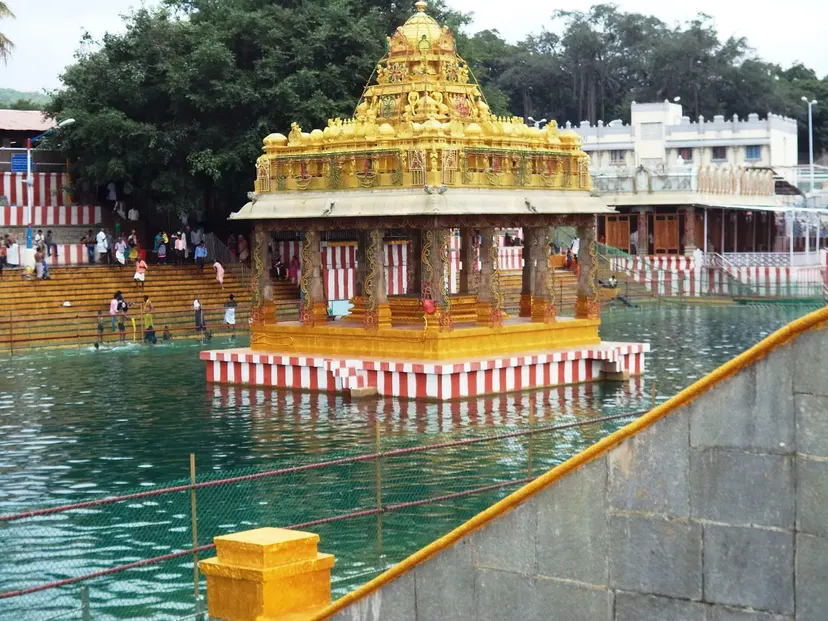
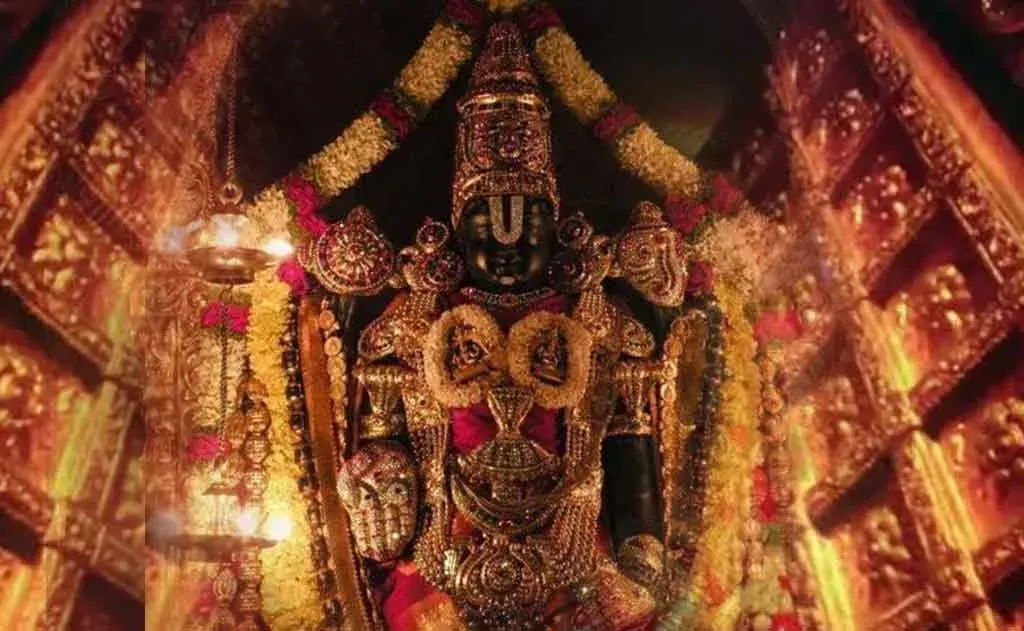
The Sri Venkateswara Swamy Temple stands on Venkatadri, one of the Seshachalam (Seven) Hills at Tirumala above the town of Tirupati in Andhra Pradesh. Its presiding deity is Venkateswara, also called Srinivasa or Balaji, worshipped as a form of Vishnu. Devotees believe he took up residence on these hills to guide and protect people through the Kali Yuga.
The temple is managed by Tirumala Tirupati Devasthanams (TTD) and is among the most visited Hindu pilgrimage centres anywhere. Pilgrims come by bus or car up the ghat road, or on foot along two traditional stepped paths from the plains.
Faith & Tradition
Religious Significance of Tirumala Venkateswara Temple
In Sri Vaishnava tradition Tirumala, called Tiruvenkatam in Tamil, is one of the 108 Divya Desams, the shrines of Vishnu praised by the Alvar poet-saints. The Tamil epic Cilappatikaram also describes Vishnu standing on the Venkatam hill, holding the discus and conch. Worship follows the Vaikhanasa Agama, and according to TTD, the reformer Ramanuja visited Tirumala three times and set the temple's rituals in order under that Agama.
TTD's account of the temple legend tells how Vishnu came to the hill as Srinivasa, married Padmavati, the daughter of King Akasa Raja, and took a large loan from Kubera to pay for the wedding. Many devotees say their offerings help repay that debt. In the same legend, Lakshmi rests on the left side of the Lord's chest and Padmavati on the right. The hill's devotional culture also owes much to the 15th-century poet Tallapaka Annamacharya, who according to TTD wrote more than 32,000 songs to Venkateswara.
Heritage
History of Tirumala Venkateswara Temple
Tradition credits the first temple to a ruler named Tondaiman. TTD and the Tirupati district administration both repeat this. Historical evidence becomes firm with the temple's inscriptions. More than a thousand are found across the hill temple and the TTD shrines in Tirupati and Tiruchanur. The best-known early record is a gift by the Pallava queen Samavai (also called Perundevi): a silver processional image of Bhoga Srinivasa, with land set aside to fund festivals. The date of this gift is disputed. TTD's history page gives 614 CE, while most epigraphic studies place it in 966 CE.
TTD's records show steady building over the next few centuries. A wall was raised around the Ananda Nilayam (the sanctum and its vimana) in 1244–1250, and the Yoga Narasimha shrine was added in the 14th century. Chola, Pandya and later rulers left further endowments.
The Vijayanagara period brought the largest gifts and many new structures. TTD records that Saluva Narasimha built mandapas in the later 15th century and that Krishnadevaraya made repeated pilgrimages. On 2 January 1517 Krishnadevaraya installed statues of himself and his queens in the temple, and his gold paid for gilding the vimana. Later patrons included the rulers of Chandragiri and, according to Wikipedia's sourced summary, the Maratha general Raghoji Bhonsle.
Under British rule the temple was run for a time by the mahants of the Hathiramji Math. In the early 1930s it passed to Tirumala Tirupati Devasthanams, set up by statute. TTD is now a trust board under the Andhra Pradesh government. Besides the hill temple, it runs the Padmavati temple at Tiruchanur, the Govindaraja temple in Tirupati and many other institutions.
Architecture and sacred features
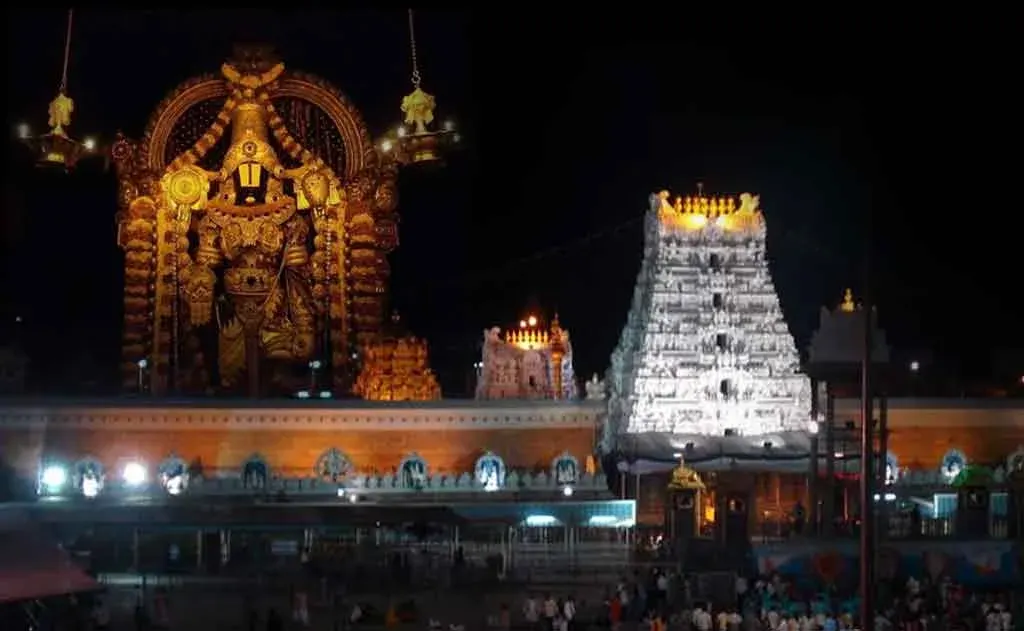
The temple is built in the South Indian (Dravidian) style. The sanctum has a gold-covered vimana known as the Ananda Nilaya Vimanam, which TTD says carries 64 images of deities. You enter through the Maha Dwaram, a gopuram that TTD gives as about fifty feet tall today, and then pass through the inner courtyards and mandapas built by Vijayanagara and later donors.
Plan Your Visit
Darshan and Visitor Information
TTD asks pilgrims to wear traditional dress for darshan. For men this means a dhoti, or pyjama with an upper cloth. For women it means a saree or half-saree with blouse, or a churidar with an upper cloth. Darshan comes in several forms, including free Sarva Darshan, time-slotted Sarva Darshan, paid Special Entry Darshan and Divya Darshan for pilgrims who walk up, and is booked through TTD's official channels.
Quotas, slot timings and fees change often, and on festival days such as Vaikuntha Ekadasi TTD may suspend privileged darshan categories. Confirm current arrangements with Tirumala Tirupati Devasthanams (tirumala.org / ttdevasthanams.ap.gov.in) before travelling (checked October 2026).
Timings and arrangements change with seasons and festivals. Confirm current details with Tirumala Tirupati Devasthanams (TTD) (official website) before travelling. Last reviewed 5 October 2026.
Sacred Calendar
Festivals at Tirumala Venkateswara Temple
Srivari Salakatla Brahmotsavam
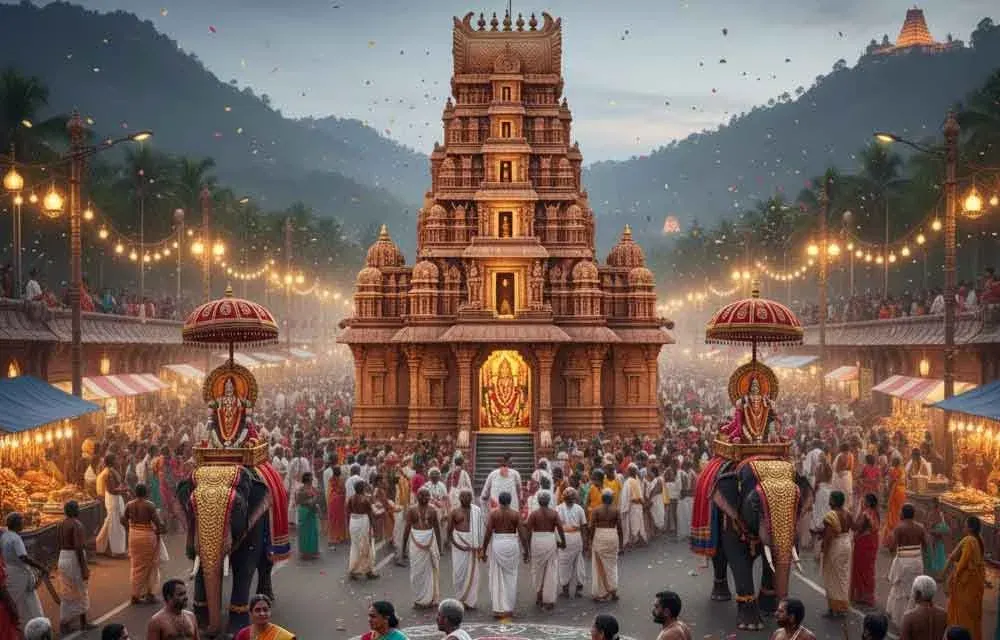
TTD calls it the temple's most important festival. It runs nine days of vahana processions, with the Garuda Vahana on day five and the chariot festival on day eight. In some years TTD also holds a separate Navaratri Brahmotsavam.
Vaikuntha Ekadasi (Vaikuntha Dwara Darshan)
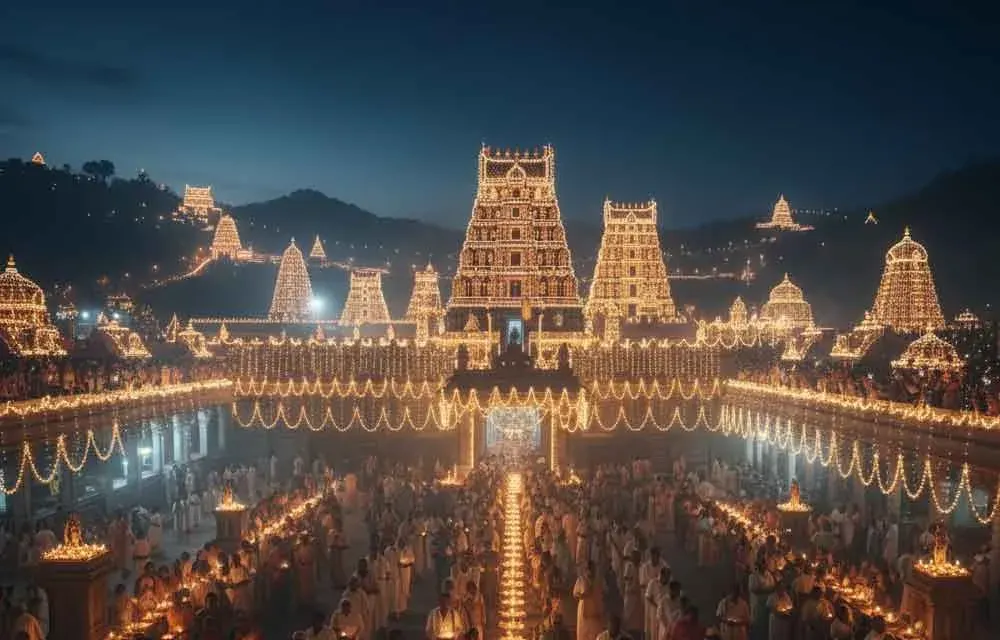
The Vaikuntha Dwaram, the passage around the sanctum that stays closed the rest of the year, is opened for darshan. In recent years TTD has kept it open for ten days.
Ratha Saptami
Known as the one-day Brahmotsavam. The processional deity Malayappa Swamy is taken out on seven vahanas in one day, starting at sunrise on the Surya Prabha Vahana.
Pavitrotsavam
A three-day atonement ritual with homams and tirumanjanam, held to make good any lapses in the year's worship.
Anivara Asthanam
The temple's ceremonial accounting day. The previous year's accounts are formally presented before the deity and new account books are begun.
Location
How to Reach Tirumala Venkateswara Temple
The nearest airport is Tirupati Airport at Renigunta, which TTD places about 15 km from Tirupati. Tirupati railway station is the main railhead, with trains from across India. Buses run frequently from Tirupati up the ghat road to Tirumala, about 21 km according to the Tirupati district administration. TTD notes that the ghat roads close to traffic for some hours around midnight.
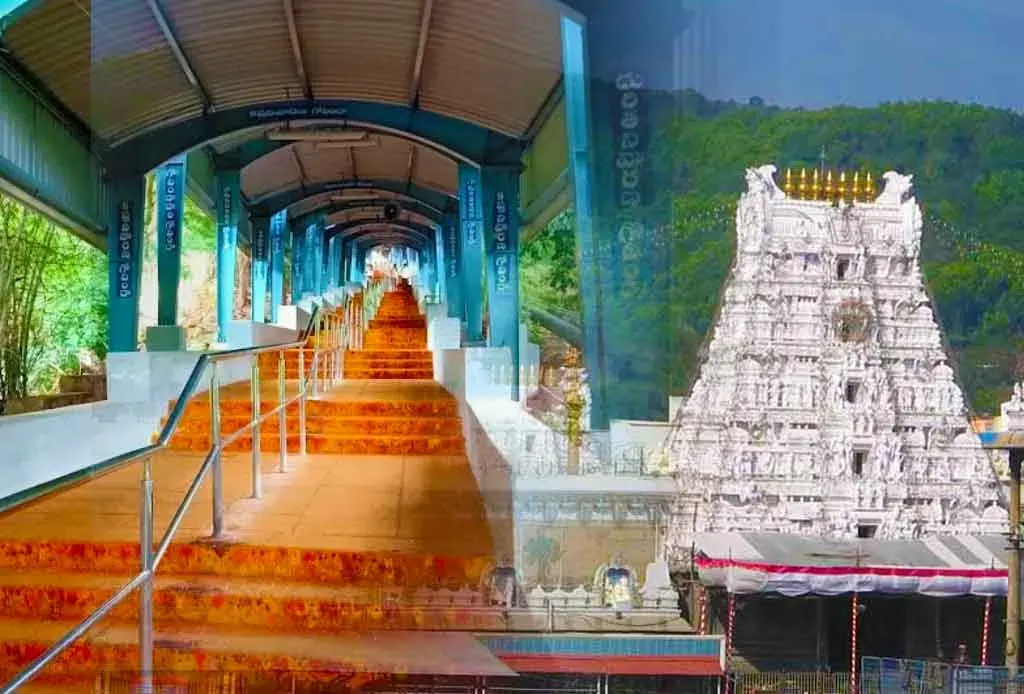
Many pilgrims climb on foot. TTD describes two routes: the Alipiri footpath of about 11 km from the foot of the hills, and the shorter Srivari Mettu path of about 6 km from near Chandragiri. Along both, TTD provides rest points, drinking water, medical help and luggage transfer.
Location: Tirumala (Tirupati), Tirupati, Andhra Pradesh, India
Nearest airport: Tirupati Airport, Renigunta
Nearest railway station: Tirupati railway station
More in Hindu temples in Andhra Pradesh · Vishnu temples · Temples in Tirupati Urban Mandal · Temples in Tirupati District
Photographs
Tirumala Venkateswara Temple Photos
Questions
Tirumala Venkateswara Temple: Frequently Asked Questions
Which deity is worshipped at Tirumala?
Sri Venkateswara, also called Srinivasa or Balaji, a form of Vishnu. In Sri Vaishnava tradition the temple is one of the 108 Divya Desams.
Who manages the Tirumala temple?
Tirumala Tirupati Devasthanams (TTD), a trust board under the Andhra Pradesh government. Its official sites are tirumala.org and ttdevasthanams.ap.gov.in.
Can I walk up to Tirumala?
Yes. TTD lists the Alipiri footpath (about 11 km) and the shorter Srivari Mettu path (about 6 km), with rest points and luggage transfer along the way.
What is the dress code for darshan at Tirumala?
TTD asks men to wear a dhoti, or pyjama with an upper cloth. Women should wear a saree, half-saree with blouse, or churidar with an upper cloth.
When is the Tirumala Brahmotsavam held?
The annual Salakatla Brahmotsavam usually falls in September–October and lasts nine days. The Garuda Vahana on the fifth day draws the largest crowds.
How old is the Tirumala temple?
Tradition credits the first temple to King Tondaiman. Datable evidence comes from inscriptions, the earliest a Pallava queen's gift that TTD dates to 614 CE and most historians to 966 CE. The temple grew greatly under the Vijayanagara rulers.
What is Vaikuntha Dwara Darshan?
Darshan through the Vaikuntha Dwaram around the sanctum, which opens only for the Vaikuntha Ekadasi period. In recent years TTD has run it for ten days with token-based entry.
यजमानYajamāna
Patron of this page
Sustained by Devotion
Cloudsoft Solutions
Hyderabad's No. 1 software training institute — sustaining sacred sevas as a Punya Kartha of Lord Venkateswara.
Daily Sri Venkateswara Sahasranama archana sponsorship — anchored to every successful Cloudsoft Solutions placement.
Sources and attribution
- Tirumala Tirupati Devasthanams — Temple History
- Tirumala Tirupati Devasthanams — Temple Legend
- Tirumala Tirupati Devasthanams — Dress Code
- Tirumala Tirupati Devasthanams — How to Reach Tirupati and Tirumala
- Tirumala Tirupati Devasthanams — Utsavams (Brahmotsavam)
- Tirupati District Administration, Government of Andhra Pradesh — Sri Vari Temple, Tirumala
- Wikipedia — Venkateswara Temple, Tirumala (pointer to epigraphic sources, Cilappatikaram reference, Divya Desam status)
- Deccan Chronicle — Anivara Asthanam to mark start of Tirumala temple's ceremonial accounting year
- Deccan Chronicle — Tirumala celebrates Ratha Saptami
- Tirumala Tirupati Devasthanams — Appeal to pilgrims in connection with Vaikunta Dwara Darshanam
Spotted an error? Write to info@hindutone.com — see our editorial policy.