Famous Temples in Kerala: A Source-Checked Guide to Guruvayur, Padmanabhaswamy, Vadakkunnathan, Attukal, Sabarimala and 70 More
A guide to 76 source-checked temples in Kerala, written only from HinduTone's temple records. Full sections cover Guruvayur, Ambalappuzha, Aranmula, Padmanabhaswamy, Koodalmanikyam, Sreevallabha, Thirunelli and Ananthapura; the Shiva temples of Vadakkunnathan, Ettumanoor, Chengannur, Thiruvanchikulam and Taliparamba; the Bhagavathy temples of Attukal, Chottanikkara, Kodungallur, Chettikulangara, Lokanarkavu and Panachikkad; Sabarimala and Achankovil; Haripad and Pazhavangadi. A table, pilgrimage circuits, advice for visitors from abroad and FAQs follow.
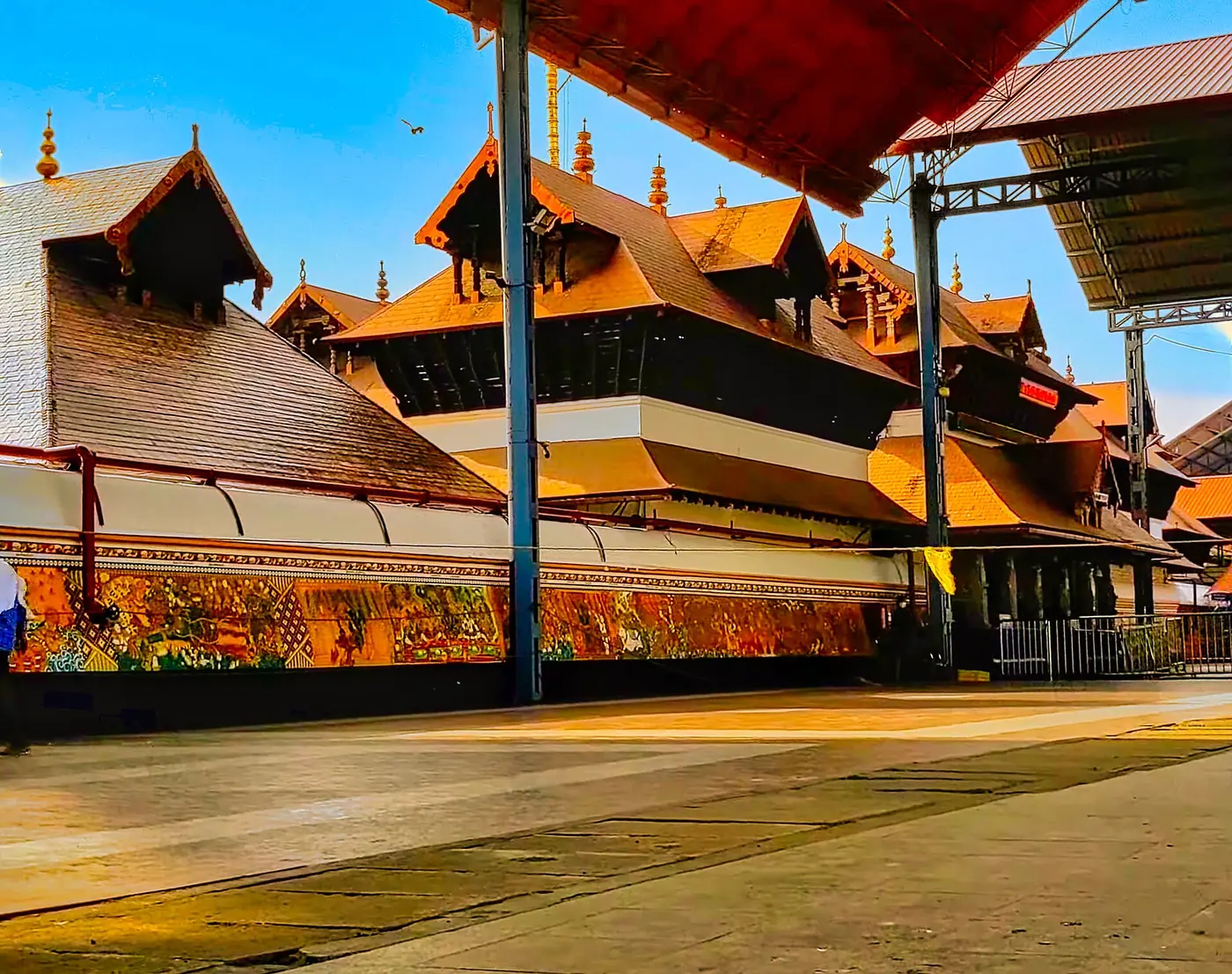
Quick answer: This guide covers 76 source-checked temples in Kerala, grouped by deity: Krishna and Vishnu (Guruvayur, Ambalappuzha, Aranmula, Sree Padmanabhaswamy, Koodalmanikyam, Thirunelli), Shiva (Vadakkunnathan, Ettumanoor, Chengannur), Bhagavathy and Devi (Attukal, Chottanikkara, Kodungallur, Chettikulangara), Sastha and Ayyappa (Sabarimala, Achankovil), Murugan (Haripad) and Ganapathi (Pazhavangadi). Twenty-three have full sections; the rest are linked by deity.
Last updated: 20 October 2026. Every temple fact below comes from HinduTone's source-checked temple records, checked on 11 October 2026. We do not give darshan timings or fees; confirm them with each temple or its devaswom board before travelling.
Kerala temples at a glance
| Temple | District/City | Deity | Known for |
|---|---|---|---|
| Guruvayur Sree Krishna Temple | Thrissur / Guruvayur | Krishna (Guruvayurappan) | Narayaneeyam; Guruvayur Ekadasi |
| Ambalappuzha Sree Krishna Temple | Alappuzha / Ambalappuzha | Krishna (Parthasarathy) | Palpayasam offering |
| Aranmula Parthasarathy Temple | Pathanamthitta / Aranmula | Krishna (Parthasarathy) | Divya Desam on the Pamba |
| Sree Padmanabhaswamy Temple | Thiruvananthapuram | Vishnu (reclining Padmanabha) | Travancore royal link |
| Koodalmanikyam Temple | Thrissur / Irinjalakuda | Vishnu, worshipped as Bharata | Nalambalam pilgrimage |
| Sreevallabha Temple | Pathanamthitta / Thiruvalla | Vishnu (Sreevallabha) | Divya Desam; Uthrasreebali |
| Thirunelli Maha Vishnu Temple | Wayanad / Thirunelli | Vishnu (Chaturbhuja) | Ancestral rites; Vavu bali |
| Ananthapura Lake Temple | Kasaragod / Ananthapura | Vishnu (Ananthapadmanabha) | Lake temple; Babiya |
| Sree Vadakkunnathan Temple | Thrissur | Shiva (Vadakkunnathan) | Thrissur Pooram; UNESCO award |
| Ettumanoor Mahadeva Temple | Kottayam / Ettumanoor | Shiva (Ettumanoorappan) | Ezhara Ponnana |
| Chengannur Mahadeva Temple | Alappuzha / Chengannur | Shiva and Parvati | Thriputharattu |
| Thiruvanchikulam Mahadeva Temple | Thrissur / Kodungallur | Shiva with Uma | Sundarar tradition |
| Rajarajeshwara Temple | Kannur / Taliparamba | Shiva (Rajarajeshwara) | Entry customs |
| Attukal Bhagavathy Temple | Thiruvananthapuram | Bhagavathy (Attukalamma) | Attukal Pongala |
| Chottanikkara Bhagavathy Temple | Ernakulam / Chottanikkara | Bhagavathy | Guruthi Pooja; Makam Thozhal |
| Kodungallur Sree Kurumba Bhagavathy | Thrissur / Kodungallur | Bhadrakali | Bharani festival |
| Chettikulangara Devi Temple | Alappuzha / Mavelikkara | Bhadrakali | Kumbha Bharani, Kettukazhcha |
| Lokanarkavu Temple | Kozhikode / Vadakara | Durga (Lokanarkavilamma) | Vadakkan Pattukal; Kalaripayattu |
| Panachikkad Saraswathi Temple | Kottayam / Panachikkad | Saraswati | Vidyarambham |
| Sabarimala Sri Ayyappa Temple | Pathanamthitta / Sabarimala | Ayyappa | Mandala-Makaravilakku season |
| Achankovil Dharma Sastha Temple | Kollam / Achankovil | Sastha as householder | Dhanu utsavam |
| Haripad Sree Subrahmanya Swamy Temple | Alappuzha / Haripad | Murugan | Payippad boat race |
| Pazhavangadi Sree Maha Ganapathy Temple | Thiruvananthapuram | Maha Ganapathy | Coconut-breaking offering |
Krishna and Vishnu temples
Guruvayur Sree Krishna Temple, Guruvayur (Thrissur)
Guruvayurappan is worshipped as Krishna in a standing four-armed image of Vishnu holding the conch, discus, mace and lotus. According to tradition, the image was once worshipped in Dwaraka and was installed here by Brihaspati (Guru) and Vayu, which gave the town its name. The Narayaneeyam was composed here in 1586. The temple is run by the Guruvayur Devaswom; entry is restricted to Hindus and Kerala Tourism lists a strict dress code. Festivals include the Kumbham Ulsavam, Guruvayur Ekadasi and Ashtami Rohini. Guruvayur temple page.
Ambalappuzha Sree Krishna Temple, Ambalappuzha (Alappuzha)
Krishna is worshipped as Parthasarathy, holding a whip and a conch, in this Travancore Devaswom Board temple about 14 km south of Alappuzha town. Its main offering is Palpayasam, a rice, milk and sugar pudding prepared daily; devotees believe Guruvayurappan comes here at the time of this offering. The ten-day Arattu falls in Meenam (March to April), and Palpayasam must be booked in advance through the board's counters. Ambalappuzha temple page.
Aranmula Parthasarathy Temple, Aranmula (Pathanamthitta)
On the banks of the Pamba, Krishna is worshipped as Parthasarathy. Kerala Tourism and the Travancore Devaswom Board's Sabarimala portal list it among the 108 Divya Desams, and tradition attributes it to Arjuna as one of five Mahabharata shrines in the Chengannur area. Its ten-day festival begins with the Kodiyettu. Aranmula temple page.
Sree Padmanabhaswamy Temple, Thiruvananthapuram
In the Fort area of the capital, Vishnu is worshipped as Padmanabha in a reclining pose. In the 18th century Anizham Thirunal Marthanda Varma dedicated his kingdom to the deity. An administrative committee headed by the district judge manages day-to-day affairs. Entry and dress rules are set by the temple administration, so confirm them before visiting. Padmanabhaswamy temple page.
Koodalmanikyam Temple, Irinjalakuda (Thrissur)
The image is a four-armed Vishnu, but devotees worship him as Bharata, Rama's brother, and he is also called Sangameswara. It is the second temple of the Nalambalam pilgrimage in Karkidakam (July to August), when devotees visit the shrines of the four Ramayana brothers in one day. The devaswom cites a Chera inscription of 854 CE and offers online booking for poojas and Nalambala Darshanam. Koodalmanikyam temple page.
Sreevallabha Temple, Thiruvalla (Pathanamthitta)
Vishnu is worshipped as Sreevallabha, bearing a conch, a discus and a lotus, and The Hindu notes the temple is regarded as one of the 108 Divya Desams; Tirumangai Alvar and Nammalvar sang of it. During Uthrasreebali, five deities, including the goddesses of Karunattukavu, Padappad and Alamthuruthy, are worshipped together on a common platform. Sreevallabha temple page.
Thirunelli Maha Vishnu Temple, Thirunelli (Wayanad)
At the foot of the Brahmagiri hills near the Karnataka border, Vishnu is worshipped in the four-armed Chaturbhuja form. The district administration calls it Dakshina Kashi, and pilgrims come above all to perform rites for departed ancestors at the Papanasini stream. Karkidaka Vavu and Thulam Vavu draw large crowds. Thirunelli temple page.
Ananthapura Lake Temple, Ananthapura (Kasaragod)
This Vishnu temple stands in the middle of a lake in Manjeshwaram taluk, about 30 km from Bekal, and is believed to be the moolasthanam of Sree Padmanabhaswamy of Thiruvananthapuram. It was long known for Babiya, a crocodile in its lake fed vegetarian offerings. Visitors should not disturb the lake or its wildlife. Ananthapura temple page.
Thursday is widely kept for Vishnu and his avatars; see our guide to Thursday and the Guruvar vrat and the wider Krishna temples guide.
Shiva temples
Sree Vadakkunnathan Temple, Thrissur
On a raised mound at the centre of Thrissur, Shiva is worshipped as a linga with Parvati in the same sanctum, under the Cochin Devaswom Board. Its restoration won UNESCO's Asia-Pacific Award of Excellence in 2015. Its deity is regarded as the silent host of Thrissur Pooram on Thekkinkadu Maidan. Maha Shivaratri is its main festival. Vadakkunnathan temple page.
Ettumanoor Mahadeva Temple, Ettumanoor (Kottayam)
According to the temple, the name comes from the belief that Shiva appeared here in eight (ettu) forms,. The temple is known for the Ezhara Ponnana, seven and a half jackfruit-wood elephants covered in about 13 kg of gold plate, displayed on the eighth day of the Kumbham festival (February to March). Ettumanoor temple page.
Chengannur Mahadeva Temple, Chengannur (Alappuzha)
Shiva and Parvati share one sanctum here. The temple is known for Thriputharattu, a four-day observance of the goddess's menstruation that Kerala Tourism describes as honoured as a symbol of fertility; it has no fixed date and ends with her ritual bath in the Pamba. The temple is closed to visitors during the days of seclusion. Chengannur temple page.
Thiruvanchikulam Mahadeva Temple, Kodungallur (Thrissur)
In the Muziris Heritage area, about 6 km from Kodungallur, Shiva is worshipped with his consort Uma, and dampathi pooja for a long, happy marriage is sought after. By tradition, the saint Sundaramurthy Nayanar left for Kailasa from here. The Kumbham festival includes an elephant race. Thiruvanchikulam temple page.
Rajarajeshwara Temple, Taliparamba (Kannur)
The Deccan Chronicle describes this Shiva temple as one of the 108 ancient Shiva temples of Kerala. By temple custom, reported by the Times of India, women are not allowed inside before the athazha puja, the night worship, so plan visits accordingly and confirm hours with the temple office. Taliparamba temple page.
Monday is traditionally kept for Shiva; read our guide to Monday and the Somvar vrat.
Bhagavathy and Devi temples
Attukal Bhagavathy Temple, Thiruvananthapuram
The goddess, known as Attukalamma, is honoured in the ten-day Kumbham festival (February to March), which opens with Kaapukettu and culminates in Attukal Pongala. Women devotees boil rice, jaggery, coconut and plantain in earthen pots as an offering across about 7 km around the temple. Expect road restrictions and heavy crowds on Pongala day. Attukal temple page.
Chottanikkara Bhagavathy Temple, Chottanikkara (Ernakulam)
Near Kochi, under the Cochin Devaswom Board, the goddess is believed to cure mental illness, and many devotees come for this reason. The Keezhkkaavu Bhagavathy is worshipped as Bhadrakali, and the evening Guruthi Pooja is now performed daily. Makam Thozhal in Kumbham is a major festival. Chottanikkara temple page.
Kodungallur Sree Kurumba Bhagavathy Temple, Kodungallur (Thrissur)
Kerala Tourism calls this Bhadrakali shrine one of Kerala's Shaktipeedhams and a mother shrine for many Bhagavathy temples. Devotees believe its power rests in five chakras consecrated by Adi Shankaracharya. The Bharani festival in Meenam (March to April) is known for distinctive traditional customs, and Thalappoli in Makaram opens with barrel crackers and ghee lamps. Kodungallur temple page.
Chettikulangara Devi Temple, near Mavelikkara (Alappuzha)
Sree Bhadrakali, called Chettikulangara Amma, is worshipped as guardian goddess of the Onattukara region. On Kumbha Bharani (February to March), thirteen karas, local areas around the temple, bring towering decorated chariots and effigies in the Kettukazhcha, and boys perform the Kuthiyottam offering. Plan for heavy congestion. Chettikulangara temple page.
Lokanarkavu Temple, Memunda near Vadakara (Kozhikode)
Durga is worshipped as Lokanarkavilamma in a complex that also has Shiva and Vishnu temples. The shrine is honoured in the Vadakkan Pattukal, the ballads of north Kerala and Kalaripayattu performers seek the goddess's blessing before their debut. The Vrischikam lamp festival runs all month. Lokanarkavu temple page.
Panachikkad Saraswathi Temple, Panachikkad (Kottayam)
Revered as Dakshina Mookambika, this Saraswati temple about 11 km south of Kottayam holds poojas throughout the year. Navarathri brings Saraswathi Pooja and Vidyarambham, when children are initiated into letters; those days are very crowded. Panachikkad temple page.
Friday is widely kept for the goddess; see our guide to Friday and the Shukravar vrat and the Durga hub.
Sastha and Ayyappa temples
Sabarimala Sri Ayyappa Temple (Pathanamthitta)
This hill shrine in the Periyar Tiger Reserve forests opens for the Mandala-Makaravilakku season (mid-November to mid-January), the opening days of each Malayalam month and festivals such as Vishu and Onam. Pilgrims keep a 41-day vratham, carry the irumudi and climb the eighteen steps. Virtual-Q booking is mandatory, and vehicles go only as far as Pamba. For the full pilgrimage, read our Sabarimala 2026-27 season guide. Sabarimala temple page.
Achankovil Dharma Sastha Temple, Achankovil (Kollam)
In a forest village near the Tamil Nadu border, Sastha is shown as a householder with his consorts Purna and Pushkala. Devotees believe sandalwood paste from the idol's hand can cure snake bites. The ten-day Dhanu festival includes a chariot festival. Forest road access can change, so check before setting out. Achankovil temple page.
Other source-checked Sastha temples: Kulathupuzha Sree Dharma Sastha Temple, where Ayyappa is worshipped in child form; Sasthamcotta Sree Dharma Sastha Temple, beside Sasthamcotta Lake; and Thiruvullakkavu Sree Dharmasastha Temple at Cherpu, known for Vidyarambham. Our Ayyappa and Dharma Sastha temples guide covers them in more detail, and the Saturday guide explains weekly Sastha worship.
Murugan and Ganapathi temples
Haripad Sree Subrahmanya Swamy Temple, Haripad (Alappuzha)
Known as Dakshina Palani, this Travancore Devaswom Board temple has a four-armed, east-facing Murugan holding the vel and vajrayudha. According to tradition, the idol was found beneath a whirlpool in Kayamkulam lake and brought by boat, and the three-day Payippad boat race in Chingam commemorates its installation. The Chithira festival and Thaipooyam kavadi draw large crowds. Haripad temple page.
Pazhavangadi Sree Maha Ganapathy Temple, East Fort (Thiruvananthapuram)
Near the Sree Padmanabhaswamy Temple, Maha Ganapathy is seated with the right leg folded. The temple is maintained by the Indian Army (Madras Regiment). Breaking coconuts is the main offering, and Vinayaka Chathurthi is the main festival. Pazhavangadi temple page.
Related reading: Murugan temples guide, Tuesday guide, famous Ganesh temples and the Wednesday guide.
More source-checked temples in Kerala
- Vishnu, Krishna and Rama: Chittoor Sree Krishnaswamy, Sreekrishna Swami Kshethram, Kadungalloor Narasimha, Aymanam Narasimha, Thuravoor Mahakshetram, Maruthorvattom Dhanwanthari, Thiruvallam Parasurama, Thrichittatt Maha Vishnu, Thrikkovil Padmanabhaswamy, Ramapuram Sree Rama, Thiruvangad Sree Ramaswamy, Vennimala Rama Lakshmana.
- Shiva: Adoor Mahalingeshwara, Annamanada Mahadeva, Peruvanam Mahadeva, Pavakulam Mahadeva, Thirunakkara Mahadeva, Thaliyil Mahadeva, Kadappattur Mahadeva, Kalavamkodam Saktheeswara, Thiruvizha Mahadeva, Thrikkuratti Mahadeva, Niranam Thrikkapaleeswaram, Maheswaram Sivaparvathi, Rameshwaram Mahadeva.
- Bhagavathy and Devi: Paramekkavu Bhagavathi, Chembukkavu Karthyayani, Choorakkottukavu Durga, Poonilarkavu, Iringole Kavu, Sri Rajarajeshwari, Sri Adishankara Janma Bhoomi, Mullakkal Rajarajeswari, Kandamangalam Rajarajeswari, Kanichukulangara Devi, Varanad Devi, Bharanikkavu Devi, Kadammanitta Devi, Malayalapuzha Bhagavathy, Puttingal Devi, Vellayani Devi, Chinakkathoor Bhagavathy, Vairankode Bhagavathy.
- Murugan, Ganapathi and Hanuman: Kidangoor Subramanya, Kumaramangalam Subramanyaswamy, Thekkan Pazhani, Thamarakulam Mahaganapathi, Sri Mukhyaprana Hanuman.
- Other: Oachira Parabrahma Temple and Sri Ramakrishna Advaita Ashrama, Kalady.
Pilgrimage circuits in Kerala
- Thiruvananthapuram (south): Sree Padmanabhaswamy, Pazhavangadi Ganapathy and Attukal lie within the city, with Thiruvallam Parasurama and Vellayani Devi in the same district.
- Central Travancore: Aranmula and Sreevallabha (Pathanamthitta) combine with Chengannur, Ambalappuzha, Haripad and Chettikulangara in Alappuzha district, and Ettumanoor and Panachikkad in Kottayam.
- Thrissur and Kodungallur: Guruvayur, Vadakkunnathan, Paramekkavu and Koodalmanikyam in Thrissur district, with Kodungallur Bhagavathy and Thiruvanchikulam in the Muziris area, and Chottanikkara near Kochi.
- Kollam Sastha temples: Achankovil, Kulathupuzha and Sasthamcotta, often visited by Sabarimala pilgrims; check forest road status first.
- North Kerala: Lokanarkavu (Kozhikode), Thirunelli (Wayanad), Taliparamba and Thiruvangad (Kannur), and Ananthapura and Bekal (Kasaragod).
Best season to visit
The records do not name a single best season for Kerala's temples. Festival days are the most crowded: the Sabarimala Mandala-Makaravilakku season (mid-November to mid-January), Kumbham festivals such as Attukal Pongala, Thrissur Pooram in Medam, and Karkidakam.
Visiting from abroad
- The records name Cochin, Thiruvananthapuram, Kannur and Mangalore international airports as nearest for different temples.
- Allow a rest day after a long-haul flight.
- Use only official booking channels, such as the Travancore Devaswom Board's Virtual-Q for Sabarimala and devaswom websites for poojas.
- Many Kerala temples follow traditional dress codes; men may be asked to remove shirts. Carry small cash for footwear counters.
- Where entry is restricted to Hindus, follow the temple's rules.
Before you go, read our temple visit guide on darshan, dress code and etiquette and our temple safety tips.
Also read: Famous temples in Tamil Nadu and Famous temples in Karnataka.
Frequently asked questions
How many Kerala temples does this guide cover?
It links 76 temples whose records HinduTone has source-checked. Twenty-three have full sections, including Guruvayur, Sree Padmanabhaswamy, Vadakkunnathan, Attukal, Chottanikkara, Sabarimala and Haripad; the rest are listed by deity with links to their temple pages.
Can non-Hindus enter the Guruvayur temple?
Kerala Tourism and the Thrissur district administration both state that entry to the Guruvayur Sree Krishna Temple is restricted to Hindus. Kerala Tourism also lists a strict dress code.
When is Attukal Pongala?
The festival falls in the Malayalam month of Kumbham, usually February to March, and its date changes every year with the Malayalam calendar. Confirm the current year's Pongala date with the temple trust or Kerala Tourism before you plan travel.
Do I need to book before going to Sabarimala?
As listed by the Travancore Devaswom Board (checked October 2026), online booking through the Virtual-Q system is mandatory for all pilgrims, and only devotees carrying the irumudi may climb the eighteen steps.
Is a temple visit a guaranteed remedy?
No. Records describe beliefs, such as devotees visiting Chottanikkara for relief from mental illness or Achankovil for snake bites, but these are matters of faith. No temple visit guarantees a result, and medical care should never be delayed.
Editor's note (20 October 2026)
Every temple fact in this guide comes from HinduTone's source-checked temple records, researched against district administrations, state tourism and devaswom and endowment departments, newspapers and temple directories, and checked on 11 October 2026. Claims resting on a single source, and temples not yet verified, are left out. Temple timings, seva rules and entry customs change, so please confirm them with each temple before travelling.
Related guides
- Ayyappa and Dharma Sastha temples guide
- Famous Krishna temples in India
- Arupadai Veedu and Murugan temples guide
- Guruvayur Ekadashi 2026: date and traditions
- Vidyarambham 2026 in Kerala
- Hindu days of the week and their significance
- Lord Shiva hub
- Lord Vishnu hub
- Lord Ganesha hub
- Hindu temples in the USA: NRI guide
Share this with family and friends
Send it on WhatsApp, post it, or copy the link.
You might also like
Famous Temples in Maharashtra: A Source-Checked Guide to Ashtavinayak, Jyotirlingas, Pandharpur, Kolhapur and More
Famous Krishna Temples in India: 13 Source-Checked Temples from Guruvayur to Mathura, Vrindavan, Dakor and Pandharpur
Famous Temples in Uttarakhand: A Source-Checked Guide to Kedarnath, Badrinath, Tungnath, Haridwar, Almora and More