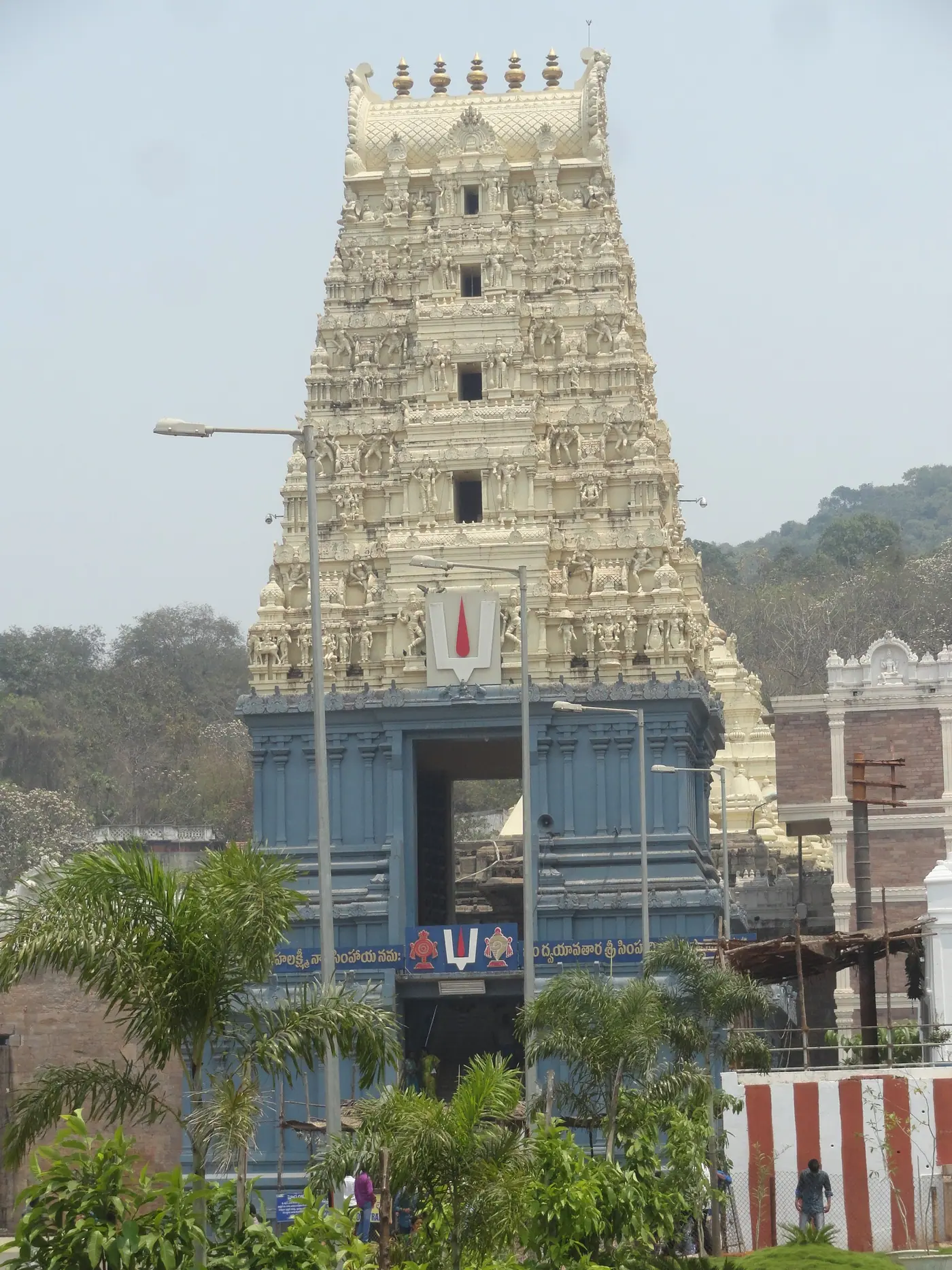
Famous Temples in Karnataka: A Source-Checked Guide to Kukke, Kollur, Mysuru, Melukote, Hampi and More
A region-by-region guide to 31 Karnataka temples, written only from HinduTone's source-checked temple records: coastal shrines such as Kukke Subrahmanya, Kollur Mookambika, Mangaladevi and Polali; Bengaluru temples from Dodda Ganapathi to Gavi Gangadhareshwara; the Mysuru region, Melukote and Sringeri; and north Karnataka's Hampi, Badami and Saundatti. Each entry covers deity, recorded tradition and history, festivals and visitor notes, with a summary table, pilgrimage circuits, tips for visitors from abroad and FAQs.
A region-by-region guide to 31 Karnataka temples, written only from HinduTone's source-checked temple records: coastal shrines such as Kukke Subrahmanya, Kollur Mookambika, Mangaladevi and Polali; Bengaluru temples from Dodda Ganapathi to Gavi Gangadhareshwara; the Mysuru region, Melukote and Sringeri; and north Karnataka's Hampi, Badami and Saundatti. Each entry covers deity, recorded tradition and history, festivals and visitor notes, with a summary table, pilgrimage circuits, tips for visitors from abroad and FAQs.
Quick answer: This guide covers all 31 Karnataka temples in HinduTone's source-checked records, in four regions: coastal Karnataka (Kukke Subrahmanya, Kollur Mookambika, Mangaladevi, Polali, Mandarthi, Sirsi), Bengaluru (Dodda Ganapathi, Gavi Gangadhareshwara, Kadu Malleshwara, the Karaga temple), the Mysuru region and Malnad (Chamundi Hill, Nanjangud, Melukote, Sringeri) and north Karnataka (Virupaksha at Hampi, Banashankari and Bhutanatha at Badami, Yellamma at Saundatti).
Last updated: 20 October 2026. Built from HinduTone's source-checked temple records (checked on 11 October 2026). The records do not publish fixed darshan timings, so confirm timings and seva rules with each temple before you travel.
Coastal Karnataka: Udupi, Dakshina Kannada and Uttara Kannada
The coast is a region of goddess shrines, serpent rites and Yakshagana, the dance-drama several temples here sponsor.
Kukke Subrahmanya Temple, Subramanya
On the Kumaradhara river in Dakshina Kannada, Subrahmanya is worshipped as lord of serpents, in a form merged with the serpent king Vasuki, according to Karnataka Tourism. Pilgrims come for sarpa dosha rites such as Ashlesha Bali and Sarpa Samskara, which must be booked in advance through official channels only, as fake websites have been reported. Champa Shashti in Margashira, with the Brahmarathotsava, is the main festival. Kukke temple page and our Kukke Subramanya visit guide.
Kollur Sri Mookambika Temple, Kollur
On the Souparnika river at the foot of Kodachadri hill in Udupi district, the goddess Mookambika is worshipped in the form of a jyotirlinga, understood by devotees as the union of Shiva and Shakti. The district administration counts it among the seven Mukthi Sthalas of Karnataka. According to tradition, the goddess struck the demon Kamasura dumb (mooka) and later killed him. Navaratri is the main festival, when lakhs of devotees come. Kollur Mookambika temple page.
Sri Mahatobhara Mangaladevi Temple, Mangaluru
At Bolar in Mangaluru, the goddess Mangaladevi gives the city its name, according to the temple and Mangalorean.com. The temple says it is believed to have been built in the 9th century by the Alupa king Kundavarman. The March jathre includes the Rathotsava and a Nemotsava for the shrine's daivas, and Navaratri runs ten days with the Tene habba harvest custom. Modest dress is requested. Mangaladevi temple page.
Polali Sri Rajarajeshwari Temple, Bantwal taluk
On the Phalguni river in Kariyangala village, Rajarajeshwari is worshipped as a large clay image. According to tradition, King Suratha was told in a dream to make her image from the clay of a nearby well. The month-long March to April festival includes the Polali Chendu, a ball game between the villages of Ammunje and Manel that symbolises the victory of good over evil. Polali temple page.
Mandarthi Shree Durgaparameshwari Temple, Udupi district
This Durgaparameshwari shrine near Brahmavara is a centre of Yakshagana: it runs five touring harake melas that perform for devotees who have taken a vow, and Devi Mahatme is the episode most often staged. Weekends and holidays can be very crowded, and Navaratri draws pilgrims. The temple is about 26.4 km by road from Udupi. Mandarthi temple page.
Shri Jnanashakthi Subrahmanyaswami Temple, Pavanje
Beside NH66 near Haleyangadi, Subrahmanya is worshipped as Jnanashakthi Subrahmanyaswami, installed in a Shiva aspect. The temple dates its founding to 1920. It is known for long Vedic yagas on its grounds and for its Yakshagana troupe, the Pavanje Mela, founded in 2020. Festivals include Champa Shashti and a nightly lamp festival through Karthika. Pavanje temple page. See also our Subrahmanya Shashti 2026 guide.
Sirsi Marikamba Jatre Gadduge, Uttara Kannada
The gadduge at Bidkibail in Sirsi is the ceremonial seat where the eight-armed, seven-foot Marikamba idol is installed during the nine-day jatre held every two years, most recently from 24 February to 4 March 2026. The goddess is brought from the Marikamba temple by chariot after her kalyana mahotsava. The temple then stays closed for 40 days. Sirsi Marikamba page.
For weekly Devi worship, see our Friday guide; for Subrahmanya, our Murugan temples guide and Tuesday guide.
Bengaluru and around
Sri Dodda Ganapathi Temple, Basavanagudi
On Bull Temple Road at the foot of the Bull Temple hill, this endowments-department temple holds a large monolithic Ganesha regularly covered in butter. A local belief holds that the right side of the image has grown until it touches the sanctum wall. Ganesh Chaturthi brings queues from early morning, and the Kadalekai Parishe groundnut fair on the last Monday of Kartika fills the road outside. Dodda Ganapathi temple page. Our Ganesha temples guide and Wednesday guide cover more.
Gavi Gangadhareshwara Cave Temple, Gavipuram
Behind a painted exterior near Chamarajpet lies a south-facing cave shrine of Shiva. On Makara Sankranti, beams of sunlight fall on the deity inside the cave; crowds are very large that day. Gavi Gangadhareshwara temple page. See also Makara Sankranti in Karnataka.
Kadu Malleshwara Temple, Malleswaram
On a hillock in Malleswaram, Shiva is worshipped as Mallikarjuna, 'of the forest'. A rock inscription of 1669 records a grant by the Maratha chief Venkoji for the upkeep of an already existing temple, so the founding date is unknown. Across the road, water flows from a stone Nandi onto a linga at the Nandi Tirtha shrine. Maha Shivaratri is the main festival. Kadu Malleshwara temple page.
ISKCON Sri Radha Krishna-Chandra Temple, Rajajinagar
On Hare Krishna Hill, the presiding deities are Radha and Krishna as Sri Radha Krishnachandra, installed in 1997. The temple follows the Gaudiya Vaishnava tradition, and Karnataka Tourism notes the associated Akshaya Patra kitchen that cooks free school meals. Janmashtami brings peak crowds; the Brahmotsava, Vaikuntha Ekadashi and Ratha Yatra are also major. ISKCON Bangalore temple page and our Krishna temples guide.
Kote Venkataramana Swamy Temple, Fort area
Beside Tipu Sultan's Summer Palace in the old fort, this Venkateshwara temple was raised by Chikka Devaraja Wodeyar of Mysore in the 17th century. Devotees of Anjaneya and Padmavathi also worship here. Vaikunta Ekadashi brings large crowds and queues. Kote Venkataramana temple page. See our Venkateswara temples guide.
Sri Dharmaraya Swamy Temple (Karaga Temple), Nagarathpet
This temple in the old pete area is where the Bengaluru Karaga sets out each year. The Karaga is a sacred floral pot carried by a pujari who, on the festival night, is believed to take the form of the goddess. The 11-day festival in March to April ends with a night procession. Expect very large crowds in narrow streets and follow police arrangements. Karaga temple page.
Bhoga Nandeeshwara Temple, Nandi village
At the foot of Nandi Hills in Chikkaballapur district, this walled complex pairs the Shiva temples of Bhoganandiswara and Arunachaleswara. The district administration dates it to about 806 CE and credits Rathnavalli of the Bana dynasty; Later dynasties added to it. It is a protected monument, so confirm arrangements with the ASI Bengaluru Circle. Bhoga Nandeeshwara temple page. For Shiva worship, see our Monday guide.
The Mysuru region, Hassan and Malnad
Sri Chamundeshwari Temple, Chamundi Hill
On Chamundi Hill, about 13 km from Mysuru, the goddess Chamundeshwari, a fierce form of Durga, is the tutelary deity of the Mysore royal family. According to legend she vanquished Mahishasura here, and Mysuru takes its name from the tale. During Mysuru Dasara her image leads the Jumboo Savari on a golden howdah. The hill is a no-plastic zone. Chamundeshwari temple page, plus our Mysore Dasara 2026 guide.
Srikanteshwara (Nanjundeshwara) Temple, Nanjangud
On the Kapila (Kabini) river about 16 km from Mysuru, Shiva is worshipped as Nanjundeshwara, the one who swallowed the Halahala poison, and is described as a healer of his devotees' diseases. The Pancha Maharathotsava sees devotees pull five chariots, including the Gauthama Ratha, reckoned at nearly 100 feet tall. Nanjangud temple page.
Cheluvanarayana Swamy Temple, Melukote
In Mandya district, Vishnu is worshipped as Cheluvanarayana (Thirunarayana), with Ramanujacharya worshipped alongside. Melukote became a Srivaishnava centre when Ramanuja lived here in the 12th century; according to tradition, he recovered the hidden image from an anthill. The 13-day Vairamudi Brahmotsava in March to April brings a night procession with the diamond crown from the Mandya treasury. Karnataka Tourism advises modest clothing. Melukote temple page. See also our Thursday guide.
Himavad Gopalaswamy Temple, Chamarajanagar district
On the misty summit of Gopalaswamy Betta, in the core of Bandipur National Park, Krishna is worshipped as Venugopalaswamy, flanked by Rukmini and Satyabhama. Private vehicles stop at the Forest Department check post; authorised buses go up, access ends at dusk, and food and plastics are banned. Gopalaswamy Betta temple page.
Sri Sharada Peetham, Sringeri
On the Tunga river in Chikkamagaluru district, the Peetham whose founding is credited to Adi Shankaracharya has the goddess Sharadamba as its main shrine. According to tradition, he chose the spot after seeing a cobra shade a frog from the sun. The Vidyashankara temple has twelve zodiac pillars. Sharannavaratri brings daily alankaras and the Jagadguru's durbar. The Peetham offers first-come guest-house rooms and free meals. Sringeri temple page.
Lakshmi Devi Temple, Doddagaddavalli
On the Hassan to Belur road, this ASI-protected four-shrined (chatuskuta) temple was built in 1113 CE, in the reign of Vishnuvardhana. Its main shrine holds a four-armed Mahalakshmi; others hold Kali, known for carved vetala figures, and a Shiva linga. The district guide suggests combining it with Belur and Halebidu. Doddagaddavalli temple page.
North Karnataka
Virupaksha Temple, Hampi
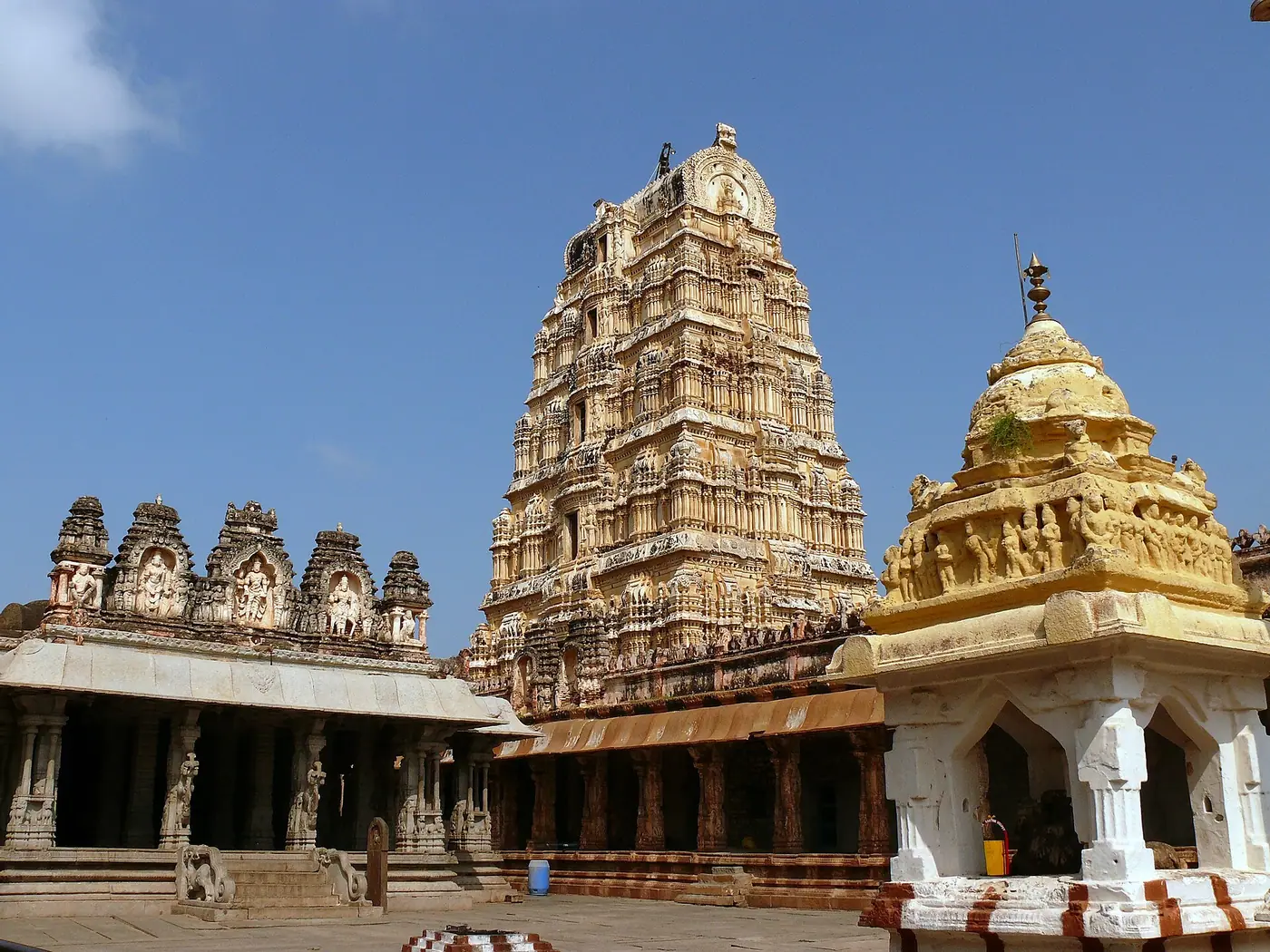
In Vijayanagara district, Shiva as Virupaksha and his consort Pampadevi, goddess of the Tungabhadra, are worshipped in a living temple within UNESCO's Group of Monuments at Hampi. The Tuluva kings of Vijayanagara greatly extended it. Its nine-storeyed gopuram towers over Hampi, and the Ranga Mantapa ceiling is painted with scenes from the epics. Virupaksha temple page.
Banashankari Temple, Badami
At Cholachagudda near Badami, the goddess Shakambari, or Banashankari, is shown as eight-armed and seated on a lion. The Chalukya rulers worshipped her as their clan deity. Its dating is uncertain. The month-long Banashankari jatre from the Pushya full moon (January to February) brings very large crowds. Banashankari temple page.
Bhutanatha Group of Temples, Badami
On the bank of Agastya lake, this ASI-protected sandstone group has Shiva worshipped as Bhutanatha, lord of souls and spirits. According to tradition, the name recalls a demon Shiva defeated here. Karnataka Tourism suggests October to March for Badami. Bhutanatha temple page.
Shri Yellamma Devi Temple, Saundatti
On Yellamma Gudda, about 5 km from Saundatti in Belagavi district, the goddess Renuka, popularly Yellamma, is the family deity of thousands of families. The district administration dates the present temple to 1514. The Hindu reported about six lakh devotees at Banada Hunnime in 2017. Yellamma temple page.
More source-checked temples in Karnataka
- Mahishamardini Temple, Neelavara (Udupi): goddess shrine with medieval inscriptions in its prakara.
- Panchalingeshwara Temple, Vitla (Dakshina Kannada): Shiva temple with a January rathotsava.
- Amratheshwari Temple, Kota (Udupi): goddess revered as 'Mother of Many Children'.
- Divine Park, Saligrama (Udupi): spiritual centre based on Swami Vivekananda's teachings.
- Old Madiwala Someshwara Temple (Bengaluru): Shiva temple with a 1247 inscription naming Vengalur.
- Seebi Narasimha Swamy Temple (Tumakuru): Narasimha temple known for Mysore-period murals.
- Mavinakere Ranganathaswamy Temple (Hassan): hilltop Ranganatha shrine, busy on Shravana Saturdays.
Udupi's Krishna temple and Dharmasthala are also major pilgrimage sites; they are not yet in our source-checked set.
Karnataka temples at a glance
| Temple | District/City | Deity | Known for |
|---|---|---|---|
| Kukke Subrahmanya | Dakshina Kannada | Subrahmanya | Serpent rites; Champa Shashti |
| Kollur Mookambika | Udupi | Mookambika | Jyotirlinga form; Navaratri |
| Mangaladevi | Mangaluru | Mangaladevi | City's namesake; March jathre |
| Polali Rajarajeshwari | Dakshina Kannada | Rajarajeshwari | Clay image; Polali Chendu |
| Mandarthi | Udupi | Durgaparameshwari | Yakshagana melas |
| Pavanje | Dakshina Kannada | Subrahmanya | Vedic yagas; Pavanje Mela |
| Sirsi Marikamba | Uttara Kannada | Marikamba | Two-yearly jatre |
| Dodda Ganapathi | Bengaluru | Ganesha | Butter-covered monolith |
| Gavi Gangadhareshwara | Bengaluru | Shiva | Sankranti sunlight |
| Kadu Malleshwara | Bengaluru | Shiva | 1669 inscription |
| ISKCON Bangalore | Bengaluru | Radha Krishna | Janmashtami |
| Kote Venkataramana | Bengaluru | Venkateshwara | Fort area; Vaikunta Ekadashi |
| Dharmaraya Swamy | Bengaluru | Karaga | Bengaluru Karaga |
| Bhoga Nandeeshwara | Chikkaballapur | Shiva | Bana-era complex |
| Chamundeshwari | Mysuru | Chamundeshwari | Mysuru Dasara |
| Nanjundeshwara | Mysuru | Shiva | Five-chariot festival |
| Cheluvanarayana | Mandya | Vishnu | Vairamudi; Ramanuja |
| Gopalaswamy Betta | Chamarajanagar | Krishna | Hilltop in Bandipur |
| Sringeri Sharada Peetham | Chikkamagaluru | Sharada | Shankara tradition |
| Doddagaddavalli | Hassan | Mahalakshmi | Hoysala, 1113 CE |
| Virupaksha | Vijayanagara | Shiva | UNESCO site; gopuram |
| Banashankari | Bagalkot | Banashankari | Month-long jatre |
| Bhutanatha | Bagalkot | Shiva | Agastya lake |
| Yellamma | Belagavi | Renuka Yellamma | Banada Hunnime |
Pilgrimage circuits in Karnataka
- Coastal circuit: Mangaladevi and Polali near Mangaluru, then Pavanje and Vitla, with Kukke Subrahmanya inland; the KSRTC Mangaluru division has run seasonal package tours that include Vitla.
- Udupi goddess circuit: Mandarthi, Neelavara and Kota around Brahmavara, ending at Kollur Mookambika.
- Bengaluru day: Dodda Ganapathi and Gavi Gangadhareshwara in the south, Kote Venkataramana and the Karaga temple in the old city, then Kadu Malleshwara and ISKCON in the north-west; Bhoga Nandeeshwara suits a separate trip.
- Mysuru circuit: Chamundi Hill, Nanjangud and Melukote, with Gopalaswamy Betta via Gundlupet; Doddagaddavalli pairs with Belur and Halebidu.
- North Karnataka: Banashankari and Bhutanatha at Badami, Yellamma at Saundatti, and Virupaksha at Hampi.
The records do not name a single best season for Karnataka's temples, apart from Karnataka Tourism's October to March suggestion for Badami. Festival days are the most crowded; see our Dussehra 2026 in Karnataka guide for this season.
Visiting from abroad
Bengaluru, Mangaluru, Mysuru, Hubballi and Jindal Vijayanagar are the airports named in these records. Take a rest day after a long flight before hill climbs or night festivals, and book sevas and rooms only through official temple or government channels. Dress modestly, carry a copy of your passport, and keep small cash for offerings and footwear counters. Our temple visit guide covers darshan and etiquette, and our temple safety tips help in festival crowds. See also the Hindu days of the week.
Frequently asked questions
Which Karnataka temples does this guide cover?
All 31 Karnataka temples in HinduTone's source-checked records, grouped into coastal Karnataka, Bengaluru, the Mysuru region and Malnad, and north Karnataka. Twenty-four have a full section and seven are listed briefly.
Do I need to book sevas at Kukke Subrahmanya in advance?
Yes. The record says Ashlesha Bali, Sarpa Samskara and other sevas have to be booked in advance. Fake websites for the temple have been reported, so book only through channels the temple or the Karnataka Endowments Department confirms.
When is the Vairamudi festival at Melukote?
The Vairamudi Brahmotsava falls in Phalguna to Chaitra, usually March to April, with dates following the Hindu calendar. Its highlight is a night procession of the deity wearing the diamond-studded crown.
Which Karnataka temple festivals draw the heaviest crowds?
The records name Navaratri at Kollur and Sringeri, Mysuru Dasara, Champa Shashti at Kukke, the Bengaluru Karaga, Makara Sankranti at Gavi Gangadhareshwara, the Nanjangud car festival, Banada Hunnime at Saundatti and the Sirsi Marikamba Jatre. Confirm dates locally.
Is a visit to these temples a guaranteed remedy?
No. Devotees pray at Kukke for relief from naga dosha and at Nanjangud to the Lord described as a healer of diseases, and the records report those beliefs. They are matters of faith, and no outcome is guaranteed.
Editor's note (20 October 2026)
Every temple fact in this guide comes from HinduTone's source-checked temple records, which were researched against district administrations, state tourism and endowment departments, newspapers and temple directories and checked on 11 October 2026. Claims resting on a single source and temples not yet verified are left out. Timings and seva rules change; please confirm them with the temple before travelling.
Related guides
You might also like
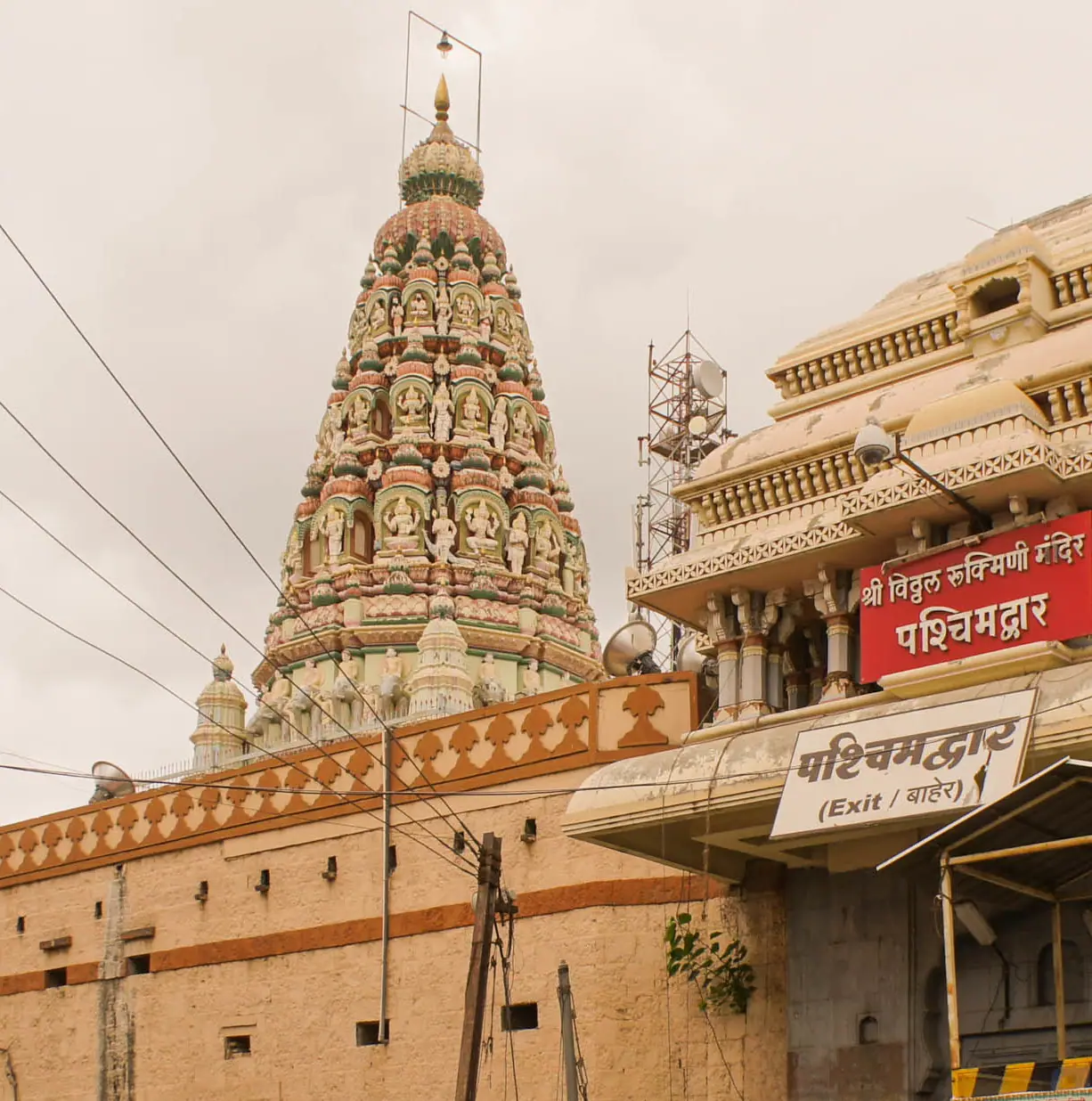
Famous Temples in Maharashtra: A Source-Checked Guide to Ashtavinayak, Jyotirlingas, Pandharpur, Kolhapur and More
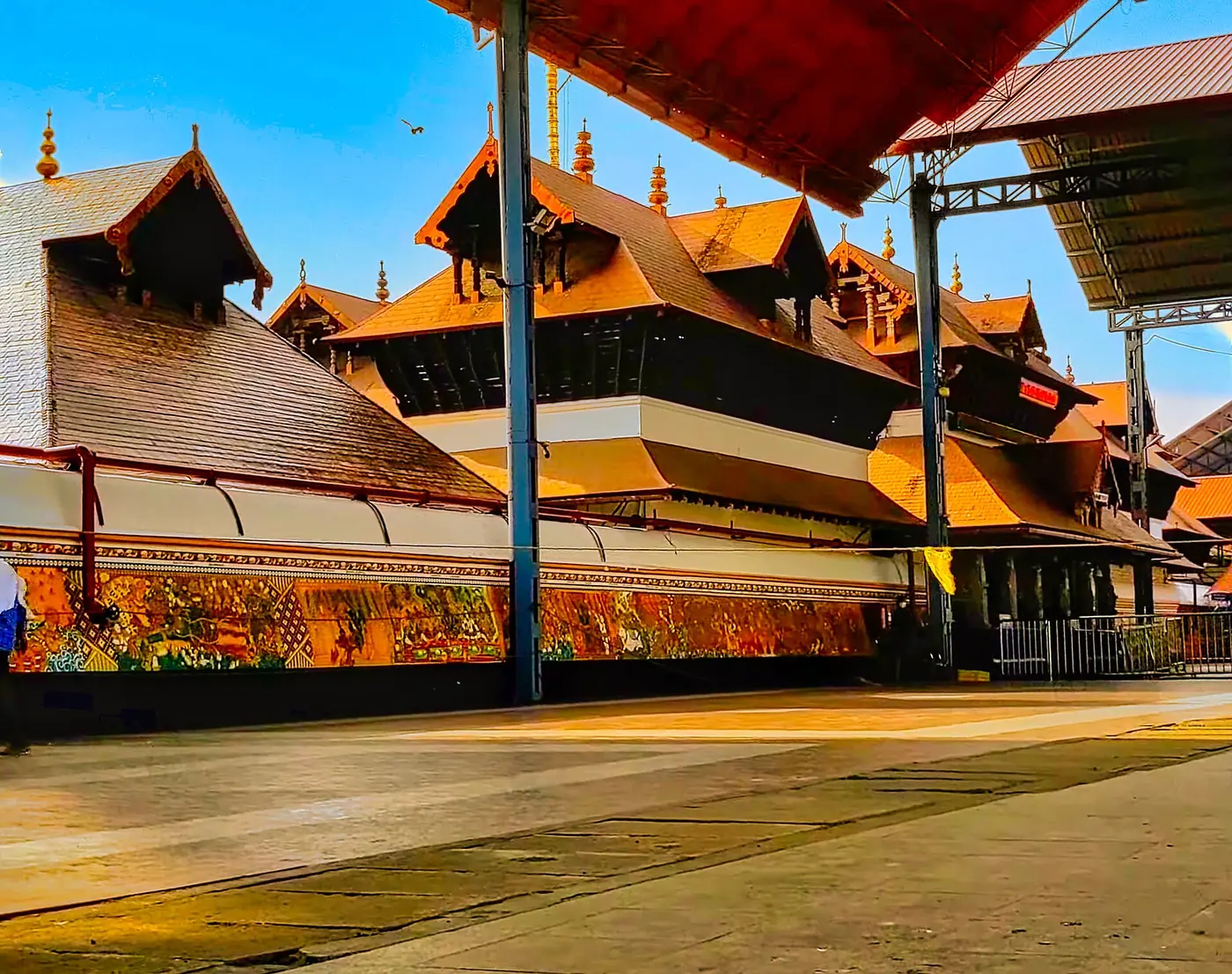
Famous Temples in Kerala: A Source-Checked Guide to Guruvayur, Padmanabhaswamy, Vadakkunnathan, Attukal, Sabarimala and 70 More
Famous Krishna Temples in India: 13 Source-Checked Temples from Guruvayur to Mathura, Vrindavan, Dakor and Pandharpur