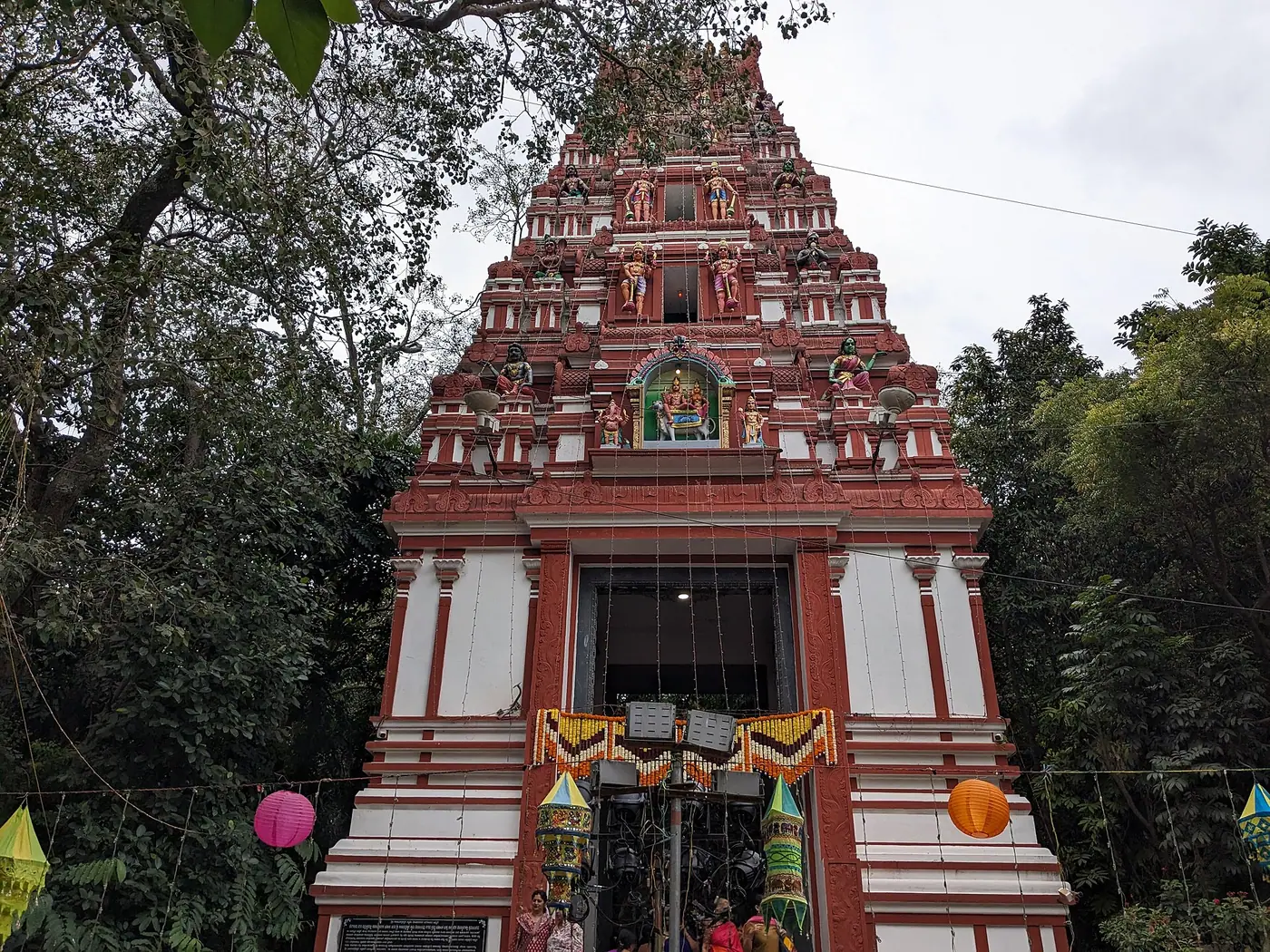
Kadu Malleshwara Temple
ಕಾಡು ಮಲ್ಲೇಶ್ವರ ದೇವಸ್ಥಾನ
Shiva temple · Bengaluru (Malleswaram), Bengaluru Urban, Karnataka, India
Photo: Mythic Society Inscriptions 3D Scanning Project · CC BY-SA 4.0 · via Wikimedia Commons
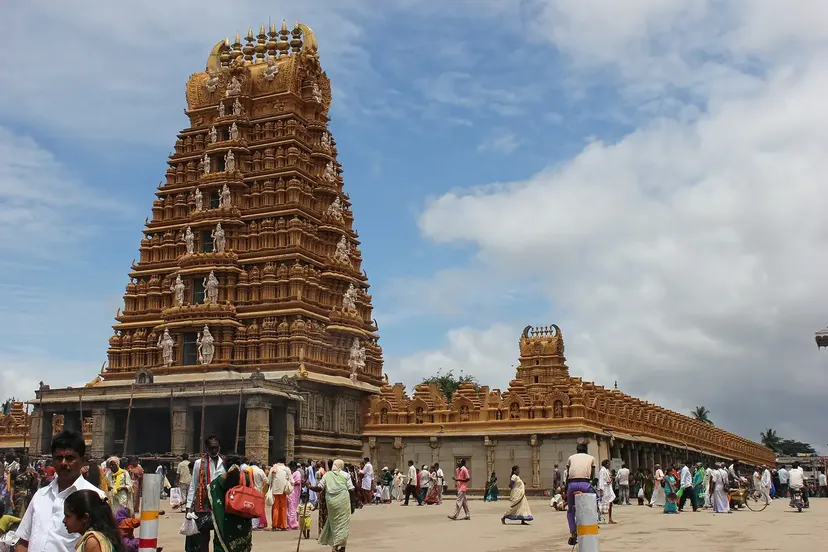
Kadu Malleshwara Temple is a Shiva temple on a small hillock in Malleswaram, north-west Bengaluru, Karnataka. Shiva is worshipped here as Mallikarjuna, or Kadu Malleshwara. The name is usually explained as "Mallikarjuna of the forest", since kadu means forest in Kannada and recalls the woodland that once covered the area.
The temple matters for the history of Bengaluru as well as for worship. Malleswaram, one of the city's oldest planned neighbourhoods, laid out in 1889, takes its name from this temple. An inscription of 1669 at the site records a Maratha grant for the temple's upkeep.
Faith & Tradition
Religious Significance of Kadu Malleshwara Temple
For local devotees the temple is the neighbourhood's guardian shrine of Shiva, and the street below it, 15th Cross, is known locally as Temple Road because of the several shrines along it. Across the road is the Sri Dakshinamukha Nandi Tirtha Kalyani Kshetra (Nandeeshwara Temple), where water flows from the mouth of a south-facing stone Nandi onto a Shiva linga and into a stepped tank. Many visitors see the two together.
Writing in The Hindu, historian S. K. Aruni pointed out that the 1669 inscription warns both Hindus and Muslims against interfering with the grant, which he reads as evidence of a mixed population in mid-seventeenth-century Bengaluru.
Heritage
History of Kadu Malleshwara Temple
The best-documented fact about the temple is its inscription. Carved on the rock outcrop at the temple and dated 1669, it records a grant of the village of Medaralingana (Medaraninganahalli) by the Maratha chief Venkoji, also known as Ekoji I, for the upkeep of the Kadu Malleswara temple. Venkoji was a son of Shahaji Bhonsle and a half-brother of Shivaji. Shahaji had taken Bengaluru as a jagir under the Bijapur Sultanate after defeating the Kempegowda rulers. The granted village lay in the area now occupied by the Indian Institute of Science. The inscription is written in old Kannada, and The Wire's Livewire describes it as Bengaluru's only Maratha-era inscription in that script.
Popular accounts, including Wikipedia, say the temple was built in 1669 by Venkoji. The inscription itself, as described by The Hindu and The Wire, records a grant to a temple that already existed. Historians quoted by The New Indian Express say Venkoji 'developed' the temple. The exact founding date is therefore unknown, and 1669 is the earliest firm date on record.
The temple predates the neighbourhood around it. The Mysore government laid out Malleswaram in 1889, and according to The Hindu the layout was named after the Kadu Mallikarjuna (Malleswara) temple, which formed its eastern edge.
The Nandi Tirtha shrine opposite was unearthed in 1997, when land was being dug up for a commercial building, and was saved after local residents protested. The New Indian Express reported that its age is uncertain: an independent historian put it in the seventeenth century, and an ASI official said it is a state-protected monument rather than an ASI site. A popular belief that the Vrishabhavathi river rises here has not been proven.
Architecture and sacred features
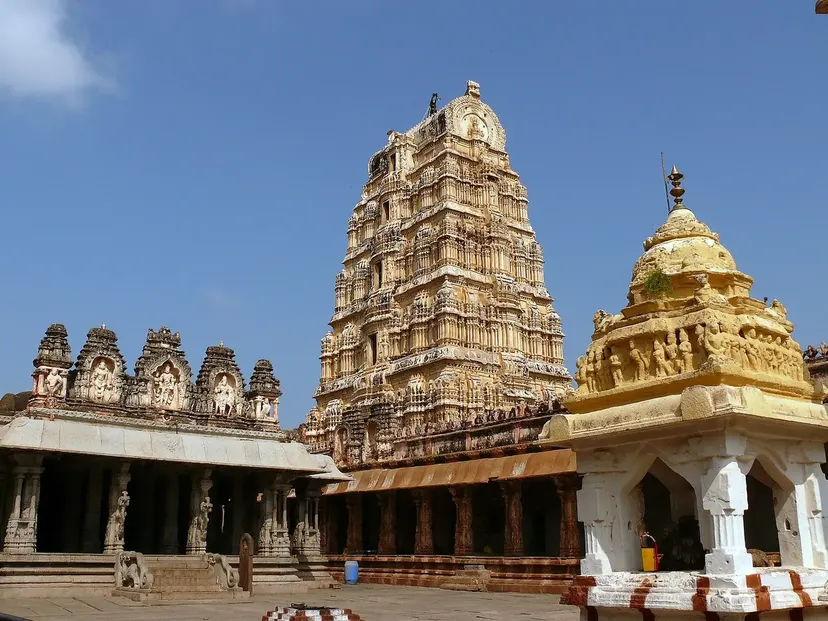
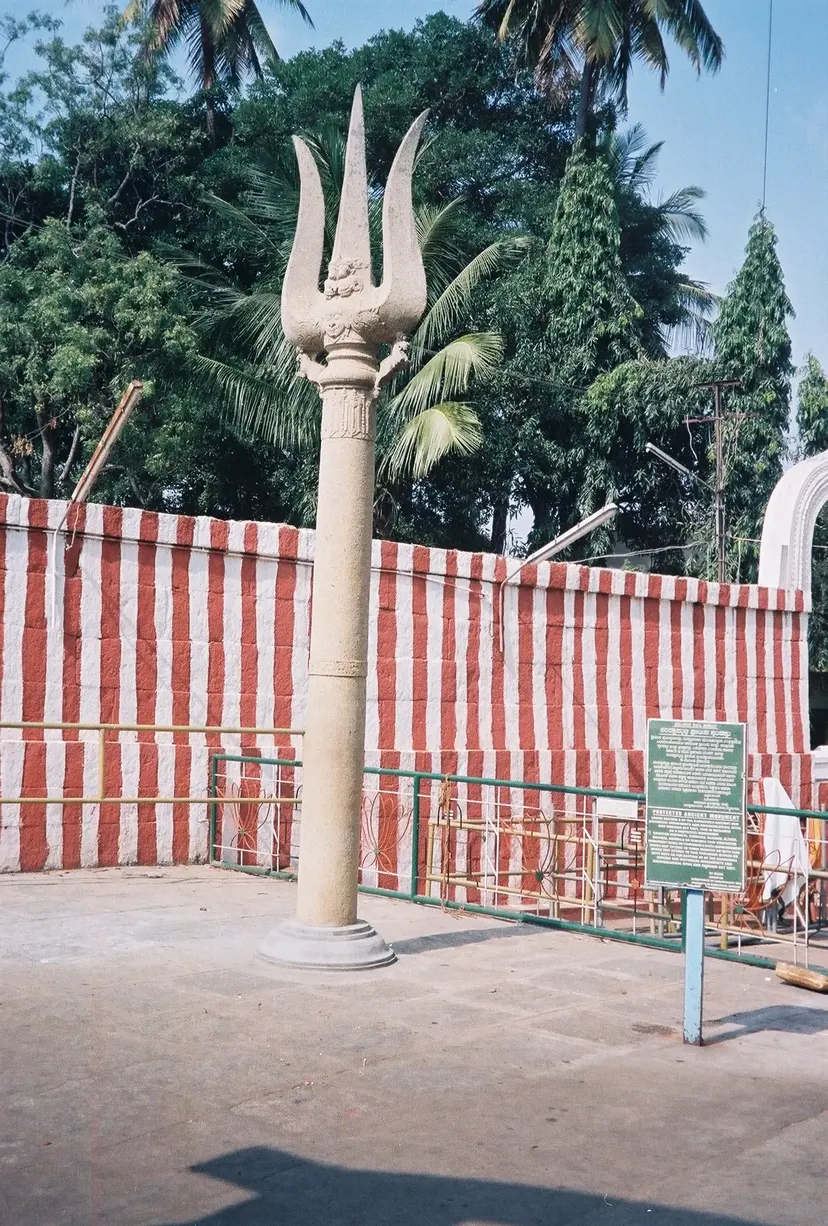
The temple is a modest hilltop shrine built in the South Indian (Dravidian) idiom, reached by steps from Temple Road. Below it, the Nandi Tirtha complex is a sunken stone courtyard with pillared corridors around a central kalyani (stepped tank). Its south-facing Nandi and linga are unusual, and the source of its constant flow of water has never been determined.
Plan Your Visit
Darshan and Visitor Information
Kadu Malleshwara is a working temple and is especially crowded on Maha Shivaratri. No official visitor rules or timings were available during research, so confirm current arrangements with the temple office before visiting.
Timings and arrangements change with seasons and festivals. Confirm current details with the temple administration before travelling. Last reviewed 5 October 2026.
Sacred Calendar
Festivals at Kadu Malleshwara Temple
Maha Shivaratri
The temple's main annual festival, when large numbers of devotees from across Bengaluru come for night-long worship of Kadu Malleshwara.
Location
How to Reach Kadu Malleshwara Temple
The temple is on 15th Cross (Temple Road) in Malleswaram, north-west Bengaluru. The nearest airport is Kempegowda International Airport, Bengaluru. Major railheads include KSR Bengaluru City and Yesvantpur Junction. Malleswaram is well served by city buses and the Namma Metro Green Line, and the temple is easy to reach by auto-rickshaw or taxi from anywhere in central Bengaluru.
Location: Bengaluru (Malleswaram), Bengaluru Urban, Karnataka, India
Nearest airport: Kempegowda International Airport, Bengaluru
Nearest railway station: KSR Bengaluru City / Yesvantpur Junction
More in Hindu temples in Karnataka · Shiva temples · Temples in Bengaluru North Taluk · Temples in Bengaluru Urban District
Questions
Kadu Malleshwara Temple: Frequently Asked Questions
Who built Kadu Malleshwara Temple?
The founding date is not recorded. An inscription of 1669 records that the Maratha chief Venkoji (Ekoji I), half-brother of Shivaji, granted a village for the temple's upkeep. Some popular accounts therefore credit him with building or developing it.
What does 'Kadu Malleshwara' mean?
Kadu means forest in Kannada, and Malleshwara is a name of Shiva as Mallikarjuna. The name refers to the forest that once surrounded the hillock.
Is Malleswaram named after this temple?
Yes. When the Mysore government laid out Malleswaram in 1889, the new neighbourhood was named after the Kadu Malleswara temple.
What is the Nandi Tirtha temple opposite Kadu Malleshwara?
It is the Sri Dakshinamukha Nandi Tirtha Kalyani Kshetra, a sunken temple unearthed in 1997. Water flows from a south-facing stone Nandi's mouth onto a Shiva linga and into a stepped tank.
Does the Vrishabhavathi river start at Kadu Malleshwara?
Local belief says so, but historians quoted in The New Indian Express say there is no proof. The area's topography does suggest a stream once flowed down from the hillock.
What does the 1669 inscription say?
It records Venkoji's grant of the village of Medaralingana, in today's Indian Institute of Science area, to the temple. It also warns members of all communities against interfering with the grant.
Sources and attribution
- © OpenStreetMap contributors — location data © OpenStreetMap contributors (ODbL)
- Wikidata Q6345722 — structured data (CC0)
- Wikipedia — Kadu Malleshwara Temple — text facts from Wikipedia, licensed CC BY-SA 4.0
- The Hindu — Made for all communities (S. K. Aruni, 6 March 2013)
- The New Indian Express — Mystery on Malleswaram 15th Cross (29 June 2017)
- The Wire (Livewire) — Bengaluru and Malleswaram: The Shivaji Connection (29 October 2021)
- Incredible India, Ministry of Tourism, Government of India — Exploring the spiritual gems of Bengaluru
- Wikipedia — Kadu Malleshwara Temple
- Wikipedia — Malleshwaram, Bengaluru
Further reading: Kadu Malleshwara Temple on Wikipedia (CC BY-SA 4.0).
Spotted an error? Write to info@hindutone.com — see our editorial policy.