Lalita Pancharatnam (Pratah Smarami Lalita): Full Text with Meaning
The Lalita Pancharatnam, 'five jewels for Lalita', is a dawn prayer to the Goddess Lalita Tripurasundari attributed to Adi Shankaracharya: remember her face, worship her hands, bow to her feet, praise her and speak her names. Here are all 6 verses in Devanagari and IAST from sanskritdocuments.org, with our own meaning and how to recite it.
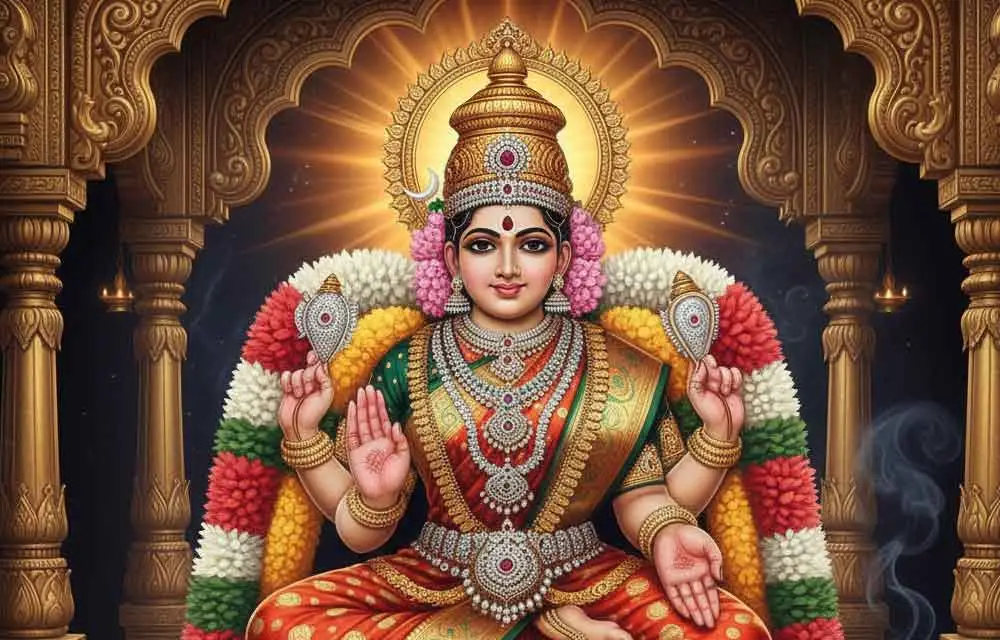
The Lalita Pancharatnam, 'five jewels for Lalita', is a dawn prayer to the Goddess Lalita Tripurasundari attributed to Adi Shankaracharya: remember her face, worship her hands, bow to her feet, praise her and speak her names. Here are all 6 verses in Devanagari and IAST from sanskritdocuments.
Quick answer: The Lalita Pancharatnam ('five jewels for Lalita', also called the Lalita Panchakam) is a Sanskrit dawn prayer of 5 verses and a phalashruti, attributed to Adi Shankaracharya. Each verse begins with 'at dawn': I remember her face, I worship her hands, I bow to her feet, I praise her, and I speak her names. It is recited every morning and especially on Fridays.
Last updated: 20 October 2026. The Sanskrit below is the complete text published by sanskritdocuments.org (file lalita5.itx), converted to Devanagari and IAST by software from the source, with no word typed by hand. Our own plain-English meaning follows every verse.
Lalita Pancharatnam: full text with meaning
Each verse has two long lines in the vasantatilaka metre. Each verse appears in Devanagari and then in IAST transliteration, followed by its meaning.
The five jewels (verses 1 to 5)
Verse 1
प्रातः स्मरामि ललितावदनारविन्दं बिम्बाधरं पृथुलमौक्तिकशोभिनासम् ।
आकर्णदीर्घनयनं मणिकुण्डलाढ्यं मन्दस्मितं मृगमदोज्ज्वलभालदेशम् ॥ १॥
prātaḥ smarāmi lalitāvadanāravindaṃ bimbādharaṃ pṛthulamauktikaśobhināsam |
ākarṇadīrghanayanaṃ maṇikuṇḍalāḍhyaṃ mandasmitaṃ mṛgamadojjvalabhāladeśam || 1||
Meaning: At dawn I remember the lotus face of Lalita: her lips red as the bimba fruit, her nose shining with a large pearl, her eyes long, reaching to her ears, adorned with jewelled earrings, gently smiling, her forehead bright with musk.
Verse 2
प्रातर्भजामि ललिताभुजकल्पवल्लीं रत्नाङ्गुळीयलसदङ्गुलिपल्लवाढ्याम् ।
माणिक्यहेमवलयाङ्गदशोभमानां पुण्ड्रेक्षुचापकुसुमेषुसृणीःदधानाम् ॥ २॥
prātarbhajāmi lalitābhujakalpavallīṃ ratnāṅguḻīyalasadaṅgulipallavāḍhyām |
māṇikyahemavalayāṅgadaśobhamānāṃ puṇḍrekṣucāpakusumeṣusṛṇīḥdadhānām || 2||
Meaning: At dawn I worship Lalita's arm, a wish-fulfilling creeper, rich with tender fingers that shine with jewelled rings, resplendent with bracelets of rubies and gold and with armlets, holding the sugarcane bow, the flower arrows and the goad.
Verse 3
प्रातर्नमामि ललिताचरणारविन्दं भक्तेष्टदाननिरतं भवसिन्धुपोतम् ।
पद्मासनादिसुरनायकपूजनीयं पद्माङ्कुशध्वजसुदर्शनलाञ्छनाढ्यम् ॥ ३॥
prātarnamāmi lalitācaraṇāravindaṃ bhakteṣṭadānanirataṃ bhavasindhupotam |
padmāsanādisuranāyakapūjanīyaṃ padmāṅkuśadhvajasudarśanalāñchanāḍhyam || 3||
Meaning: At dawn I bow to Lalita's lotus feet, ever intent on granting the wishes of her devotees, the boat across the ocean of worldly life, worshipped by Brahma, who sits on the lotus, and by the lords of the gods, marked with the lotus, the goad, the banner and the discus.
Verse 4
प्रातः स्तुवे परशिवां ललितां भवानीं त्रय्यन्तवेद्यविभवां करुणानवद्याम् ।
विश्वस्य सृष्टिविलयस्थितिहेतुभूतां विश्वेश्वरीं निगमवाङ्मनसातिदूराम् ॥ ४॥
prātaḥ stuve paraśivāṃ lalitāṃ bhavānīṃ trayyantavedyavibhavāṃ karuṇānavadyām |
viśvasya sṛṣṭivilayasthitihetubhūtāṃ viśveśvarīṃ nigamavāṅmanasātidūrām || 4||
Meaning: At dawn I praise Lalita Bhavani, the consort of the supreme Shiva, whose glory is known through the Upanishads, faultless in compassion, the cause of the creation, preservation and dissolution of the universe, queen of the universe, far beyond the reach of scripture, speech and mind.
Verse 5
प्रातर्वदामि ललिते तव पुण्यनाम कामेश्वरीति कमलेति महेश्वरीति ।
श्रीशाम्भवीति जगतां जननी परेति वाग्देवतेति वचसा त्रिपुरेश्वरीति ॥ ५॥
prātarvadāmi lalite tava puṇyanāma kāmeśvarīti kamaleti maheśvarīti |
śrīśāmbhavīti jagatāṃ jananī pareti vāgdevateti vacasā tripureśvarīti || 5||
Meaning: At dawn, O Lalita, I speak your holy names with my voice: Kameshvari, Kamala, Maheshvari, Shri Shambhavi, the supreme Mother of the worlds, the Goddess of speech, Tripureshvari.
The phalashruti (verse 6)
Verse 6
यः श्लोकपञ्चकमिदं ललिताम्बिकायाः सौभाग्यदं सुललितं पठति प्रभाते ।
तस्मै ददाति ललिता झटिति प्रसन्ना विद्यां श्रियं विमलसौख्यमनन्तकीर्तिम् ॥ ६॥
yaḥ ślokapañcakamidaṃ lalitāmbikāyāḥ saubhāgyadaṃ sulalitaṃ paṭhati prabhāte |
tasmai dadāti lalitā jhaṭiti prasannā vidyāṃ śriyaṃ vimalasaukhyamanantakīrtim || 6||
Meaning: To one who recites at dawn these five graceful verses to Mother Lalita, which bring good fortune, Lalita, quickly pleased, gives learning, prosperity, pure happiness and endless fame.
Colophon
॥ इति श्रीमच्छङ्करभगवतः कृतौ ललिता पञ्चकं सम्पूर्णम् ॥
|| iti śrīmacchaṅkarabhagavataḥ kṛtau lalitā pañcakaṃ sampūrṇam ||
Meaning: Thus ends the Lalita Panchakam, a work of the revered Shankara Bhagavatpada.
Five ways of worship in five verses
The five verses are a complete morning worship in miniature. Each uses a different verb and turns to a different aspect of the Goddess:
| Verse | Opening words | Act of worship | Turned to |
|---|---|---|---|
| 1 | pratah smarami | I remember | her face |
| 2 | pratar bhajami | I worship | her arm and hands, with bow, arrows and goad |
| 3 | pratar namami | I bow | her lotus feet |
| 4 | pratah stuve | I praise | her as the cause and queen of the universe |
| 5 | pratar vadami | I speak | her holy names |
The sequence moves from the mind (remembering) to the hands (worship) to the body (bowing) to the voice (praise and names), so that the whole person is offered at the start of the day.
When is the Lalita Pancharatnam traditionally recited?
- Every morning: each verse begins 'pratah', at dawn, and verse 6 asks for it to be recited 'prabhate', in the early morning.
- Fridays: the day of the Devi; see our Friday guide and the Friday rituals guide for NRI families.
- Before the Lalita Sahasranama: as a short opening; see our Lalita Sahasranama complete guide.
- Lalita Panchami and Navaratri: Lalita Panchami 2026 fell on 15 October, during Sharad Navaratri.
How to recite it at home
- Recite it soon after waking, after washing, before a picture of Lalita, Kamakshi or any form of the Devi, with a lamp if you can.
- Verse 1: close your eyes and picture her smiling face. Verse 2: picture her hands with the sugarcane bow and flower arrows. Verse 3: bow your head. Verse 4: fold your hands. Verse 5: say each name clearly.
- Recite verse 6 once at the end.
- On Fridays, follow it with the Lalita Sahasranama, the Sri Suktam or the Kanakadhara Stotram.
Pronunciation help
- In the IAST, a line over a vowel (ā, ī, ū) means it is held twice as long; ṇ and ṭ are made with the tongue curled back; ś and ṣ are both 'sh' sounds.
- The source spells one word in verse 2 with ḻ (ratnāṅguḻīya), a South Indian spelling of the l in 'anguliya' (ring); say it as an ordinary l.
- Verse 4 ends with a long compound: ni-ga-ma-vāṅ-ma-na-sā-ti-dū-rām, 'far beyond scripture, speech and mind'.
Traditional beliefs about the Pancharatnam
Verse 6 is the phalashruti: Lalita, quickly pleased, gives learning, prosperity, pure happiness and endless fame to one who recites the five verses at dawn. Devotees traditionally believe that reciting it with faith:
- begins the day in the Mother's presence;
- brings grace, beauty of mind and good fortune into the home;
- prepares the mind for the Lalita Sahasranama and Sri Vidya worship;
- is a complete worship for a busy morning.
These are matters of faith, not guarantees, and the hymn is best recited for the joy of remembering the Mother rather than for any result.
Tips for NRI families
- Two minutes before work or school. The whole prayer takes about two minutes; recite it with children before they leave the house.
- Learn verse 5 first. It is a string of the Mother's names: Kameshvari, Kamala, Maheshvari, Shambhavi, Tripureshvari.
- Pair it with Surya at dawn. Many families recite it right after offering water to the Sun; see our Surya worship guide.
- Go deeper. The Lakshmi hub and Durga hub gather our Devi guides; the Bhavani Ashtakam is another short prayer to the Mother by Shankaracharya.
Frequently asked questions
Who composed the Lalita Pancharatnam?
The source attributes it to Shankara: its Author field is Shankaracharya and its colophon reads 'iti shrimach-Chhankara-bhagavatah kritau Lalita-panchakam sampurnam', the Lalita Panchakam, a work of Shankara Bhagavatpada.
Why is it called Pancharatnam?
Pancharatna means 'five jewels': the five verses of praise. The source calls it the Lalita Panchakam or Lalita Pratah-stotra-panchakam, 'five verses to Lalita at dawn'. A sixth verse gives the phalashruti.
Who is Lalita?
Lalita Tripurasundari, 'she who plays', the Divine Mother worshipped in the Sri Vidya tradition and praised in the Lalita Sahasranama. In verse 2 she holds the sugarcane bow, the flower arrows and the goad.
When is it traditionally recited?
At dawn, as each verse says ('pratah', in the morning), and especially on Fridays, Purnima, Navaratri and Lalita Panchami.
What does the phalashruti promise?
Verse 6 says that Lalita, quickly pleased, gives learning, prosperity, pure happiness and endless fame to one who recites the five verses at dawn. These are the text's traditional words, recited in faith, not guarantees.
How long does it take?
About two minutes. It is often recited three times.
Editor's note (20 October 2026)
This page was published on 20 October 2026 at the address readers and search engines were already requesting. The Sanskrit is the full text of the Lalita Panchakam on sanskritdocuments.org (file lalita5.itx, titled 'Shri Lalita Pratah-stotra-panchakam', transliterated by Kapila Shankaran and proofread by Sowmya Ramkumar; Author field: Shankaracharya; colophon 'iti shrimach-Chhankara-bhagavatah kritau Lalita-panchakam sampurnam'). It is widely known as the Lalita Pancharatnam. It was converted from ITRANS to Devanagari and IAST by software; no letter has been changed, including the source's spelling ratnāṅguḻīya in verse 2. The phalashruti is given as the text's own traditional words.
Related guides
You might also like
Lalita Sahasranama — Complete Guide to the 1000 Names of Devi Lalita Tripura Sundari, Sri Vidya Tradition, Friday Practice & 30-Day NRI Guide for 2026
Surya Kavacham (Yajnavalkya): Full Text with Meaning
Bhavani Ashtakam (Adi Shankaracharya): Full Text with Meaning