Top 10 Must-Visit Temples in Telangana
Telangana, a state rich in culture and history, is home to many ancient temples that hold spiritual, architectural, and historical significance.
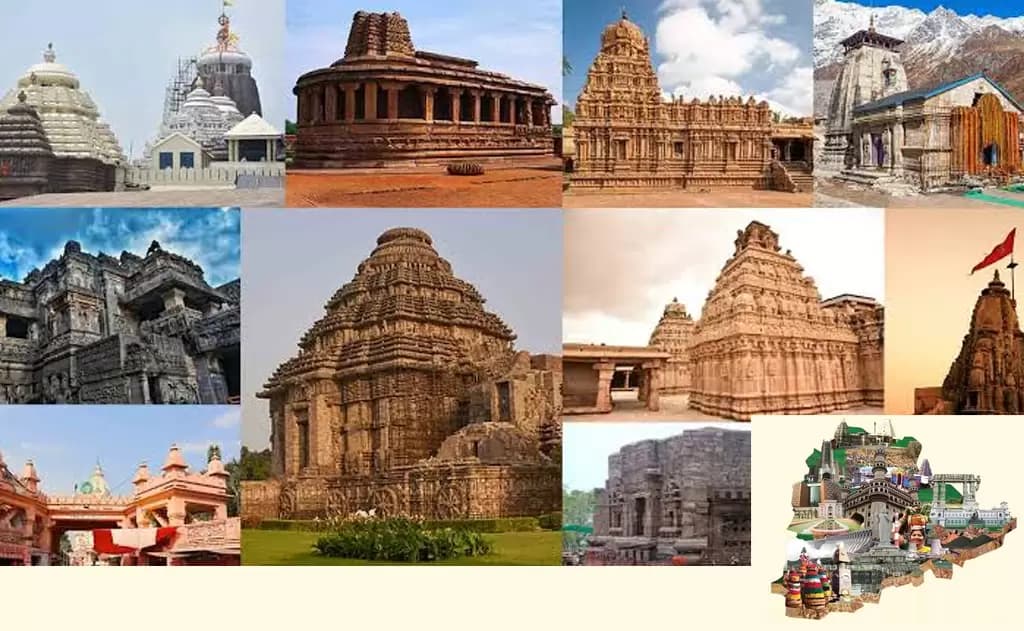
Telangana, a state rich in culture and history, is home to many ancient temples that hold spiritual, architectural, and historical significance.
Telangana, a state rich in culture and history, is home to many ancient temples that hold spiritual, architectural, and historical significance. From grand, well-known shrines to serene, lesser-known sanctuaries, here are the top 10 temples you must visit in Telangana.
Yadagirigutta Temple (Yadadri)
Deity: Lord Lakshmi Narasimha
Highlights: Located on a picturesque hillock, this temple is a major pilgrimage center. Recent renovations have enhanced its grandeur, blending traditional and modern architectural styles.
Location: Yadadri Bhuvanagiri district
Bhadrachalam Temple
Deity: Lord Rama
Highlights: Situated on the banks of the Godavari River, this iconic temple is closely associated with the Ramayana. The annual Sri Rama Navami celebrations are a major attraction.
Location: Bhadradri Kothagudem district
Vemulawada Rajarajeshwara Temple
Deity: Lord Shiva (Rajarajeshwara Swamy)
Highlights: Known as Dakshina Kashi, this temple is famous for its unique ritual where devotees offer silver coins for blessings. The temple also houses a shrine dedicated to Lord Vishnu.
Location: Rajanna Sircilla district
Thousand Pillar Temple
Deities: Lord Shiva, Vishnu, and Surya
Highlights: This 12th-century temple is a marvel of Kakatiya architecture, featuring intricately carved pillars and sculptures. It is a testament to the region's rich history.
Location: Hanamkonda, Warangal
Ramappa Temple
Deity: Lord Shiva (Ramalingeswara)
Highlights: A UNESCO World Heritage Site, this temple is renowned for its exquisite sandstone carvings and floating bricks used in its construction.
Location: Mulugu district
Basara Saraswathi Temple
Deity: Goddess Saraswathi
Highlights: A unique temple dedicated to the goddess of learning, it is a popular destination for Aksharabhyasam (initiation of education).
Location: Nirmal district
Jogulamba Temple
Deity: Goddess Jogulamba
Highlights: One of the 18 Shakti Peethas, this temple is revered for its spiritual significance. It is located at the confluence of the Krishna and Tungabhadra rivers.
Location: Gadwal district
Keesaragutta Temple
Deity: Lord Shiva
Highlights: A serene hilltop temple surrounded by lush greenery, it is believed to be the place where Lord Rama worshipped Lord Shiva during his exile.
Location: Medchal-Malkajgiri district
Bhadrakali Temple
Deity: Goddess Bhadrakali
Highlights: Located near a scenic lake, this ancient temple is believed to have been built during the Kakatiya dynasty. It is a must-visit for history and nature enthusiasts.
Location: Warangal
Kondagattu Anjaneya Swamy Temple
Deity: Lord Hanuman
Highlights: Surrounded by hills and lush greenery, this temple is a haven for Hanuman devotees. It is also known for its serene and spiritual ambiance.
Location: Jagitial district
These temples not only offer spiritual solace but also provide a glimpse into Telangana's glorious heritage and natural beauty. Whether you are a devotee or a traveler, these sacred sites are sure to leave a lasting impression.
What makes Kakatiya-era temple architecture distinctively Telanganan?
The Kakatiya dynasty (roughly 10th–14th centuries CE) left an architectural vocabulary that is unmistakably its own. Their craftsmen worked primarily in dark grey-green basalt, a locally quarried stone that allowed for exceptionally fine detailing. The Thousand Pillar Temple at Hanamkonda and the Ramappa Temple at Palampet (Mulugu district) both demonstrate the hallmark Kakatiya star-shaped (stellate) platform, known as a jagati, which creates dramatic interplay of light and shadow across the exterior walls throughout the day.
Kakatiya sculptors were particularly skilled in depicting the Nayika (heroine) figures, bracket sculptures of celestial women in dynamic dance poses, which line the exterior eaves of temples like Ramappa. The 'floating bricks' referenced in descriptions of Ramappa are technically porous, lightweight bricks — likely made with a specific mix of rice husk and clay — that were used in the shikhara (tower) to reduce structural load. This engineering choice has been confirmed by archaeological studies at the site, and it contributed to the temple surviving the 1323 CE Tughlaq invasion relatively intact.
How do the Shakti Peethas of Telangana connect to pan-Indian Devi traditions?
The Shakti Peetha tradition traces its origin to the Devi Bhagavata Purana and the Kalika Purana, both of which describe how the body of Sati fell to earth in multiple pieces after Vishnu's Sudarshana Chakra severed her corpse during Shiva's grief-stricken wandering. Each site where a body part or ornament fell became a Peetha, a seat of the Goddess. Telangana shelters the Jogulamba Peetha at Alampur (Jogulamba Gadwal district), where the upper teeth of Sati are said to have fallen, making it one of the most ancient Shakti shrines in the Deccan.
Jogulamba Devi is worshipped in her Ugra (fierce) form, and unlike many Devi temples where the deity is depicted in a saumya (gentle) iconographic mode, the idol here traditionally showed the goddess in a seated position with a composite iconography. The kshetrapala (guardian deity) at this site is Bala Brahmeswara Swamy, reinforcing the Shaiva-Shakta synthesis so characteristic of the region. Pilgrims travelling the full circuit of the 18 Maha Shakti Peethas consider Alampur an essential stop, and the nearby cluster of Navabrahma temples — nine Shiva temples of the Chalukyan period — adds further sacred density to the location.
Why is Bhadrachalam considered the Ayodhya of the South?
Bhadrachalam's association with the Ramayana rests on the belief, recorded in local sthala puranas, that this stretch of the Godavari River corresponds to the Dandakaranya forest where Rama, Sita, and Lakshmana spent a significant portion of their exile. The presiding deity, Sri Sitaramachandra Swamy, is depicted in a rare and auspicious pattabhisheka (coronation) posture alongside Sita, Lakshmana, and Hanuman — an iconographic arrangement that distinguishes Bhadrachalam from most other Rama temples in India.
The temple rose to pan-regional fame largely through the 17th-century devotee-saint Kancherla Gopanna, popularly known as Bhadrachala Ramadasu, who served as a tahsildar under the Golconda Sultanate. He is said to have diverted state revenue to fund the temple's construction, for which he was imprisoned. His compositions, the Dasarathi Kirtanalu, remain living liturgy in the temple's daily worship and are sung during Sri Rama Navami, when the celestial wedding (Kalyanotsavam) of Rama and Sita is re-enacted each year on the banks of the Godavari with enormous public participation.
What is the significance of Aksharabhyasam at Basara Saraswathi Temple?
Gnana Saraswathi Temple at Basara, situated on the northern bank of the Godavari River in Nirmal district, is one of only two temples in India primarily consecrated to Goddess Saraswathi, the other being at Sringeri in Karnataka. The presiding deity here is worshipped as Gnana Saraswathi — Saraswathi as the embodiment of pure knowledge — and the idol is said to have been established by Sage Vyasa after he composed the Mahabharata, a tradition preserved in the temple's own sthala purana.
Aksharabhyasam, the formal initiation of a young child (typically between the ages of two and five) into learning, involves a priest guiding the child's finger to write the first syllable — usually 'Sri' or 'Ha' in Telugu — in a plate of raw rice. Families travel from across Telangana, Andhra Pradesh, and Maharashtra for this ceremony, believing that beginning education under Saraswathi's direct presence at Basara confers lifelong sharpness of intellect. Vijayadasami (Dussehra) is the most auspicious day for this ritual, and the temple receives tens of thousands of families on that single day each year.
How has the renovation of Yadagirigutta transformed it into a heritage pilgrimage experience?
The Yadadri Lakshmi Narasimha Swamy Temple sits atop a granite hillock in Yadadri Bhuvanagiri district and enshrines Lord Narasimha — the fourth avatar of Vishnu — in five distinct forms: Jwala, Gandabherunda, Ugra, Yogananda, and Lakshminarasimha. These five forms are housed in natural caves within the hill itself, giving the temple a character that is simultaneously geological and sacred. The cave shrines are mentioned in the Skandha Purana, reinforcing the site's antiquity.
The large-scale renovation completed in the early 2020s was guided by Agama shastra principles to ensure the expanded structure remained ritually valid. White Rajasthan marble, intricately carved gopurams (gateway towers) rising over 100 feet, and a new pradakshina path (circumambulatory walkway) were incorporated while preserving the original cave sanctums untouched. The project also included a large pushkarini (sacred tank), restoring a feature historically integral to Vaishnava temples. The result is a rare example of contemporary temple construction that consciously honours both the Pancharatra Agama framework and the ecological character of the original hillock site.
Which lesser-visited temples in Telangana deserve a pilgrim's attention beyond the top ten?
The Kolanupaka Mahavishnu Temple in Yadadri Bhuvanagiri district, also known as Kolanupaka Swayambhu Narasimha Temple, houses a swayambhu (self-manifested) emerald idol of Mahavishnu that is among the most prized in south India. Nearby stands the Someswara Swamy Jain Temple, making the village an unusually rich site of multi-religious heritage from the Kalyani Chalukya period. Epigraphic inscriptions at the site date the complex to around the 11th century CE.
The Sangameswara Temple at the Sangam (confluence) of the Krishna and Bhima rivers in Waddepally, Nalgonda district, submerges partially during monsoon floods each year and re-emerges as waters recede — a natural cycle that local tradition interprets as the deity's annual abhisheka (sacred bath) by the rivers themselves. Further north, the Kondagattu Anjaneya Temple near Jagtial is one of the most visited Hanuman shrines in Telangana, set dramatically on a forested hillside and associated with the relief of mental afflictions — thousands of devotees bring family members for the annual Brahmotsavam, believing the darshan itself carries healing grace.
Frequently Asked Questions
Where is Top 10 Must located?
Telangana, a state rich in culture and history, is home to many ancient temples that hold spiritual, architectural, and historical significance. From grand, well-known shrines to serene, lesser-known sanctuaries, here are the top 10 temples you must visit in Telangana.
Who is the presiding deity of Top 10 Must?
The temple's presiding deity and its significance are described in the guide above.
What are the timings and how do I reach Top 10 Must?
Temples typically open early morning and evening; confirm current darshan timings before visiting. The nearest airport, railway station and road routes are covered in the guide above.
What is the best time to visit Top 10 Must?
Major festival days and the cooler months are popular, though weekday mornings offer a calmer darshan. Plan around the temple's key festivals for the most vibrant experience.
You might also like
Janmashtami 2026 in India: Date, Rituals & Top Temples to Visit
Angkor Wat: Divine Mysteries & Soul-Stirring Miracles of Lord Vishnu's Cosmic Temple
Prambanan: Divine Mysteries & Soul-Stirring Miracles of the Trimurti in Indonesia