Temples Along the Krishna River: A Sacred Pilgrimage
The Krishna River, originating in the Western Ghats, flows through Karnataka, Maharashtra, Telangana, and Andhra Pradesh, offering spiritual and cultural…
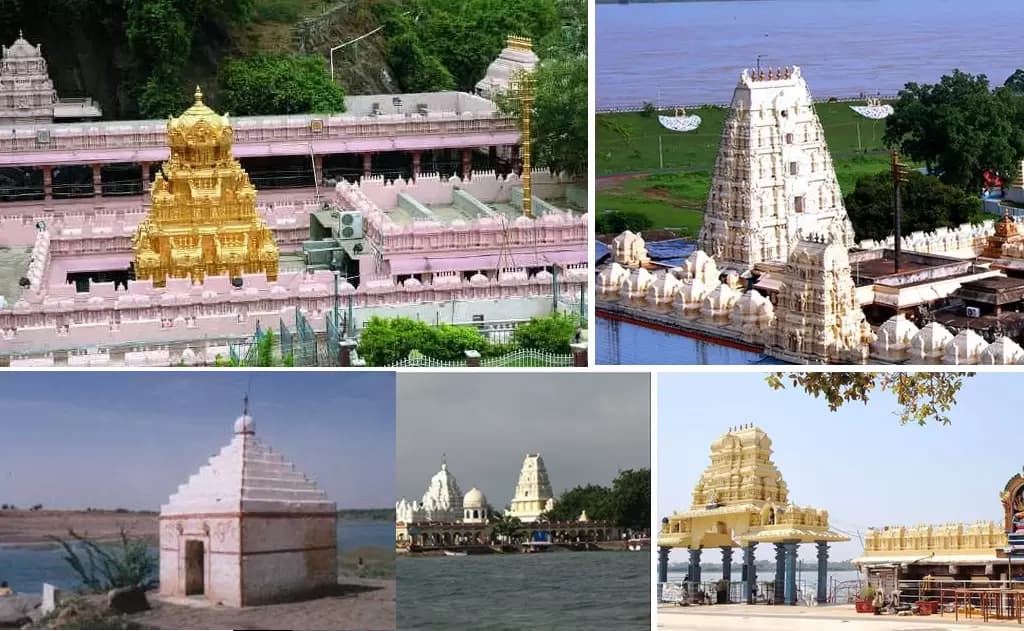
The Krishna River, originating in the Western Ghats, flows through Karnataka, Maharashtra, Telangana, and Andhra Pradesh, offering spiritual and cultural…
The Krishna River, originating in the Western Ghats, flows through Karnataka, Maharashtra, Telangana, and Andhra Pradesh, offering spiritual and cultural significance along its course. Its banks are adorned with temples that attract pilgrims and history enthusiasts alike. Here is a journey through some of the most revered temples along the Krishna River.
Temples in Karnataka
Sri Dattatreya Temple, Ganagapur
Deity: Lord Dattatreya
Highlights: This temple is a major pilgrimage site for devotees of Lord Dattatreya. It is believed to be the place where Dattatreya performed penance.
Location: Kalaburagi district
Kudalasangama Temple
Deity: Lord Shiva (Sangameshwara)
Highlights: Located at the confluence of the Krishna and Malaprabha rivers, this temple is associated with Basavanna, the founder of the Lingayat sect.
Location: Bagalkot district
Narasimha Temple, Sogal
Deity: Lord Narasimha
Highlights: A serene temple surrounded by nature, it is believed to have been a place of worship for centuries.
Location: Belagavi district
Temples in Maharashtra
Sangameshwar Temple
Deity: Lord Shiva
Highlights: Situated at the confluence of the Krishna and Warna rivers, this temple is known for its ancient roots and tranquil setting.
Location: Sangli district
Mahalakshmi Temple, Kolhapur
Deity: Goddess Mahalakshmi
Highlights: While not directly on the Krishna, it is closely linked to the river’s cultural landscape. This temple is one of the Shakti Peethas.
Location: Kolhapur district
Dattatreya Temple, Narsobawadi
Deity: Lord Dattatreya
Highlights: This sacred site near the Krishna River is believed to be where Lord Dattatreya lived in human form.
Location: Kolhapur district
Temples in Telangana
Jogulamba Temple
Deity: Goddess Jogulamba
Highlights: One of the 18 Shakti Peethas, this temple is situated near the confluence of the Krishna and Tungabhadra rivers.
Location: Gadwal district
Kaleshwaram Temple
Deities: Lord Shiva and Lord Yama
Highlights: Known for its Trilinga Kshetram significance, it is located close to the Krishna’s basin.
Location: Bhupalpally district
Temples in Andhra Pradesh
Kanaka Durga Temple
Deity: Goddess Kanaka Durga
Highlights: Perched on the Indrakeeladri hills overlooking the Krishna River, this temple is a prominent site for the Dasara festival.
Location: Vijayawada
Amaralingeswara Swamy Temple
Deity: Lord Shiva
Highlights: One of the Pancharama Kshetras, this temple is located near the Krishna River, adding to its spiritual significance.
Location: Amaravati, Guntur district
Muktyala Venkateswara Swamy Temple
Deity: Lord Venkateswara
Highlights: This riverside temple is known for its serene atmosphere and stunning views of the Krishna River.
Location: Krishna district
A Spiritual Connection
The Krishna River flows through regions steeped in spirituality and history. The temples along its banks are not just places of worship but also cultural landmarks that reflect the essence of the river’s divine journey. Visiting these temples offers a harmonious blend of devotion, architecture, and natural beauty.
Why is the Krishna River itself considered sacred in Hindu scripture?
The Krishna River is named after Lord Vishnu in his dark-complexioned form, and its sanctity is rooted in the Skanda Purana, which devotes an entire section — the Sahyadri Khanda — to describing its divine origin. According to this account, the river emerged from the sacred pond at Mahabaleshwar in the Sahyadri mountains, flowing eastward as a purifying force across the Deccan plateau. The Padma Purana also references the Krishna as one of the foremost tirthas of the southern Indian subcontinent.
Ritual bathing in the Krishna, particularly during Amavasya (new moon) and Purnima (full moon) tithis, is considered highly meritorious. Pilgrims believe that a single dip at a sangama — the confluence of two rivers — multiplies the spiritual benefit manifold. This explains the dense clustering of temples precisely at points where tributaries such as the Bhima, Tungabhadra, Malaprabha, and Warna meet the Krishna, as each sangama is treated as a living tirtha.
The Panchalingeshwara Kshetras along the Krishna basin
Scholars of Shaiva tirtha tradition identify several Shiva shrines along the Krishna as part of the broader Panchalingeshwara circuit of Andhra Pradesh and Telangana. Srisailam Mallikarjuna, one of the twelve Jyotirlingas enshrined on the Nallamala hills above the Krishna gorge, is the most exalted of these. The Shiva Purana's Kotirudra Samhita explicitly names Mallikarjuna as a self-manifested (svayambhu) linga, making Srisailam the spiritual crown of the entire river pilgrimage.
Below Srisailam, the temple town of Amaravati on the Krishna's southern bank was historically associated with Amaresvara, a Shiva shrine venerated in the Skanda Purana as one of the Pancharama Kshetras. The Pancharamas — Amararama (Amaravati), Draksharama, Somarama, Kshirarama, and Bheemarama — are five ancient Shiva temples in coastal Andhra, each said to enshrine a fragment of Tarakasura's shattered body. Together they form a sacred arc closely tied to the lower Krishna valley.
How Basavanna and the Lingayat tradition transformed Kudalasangama into a living pilgrimage
Kudalasangama in Bagalkot district is far more than a geographical confluence. It was the chosen home of Basavanna (c. 12th century CE), the Veerashaiva reformer and statesman who composed his celebrated Vachanas here in Kannada, addressed to Kudala Sangama Deva — his personal name for the Shiva of the confluence. Every Vachana he wrote carries this signature, making the temple a living literary monument as much as a religious one.
The Anubhava Mantapa tradition, which Basavanna founded, drew sharanas (devotees) from across Karnataka to debate theology and devotion at Kudalasangama. Today the site hosts the Basavanna Jayanti festival each year on the third day of the bright fortnight in Vaisakha, drawing hundreds of thousands of Lingayat pilgrims from across Karnataka and Maharashtra. The temple complex has been expanded significantly in the modern era, but the original Sangameshwara shrine is maintained with ancient ritual continuity.
Srisailam: The Jyotirlinga above the Krishna gorge and its forest pilgrimage heritage
Srisailam, located in Nandyal district of Andhra Pradesh within the Nallamala forest reserve, stands on a plateau roughly 457 metres above the Krishna River as it cuts through one of India's most dramatic gorges. The presiding deities are Mallikarjuna Swamy (Shiva) and Bhramaramba Devi, who together make Srisailam one of only two sites in India that simultaneously holds Jyotirlinga and Shakti Peetha status. The Devi Bhagavata Purana identifies Bhramaramba as the form of Parvati who assumed the appearance of a black bee (bhramara) to slay the demon Arunasura.
Historical inscriptions at the temple record patronage from the Satavahana dynasty through the Kakatiyas, Vijayanagara emperors, and the Qutb Shahi rulers of Golconda, attesting to more than two millennia of continuous worship. The traditional padayatra (foot pilgrimage) to Srisailam through the Nallamala forest, covering roughly 100 kilometres from Markapur, is called the Sikharesvara Yatra and is considered particularly auspicious during Shivaratri and during the Karthika month. Pilgrims descend the hill to the Krishna via the Patala Ganga ghat, where ritual bathing before temple entry is customary.
Vijayawada's Kanaka Durga Temple: Where the Krishna meets the Goddess
Perched atop the Indrakeeladri hill at Vijayawada in Krishna district, the Kanaka Durga temple is one of the most visited Shakti shrines in Andhra Pradesh. The goddess Kanaka Durga — Durga radiant as gold — is believed by her devotees to protect the city and regulate the Krishna River itself, whose waters flow directly below the hill. The Devi Bhagavata refers to a goddess enshrined on Indrakeeladri as Indrakeeladri Vasini, and local sthala purana holds that Lord Shiva in his Malleswara form resides at the base of the same hill.
The temple becomes most vibrant during Navaratri, when the goddess is decorated each day in a different alankara (divine form) — from Swarna Kavachalankrutha on the first day to Saraswati and Lakshmi forms through the nine nights. The Krishna River in full flood during the post-monsoon season, visible from the hilltop, is itself regarded as an offering of nature to the goddess. The Prakasam Barrage below the hill was constructed in 1957 and now frames the entire pilgrimage landscape, with the Gandhi Ghat on the riverbank serving as a major ritual bathing site during Karthika Purnima.
Planning a Krishna River pilgrimage: tirthas, tithis, and practical pathways
A comprehensive pilgrimage along the Krishna typically begins at Mahabaleshwar in Maharashtra, the river's source, and ends at Hamsaladeevi in Andhra Pradesh where the river meets the Bay of Bengal. The traditional sequence follows the river's eastward course and incorporates the sangama tirthas — Kudalasangama, Sangameshwar (Sangli), Alampur, and Srisailam — as the major halts. Pilgrims observing Karthika Masam (the lunar month of Kartika, roughly October–November) consider this the most auspicious time for the journey, as the river levels stabilise after the monsoon.
Key preparatory observances include taking a sankalpa (ritual vow) at the source or at one's home temple, maintaining a sattvic diet throughout, and observing brahmacharya for the duration of the yatra. Many pilgrims combine the Krishna yatra with a visit to Srisailam's Mallikarjuna Jyotirlinga and Bhramaramba Peetha, making a single journey serve both the Jyotirlinga circuit and the Shakti Peetha circuit simultaneously. State road transport networks in Karnataka, Telangana, and Andhra Pradesh connect most major temples along the route, and river boat services operate seasonally at Srisailam and Vijayawada for the ghat rituals.
Frequently Asked Questions
Where is Temples Along the Krishna River located?
The Krishna River, originating in the Western Ghats, flows through Karnataka, Maharashtra, Telangana, and Andhra Pradesh, offering spiritual and cultural significance along its course. Its banks are adorned with temples that attract pilgrims and history enthusiasts alike.
Who is the presiding deity of Temples Along the Krishna River?
The presiding deity is Lord Krishna.
What are the timings and how do I reach Temples Along the Krishna River?
Temples typically open early morning and evening; confirm current darshan timings before visiting. The nearest airport, railway station and road routes are covered in the guide above.
What is the best time to visit Temples Along the Krishna River?
Major festival days and the cooler months are popular, though weekday mornings offer a calmer darshan. Plan around the temple's key festivals for the most vibrant experience.
You might also like
Janmashtami 2026 in India: Date, Rituals & Top Temples to Visit
Dwarkadhish: Divine Mysteries & Soul-Stirring Miracles of Lord Krishna's Eternal Kingdom
Banke Bihari: Divine Mysteries & Soul-Stirring Miracles of the Krishna Who Hides from His Devotees