




Karthika Masam Food Rules: What to Eat and Avoid – Complete Devotional Guide
Introduction to Karthika Masam
Karthika Masam, also known as Kartik month, is one of the most sacred months in the Hindu lunar calendar. This auspicious month typically falls between October and November and is dedicated to Lord Shiva and Lord Vishnu. Devotees observe special rituals, fasting, and dietary restrictions during this holy period to purify their body, mind, and soul.
The Divine Significance of Karthika Masam
The Legend of Karthika Masam
According to Hindu scriptures, Karthika Masam holds immense spiritual significance. The month derives its name from the Karthika Nakshatra (star constellation). Several divine events are associated with this sacred month:
The Story of Tripura Samhara: During Karthika Masam, Lord Shiva destroyed the three flying cities (Tripuras) of the demons, bringing peace to the universe. The demons had received a boon that made them nearly invincible, but Lord Shiva, mounted on a celestial chariot, destroyed their cities with a single arrow on the full moon day of Karthika month.
Damodara Leela of Lord Krishna: One of the most beloved stories is that of baby Krishna being tied to a mortar by Mother Yashoda. The word “Damodara” means “one who is bound around the belly with a rope.” This incident occurred during Karthika month, making it especially dear to Vaishnavites.
Lighting the Path: It is believed that during Karthika Masam, the gods descend to earth. Devotees light oil lamps to welcome them and dispel darkness, both physical and spiritual.
Spiritual Benefits of Observing Karthika Masam
- Cleansing of past sins and negative karma
- Attainment of spiritual enlightenment
- Fulfillment of desires and wishes
- Protection from evil forces
- Prosperity and well-being for the family
- Liberation (moksha) from the cycle of birth and death
Karthika Masam Food Rules: What to Eat
During Karthika Masam, devotees follow sattvic (pure) dietary practices to maintain physical and spiritual cleanliness. Here are the recommended foods:
Grains and Cereals
- Rice: White rice is permitted and commonly consumed
- Wheat: Chapatis and wheat-based preparations
- Millets: Foxtail millet, finger millet, pearl millet
- Amaranth (Rajgira): Highly recommended during fasting days
- Sama rice (Barnyard millet): Ideal for fasting
Fruits
- All fresh, seasonal fruits are encouraged
- Bananas, apples, pomegranates, grapes
- Coconut and coconut water
- Dates and dried fruits
- Fruit juices (freshly prepared without preservatives)
Vegetables
- Bottle gourd (lauki), pumpkin, ash gourd
- Root vegetables: potatoes, sweet potatoes, yam
- Leafy greens in moderation
- Cucumber, tomatoes, carrots
- Green beans, cluster beans
Dairy Products
- Milk: Cow’s milk is considered most sacred
- Curd/Yogurt: Freshly set, unsweetened
- Ghee (Clarified butter): Essential for offerings and cooking
- Paneer (Cottage cheese): Homemade preferred
- Buttermilk: Helpful for digestion
Nuts and Seeds
- Almonds, cashews, walnuts
- Pumpkin seeds, sunflower seeds
- Peanuts (in moderation)
Sweeteners
- Jaggery (gur) – preferred over sugar
- Rock sugar (mishri)
- Honey (in limited quantities)
Spices and Herbs
- Cumin, coriander, turmeric
- Ginger, black pepper
- Rock salt or sea salt
- Cinnamon, cardamom
Special Preparations
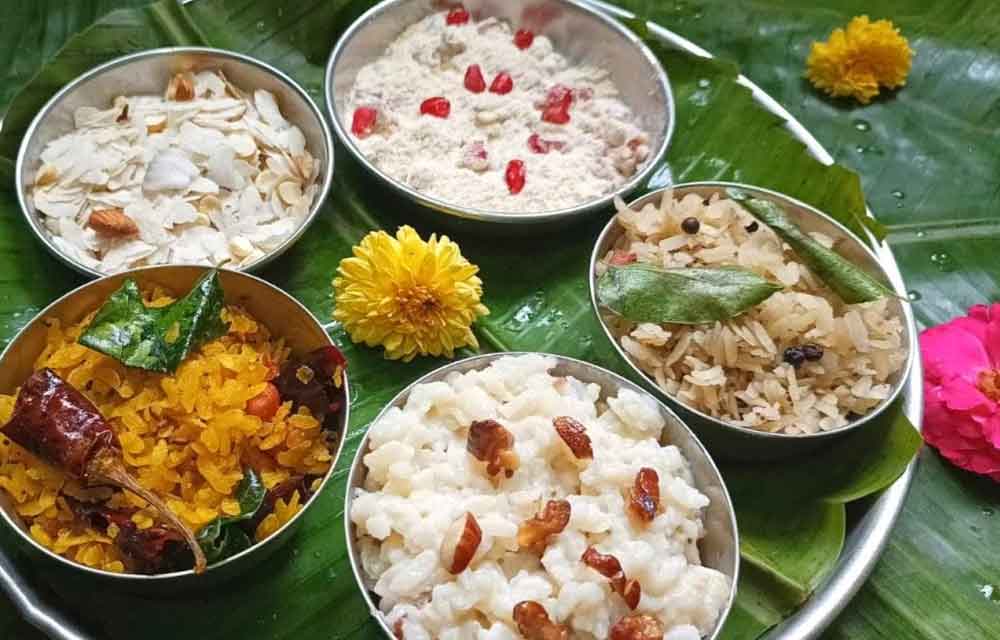
- Khichdi: Made with rice and moong dal
- Sabudana (Tapioca pearls): For fasting days
- Puffed rice (murmura): Light and sattvic
- Tulsi leaves: Added to water and food
- Naivedyam (offerings): Coconut rice, sweet pongal, laddu
Karthika Masam Food Rules: What to Avoid
Strict dietary restrictions help devotees maintain purity and focus on spiritual practices:
Strictly Prohibited Foods
Non-Vegetarian Items:
- All types of meat (chicken, mutton, beef, pork)
- Fish and seafood
- Eggs (including items containing eggs)
Certain Vegetables:
- Onions and garlic (considered tamasic)
- Eggplant (brinjal) – avoided by many
- Mushrooms
- Drumstick (by some communities)
Grains and Pulses:
- Black gram (urad dal) – especially avoided
- Horse gram
- Chickpeas (by some traditions)
- Store-bought refined flours with preservatives
Addictive and Processed Items:
- Alcohol and fermented beverages
- Tobacco in any form
- Caffeine – tea and coffee (optional but recommended to avoid)
- Aerated drinks and packaged juices
- Processed and packaged foods
- Ajinomoto and artificial flavor enhancers
Oils and Cooking Media:
- Sesame oil (til oil) – traditionally avoided for cooking
- Mustard oil (by some traditions)
- Heavy, processed oils
Other Restricted Items:
- Food from outside or restaurants
- Leftover or stale food
- Food with excessive salt or spices
- Fried items in excess
- Bitter gourd (by some communities)
Additional Dietary Guidelines
- Avoid eating after sunset or before sunrise on special fasting days
- Refrain from eating on banana leaves (use plates)
- Do not consume food that has fallen on the ground
- Avoid reheating food multiple times
- Minimize salt intake on ekadashi days
Special Fasting Days in Karthika Masam
Karthika Ekadashi
This is one of the most important fasting days. Devotees observe complete or partial fasting, consuming only fruits, milk, and water.
Karthika Pournami (Full Moon Day)
The last day of Karthika Masam is extremely auspicious. Many observe a complete fast or eat only once after evening prayers.
Weekly Observances
- Mondays: Dedicated to Lord Shiva
- Thursdays: Sacred for Lord Vishnu
- Saturdays: Special prayers and fasting
Traditional Recipes for Karthika Masam
Morning Breakfast Options
- Aval (Poha): Made with jaggery and coconut
- Upma: Using semolina or millets
- Pongal: Sweet or savory
- Fruits with milk
Lunch Preparations
- Plain rice with sambar (without onion-garlic)
- Curd rice with mild seasoning
- Vegetable khichdi with ghee
- Chapatis with simple vegetable curry
Evening Snacks
- Sundal: Made with chickpeas or green gram
- Boiled sweet potato with coconut
- Fresh fruits
- Puffed rice with jaggery
Prasadam (Sacred Offerings)
- Coconut laddu
- Aravana payasam (sweet porridge)
- Appam (pancakes with jaggery)
- Vella Nivedyam (jaggery rice)
Health Benefits of Karthika Masam Diet
Following the traditional Karthika Masam diet offers numerous health benefits:
- Detoxification: The sattvic diet helps cleanse the digestive system
- Improved Digestion: Light, easily digestible foods reduce burden on organs
- Weight Management: Natural, unprocessed foods aid in weight control
- Mental Clarity: Pure foods enhance concentration and meditation
- Reduced Inflammation: Avoiding tamasic foods decreases bodily inflammation
- Better Sleep: Light evening meals improve sleep quality
- Increased Energy: Natural foods provide sustained energy
Daily Rituals and Practices
Morning Routine
- Wake up during Brahma Muhurta (before sunrise)
- Take a holy bath
- Light a lamp with ghee or sesame oil
- Offer prayers to Lord Shiva and Lord Vishnu
- Consume Tulsi water on an empty stomach
Throughout the Day
- Chant mantras and bhajans
- Read sacred texts like Bhagavad Gita or Shiva Purana
- Practice meditation
- Maintain celibacy and avoid anger
- Engage in charitable activities
Evening Rituals
- Light lamps at temples and home
- Perform pradakshina (circumambulation) around Tulsi plant
- Offer naivedyam to deities
- Participate in community bhajans
- Practice gratitude and forgiveness
Regional Variations in Karthika Masam Observances
South India
- Emphasis on lighting oil lamps daily
- Special focus on Arunachala Deepam in Tamil Nadu
- Elaborate kolams (rangoli) with traditional designs
- Community temple visits and processions
North India
- Celebrated as Kartik Purnima
- Holy dips in sacred rivers, especially the Ganges
- Dev Deepawali celebrations in Varanasi
- Focus on charity and feeding the poor
Eastern India
- Celebrated as Kartik Brata
- Special prayers to Radha-Krishna
- Cultural programs and devotional songs
- Lighting of diyas in rows (akash deep)
Western India
- Integration with Diwali festivities
- Pilgrimages to Pushkar for Kartik Purnima
- Special prayers in Dwarka and Somnath temples
Tips for Successfully Observing Karthika Masam
- Gradual Preparation: Start adjusting your diet a few days before the month begins
- Meal Planning: Prepare a weekly menu to avoid last-minute confusion
- Stay Hydrated: Drink plenty of water throughout the day
- Mindful Eating: Eat slowly and with awareness
- Avoid Overeating: Practice portion control even with permitted foods
- Family Involvement: Encourage family members to participate together
- Maintain Purity: Keep kitchen and dining areas clean
- Positive Mindset: Approach restrictions with devotion, not deprivation
- Listen to Your Body: Adjust fasting intensity based on health conditions
- Seek Guidance: Consult elders or spiritual guides for clarifications
Common Mistakes to Avoid
- Breaking fast before the prescribed time
- Consuming hidden non-vegetarian ingredients (like gelatin)
- Overeating on non-fasting days
- Becoming irritable or angry due to dietary restrictions
- Focusing only on food restrictions while neglecting spiritual practices
- Eating processed “fasting foods” loaded with unhealthy ingredients
- Not planning meals leading to nutritional deficiencies
Special Considerations
For Children and Elderly
Modified fasting rules apply. They may consume milk, fruits, and light meals while avoiding prohibited items.
For Pregnant and Nursing Mothers
Complete fasting is not recommended. They should maintain a nutritious sattvic diet with their doctor’s guidance.
For Those with Medical Conditions
People with diabetes, hypertension, or other health issues should consult healthcare providers before observing strict fasts.
Conclusion: The True Essence of Karthika Masam
Karthika Masam is not merely about dietary restrictions but about spiritual transformation. The food rules are designed to purify the body, which serves as a temple for the divine soul. By following these guidelines with faith and devotion, one can experience:
- Deepened connection with the divine
- Inner peace and tranquility
- Heightened spiritual awareness
- Cleansing of karmic debts
- Blessings for prosperity and well-being
The sacred month reminds us that true devotion lies in discipline, sacrifice, and the sincere desire to move closer to God. As we light lamps to dispel outer darkness, let us also illuminate our inner consciousness through pure thoughts, pure food, and pure actions.
May Lord Shiva and Lord Vishnu bless all devotees observing Karthika Masam with health, happiness, and spiritual progress.
Frequently Asked Questions
Q: Can I drink tea or coffee during Karthika Masam? A: While not strictly prohibited, it’s recommended to avoid caffeine and instead drink herbal teas, milk, or water with Tulsi.
Q: Is eating rice allowed during fasting days? A: Regular rice may be consumed on non-fasting days. On fasting days, opt for sabudana, sama rice, or fruits.
Q: Why are onions and garlic avoided? A: They are considered tamasic (promoting ignorance) and rajasic (promoting passion), which hinder spiritual progress.
Q: Can I eat outside during Karthika Masam? A: It’s best to prepare food at home to ensure purity and adherence to dietary rules.
Q: What if I accidentally consume a prohibited item? A: Acknowledge the mistake, seek forgiveness through prayer, and continue your observance with renewed commitment.
Observe Karthika Masam with devotion, discipline, and dedication. May this sacred month bring divine blessings into your life!
Om Namah Shivaya | Hare Krishna Hare Rama
Related posts:
 Karthika Masam 2025: Ultimate Guide for NRIs in USA, Canada, UK, Australia, and Germany
 Karthika Masam 2025 Horoscope: Complete Monthly Predictions for All Moon Signs (Rashi)
 Importance of Visiting Shiva Temples During Karthika Masam – Divine Significance and Sacred Stories
 Karthika Masam 2025: Complete Dates, Start & End Times, Events, and Hindu Calendar Details for Melbourne Hindus
 Karthika Masam First Day: Must-Visit Hindu Temples in Australia – Complete Guide 2025
 Karthika Masam Celebrations and Events in Malaysia 2025: A Comprehensive Guide for Devotees in the Land of Diversity


 ︎
︎

