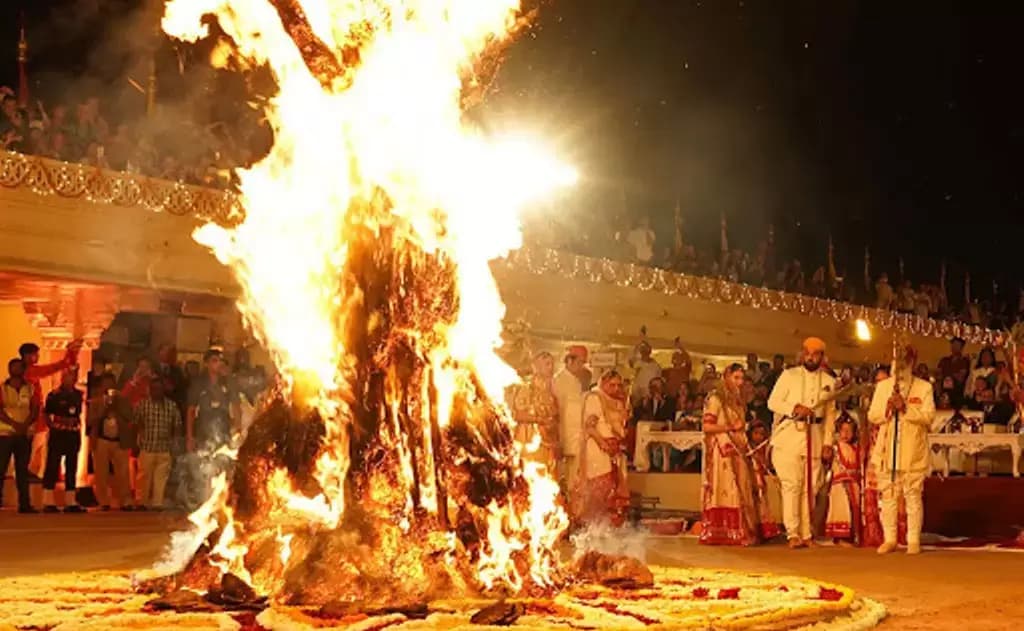
Vat Savitri Vrat Story: The Power of a Wife's Devotion That Defeated Death Itself
Read the complete emotional story of Savitri and Satyavan — how one woman’s love, wisdom and devotion defeated Death itself. Discover the meaning, rituals and modern-day lessons of Vat Savitri Vrat and Vat Purnima.
Read the complete emotional story of Savitri and Satyavan — how one woman’s love, wisdom and devotion defeated Death itself. Discover the meaning, rituals and modern-day lessons of Vat Savitri Vrat and Vat Purnima.
“Na me priya anya asti na me priya tatah param” — “There is none dearer to me than my husband — and none dearer than him shall ever be.” — Savitri to Yama, Mahabharata, Vana Parva.
Introduction: A Love So Strong, It Made Death Retreat
There is a story in Hindu tradition so extraordinary, so emotionally devastating and so ultimately triumphant that it has survived over 3,000 years without losing a single ounce of its power.
It is the story of a woman who followed Death himself into the shadows — armed with nothing but unwavering love, razor-sharp wisdom and the strength of her devotion — and walked back out with her husband’s soul in her hands.
This is the story of Savitri and Satyavan — the foundation of Vat Savitri Vrat (also known as Vat Purnima) — one of the most profound, emotionally rich and spiritually significant festivals in the Hindu calendar.
Every year, married Hindu women across India and the global diaspora tie sacred threads around a banyan tree (Vat Vriksha), fast through the day, and retell this ancient story. But for most, the story is known only in outline. Hindutone brings you the complete story — narrated as it deserves to be, with all its grief, fire, wisdom and ultimate love.
What Is Vat Savitri Vrat? — The Festival Explained
Vat Savitri Vrat (also called Vat Purnima) is a sacred Hindu fast observed by married women for the long life, health and prosperity of their husbands.
- Vat = the Banyan tree (Vata Vriksha in Sanskrit).
- Savitri = the legendary woman whose story is the heart of this festival.
- Vrat = a vow, fast or sacred observance.
When Is It Observed?
- Vat Savitri Vrat — Jyeshtha Amavasya (New Moon, May–June). North India: UP, Bihar, MP, Rajasthan, Delhi.
- Vat Purnima — Jyeshtha Purnima (Full Moon, May–June). Maharashtra, Gujarat, Karnataka, Goa.
- Global Diaspora — regional Panchang. USA, UK, Australia: both dates observed across communities.
What Do Women Do?
- Fast from sunrise to moonrise (or entire day without water in traditional practice).
- Gather at a Banyan tree (or worship a sapling at home).
- Tie sacred red / yellow threads around the trunk, circling 5, 7 or 108 times.
- Offer flowers, fruits, sindoor, bangles and a diya.
- Listen to or narrate the Savitri-Satyavan Katha (the complete story).
- Pray for husband’s long life, health and marital harmony.
The Banyan tree is chosen because it symbolises eternal life — its aerial roots grow downward into the earth, planting new trunks and essentially living forever. It is the tree beneath which Savitri sat with her husband’s lifeless body. It witnessed her victory over Yama.
The Complete Story of Savitri and Satyavan
Narrated from the Mahabharata, Vana Parva (Book of the Forest), Chapters 293–299.
🌺 Chapter One — The Princess Who Refused All Suitors
In the kingdom of Madra, ruled by a wise and gentle king named Ashwapati, there lived a daughter so extraordinary that the kingdom itself felt unworthy of her. Her name was Savitri — named after the sacred Gayatri mantra’s presiding deity, who had finally blessed the childless king after years of rigorous penance.
Savitri was deeply learned in the Vedas and scriptures, sharp-minded and philosophically gifted, physically radiant — described in the Mahabharata as having a form so luminous she seemed like a deity walking on Earth — and extraordinarily composed in every crisis.
As she came of age, no man came forward to ask for her hand in marriage. Her very brilliance intimidated every eligible prince. Finally, King Ashwapati made an unusual request:
“My child, I am old. No suitor comes for you because they perhaps fear your greatness. Go forth into the world, into the forests and kingdoms, and choose for yourself the man you wish to marry. A father could give no greater gift than the freedom to choose one’s own destiny.”
Advertisement
Savitri bowed, accepted the chariot her father offered, and departed — a princess riding alone into an uncertain world, searching for a love worthy of her spirit.
💔 Chapter Two — The Moment She Saw Him
Savitri travelled through many kingdoms. None of the princes, kings or warriors stirred her heart. Then her chariot entered the deep forest. There, in a simple hermitage made of leaves and mud, she found an elderly blind king named Dyumatsena — once the powerful ruler of the Shalwa kingdom, now dethroned and exiled — living in the forest with his wife and his son.
His son was chopping wood at the forest’s edge when Savitri first saw him. Satyavan. Strong, kind, laughing — eyes holding both gentleness and courage. Not a prince anymore — just a young man in rough forest clothing, working hard to care for his blind, aged parents in exile. In that single moment, Savitri knew. This was him.
She returned to her father’s court. The royal sage Narada happened to visit that very evening. When King Ashwapati joyfully described his daughter’s choice, Narada’s face fell.
“Satyavan is indeed all you describe — noble, wise, devoted, virtuous. He has every good quality a man can possess. He has but one fault — and it is fatal. He is marked to die. Exactly one year from today, Satyavan will leave this world.”
The court fell silent. Ashwapati turned to his daughter:
“My child, you heard the sage. Choose another. Please, let this one go.”
Savitri stood still for a long moment. Then she lifted her eyes — calm, clear and absolutely certain:
“Father. A daughter of your lineage chooses only once. I have chosen Satyavan. Whether he lives one year or one hundred, he is my husband. I will marry no other.”
No one in that court could change her mind. The wedding was arranged. Savitri removed her royal silks and ornaments, dressed in simple forest bark cloth and a single braid, and went to live with Satyavan in the forest.
🌿 Chapter Three — One Perfect Year
What followed was one perfect year of married life — the kind most people spend lifetimes searching for. Savitri served her in-laws with complete devotion, guiding the blind Dyumatsena, managing the hermitage, collecting fruits and firewood. She was simultaneously a devoted daughter-in-law, a constant companion and a deeply loving wife. Satyavan adored her. They sat under the banyan tree together and talked for hours — philosophy, poetry, childhood memories, dreams. He never suspected what she knew: that their days together were numbered.
When exactly three days remained, Savitri began her final preparation. She observed a rigorous three-day fast — no food, no water — and spent each night in prayer. She was preparing for the most important battle of her life — a battle no army could fight, no weapon could win.
💀 Chapter Four — The Day Death Came
On the fourth morning Satyavan picked up his axe to leave for the forest to collect wood. Savitri rose immediately:
“Let me come with you today.”
Satyavan looked at her tenderly. She had never asked to accompany him before. He saw something in her eyes — a depth, an intensity — that he could not name. He smiled, took her hand, and they walked together into the forest. Birds sang. Sunlight filtered through ancient trees. They walked side by side in companionable silence. Satyavan gathered wood while Savitri sat beneath a great banyan tree, watching him with eyes she would not close, not even to blink.
Midway through the morning Satyavan stopped. He pressed his hand to his forehead, suddenly pale:
“My head... a terrible pain. I feel so strange... I need to rest.”
He walked to Savitri, lowered himself slowly, and laid his head in her lap, beneath the shade of the banyan. Savitri placed her hand gently on his forehead. She did not cry. She did not panic. Her hands were absolutely steady — because she had known this moment was coming, and she had prepared with everything she had.
A moment later she felt the change — a cosmic stillness, a silence that was not of the forest. Standing before her was a figure of immense presence — dark-skinned, wearing red garments, carrying a noose, riding a magnificent dark buffalo. His eyes were not cruel but deeply serious — like justice itself made visible.
It was Yama — the Lord of Death, the God of Dharma. He had come himself. For souls of extraordinary virtue, Yama comes personally rather than sending his messengers. He gently drew a thumb-sized figure of light from Satyavan’s body — his soul — and secured it in his noose. Then he turned southward and began to walk toward Yamaloka.
Savitri laid Satyavan’s body carefully down, rose, and without a word, began to follow.
⚡ Chapter Five — Four Boons and One Brilliant Mind
Yama walked. Savitri walked. After some time, Yama turned, surprised:
“Woman, you cannot follow me. Go back and perform your husband’s funeral rites.”
Savitri did not stop:
“My Lord, I have heard that wherever one’s husband goes, a devoted wife must follow. I am simply fulfilling my dharma. Moreover, it is only right to walk alongside the wise — and who is wiser than you, O Dharmaraja?”
Yama paused. In thousands of years, no living being had ever followed him like this. He looked at her with new attention:
“Your words please me greatly. Ask any boon — except the life of your husband — and I shall grant it.”
Savitri was already prepared. She knew Yama could not simply be overpowered. He had to be outwitted — through dharma, wisdom and patience.
- First boon: “Please restore the sight of my father-in-law, Dyumatsena.” — Granted.
- Second boon: “Please restore my father-in-law’s kingdom — return what was unjustly taken.” — Granted.
- Third boon: “Please grant my father, King Ashwapati, a hundred noble sons to carry on his lineage.” — Granted.
Yama stopped and faced her fully. He saw this woman — fasting, exhausted, walking barefoot on the road to death itself — and felt profound respect:
“Ask one final boon, Savitri — anything at all. But not the life of your husband.”
Savitri paused. This was the moment. She had built toward this with three careful, patient boons. Now she spoke her fourth boon — slowly, precisely, and with a brilliance so sharp that Yama himself stood in silence:
“My Lord, please grant me many sons — sons born of my own body, from my own husband Satyavan.”
The words hung in the forest air like lightning before thunder. Yama saw it immediately — the perfect logical trap built with perfect love. He had promised her sons from her own body. A woman of her calibre would only ever have sons from her husband. Therefore, to grant her sons... he had to return Satyavan.
There was no way around it. Dharma itself had spoken — through her. The Lord of Death — who had never once reversed a decision in his eternal existence — looked at Savitri for a long moment, then smiled with admiration:
“Savitri... you have not merely outwitted me. You have taught me something. Go back. Your husband lives. I release Satyavan’s soul to you. Take him home.”
He loosened the noose. The thumb-sized figure of light floated free. Yama turned and walked southward — alone.
🌅 Chapter Six — The Homecoming
Savitri ran back through the forest. Satyavan’s body lay exactly as she had left it — still, peaceful, beneath the great banyan tree. She knelt beside him, placed his head in her lap, and waited. Slowly — like a man waking from the deepest sleep — Satyavan opened his eyes:
“I must have fallen asleep. How long have I been here? And why are you crying, my love?”
Savitri laughed through her tears — the kind of laugh that is pure, gasping relief:
“You have been gone longer than you know. But you are here now. Let us go home.”
They walked home together through the evening forest. When they reached the hermitage, Dyumatsena — his blind eyes now clear — saw his son walk through the door and wept. That same night, messengers arrived from Shalwa to announce that the usurper had died and the kingdom belonged to Dyumatsena again. And in King Ashwapati’s distant court, a hundred sons were born to his queens. Every word Savitri had spoken to Yama had come true.
Why the Banyan Tree? — The Symbolism Explained
[image: https://images.hindutone.com/wp-content/uploads/2025/11/Ksheerabdi-Dwadashi-–-The-Divine-Union-of-Lakshmi-Narayana.jpg]
- Aerial roots that form new trunks: eternal renewal — life conquering death.
- Never truly dies: immortality — what Savitri won for Satyavan.
- Provides shelter to thousands: the protective husband, the sheltering marriage.
- Lives for thousands of years: the longevity women pray for.
- The witness: under it sat Savitri with Satyavan’s body — sacred witness to the greatest act of love.
In Hindu tradition the Banyan is also associated with Brahma, Vishnu and Shiva collectively — representing creation, preservation and transformation — the full cosmic cycle, just as marriage itself encompasses birth, life and the transcendence of death.
The Deeper Meaning — What Savitri Actually Teaches Us
- Truth 1 — Preparation is the highest form of love: Savitri did not weep all year. She studied dharma, served her family and loved her husband with full presence — all while secretly preparing to face Yama. Her love was active, strategic and disciplined.
- Truth 2 — Wisdom is the strongest weapon: she did not fight Yama with tears or pleas. She outmanoeuvred him with logic and dharma. Her fourth boon was a masterpiece of legal reasoning disguised as a simple wish.
- Truth 3 — Dharma protects those who uphold it: every boon was rooted in dharma — restoring what was rightfully owed, ensuring lineage, protecting the vulnerable. Yama is the God of Dharma; he could not violate dharma even to protect his own jurisdiction.
- Truth 4 — Love follows, regardless of cost: Savitri followed Death on foot, fasting, barefoot, through the cosmic boundary between the living and the dead.
- Truth 5 — Death is not the enemy; unawareness is: Savitri faced death not with denial but with clear-eyed readiness. Knowing Satyavan’s fate from the beginning did not diminish her love — it deepened it.
Modern-Day Relevance — What Savitri Teaches 21st-Century Couples
💑 For Modern Couples — Lessons for Every Relationship
- Choose with clarity, commit with totality. Savitri chose Satyavan for who he was, not for prospects. Then she committed with her entire being.
- Love is a verb, not a feeling. Savitri’s love expressed itself in daily acts — firewood, in-law care, simple meals, presence. Daily acts beat occasional grand gestures.
- Know your partner fully — even their darkness. Savitri knew Satyavan’s fate and chose him anyway, working within the truth with love and strategy.
- Stand by your spouse when the world walks away. Savitri stood alone in conviction when her father, Narada and the entire court urged otherwise.
- Bring your full intelligence to your relationship. Her intellect and her love were partners. Modern relationships thrive when both bring full mind, not just emotion.
- Grief and love can coexist. Active grief — feeling loss fully while remaining capable of purposeful action — is one of the highest forms of emotional maturity.
👩 For Women — Savitri as a Complete Role Model
Savitri is often reduced to a symbol of wifely sacrifice. This misreads her entirely. She is a model of autonomous choice (she chose her husband freely), intellectual confidence (she debated and outwitted a god), emotional resilience, strategic thinking and loving service. She was not submissive — she was strategically devoted, a crucial difference.
👨 For Men — What Satyavan Teaches Husbands
Satyavan never once condescended to Savitri despite her brilliance, respected her decision to accompany him on the final day, and worked humbly to care for aged parents in exile rather than wallowing in lost royalty. His character, not his circumstances, attracted Savitri. A reminder that a man’s worth is measured in character and care for the vulnerable.
How to Observe Vat Savitri Vrat — Complete Guide
Day Before — Preparation
- Set up a Banyan tree sapling or a pot with the tree’s image if outdoors is unavailable.
- Prepare puja items: red sindoor, red / yellow thread, flowers (marigold or lotus), a diya, fruits and water in a kalash.
- Plan to break fast with seasonal fruits after moonrise.
Morning of Vrat
- Wake before sunrise, bathe and wear traditional clothing in red, yellow or green.
- Apply sindoor and wear bangles — symbols of Saubhagya (marital blessings).
- Begin the fast — water-only fast or fruit fast, depending on tradition and health.
Puja Vidhi at the Banyan Tree
- Sprinkle clean water at the base of the Banyan tree.
- Apply sindoor and turmeric to the trunk.
- Offer flowers, fruits and light the diya.
- Tie the sacred thread around the trunk — circle clockwise 5, 7 or 108 times while chanting.
- Narrate or listen to the Savitri-Satyavan Katha (the full story).
- Offer water to the tree (symbolically offering it to Yama).
- Seek the blessings of elders — touch their feet.
- Pray for husband’s health, longevity and marital harmony.
Evening
- Break the fast after moonrise (or sunset, depending on regional tradition).
- Husband ideally offers his wife fruit or a sweet to break her fast — a deeply tender practice.
- Family dinner together; exchange of gratitude between spouses.
🌍 NRI Guide — Vat Savitri / Vat Purnima 2026 in USA, UK & Australia
If a Banyan tree is not accessible, use a potted Banyan sapling from an Indian nursery, a printed or framed image for home puja, or attend a community event at your nearest Mandir. Many BAPS, ISKCON and Vaishnava temples in all three countries organise Vat Purnima community events with decorated Banyan trees.
USA — Major Diaspora Hubs
- NJ: BAPS Akshardham Robbinsville, Edison Mandir and Hindu Society of NJ host Vat Purnima with decorated banyan setups.
- NY: Hindu Temple Society of North America (Flushing) and BAPS Manhattan organise community puja and Katha streams.
- Texas: Houston BAPS, Sri Meenakshi Temple Pearland and DFW Hindu Temple host Vat Purnima.
- California: Fremont, Sunnyvale and Artesia mandirs run group sankalpa pujas with Katha.
UK — London & Beyond
- BAPS Neasden, Shri Sanatan Wembley, Bhaktivedanta Manor (Hertfordshire) — all run Vat Purnima group puja and Katha.
- Leicester, Birmingham, Manchester — Hindu Society events with banyan-tree setups.
Australia — Sydney, Melbourne & Beyond
- Sydney: Sri Karpaga Vinayakar Temple Westmead and Sri Venkateswara Temple Helensburgh host Vat Purnima group puja.
- Melbourne: Shri Shiva Vishnu Temple Carrum Downs runs a women-led Katha session.
- Brisbane / Perth: Hindu Temple Society events with virtual Katha.
Approximate 2026 Timing
- India (IST): Vat Purnima — June 11, 2026 (sunrise to moonrise).
- USA (EDT): observe overlapping window June 10 evening → June 11; PT shifts ~3 hours earlier.
- UK (BST): June 11, 2026 — early morning into evening.
- Australia (AEST): June 11, 2026 — morning Indian-time-friendly window.
Always confirm the exact tithi timings with your local Panchang or the Drik Panchang app for your city.
Mantras and Prayers for Vat Savitri Vrat
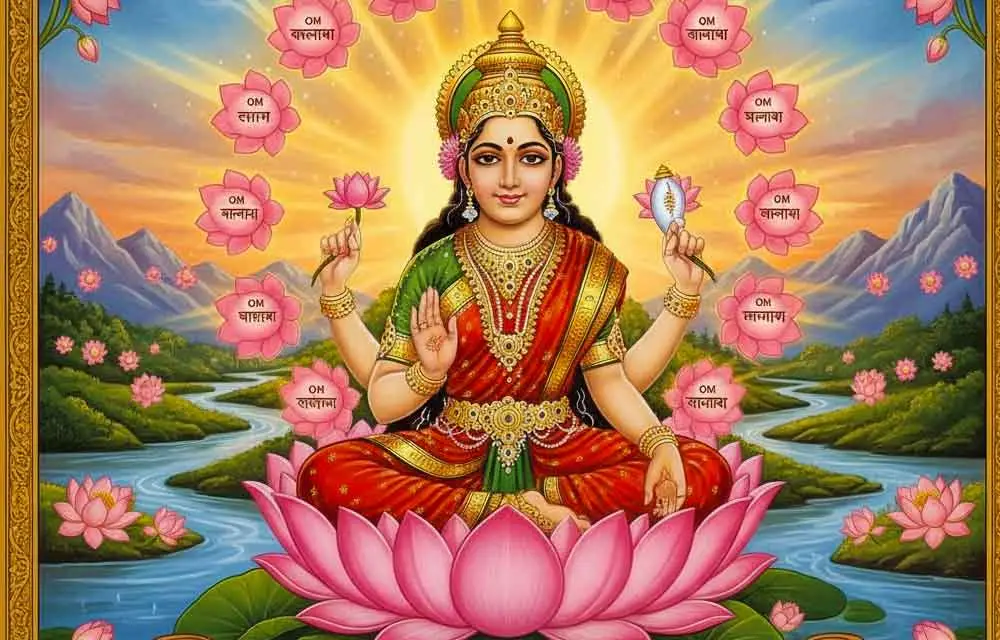
🙏 Savitri Mantra: “Om Savitryai Namaha” (108 times, while circling the Banyan tree).
🙏 Prayer for husband’s long life:
“Avidhawaa Sada Bhooyaath Sowbhagyam Dehi Me Sadaa | Putran Dehi Dhanam Dehi Sarva Kaamaansh Cha Dehi Me ||” — Grant me the fortune of never being widowed. Grant me sons, wealth, and all that I desire.
🙏 Yama Vandana (offering respect to Dharmaraja):
“Om Yamaya Dharmarajaya Mrityave Chaantakaya Cha | Vaivasvataya Kalaya Sarva Bhuta Kshayaya Cha ||”
🙏 Vata Vriksha (Banyan) prayer:
“Vat Vrikshasya Moolani Yatra Tishthati Sarvada | Tatra Me Vasatham Santam Pati Raayu Pravardhayeh ||” — Wherever the roots of the Banyan tree stand firm, may my husband’s life grow long and steady.
Vat Savitri Across India — Regional Traditions
🏔️ North India (Jyeshtha Amavasya)
UP, Bihar, Jharkhand, MP and Delhi observe on the New Moon. Women visit ancient Banyan trees at riverbanks and temples; the Katha is narrated by a senior woman or pandit; communities gather under large trees in deeply social, festive observance.
🌊 Maharashtra & Gujarat (Vat Purnima — Full Moon)
Observed on Jyeshtha Purnima. In Maharashtra it is a major married-women’s festival — elaborate dress, gift exchanges and group puja at temple Banyan trees. The festival carries a celebration of sisterhood as much as marriage.
🌺 Karnataka & Andhra Pradesh / Telangana
Known as Savitri Vrata — observed in temple courtyards. Women carry copper kalash on their heads as they circle the tree — a deeply meditative, physically demanding act of devotion.
🌿 Odisha & Bengal
Known as Savitri Vrata, observed with particular focus on reading the Savitri Upanishad. Young women often observe this fast as a prayer for a good husband.
The Savitri of the Vedas vs the Savitri of the Mahabharata
- Vedic Goddess Savitri: the solar deity, feminine form of Savita (the Sun God), connected to the Gayatri mantra; mother of the Vedas.
- Mahabharata Savitri: a human princess of extraordinary virtue — symbol of devoted love and female wisdom.
The human Savitri of the Mahabharata was named after the goddess precisely because her parents sensed she would carry that same solar energy — radiant, life-giving and unconquerable.
The Savitri Upanishad — A Hidden Scripture
Not widely known even among devout Hindus, the Savitri Upanishad — a minor Upanishad attached to the Atharva Veda — provides the metaphysical framework for the Savitri story:
- Savitri represents Jiva (the individual soul).
- Satyavan represents Atman (the true Self).
- Yama represents Kala (time and death).
- Savitri’s victory represents Jiva’s liberation — the soul recognising and reclaiming the Atman from the grip of time and death.
What appears on the surface to be a wife saving a husband is actually a metaphor for spiritual awakening — the human soul’s journey to recognise its own immortal nature, defeating the illusion of death through knowledge, devotion and unwavering love of the divine.
Conclusion — Why Savitri’s Story Will Never Grow Old
In a world that often reduces love to convenience and commitment to a contract, the story of Savitri is radical, countercultural and absolutely necessary. It tells us that real love is not a feeling that comes and goes — it is a decision, a practice, a discipline, and when needed, a battle.
Every married woman who fasts on Vat Savitri Vrat is not performing an empty ritual. She is reenacting the most powerful love story ever told. She is saying, quietly, with her fasting body and her thread-wrapped prayers:
“I see you. I choose you. And I would follow you anywhere — even to the ends of the universe — to bring you home.”
That is Vat Savitri Vrat. That is Savitri. That is the power of a wife’s devotion.
🌿 Jai Savitri Mata · Om Namo Narayanaya · Om Shanti Shanti Shanti 🙏
Frequently Asked Questions (FAQ)
What is the meaning of Vat Savitri Vrat?
Vat Savitri Vrat is a sacred Hindu fast observed by married women, honouring the legendary Savitri who saved her husband Satyavan from Yama through unwavering devotion, wisdom and love. “Vat” refers to the Banyan tree under which Satyavan died and Savitri’s victory occurred.
What is the difference between Vat Savitri Vrat and Vat Purnima?
Both celebrate the same story. Vat Savitri Vrat (Jyeshtha Amavasya, New Moon) is observed in North India. Vat Purnima (Jyeshtha Purnima, Full Moon) is observed in Maharashtra, Gujarat and Goa. The difference is regional tradition, not the story or significance.
Can unmarried women observe Vat Savitri Vrat?
Yes — in many regions like Odisha, Bengal and parts of South India, unmarried women observe Savitri Vrata as a prayer for a good, long-lived husband in their future.
What is the significance of the Banyan tree in Vat Savitri Vrat?
The Banyan (Vat Vriksha) is the tree beneath which Satyavan died and where Savitri sat vigil and then followed Yama. It symbolises immortality because its aerial roots constantly form new trunks — the living symbol of what Savitri won.
Is Vat Savitri Vrat only for Hindu women?
Traditionally yes. However, the philosophical and emotional wisdom of the Savitri story is universal — it speaks to anyone who values deep, committed, resilient love.
What should I eat to break the Vat Savitri fast?
Traditionally seasonal fruits, sweets, and a meal honouring Jyeshtha-month ingredients (mangoes, coconut water, cooling foods). The husband ideally offers the first fruit to his wife.
Where can diaspora Hindus observe Vat Savitri Vrat?
Major BAPS, ISKCON, Vaishnava mandirs and Hindu community centres across the USA (NJ, Houston, Chicago, Fremont), UK (Leicester, Harrow, Wembley) and Australia (Parramatta, Dandenong) organise Vat Purnima events with decorated Banyan trees.
What is the Savitri Satyavan story’s origin?
The story originates in the Mahabharata, Vana Parva (Book of the Forest), told by sage Markandeya to the Pandavas during their forest exile. It is also referenced in the Padma Purana and forms the basis of the Savitri Upanishad (Atharva Veda).
Can I observe Vat Savitri without an actual banyan tree (apartment / cold-climate diaspora)?
Yes. Use a potted banyan sapling from an Indian nursery, or a framed image of the Banyan tree placed at the home shrine. Tie the sacred thread on a tulsi pot or the image. Devotion is what counts; the physical tree is symbolic.
Is fasting safe during Vat Savitri Vrat?
Healthy adult women may observe a sunrise-to-moonrise fast. Pregnant, nursing, diabetic, hypertensive women or anyone unwell should observe a phalahar (fruit + water) fast or symbolic fast and consult a doctor.
Disclaimer: ritual practices, dates and traditions described in this article may vary by region, family tradition and local Panchang. Always consult your local pandit or temple for personalised guidance.
You might also like

Vat Savitri Vrat 2026: Date, Muhurat, Story of Savitri & Satyavan, Puja Vidhi, Banyan Tree Ritual & NRI Apartment Adaptations
Sita Navami 2026: Date, Muhurat, Puja Vidhi, Story of Mata Sita & Complete Vrat Guide
The Legend of Lord Krishna and Govardhan Giri: A Divine Tale of Faith and Protection