

Vishu 2026: Date, Importance, Puja, Rituals, and Celebrations
Vishu 2026 Date Vishu, the traditional Malayalam New Year and harvest festival of Kerala, falls on April 15, 2026 (Wednesday).
Vishu 2026 Date Vishu, the traditional Malayalam New Year and harvest festival of Kerala, falls on April 15, 2026 (Wednesday).
Vishu 2026 Date Vishu, the traditional Malayalam New Year and harvest festival of Kerala, falls on April 15, 2026 (Wednesday). This date marks the first day of the Malayalam month of Medam (also known as Mesha Sankranti), when the sun transits into the zodiac sign of Aries (Meda Rashi).
Reliable sources like Prokerala and DrikPanchang confirm Vishu 2026 on April 15, with the auspicious Sankranti moment occurring around the previous day or early morning (exact timings vary by location and panchang). In some calendars, it aligns closely with April 14, but Kerala celebrations center on April 15, 2026. It is a regional public holiday in Kerala.
What is Vishu? Importance and Significance Vishu (വിഷു), meaning "equal" in Sanskrit, symbolizes equality, balance, and renewal. It coincides with the spring equinox period, when day and night are nearly equal, representing harmony in nature.
This vibrant festival is Kerala's celebration of the Malayalam New Year (astrological solar new year in Malabar regions), prosperity, and the arrival of spring. It holds deep cultural and spiritual importance for Malayalis worldwide, marking new beginnings, abundance from the harvest, and gratitude to nature and deities.
Families seek blessings for health, wealth, and happiness in the coming year. Vishu emphasizes positivity—starting with an auspicious sight (Vishu Kani) to ensure good fortune. It is a time for family reunions, feasting, and community joy, often compared to other Indian New Year festivals like Ugadi or Puthandu.
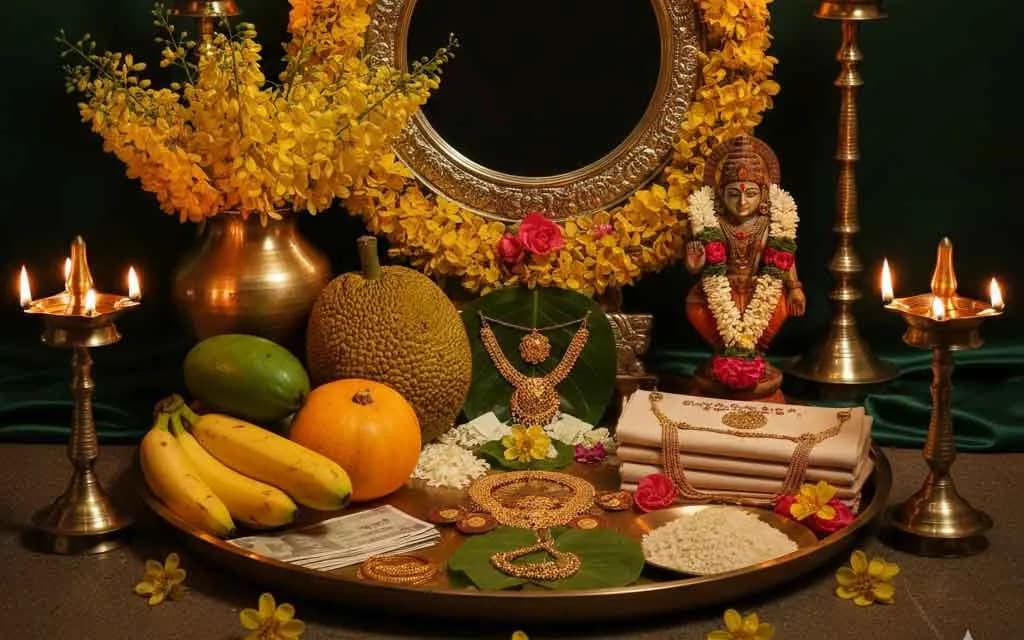
Vishu Kani: The Most Important Ritual The highlight of Vishu is Vishu Kani (വിഷു കാണി), the "auspicious first sight."
- The night before Vishu, the eldest family member prepares the Kani in a sacred room or temple corner.
- A mirror is placed at the center, surrounded by auspicious items symbolizing prosperity:
- Gold ornaments and coins
- Fresh fruits (mango, jackfruit, banana)
- Vegetables (cucumber, pumpkin)
- Flowers (especially Konna – Cassia fistula, the golden shower tree)
- Rice, paddy, betel leaves, nuts, holy texts
- A lit oil lamp (deepam) and an image or idol of Lord Krishna (often as Vishnupad or Guruvayurappan)
- Early morning (around 4-5 AM), family members wake up, keep eyes closed, and are led to view the Kani first. The sight of light reflecting in the mirror and these prosperous items is believed to bring good luck for the year.
- Children and elders receive Vishukkaineettam (gifts of money) from elders after viewing the Kani.
Puja and Other Key Rituals on Vishu Day
- Early Morning Puja: After Vishu Kani, families perform puja to Lord Krishna or Vishnu. Offerings include flowers, fruits, and sweets. Temples (especially Guruvayur) see massive crowds for special darshan.
- Vishu Sadhya: A grand vegetarian feast (sadhya) on banana leaves with over 20-30 dishes, including thoran, avial, sambar, rasam, payasam (kheer), and Vishu-special items like Vishu kaalan.
- Temple Visits and Charity: Devotees visit temples, offer prayers, and donate to the needy.
- Crackers and Fireworks: In some areas, mild fireworks add festivity.
- Traditional Attire: Women wear elegant Kasavu sarees, men wear mundu, enhancing the cultural vibe.
How Vishu is Celebrated in Kerala Celebrations begin days in advance with cleaning homes, buying new clothes, and preparing the Kani. On Vishu day:
- Family gatherings
- Exchanging greetings ("Vishu Aashamsagal!")
- Special prayers and cultural programs
- In rural areas, farmers celebrate the harvest.
Vishu promotes optimism—avoiding negative words or sights on this day. It unites communities and reminds people of life's blessings.
Conclusion Vishu 2026 on April 15 is more than a festival—it's a beautiful tradition of hope, equality, and prosperity. Whether in Kerala or the Malayali diaspora, the rituals of Vishu Kani, puja, and sadhya bring families together in joy. Celebrate with positivity for a prosperous year ahead!
Vishu Aashamsagal to all readers of HinduTone!
To enhance your understanding of Vishu Kani setup and traditional celebrations, here are some visual references:
Frequently Asked Questions
When is Vishu 2026?
Vishu 2026 falls on April 15, 2026.
What is the significance of Vishu?
Vishu 2026 Date Vishu, the traditional Malayalam New Year and harvest festival of Kerala, falls on April 15, 2026 (Wednesday). This date marks the first day of the Malayalam month of Medam (also known as Mesha Sankranti), when the sun transits into the zodiac sign of Aries (Meda Rashi).
How is Vishu celebrated?
Devotees observe it with puja, fasting or special offerings, visiting temples, chanting mantras, and gathering with family. Customs vary by region and tradition.
What should devotees do on Vishu?
Take a sacred bath, perform the day's puja and charity (dana), observe any prescribed fast, and chant mantras with sincere devotion.
You might also like
Shani Deva Temples Worldwide & Must-Performed Rituals — Complete Devotee's Guide
June 2026 Hindu Festival Calendar — Complete Dates, Vrat & Puja Guide for NRIs

Gayatri Jayanti 2026: Date, Gayatri Mantra, Puja Vidhi & Significance
