Bhagavad Gita Verses with Meaning: 15 Key Shlokas on Wisdom, Context and Everyday Life
Fifteen of the most quoted Bhagavad Gita verses, from 2.47 on action without attachment to 18.66 on surrender. Each has the Sanskrit and transliteration from a verified source, the correct chapter and verse, who is speaking and why, our own plain-English meaning, and a short reflection for everyday life.
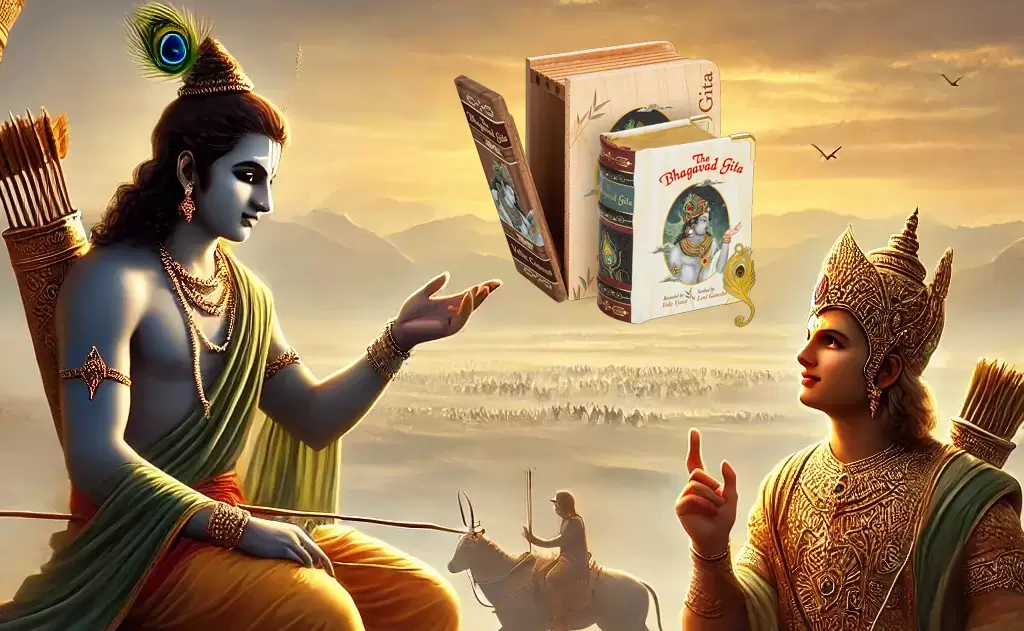
Quick answer: The Bhagavad Gita has 700 verses in 18 chapters, spoken by Krishna to Arjuna on the battlefield of Kurukshetra in the Mahabharata. The fifteen verses below are among the most quoted: 2.47 (act without clinging to results), 2.14 and 2.20 (endurance and the undying self), 4.7 to 4.8 (the Lord appears whenever dharma declines), 6.5 (lift yourself by your own mind) and 18.66 (surrender). Each one is given with its Sanskrit, its transliteration, its context, a plain meaning and a reflection for daily life.
Last updated: 9 October 2026. The Devanagari and IAST transliteration on this page are taken from the sanskritdocuments.org text of the Bhagavad Gita. The English meanings are our own plain-English renderings, not quotations from any published translation.
The setting in one paragraph
The Gita sits in the Bhishma Parva of the Mahabharata. Two armies of the same family face each other at Kurukshetra. Arjuna, the great archer, sees teachers and relatives on the other side and puts down his bow. Krishna, his friend and charioteer, answers his despair over 18 chapters, moving from the nature of the self, to action without selfish attachment, to meditation, devotion and finally surrender. The whole dialogue is narrated by Sanjaya to the blind king Dhritarashtra. Every verse below makes more sense when you remember that it is spoken to a person in crisis who has to act.
For a chapter-by-chapter overview, see our complete guide to the 18 chapters, and for who Krishna is in the wider epic, Krishna avatar: the Gita and the Mahabharata.
The 15 verses at a glance
| Verse | Chapter | Theme |
|---|---|---|
| 2.14 | 2, Sankhya Yoga | Pleasure and pain come and go; endure them |
| 2.20 | 2, Sankhya Yoga | The self is never born and never dies |
| 2.47 | 2, Sankhya Yoga | Your concern is the action, not its fruits |
| 2.48 | 2, Sankhya Yoga | Evenness of mind is yoga |
| 2.62 to 2.63 | 2, Sankhya Yoga | How brooding leads to anger and ruin |
| 3.35 | 3, Karma Yoga | Better your own dharma than another's |
| 4.7 to 4.8 | 4, Jnana Karma Sannyasa Yoga | The Lord appears age after age |
| 6.5 | 6, Dhyana Yoga | You are your own friend and your own enemy |
| 6.35 | 6, Dhyana Yoga | The restless mind is tamed by practice and detachment |
| 9.22 | 9, Raja Vidya Raja Guhya Yoga | The Lord carries the needs of the devoted |
| 12.13 to 12.14 | 12, Bhakti Yoga | Qualities of the devotee who is dear to God |
| 18.66 | 18, Moksha Sannyasa Yoga | Take refuge in me alone |
Quotes often wrongly credited to the Gita
Two lines that circulate widely as Gita quotes are not from it. "All that we are is the result of what we have thought" is a well-known English rendering of the opening of the Dhammapada, a Buddhist scripture. "You came empty-handed and you will leave empty-handed; what is yours today belonged to someone else yesterday" is a modern summary, often printed as a "Gita Saar" poster, and does not match any verse. When you share a Gita quote, look for a chapter and verse number; if there is none, check before you post.
2.14: Endure what comes and goes
Context: Arjuna is overwhelmed by grief. Before any philosophy, Krishna gives a practical first step.
मात्रास्पर्शास्तु कौन्तेय शीतोष्णसुखदुःखदाः ।
आगमापायिनोऽनित्यास्तांस्तितिक्षस्व भारत ॥
mātrāsparśāstu kaunteya śītoṣṇasukhaduḥkhadāḥ |
āgamāpāyino'nityāstāṃstitikṣasva bhārata ||
Meaning (our rendering): Contact of the senses with their objects gives cold and heat, pleasure and pain. These come and go and do not last, Arjuna. Bear them patiently.
Reflection for daily life: Pleasant and painful experiences are like seasons. Naming them as passing ("this is the heat of a hard week") makes them easier to bear without reacting badly.
2.20: The self is never born and never dies
Context: Krishna explains why Arjuna's grief for those who will die rests on a mistake about what a person really is.
न जायते म्रियते वा कदाचिन्
नायं भूत्वा भविता वा न भूयः ।
अजो नित्यः शाश्वतोऽयं पुराणो
न हन्यते हन्यमाने शरीरे ॥
na jāyate mriyate vā kadācin
nāyaṃ bhūtvā bhavitā vā na bhūyaḥ |
ajo nityaḥ śāśvato'yaṃ purāṇo
na hanyate hanyamāne śarīre ||
Meaning (our rendering): The self is never born and never dies. It did not come into being and will not cease to be. Unborn, eternal, everlasting and ancient, it is not killed when the body is killed.
Reflection for daily life: Many families recite this verse at times of loss. It does not deny grief; it widens the view, so that a person is not reduced to the body alone.
Interpretations differ: The verse closely echoes one in the Katha Upanishad. Advaita teachers read it as describing the one Self in all beings; theistic schools read it as describing each individual soul, eternal and distinct.
2.47: Your concern is the action, not its fruits
Context: Having spoken of the self, Krishna turns to action. Arjuna must still do his duty, but in a different spirit.
कर्मण्येवाधिकारस्ते मा फलेषु कदाचन ।
मा कर्मफलहेतुर्भूर्मा ते सङ्गोऽस्त्वकर्मणि ॥
karmaṇyevādhikāraste mā phaleṣu kadācana |
mā karmaphalaheturbhūrmā te saṅgo'stvakarmaṇi ||
Meaning (our rendering): Your right is to the action alone, never to its fruits. Do not let the fruit of action be your motive, and do not become attached to doing nothing.
Reflection for daily life: Prepare the exam, write the code, cook the meal with full attention, then let the result be what it is. The verse also warns against the opposite mistake: giving up effort because results are uncertain.
Interpretations differ: This is the root of nishkama karma, action without selfish desire. It is not a counsel of indifference: commentators agree the verse asks for full effort, while letting go of anxiety and ownership over outcomes.
2.48: Evenness of mind is yoga
Context: This verse follows directly from 2.47 and gives the Gita's own short definition of yoga.
योगस्थः कुरु कर्माणि सङ्गं त्यक्त्वा धनञ्जय ।
सिद्ध्यसिद्ध्योः समो भूत्वा समत्वं योग उच्यते ॥
yogasthaḥ kuru karmāṇi saṅgaṃ tyaktvā dhanañjaya |
siddhyasiddhyoḥ samo bhūtvā samatvaṃ yoga ucyate ||
Meaning (our rendering): Established in yoga, do your work, Dhananjaya, giving up attachment, the same in success and failure. This evenness is called yoga.
Reflection for daily life: Before a big meeting or a hospital visit, aim for the same inner steadiness whatever the result. Yoga here is a state of mind, not only a set of postures.
2.62: From brooding to desire and anger
Context: Arjuna asks how a person of steady wisdom behaves. Krishna describes how the mind loses its balance.
ध्यायतो विषयान्पुंसः सङ्गस्तेषूपजायते ।
सङ्गात्सञ्जायते कामः कामात्क्रोधोऽभिजायते ॥
dhyāyato viṣayānpuṃsaḥ saṅgasteṣūpajāyate |
saṅgātsañjāyate kāmaḥ kāmātkrodho'bhijāyate ||
Meaning (our rendering): When a person keeps thinking about the objects of the senses, attachment to them arises. From attachment comes desire, and from desire comes anger.
Reflection for daily life: Notice the first link in the chain. Endless scrolling, replaying an argument or staring at what someone else has all begin as "just thinking about it".
2.63: From anger to ruin
Context: The chain from 2.62 continues to its end.
क्रोधाद्भवति सम्मोहः सम्मोहात्स्मृतिविभ्रमः ।
स्मृतिभ्रंशाद् बुद्धिनाशो बुद्धिनाशात्प्रणश्यति ॥
krodhādbhavati sammohaḥ sammohātsmṛtivibhramaḥ |
smṛtibhraṃśād buddhināśo buddhināśātpraṇaśyati ||
Meaning (our rendering): From anger comes delusion; from delusion, confusion of memory; from the loss of memory, the ruin of judgement; and with judgement ruined, a person is lost.
Reflection for daily life: Anger clouds memory: we forget what the other person means to us and what we ourselves stand for. A pause between feeling and reaction breaks the chain.
3.35: Better your own dharma than another's
Context: Arjuna would rather withdraw than fight. Krishna insists that each person must walk his own path.
श्रेयान्स्वधर्मो विगुणः परधर्मात्स्वनुष्ठितात् ।
स्वधर्मे निधनं श्रेयः परधर्मो भयावहः ॥
śreyānsvadharmo viguṇaḥ paradharmātsvanuṣṭhitāt |
svadharme nidhanaṃ śreyaḥ paradharmo bhayāvahaḥ ||
Meaning (our rendering): Better is one's own dharma, even done imperfectly, than the dharma of another done well. Better even to die in one's own dharma; the dharma of another brings fear.
Reflection for daily life: Comparing your path with someone else's career, family life or spiritual practice breeds restlessness. Do your own work honestly, even if it looks less impressive.
Interpretations differ: Commentators differ on how fixed svadharma is. Some tie it to one's station and stage of life; many modern teachers read it as one's own nature, abilities and responsibilities.
4.7: Whenever dharma declines
Context: Krishna reveals that he taught this yoga long ago and that he takes birth again and again. Arjuna asks how.
यदा यदा हि धर्मस्य ग्लानिर्भवति भारत ।
अभ्युत्थानमधर्मस्य तदात्मानं सृजाम्यहम् ॥
yadā yadā hi dharmasya glānirbhavati bhārata |
abhyutthānamadharmasya tadātmānaṃ sṛjāmyaham ||
Meaning (our rendering): Whenever there is a decline of dharma, Bharata, and a rise of adharma, then I bring myself forth.
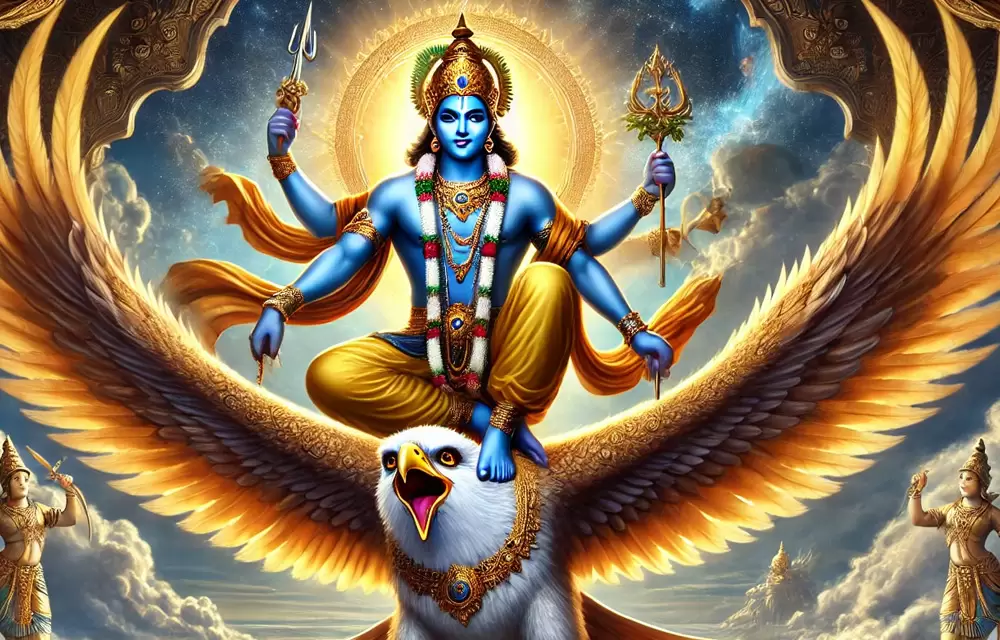
Reflection for daily life: These two verses are the scriptural basis of the avatar idea behind festivals such as Janmashtami and Rama Navami. In daily life they are a reminder that order can be restored, in the world and in ourselves.
4.8: To protect the good, age after age
Context: This verse completes 4.7 and gives the purpose of the divine descent.
परित्राणाय साधूनां विनाशाय च दुष्कृताम् ।
धर्मसंस्थापनार्थाय सम्भवामि युगे युगे ॥
paritrāṇāya sādhūnāṃ vināśāya ca duṣkṛtām |
dharmasaṃsthāpanārthāya sambhavāmi yuge yuge ||
Meaning (our rendering): To protect the good, to destroy those who do evil, and to establish dharma firmly, I come into being age after age.
Reflection for daily life: Many people repeat 4.7 to 4.8 together as a prayer for courage when things look hopeless. For the ten avatars of Vishnu, see the Dasavataram section.
6.5: You are your own friend and your own enemy
Context: In the chapter on meditation, Krishna places responsibility for inner growth on the seeker.
उद्धरेदात्मनात्मानं नात्मानमवसादयेत् ।
आत्मैव ह्यात्मनो बन्धुरात्मैव रिपुरात्मनः ॥
uddharedātmanātmānaṃ nātmānamavasādayet |
ātmaiva hyātmano bandhurātmaiva ripurātmanaḥ ||
Meaning (our rendering): Lift yourself up by your own self; do not let yourself sink down. The self alone is its own friend, and the self alone is its own enemy.
Reflection for daily life: Self-talk matters. Speak to yourself as you would to a friend you want to help. We have a longer reflection on this verse in Bhagavad Gita 6.5: mastering the mind.
6.35: The restless mind is tamed by practice
Context: Arjuna protests that the mind is as hard to hold as the wind. Krishna agrees, and then gives the remedy.
असंशयं महाबाहो मनो दुर्निग्रहं चलम् ।
अभ्यासेन तु कौन्तेय वैराग्येण च गृह्यते ॥
asaṃśayaṃ mahābāho mano durnigrahaṃ calam |
abhyāsena tu kaunteya vairāgyeṇa ca gṛhyate ||
Meaning (our rendering): Without doubt, mighty-armed one, the mind is restless and hard to control. But by practice and by detachment, son of Kunti, it can be held.
Reflection for daily life: Abhyasa (steady practice) and vairagya (letting go) are two hands working together: a fixed few minutes of prayer or meditation each day, and loosening the grip on what keeps pulling you away.
9.22: The Lord carries the needs of the devoted
Context: In the chapter on the royal secret, Krishna speaks of those who worship him with undivided minds.
अनन्याश्चिन्तयन्तो मां ये जनाः पर्युपासते ।
तेषां नित्याभियुक्तानां योगक्षेमं वहाम्यहम् ॥
ananyāścintayanto māṃ ye janāḥ paryupāsate |
teṣāṃ nityābhiyuktānāṃ yogakṣemaṃ vahāmyaham ||
Meaning (our rendering): Those who think of me alone and worship me, ever devoted, for them I carry what they lack and protect what they have.
Reflection for daily life: The phrase yogakshemam vahamyaham, "I carry their welfare", is the motto of the Life Insurance Corporation of India. For devotees it is an invitation to do one's part sincerely and trust the rest.
12.13: The qualities of a true devotee
Context: Arjuna asks which devotee is best. Krishna answers with a list of qualities rather than rituals.
अद्वेष्टा सर्वभूतानां मैत्रः करुण एव च ।
निर्ममो निरहङ्कारः समदुःखसुखः क्षमी ॥
adveṣṭā sarvabhūtānāṃ maitraḥ karuṇa eva ca |
nirmamo nirahaṅkāraḥ samaduḥkhasukhaḥ kṣamī ||
Meaning (our rendering): One who hates no being, who is friendly and compassionate, free from possessiveness and ego, even in pain and pleasure, and forgiving.
Reflection for daily life: Use this verse as a quiet check at the end of the day: was I friendly, was I forgiving, did I hold my ground in both good and bad moments?
12.14: Dear to me
Context: The description continues and ends with Krishna's own verdict.
सन्तुष्टः सततं योगी यतात्मा दृढनिश्चयः ।
मय्यर्पितमनोबुद्धिर्यो मद्भक्तः स मे प्रियः ॥
santuṣṭaḥ satataṃ yogī yatātmā dṛḍhaniścayaḥ |
mayyarpitamanobuddhiryo madbhaktaḥ sa me priyaḥ ||
Meaning (our rendering): Ever content, disciplined, self-controlled and firm in resolve, with mind and intellect offered to me: such a devotee of mine is dear to me.
Reflection for daily life: Devotion here is measured by character and steadiness, not by display. The full chapter is in our Bhagavad Gita chapter 12, Bhakti Yoga commentary.
18.66: Take refuge in me alone
Context: Near the very end of the Gita, after every path has been explained, Krishna gives what many call his final word.
सर्वधर्मान्परित्यज्य मामेकं शरणं व्रज ।
अहं त्वा सर्वपापेभ्यो मोक्षयिष्यामि मा शुचः ॥
sarvadharmānparityajya māmekaṃ śaraṇaṃ vraja |
ahaṃ tvā sarvapāpebhyo mokṣayiṣyāmi mā śucaḥ ||
Meaning (our rendering): Setting aside all dharmas, take refuge in me alone. I will free you from all sins. Do not grieve.
Reflection for daily life: When effort and planning reach their limit, many people find peace in handing the outcome to God and continuing to act without fear.
Interpretations differ: This verse has been read in very different ways. Advaita commentators, following Shankara, connect it with giving up the sense of doership and resting in knowledge of the Self. The Sri Vaishnava tradition of Ramanuja calls it the charama shloka, the final teaching of complete surrender (prapatti). Other devotional schools read "all dharmas" as all other means, and stress loving surrender. All agree it is not a licence to abandon ethics.
See the full closing chapter in Bhagavad Gita chapter 18, Moksha Sannyasa Yoga.
How to read one verse a day
- Read the Sanskrit or transliteration aloud once, even slowly. Sound is part of how the tradition has carried these verses.
- Read the meaning, then the context. Who is speaking, and to whom?
- Pick one phrase to carry through the day, such as "evenness is yoga" or "lift yourself by yourself".
- In the evening, ask where the verse showed up. That reflection is where reading becomes practice.
- Move on to the whole chapter when a verse grips you. Chapter 2 is the best starting point: chapter 2, Sankhya Yoga, all 72 verses.
If you use AI apps to study the Gita, check every quote against a reliable text; our piece on Gita chatbots and their accuracy explains why. Gita Jayanti, the day the Gita is celebrated, falls on 20 December 2026; see Gita Jayanti 2026.
Also read: Krishnashtakam (Vasudeva sutam devam) with meaning and Bhaja Govindam with meaning.
Frequently asked questions
How many verses are there in the Bhagavad Gita?
The common text has 700 verses in 18 chapters. Some editions count 701 because they include an extra question by Arjuna at the start of chapter 13, so a few verse numbers in that chapter can differ by one between books.
What is the most famous verse of the Bhagavad Gita?
Verse 2.47, karmany evadhikaras te, is probably the most quoted. It says your concern is with the action itself, not its fruits. Verses 4.7 to 4.8 (on the Lord appearing age after age) and 18.66 (on surrender) are close behind.
Is "You came empty-handed and will leave empty-handed" from the Bhagavad Gita?
No. That passage is a popular modern summary, often printed as a "Gita Saar" poster, and it does not match any single verse. Likewise "All that we are is the result of what we have thought" is a well-known rendering of the opening of the Dhammapada, a Buddhist text, not the Gita.
Are the English translations on this page from a published book?
No. The Sanskrit and transliteration come from the sanskritdocuments.org text of the Gita. The English meanings are our own plain renderings, kept simple on purpose. For deeper study, read a full translation with commentary from the tradition you follow.
What does Bhagavad Gita 18.66 mean?
Krishna tells Arjuna to set aside all other dharmas, take refuge in him alone, and not grieve, for he will free him from all sins. Schools read it differently: Advaita commentators stress knowledge and giving up the sense of doership, while the Sri Vaishnava tradition calls it the charama shloka, the final teaching of complete surrender.
How should a beginner start reading the Gita?
Start with chapter 2, which summarises the whole teaching, then chapters 3, 6, 12 and 18. Reading one verse a day with its meaning, and asking how it applies to that day, is a practice many families follow.
Editor's note (9 October 2026)
This page replaces an older list of Gita quotes that included lines not found in the Gita. Every verse is now given with its chapter and verse number, and the Devanagari and IAST were copied from the sanskritdocuments.org text, not typed from memory. Verse numbers follow the common 700-verse text. The English meanings and daily-life reflections are our own and are meant as an introduction; for study, use a full translation and commentary from your own tradition.
Related guides
Share this with family and friends
Send it on WhatsApp, post it, or copy the link.
More from Hinduism
- AI and the Sanskrit Revival in 2026: Language Models, Manuscript OCR, Translation Tools and What AI Still Gets Wrong
- Can a Robot Perform Puja? Robot Aarti, AI in Rituals and What Hindu Tradition Says
- GitaGPT and AI Bhagavad Gita Chatbots: How Accurate Are They, and What Does Hindu Tradition Say?
- Robotic Elephants and AI in Hindu Temples: Kerala's Mechanical Tuskers, Tirumala's AI Command Centre and the Debate
- Quantum Computing Explained for Hindus: Qubits, Superposition and Entanglement, with Vedanta Analogies (Not Equivalences)