Maha Kumbh Mela 2025: A Spiritual Spectacle of a Lifetime
The Maha Kumbh Mela is not just a festival but a unique spiritual experience that draws millions of devotees from around the world.

The Maha Kumbh Mela is not just a festival but a unique spiritual experience that draws millions of devotees from around the world. Occurring once every 144 years, this extraordinary event is an opportunity to worship Mother Ganges, take a sacred dip in the holy waters, and seek spiritual liberation.
A Sacred Bath in the Triveni Sangam
The Maha Kumbh Mela of 2025, happening in Prayagraj from January 13 to February 26, invites devotees to bathe at the sacred confluence of three holy rivers: the Ganges, Yamuna, and Saraswati. This sacred bath is believed to wash away sins and grant spiritual purity. The significance of the event is deeply rooted in Hindu mythology, where the gods and demons churned the ocean of milk, and drops of the nectar of immortality fell on the earth. The Maha Kumbh Mela commemorates this sacred event, symbolizing the eternal quest for divine grace and immortality.
The Spiritual and Cultural Significance
This year’s Maha Kumbh Mela is not only a celebration of faith but also a cultural and spiritual spectacle. Pilgrims, saints, and spiritual leaders from across India will gather to share knowledge, engage in spiritual discourse, and uplift the spirits of all attendees. The festival is marked by grand satsangs, soul-stirring bhajans, and cultural events that transcend social boundaries.
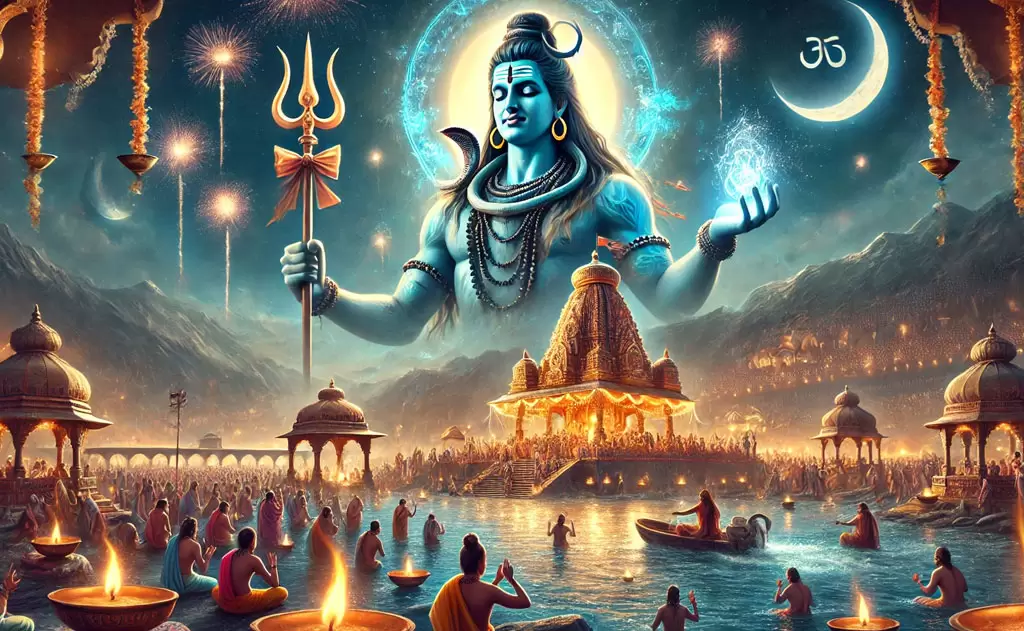
In addition, the evening aarti at the Triveni Sangam is one of the most awe-inspiring moments of the Mela. The serene sight of lamps floating down the river, accompanied by the sounds of prayers and the clanging of bells, creates a surreal atmosphere that leaves every devotee with a sense of peace and divine connection.
A Unique Combination of Maha Kumbh and Magh Mela
What makes this year’s event even more special is the convergence of the Maha Kumbh Mela with the annual Magh Mela, an occasion when devotees live on the riverbanks, fasting and worshipping the sacred waters. This rare alignment of two powerful spiritual events intensifies the significance of the occasion, attracting an even larger number of pilgrims.
Elaborate Arrangements for Devotees
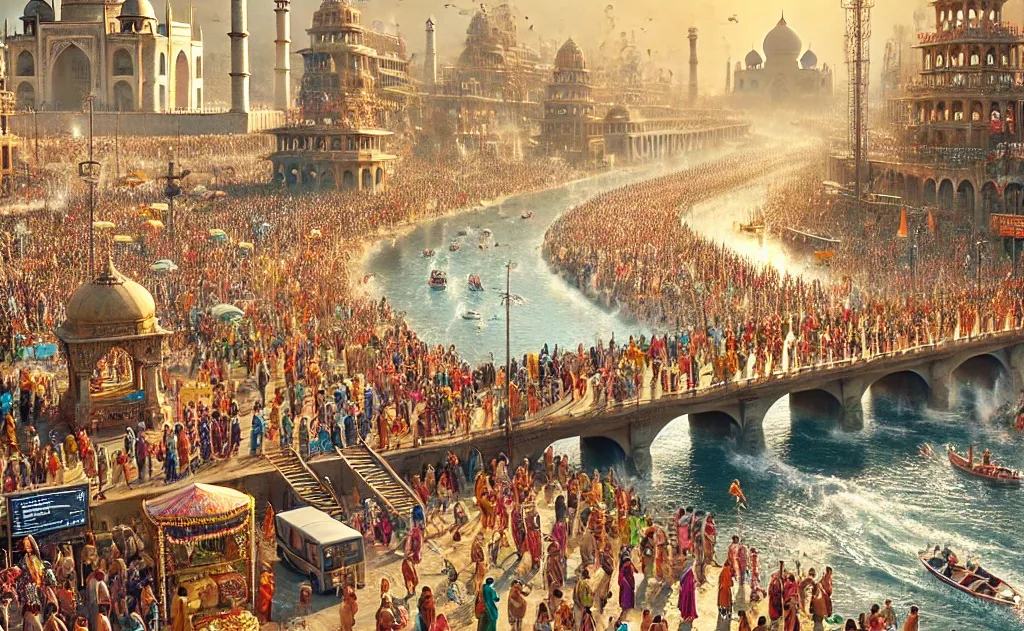
To accommodate over 450 million devotees, extensive preparations have been made by the Uttar Pradesh government. Temporary cities have sprung up around Prayagraj, with special tents for saints and accommodations for pilgrims. Infrastructure, including temporary bridges and ghats, has been set up at the Triveni Sangam to ensure a smooth and sacred experience for all visitors.
Special attention has been given to maintaining safety and hygiene, with the deployment of medical teams, free food services, and a dedicated app for emergency assistance and guidance. Additionally, six key dates during the festival are deemed most sacred, with devotees flocking in large numbers to bathe in the holy rivers on these days to attain moksha.
Conclusion
The Maha Kumbh Mela is a celebration of life, spirituality, and unity. This year, with its blend of deep spiritual significance and elaborate cultural festivities, it offers a once-in-a-lifetime opportunity to reconnect with the divine, immerse oneself in the sanctity of the holy rivers, and experience the profound unity of India’s spiritual heritage. Let us embrace this rare occasion and take part in this grand spectacle of faith at Prayagraj in 2025.
What is the Astronomical Basis Behind the 144-Year Cycle of Maha Kumbh?
The timing of Kumbh Mela is determined by a precise alignment of celestial bodies rather than a fixed calendar date. Maha Kumbh specifically occurs when Jupiter (Brihaspati) enters Taurus (Vrishabha), the Sun enters Capricorn (Makar), and the Full Moon occurs in the month of Magha — a conjunction so rare that it completes its full cycle only once every 144 years. This calculation is rooted in Jyotisha Shastra, the Vedic science of astronomy and timekeeping.
Ancient texts including the Skanda Purana and the Atharva Veda Parishishta reference the sacred power of planetary confluences and their ability to amplify the spiritual potency of water bodies. The idea is that when these planets align, the waters of the Triveni Sangam at Prayagraj absorb heightened cosmic energy — referred to as Amrita Shakti — making the Snan (ritual bath) extraordinarily efficacious. This is not mere belief but a systematic framework of astronomical observation preserved across millennia.
How Does the Samudra Manthan Legend Directly Connect to Prayagraj and the Kumbh?
The Puranic account of Samudra Manthan — the churning of the cosmic ocean — found in detail in the Bhagavata Purana (Book 8) and the Vishnu Purana, describes how Devas and Asuras together churned the Kshirasagara using Mount Mandara as the churning rod and the serpent Vasuki as the rope. Among the fourteen treasures that emerged was Amrita, the nectar of immortality. Fearing that the Asuras would seize it, the divine carrier Jayanta (son of Indra) flew away with the Kumbha (pot) of Amrita.
During Jayanta's flight, drops of Amrita fell at four specific locations on earth: Prayagraj, Haridwar, Ujjain (Kshipra river), and Nashik (Godavari river). These four sites now host the rotating Kumbh Mela cycle. Prayagraj is considered the most sacred of the four because the Amrita fell at the Triveni Sangam itself — the confluence of the Ganga, Yamuna, and the subterranean Saraswati — investing the waters there with the highest concentration of divine grace. The Maha Kumbh, held only at Prayagraj, therefore stands as the apex of all Kumbh gatherings.
Who Are the Akharas and Why Are They Central to the Maha Kumbh?
The Akharas are ancient monastic orders of ascetics that form the organisational backbone of Kumbh Mela. Traditionally, Adi Shankaracharya is credited with formalising several of these orders in the 8th century CE to protect and propagate Sanatana Dharma. There are thirteen recognised Akharas, broadly divided into Shaiva (devoted to Shiva), Vaishnava (devoted to Vishnu), and Udasin (following the path established by Sri Chand, son of Guru Nanak). Each Akhara maintains its own distinct lineage, rituals, and philosophical tradition.
The most anticipated event associated with the Akharas is the Amrit Snan — also called the Shahi Snan or royal bath. On specific auspicious dates (called Shahi Snan tithi), each Akhara proceeds to the Sangam in a grand procession led by its Mahamandaleshwar and Naga Sadhus, who are naked ascetics smeared in ash (vibhuti), representing complete renunciation of the material world. The order of bathing among the Akharas follows a centuries-old protocol, and any disruption to this sequence is considered a serious matter of tradition and honour.
For the 2025 Maha Kumbh, the key Shahi Snan dates fall on Makar Sankranti (January 14), Mauni Amavasya (January 29), and Basant Panchami (February 3). These days draw the largest single-day concentrations of pilgrims, often numbering in the tens of millions at the Sangam alone.
What Is the Spiritual Significance of the Triveni Sangam Beyond the Physical Confluence?
The word Triveni means 'three braids' — a reference to the meeting of three rivers at Prayagraj. The Ganga descends from the Himalayas carrying the blessings of Shiva, the Yamuna flows from Yamunotri bearing the grace of Surya (the Sun god), and the Saraswati, now considered an invisible or subterranean river (antarvahini), represents Saraswati Devi — goddess of wisdom, speech, and the Vedas. Their union is therefore understood as a confluence not merely of water but of Jnana (knowledge), Bhakti (devotion), and Shakti (power).
The Matsya Purana and Padma Purana both describe Prayagraj (historically called Tirtharaja — king of all tirthas) as the most sacred pilgrimage site in all creation. Lord Brahma himself is said to have performed the Ashwamedha Yajna here after creation, and the site of that yajna — the Brahma Vedi — is venerated at Prayagraj to this day. The Akshaya Vata, an ancient banyan tree within the Patalpuri temple complex at Prayagraj Fort, is specifically mentioned in the Mahabharata as a tree of immortality visited by the Pandavas during their exile.
How Should a Devotee Practically Prepare for the Maha Kumbh Pilgrimage in 2025?
A Kumbh pilgrimage is most fruitful when undertaken with prior spiritual preparation. Traditional texts recommend observing at least a brief period of Upavasa (fasting) or dietary simplification before arrival, reciting the Ganga Stotram or the Yamuna Ashtakam in the days leading up to the Snan, and carrying a resolve — a Sankalpa — stating one's name, lineage, and the intention of the bath. The Sankalpa is formally declared at the water's edge with a priest or independently, invoking the river deities before immersion.
Practically, pilgrims travelling to Prayagraj during the 2025 Maha Kumbh should note that the main Mela grounds are spread across Sectors 1 through 25 across the Sangam area, with designated Ghats for different Akharas and the general public. The Uttar Pradesh government has coordinated with the Mela Authority to establish medical camps, lost-and-found centres, and digital registration portals for tent accommodations within the Mela grounds. Pilgrims are advised to keep a printed copy of their camp allocation and to carry minimal valuables to the bathing Ghats on the major Snan dates.
It is also spiritually recommended to visit the Akshaya Vata, the Saraswati Koop (sacred well believed to connect to the subterranean Saraswati), and the Hanuman temple at Bade Hanuman Mandir near the Sangam — where a reclining idol of Lord Hanuman is unique in all of India — as part of the complete Prayagraj Tirtha Yatra that the Maha Kumbh facilitates.
Frequently Asked Questions
When and where was the Maha Kumbh Mela 2025 held?
The Maha Kumbh Mela of 2025 was scheduled in Prayagraj from January 13 to February 26. Devotees bathed at the Triveni Sangam, the confluence of the Ganga, Yamuna and Saraswati.
Why does the Maha Kumbh occur only once every 144 years?
It occurs when Jupiter enters Taurus, the Sun enters Capricorn and the Full Moon falls in the month of Magha. This conjunction is so rare that it completes its cycle only once every 144 years.
What is the legend behind the Kumbh Mela, as commonly told?
As commonly told, Devas and Asuras churned the cosmic ocean and Amrita, the nectar of immortality, emerged. Drops fell at Prayagraj, Haridwar, Ujjain and Nashik, which host the Kumbh cycle.
Who are the Akharas and what is the Amrit Snan?
The Akharas are thirteen ancient monastic orders of ascetics who form the backbone of the Kumbh. The Amrit Snan, or Shahi Snan, is the royal bath when each Akhara processes to the Sangam led by its Mahamandaleshwar and Naga Sadhus.
What were the key Shahi Snan dates in 2025?
The key Shahi Snan dates were Makar Sankranti on January 14, Mauni Amavasya on January 29 and Basant Panchami on February 3. These days drew the largest crowds at the Sangam.
How should a devotee prepare spiritually for the Kumbh bath?
Traditional texts suggest a brief period of fasting or simple diet beforehand and reciting the Ganga Stotram or Yamuna Ashtakam. A Sankalpa stating one's name, lineage and intention is declared at the water's edge before immersion.
Share this with family and friends
Send it on WhatsApp, post it, or copy the link.
More from Maha Kumbh Mela
- Maha Kumbh 2025 Legacy — 13 Months Later: Records, Spiritual Impact, NRI Pilgrim Stories & Next Ardh Kumbh 2027 Preview
- The Maha Kumbh Mela: A Sacred Journey for Every Hindu
- Kumbh Mela 2025: End Date, Holy Dip Opportunities, and Key Shahi Snan Dates
- Astrological Significance of Shiva Rathri and Its Relationship with Maha Kumbh Mela This Year
- The Greatest Records Achieved by Maha Kumbh Mela: A Historic Gathering of Faith
You might also like
Maha Shivaratri and Maha Kumbh Mela: A Sacred Union of Devotion, Rituals, and Astrology

Hinduism’s Global Stage: How Maha Kumbh 2025 Redefined Spiritual Tourism
Maha Kumbh Mela: Differences We Can Expect in the Next 144 Years