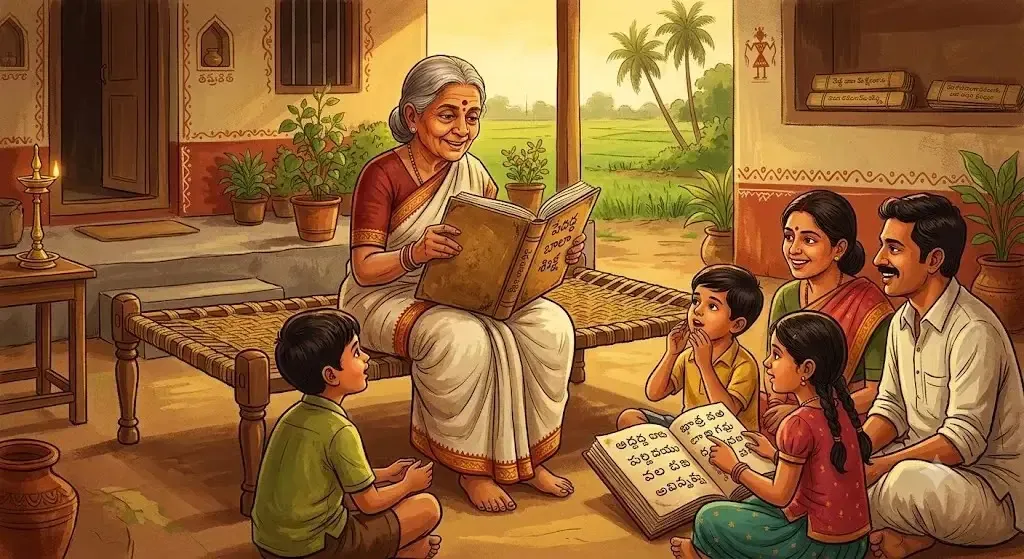
The Story of Ambarisha and Durvasa
Source: Bhagavata Purana King Ambarisha was a staunch devotee of Lord Vishnu who observed Ekadashi with complete dedication.
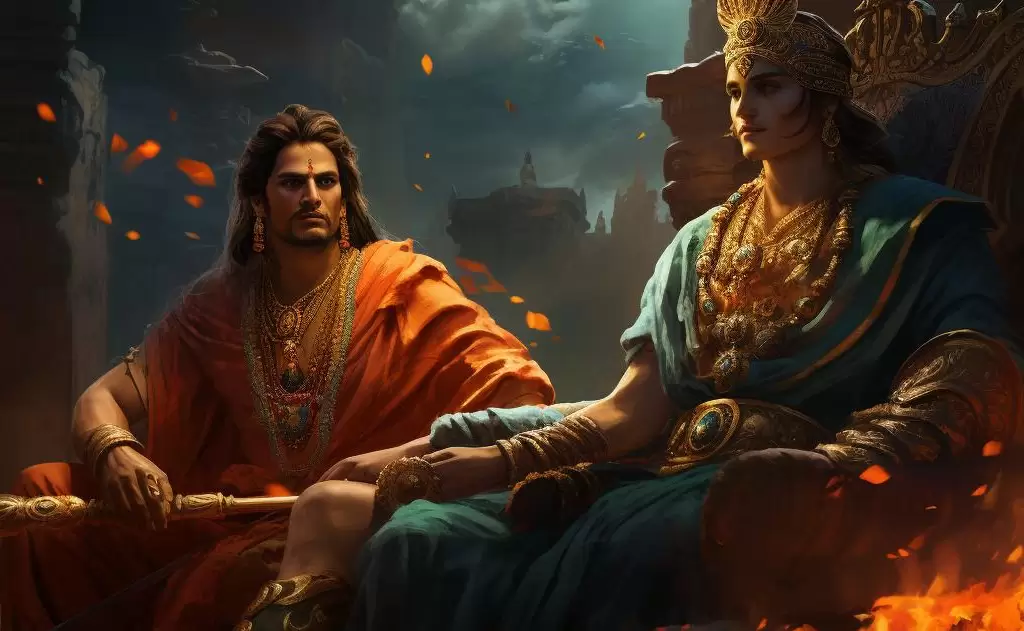
Source: Bhagavata Purana
King Ambarisha was a staunch devotee of Lord Vishnu who observed Ekadashi with complete dedication. Once, sage Durvasa, known for his fiery temper, visited the king on Ekadashi and delayed his meal beyond the fasting time. Bound by the rules of the Ekadashi vrat, the king broke his fast with water to maintain its sanctity.
Durvasa, feeling insulted, cursed the king. However, Lord Vishnu’s Sudarshana Chakra intervened to protect Ambarisha. The sage realized his mistake and sought forgiveness, acknowledging the king’s unshakable devotion.
Relevance Today: This tale teaches us that true devotion surpasses fear or personal loss. It also underscores the importance of adhering to spiritual vows with sincerity and humility.
Modern Testimonials: Miracles Experienced by Devotees
- Overcoming Health Challenges
A devotee shared how observing Vaikuntha Ekadashi helped them recover from a prolonged illness. Through fasting and chanting Vishnu’s name, they experienced physical healing and emotional peace, which they attributed to divine intervention.
- Career Breakthroughs
A young professional struggling with career stagnation decided to observe Vaikuntha Ekadashi with deep devotion. They prayed for guidance and found unexpected opportunities that aligned perfectly with their goals.
- Family Reconciliation
A family strained by conflicts came together during Vaikuntha Ekadashi when they jointly performed prayers and rituals. The experience deepened their bond and brought harmony to their home.
Key Takeaways for Devotees
Faith and Devotion: These stories highlight that unwavering faith and sincere effort attract divine blessings. Fasting and Rituals: Observing Ekadashi fasts purifies the mind and body, fostering spiritual growth. Relevance of Stories: Ancient tales are not just folklore; they offer practical lessons for handling challenges and embracing spiritual practices in modern life.
By drawing inspiration from these stories, devotees can approach Vaikuntha Ekadashi with renewed faith and dedication, opening themselves to the possibility of miracles and spiritual upliftment.
Who Was King Ambarisha and Why Did He Matter in the Lineage of Devotees?
King Ambarisha was a monarch of the Ikshvaku dynasty, descended from the solar lineage (Suryavamsha) and counted among the greatest royal devotees — the rajarshis — mentioned in the Bhagavata Purana. The ninth book of the Bhagavata Purana (Navama Skandha) devotes several chapters to his life, describing how he surrendered every faculty of his being to Lord Vishnu: his mind dwelling on Vishnu's lotus feet, his words reciting Vishnu's names, his hands engaged in cleaning the temple, his ears hearing the Bhagavata, and his eyes beholding the deity's form.
This eight-fold surrender — engaging all the senses in divine service — is held up by Vaishnava acharyas as the very definition of navavidha bhakti, the nine modes of devotion outlined in the Bhagavata. Ambarisha is therefore not merely a character in a story; he represents a philosophical ideal: the proof that a householder king, fully engaged in worldly responsibilities, can attain the highest spiritual state through single-pointed, wholehearted devotion.
What Exactly Happens in the Bhagavata Purana Account — a Closer Reading of the Episode?
The episode unfolds on the Dvadashi tithi (the twelfth lunar day) following a complete Ekadashi fast observed by Ambarisha at Madhuvana on the banks of the Yamuna river. The rules of Ekadashi vrata require that the devotee break the fast (parana) within a precise window on the morning of Dvadashi — neither too early nor too late — to receive the full merit of the vow. Sage Durvasa arrived as a guest just as this window was opening, accepted the king's invitation to dine, and then departed to the river for bathing, remaining absent so long that the auspicious parana moment was about to close.
Faced with an impossible dilemma — violating the sacred fast by waiting too long, or violating the code of hospitality by eating without the guest — Ambarisha consulted learned Brahmins and followed their counsel: he broke his fast by sipping water alone (achamana), since water is considered both food and non-food in Vedic reckoning, thus technically honoring both obligations. When Durvasa returned and perceived what had happened through his yogic vision, he felt dishonored and in fury created a critical demon (Kritya) from a matted lock of hair to destroy the king. The Sudarshana Chakra of Lord Vishnu instantly incinerated the demon and then turned toward Durvasa himself, pursuing him across the three worlds — through Brahmaloka, Vaikunthaloka — until the sage finally surrendered at the king's feet to seek relief.
What Is the Theological Significance of the Sudarshana Chakra's Role in This Story?
The Sudarshana Chakra — the spinning discus weapon of Lord Vishnu — is not merely a physical armament in Vaishnava theology; it is the embodiment of the Lord's divine will (sankalpa shakti) and cosmic order (rita). Its Sanskrit name combines 'su' (auspicious) and 'darshana' (vision), pointing to its role as the instrument that removes all that obscures the divine order. In the Vishnu Purana and the Pancharatra Agamas, Sudarshana is worshipped as a deity in his own right, with his own temples — notably the Sudarshana shrine within the Sri Ranganathaswamy Temple at Srirangam in Tamil Nadu.
In Ambarisha's story, the chakra's pursuit of Durvasa carries a profound doctrinal message captured in a verse the Bhagavata Purana places in Vishnu's own speech: 'I am completely under the control of my devotees; I have no independence whatsoever. My heart is conquered by those who have given their heart to me.' (Bhagavata Purana 9.4.63 — 'aham bhakta-paradhino'). The cosmic implication is that even a sage of Durvasa's tapas-born power cannot prevail against the protective grace that Lord Vishnu extends over a pure bhakta, and that no spiritual authority — however formidable — supersedes the shield of sincere devotion.
How Does Durvasa's Character Serve as a Teaching Rather Than a Simple Villain in This Narrative?
Durvasa Muni, regarded as a partial manifestation of Lord Shiva in the Puranic tradition, is frequently cast in stories as a short-tempered sage whose curses unleash consequences that reshape history — his curse of Indra, for instance, sets the stage for the Devas losing their strength and the subsequent churning of the cosmic ocean (Samudra Manthan). Yet he is never presented as evil; his anger arises from the intense heat of his tapasya, which makes any perceived slight feel amplified beyond normal human experience.
In the Ambarisha episode, Durvasa functions as an agent who tests and ultimately validates the king's devotion. His humiliation — a mighty ascetic forced to beg forgiveness from a king he tried to destroy — dismantles the ego-centric notion that spiritual power (tapobala) alone confers safety or superiority. The resolution of the episode, in which Ambarisha himself prays for the chakra to withdraw and spare the sage, reveals that the true devotee harbors no enmity even toward those who harm him. This mirrors the Bhagavad Gita's description of the sthitaprajna (one of steady wisdom) in Chapter Two: unshaken in adversity, free from hatred.
How Is Ekadashi Vrata Observed Traditionally and What Are Its Scriptural Foundations?
Ekadashi — the eleventh lunar day of each fortnight — is prescribed as a fast day in the Padma Purana, which contains an extended dialogue between Lord Vishnu and the sage Dalbhya explaining the origin and rules of the vrata. The Padma Purana states that the goddess Ekadashi herself emerged from Vishnu's body to combat the demon Mura, and that Vishnu, pleased by her effort, granted her the boon that those who fast on her day would be freed from the cycle of rebirth. Accordingly, Ekadashi occurs twenty-four times a year (and occasionally a twenty-fifth time known as Adhika Ekadashi in a leap lunar month).
The fast traditionally involves abstaining from grains and beans — which are said to harbor microscopic life and carry tamas (inertia) on this particular day according to Ayurvedic and Vedic reasoning — while permitting fruits, dairy, roots, and water. Parana, the breaking of the fast, must occur after sunrise on Dvadashi and before the Dvadashi tithi ends, precisely the timing at the heart of the Ambarisha episode. Vaikuntha Ekadashi, occurring on the Shukla Ekadashi of the Margazhi month (Dhanur masa, approximately December–January), is especially celebrated at Srirangam and Tirupati Tirumala, where the Vaikuntha Dwaram (the northern gateway of the temple) is opened exclusively on this day, symbolizing the opening of the gates of Vaikuntha to all devotees.
What Lasting Impact Did This Story Have on Vaishnava Philosophical and Devotional Literature?
The Ambarisha-Durvasa episode became a cornerstone reference for the concept of bhakti as an independent and supreme path (bhakti as a pramana) in the writings of Sri Vaishnavism's founding acharya, Sri Ramanujacharya, and was elaborated upon by later teachers of the Vishishtadvaita school. The verse 'aham bhakta-paradhino' — 'I am bound by my devotees' — is among the most quoted in Vaishnava discourse on the nature of God's relationship with the soul.
Medieval Tamil poet-saints, the Alvars, drew on the spirit of Ambarisha's surrender when composing hymns in the Nalayira Divya Prabandham. Tirumangai Alvar and Nammalvar both celebrate the concept of the Lord as being 'captured' by pure love, echoing the very dynamic this story illustrates. The episode thus travels across language and form — from Sanskrit Purana to Tamil devotional poetry to philosophical commentary — demonstrating how a single narrative can seed an entire tradition of spirituality centered on the transformative power of wholehearted surrender.
Frequently Asked Questions
Who was King Ambarisha in the Bhagavata Purana?
Ambarisha was a king of the Ikshvaku dynasty and a great royal devotee (rajarshi) of Lord Vishnu. The ninth book of the Bhagavata Purana describes how he devoted his mind, words, hands, ears and eyes to Vishnu.
Why did sage Durvasa curse Ambarisha?
Durvasa arrived as the Ekadashi fast was ending and went to bathe, delaying so long that the parana window was closing. Ambarisha broke his fast by sipping water, and Durvasa felt dishonoured and cursed him.
How did Ambarisha break his fast without insulting his guest?
On the advice of learned Brahmins, he sipped water (achamana). Water is considered both food and non-food, so it honoured both the vow and the rules of hospitality.
What role did the Sudarshana Chakra play in the story?
Vishnu's Sudarshana Chakra destroyed the demon Durvasa created and then pursued the sage across the three worlds. It stopped only after Durvasa surrendered and Ambarisha prayed for him.
How is Ekadashi vrata observed and when is parana done?
The fast traditionally avoids grains and beans, allowing fruits, dairy, roots and water. Parana must be done after sunrise on Dvadashi and before the Dvadashi tithi ends.
What does the story teach devotees today?
True devotion surpasses fear or personal loss, and spiritual vows should be kept with sincerity and humility. Ambarisha also shows that a true devotee holds no enmity even toward those who harm him.
Share this with family and friends
Send it on WhatsApp, post it, or copy the link.
More from Stories
- Diwali Stories for Kids: One Story Every Night for the 5 Days of Diwali (2026)
- Navratri Stories for Kids: One Story Every Night for the 9 Forms of Durga (2026)
- Ten Heads of Ravana: Meaning, Stories and Interpretations Explained
- Dussehra Story for Kids: Rama and Ravana, Durga and Mahishasura (Read-Aloud Versions)
- Nirjala Ekadashi Mahatmyam | Bhima–Vyasa Dialogue | Pandava Nirjala Ekadashi Story
You might also like
Sita Navami 2026: Date, Muhurat, Puja Vidhi, Story of Mata Sita & Complete Vrat Guide
The Story Behind Maha Shivaratri: Mythology and Legends
The Resolve of a Monk – A Divine Incident Showcasing Kanchi Paramacharya’s Compassion