Britain and Islam: A Historical and Contemporary Perspective
The relationship between Britain and its Muslim communities is a complex tapestry woven from centuries of historical interactions, colonial legacies, and…
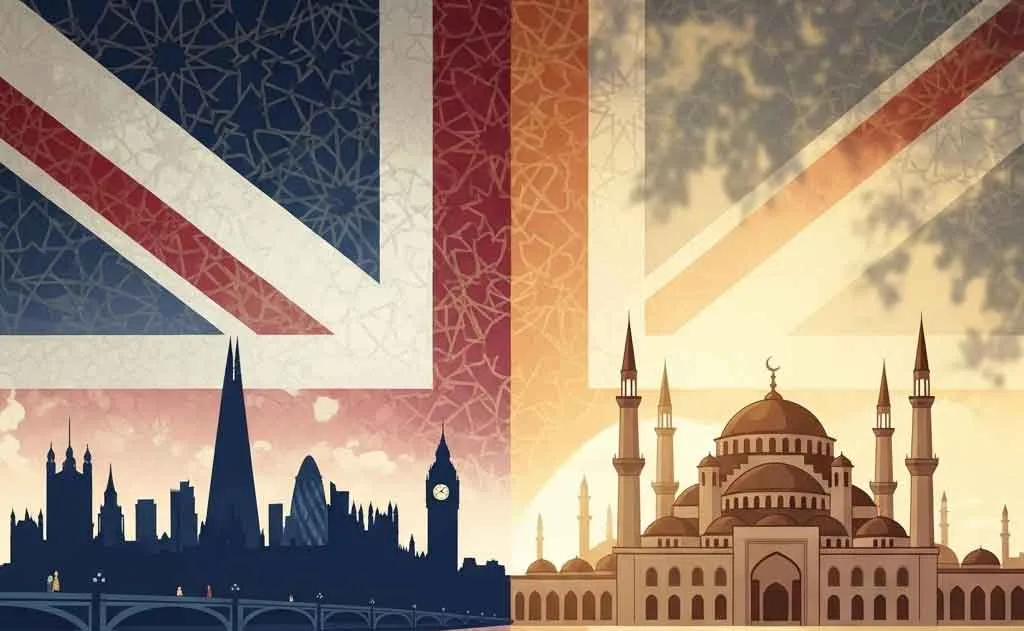
The relationship between Britain and its Muslim communities is a complex tapestry woven from centuries of historical interactions, colonial legacies, and modern challenges of integration and identity. For a global Hindu audience, this story resonates as it reflects the broader dynamics of cultural diversity, religious coexistence, and the challenges of minority communities in Western societies. As of 2025, with Muslims comprising roughly 6.5% of the UK population, Britain’s engagement with Islam offers insights into navigating pluralism in a rapidly changing world.
Historical Roots: From Trade to Empire
Britain’s earliest encounters with Islam date back to the medieval period, though direct contact was limited. In the 8th century, King Offa of Mercia minted coins with Arabic inscriptions, likely inspired by trade with the Abbasid Caliphate. By the 16th century, Elizabethan England forged alliances with the Ottoman Empire to counter Catholic Europe, bringing Muslim merchants and diplomats to British shores. These early exchanges laid a foundation for cultural curiosity, though no significant Muslim population existed then.
The British Empire’s expansion into South Asia and the Middle East deepened these ties. From the 18th century, Muslim lascars (seafarers) from regions like Bengal settled in port cities like London and Cardiff. The colonial administration in India, which included modern-day Pakistan and Bangladesh, brought South Asian Muslims into closer contact with British systems, influencing migration patterns later. Victorian-era conversions, such as that of Marmaduke Pickthall, who translated the Qur’an in 1930, reflected a growing fascination with Islamic culture among British elites.
Post-Colonial Migration and Demographic Shifts
The modern Muslim presence in Britain took shape after World War II, driven by labor demands in the 1950s and 1960s. Large-scale immigration from Pakistan, Bangladesh, and India—regions with significant Muslim populations—transformed cities like Bradford, Birmingham, and Leicester. The 1962 Commonwealth Immigrants Act, which restricted migration, prompted a surge of arrivals, with many South Asian Muslims settling in industrial hubs. By 2021, the Muslim population in England and Wales was estimated at 3.9 million, or 6.5% of the total, with Pakistanis and Bangladeshis forming the largest groups, alongside smaller Arab, Somali, and Turkish communities.
For Hindu readers, this migration parallels the experiences of Indian Hindu communities in the UK, who also arrived post-war and faced similar socio-economic challenges. Mosques, such as the East London Mosque, became community anchors, much like Hindu temples did for diaspora Hindus. However, Muslim communities, predominantly Sunni with Deobandi and Barelvi affiliations, have faced unique scrutiny due to their size and visibility.
The Salman Rushdie Controversy: A Cultural Flashpoint
The 1988 publication of Salman Rushdie’s The Satanic Verses marked a turning point. The novel, seen by some Muslims as offensive to Islamic beliefs, sparked protests, notably in Bradford, where public book burnings drew global attention. The 1989 fatwa by Iran’s Ayatollah Khomeini against Rushdie intensified the crisis, raising questions about free speech and religious sensitivity in Britain. This episode resonates with Hindu audiences familiar with debates over cultural representation and religious sensitivities, such as controversies surrounding depictions of Hindu deities.
The Rushdie affair galvanized British Muslim advocacy, leading to the formation of groups like the Muslim Council of Britain (MCB) in 1997. These organizations sought to amplify Muslim voices but faced criticism for alleged links to Islamist ideologies, a concern echoed in Hindu diaspora discussions about balancing religious identity with integration.
Security Challenges and Extremism
The 2005 London bombings (7/7), carried out by British-born Muslim terrorists, killing 52 people, brought issues of Islamic extremism into sharp focus. Earlier, in the 1990s, Britain’s asylum policies earned it the nickname “Londonistan” for sheltering Islamist dissidents. Figures like Anjem Choudary, later convicted for terrorism-related activities, exploited this environment. Subsequent attacks, including the 2013 murder of soldier Lee Rigby and the 2017 Manchester Arena bombing, heightened public and policy concerns.
The UK’s Prevent strategy, aimed at countering radicalization, has been contentious, with critics arguing it unfairly targets Muslims. In 2024, the government banned Hizb ut-Tahrir for promoting terrorism and scrutinized groups like the MCB for potential extremist ties. For Hindu readers, these developments may evoke parallels with global concerns about religious extremism and the need for balanced security measures that respect community rights.
Islamophobia and Social Dynamics
Anti-Muslim sentiment has risen in recent years, with Tell Mama reporting 6,313 Islamophobic incidents in 2024, a 43% increase from the prior year. Misinformation, such as false claims linking the 2024 Southport murders to Islam, fueled riots targeting mosques and migrant communities. Far-right groups like the English Defence League have amplified tensions, a pattern familiar to Hindu communities facing similar prejudices in the West.
Yet, positive efforts exist. Muslim leaders like Imam Adam Kelwick in Liverpool have countered hate with dialogue, hosting interfaith events. Hindu communities in the UK, through organizations like the Hindu Forum of Britain, have similarly promoted interfaith harmony, recognizing shared challenges as religious minorities.
Contributions and Coexistence
British Muslims have enriched the UK’s cultural fabric. From Khadijah Mellah, the first hijab-wearing jockey to win a British race, to the proliferation of halal businesses, their contributions are undeniable. Mosques and Islamic centers provide social services, paralleling the role of Hindu mandirs. Sufi traditions, prevalent among South Asian Muslims, emphasize spirituality, offering a counterpoint to political Islamism and resonating with Hindu spiritual practices.
Challenges remain, including workplace discrimination and socio-economic disparities. A 2017 study found Muslims less likely to hold senior roles despite educational gains, a concern shared by other minority groups, including Hindus.
Looking Ahead: Lessons for a Global Audience
Britain’s experience with Islam offers lessons for pluralistic societies worldwide, including India, where Hindu-Muslim dynamics are a key social issue. The UK’s journey highlights the importance of dialogue, equitable policies, and combating prejudice to foster coexistence. Grassroots initiatives, from interfaith sports events to mosque open days, show the potential for harmony despite tensions.
For Hindutone.com readers, Britain’s story underscores the need for mutual respect among diverse communities. As Britain navigates its multicultural future, the interplay of faith, identity, and integration remains a work in progress, offering insights for Hindus globally in fostering inclusive societies.
Frequently Asked Questions
When did Britain first encounter Islam?
Earliest contact dates to the medieval period, when King Offa of Mercia minted coins with Arabic inscriptions in the 8th century. In the 16th century, Elizabethan England allied with the Ottoman Empire, bringing Muslim merchants and diplomats.
How large is the Muslim population in the UK?
By 2021 the Muslim population of England and Wales was estimated at 3.9 million, or 6.5% of the total. Pakistanis and Bangladeshis form the largest groups, with smaller Arab, Somali and Turkish communities.
Why did Muslim migration to Britain increase after World War II?
Labour demands in the 1950s and 1960s drew large-scale immigration from Pakistan, Bangladesh and India. The 1962 Commonwealth Immigrants Act then restricted migration, prompting a surge of arrivals who settled in industrial hubs like Bradford, Birmingham and Leicester.
What was the Salman Rushdie controversy in Britain?
The 1988 publication of The Satanic Verses sparked protests, notably in Bradford, where book burnings drew global attention. The 1989 fatwa by Ayatollah Khomeini raised questions about free speech, and the affair led to groups like the Muslim Council of Britain in 1997.
How does the British Muslim experience relate to British Hindus?
Indian Hindu communities in the UK also arrived post-war and faced similar socio-economic challenges. Mosques became community anchors much like Hindu temples, and groups such as the Hindu Forum of Britain promote interfaith harmony.
How much Islamophobia has been reported in the UK recently?
Tell Mama reported 6,313 Islamophobic incidents in 2024, a 43% increase from the prior year. Misinformation about the 2024 Southport murders fuelled riots targeting mosques and migrant communities.
Share this with family and friends
Send it on WhatsApp, post it, or copy the link.
More from News
- Aurora Hindu Temple Shooting Plot Foiled: Illinois Teen Charged After Rifle Jammed, Police Say
- Hindu Temples Abroad News, October 2026: Neasden's 42-Foot Tapomurti, Maha Annakut, Paris Mandir Hosts UNESCO Diplomats, Abu Dhabi Prayers
- Hindu Temple News, October 2026: Tirumala Navaratri Brahmotsavam, Sabarimala Security, Kashi's New CEO and Puri Updates
- Hindu Festival News, October 2026: Kullu Dussehra, Bastar, Delhi Ramlila, Gujarat Garba, Bathukamma, Chhath and Ayodhya Deepotsav
- Festival Special Trains 2026: Dasara, Diwali and Chhath Specials Announced So Far, Route by Route
You might also like
No Scheduled Caste status if converted to Islam, Christianity
TCS Nashik Employees Allegations: Sexual Harassment & Forced Conversion Claims Emerge at Tata Consultancy Services BPO
Shani Jayanti 2026: Date, Significance, Rituals & Powerful Mantras