All Political Parties Unite Against YouTubers Ranveer Allahabadia & Apurva Mukhija
Mumbai Police Crack Down on YouTubers Ranveer Allahabadia & Apurva Mukhija as Political Pressure Mounts In a dramatic turn of events, the Mumbai Police have…
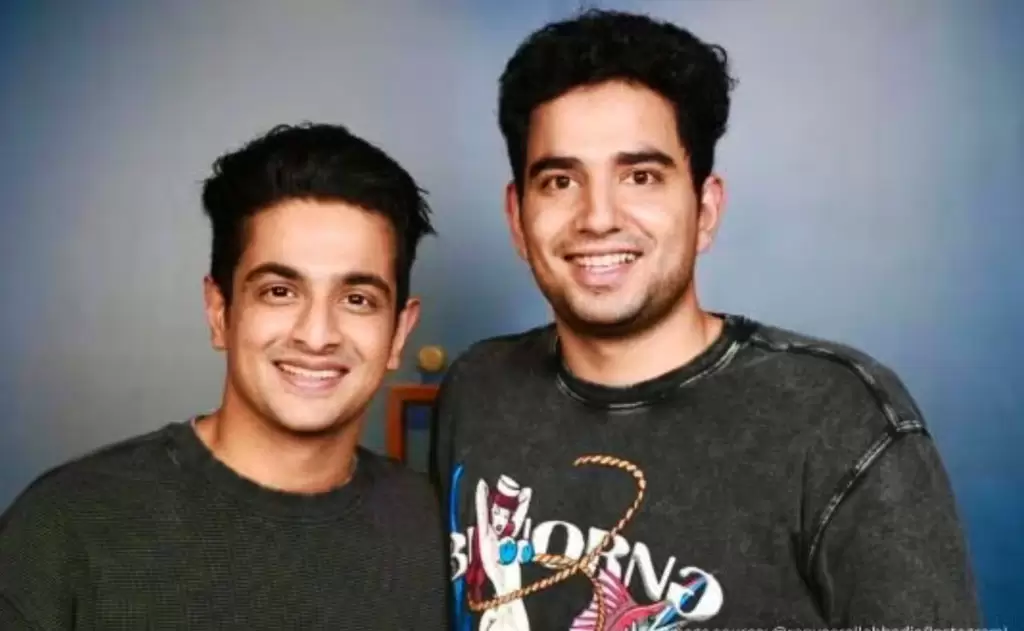
Mumbai Police Crack Down on YouTubers Ranveer Allahabadia & Apurva Mukhija as Political Pressure Mounts In a dramatic turn of events, the Mumbai Police have…
Mumbai Police Crack Down on YouTubers Ranveer Allahabadia & Apurva Mukhija as Political Pressure Mounts
In a dramatic turn of events, the Mumbai Police have reached the studios of YouTubers Ranveer Allahabadia and Apurva Mukhija, both long criticized for their controversial content. Their actions have now sparked nationwide political backlash, with major parties uniting against them. The growing outrage has led to serious allegations that could have a lasting impact on their careers.
Shivsena Vows Legal Action
The Shivsena has strongly condemned both influencers, announcing their intent to pursue legal action in what they describe as “a move in the interest of Maharashtra.” Party officials argue that the duo’s content undermines the state's cultural and social values, further justifying their firm stance.
SSUBT MP Priyanka Chaturvedi to Raise Issue in Parliament
Adding weight to the controversy, SSUBT MP Priyanka Chaturvedi has confirmed her plans to bring the issue to Parliament. Known for her advocacy of ethical digital practices, she believes this marks a crucial moment in holding social media influencers accountable. Her involvement signals an increasing governmental focus on online content regulation.
CPI MP P Sandosh Supports Government Action
Further intensifying the debate, CPI MP P Sandosh has announced that the Communist Party will stand with the government in framing a policy to regulate digital content. He has called for stricter social media guidelines to prevent the spread of what he describes as irresponsible and harmful content from creators like Allahabadia and Mukhija.
CM Devendra Fadnavis Promises Swift Action
With pressure mounting, Maharashtra Chief Minister Devendra Fadnavis has assured the public of immediate action. He reaffirmed the government’s commitment to protecting the dignity and moral integrity of the state, vowing to implement necessary measures against digital misconduct.
A United Political Front Against Controversial Influencers
The rare unity among political parties, from Shivsena to CPI, underscores the gravity of the situation. As the nation watches closely, all eyes are now on the next steps in this high-profile crackdown on digital influencers.
Stay tuned for further updates as the story unfolds.
What Specific Content Triggered the Political Firestorm?
The immediate catalyst for the nationwide backlash was a segment aired on Ranveer Allahabadia's podcast show, in which a guest comedian made remarks widely condemned as obscene and deeply offensive to familial and religious sensibilities. Apurva Mukhija, who co-hosted the episode, was criticised for not intervening or exercising editorial judgment. Clips from the episode spread rapidly across platforms including X (formerly Twitter) and Instagram, accumulating millions of views within hours and drawing sharp condemnation from viewers across age groups and political affiliations.
Several Hindu organisations and cultural bodies pointed out that certain remarks in the episode were interpreted as mocking the sacred institution of the family — a concept deeply rooted in Dharmic values — and showed disregard for Maryada, the principle of dignified conduct enshrined in texts like the Ramayana and Manusmriti. The controversy intensified as religious leaders and community voices amplified the criticism, framing the content not merely as a legal matter but as a cultural and civilisational one.
How Do Indian Laws Govern Obscene and Offensive Online Content?
The legal framework surrounding this controversy draws primarily from Section 67 of the Information Technology Act, 2000, which penalises the publishing or transmission of obscene material in electronic form, and Section 292 of the Indian Penal Code, which addresses the sale and distribution of obscene material. Mumbai Police's visit to the studios of both creators signals a preliminary inquiry stage, during which statements are recorded and digital evidence is preserved before formal charges are framed.
Beyond obscenity laws, complaints have reportedly been filed under provisions relating to outraging religious feelings under Section 295A of the Indian Penal Code, a section that has historically been invoked when content is deemed deliberately and maliciously offensive to religious communities. Legal experts note that conviction under these combined provisions can carry imprisonment as well as monetary penalties, making the situation significantly more consequential than a simple notice or warning from a regulatory body.
What Is the Broader Debate Around Regulating Digital Content Creators in India?
India's influencer and podcast economy has grown exponentially over the past five years, with creators like Ranveer Allahabadia — who runs the widely followed BeerBiceps channel — amassing subscriber bases in the tens of millions. This scale of reach, often exceeding that of mainstream television channels, has renewed calls for a statutory framework that holds digital creators to standards comparable to those applied to licensed broadcast media under the Cable Television Networks (Regulation) Act.
The Ministry of Information and Broadcasting has previously issued advisories urging self-regulation among Over-The-Top (OTT) platforms and digital content creators, but critics argue that advisory frameworks without enforcement teeth have proven insufficient. CPI MP P Sandosh's call for a formal policy aligns with a growing parliamentary consensus that platform community guidelines alone cannot substitute for codified national standards, especially when content reaches vulnerable or younger demographics at scale.
Proponents of free expression caution, however, that overly broad regulatory powers risk being misused to suppress legitimate satire, political commentary, and artistic freedom. They argue that any new framework must include precise definitions, independent oversight bodies, and robust appellate mechanisms to prevent regulatory overreach — a concern that remains unresolved in current legislative discussions.
How Have Cultural and Dharmic Perspectives Shaped Public Response?
Many Hindu commentators and Dharmacharyas have framed the controversy through the lens of Lok Maryada — the social code of conduct that upholds decency in public life — arguing that the reach of digital media carries with it a proportionally greater Dharmic responsibility. Ancient texts such as the Arthashastra of Kautilya recognised that speech (Vak) wielded in public life must be guided by Hita (welfare of society) and Priya (what is considered acceptable and respectful), principles seen as directly applicable to the responsibilities of modern public communicators.
Notably, the Bhagavad Gita (Chapter 17, verse 15) describes Satvic speech as that which is truthful, pleasing, beneficial, and non-agitating — Anudvegakaram vakyam. Several religious voices in public discourse cited this verse to underscore that the issue is not one of censorship but of the Dharmic standard expected of those who command a large public audience. This framing has resonated widely among audiences who see the episode as symptomatic of a broader erosion of cultural values in commercially driven digital content.
What Precedents Exist for Political Action Against Indian Media Personalities?
India has seen several instances where broadcasters, filmmakers, and digital creators faced coordinated political and legal responses to content deemed culturally or religiously offensive. The controversy around the film Padmaavat (2018) saw multiple state governments seeking bans and facing political protests, eventually resolved only after Supreme Court intervention. More recently, several stand-up comedians have faced FIRs filed under Section 295A, illustrating that the legal tools being discussed in this case are not novel but have an established, if contested, pattern of use.
What distinguishes the current case is the rare cross-party unity — from the ruling Shivsena alliance to opposition parties including the CPI — suggesting that the political calculus transcends typical ideological fault lines. Analysts observe that the episode touched a nerve across constituencies with differing priorities: those concerned with religious dignity, those advocating women's rights, and those focused on child safety online. This convergence of concerns across the political spectrum makes a legislative response considerably more likely than in past controversies involving individual creators.
Frequently Asked Questions
What is All Political Parties Unite Against YouTubers?
Mumbai Police Crack Down on YouTubers Ranveer Allahabadia & Apurva Mukhija as Political Pressure Mounts In a dramatic turn of events, the Mumbai Police have reached the studios of YouTubers Ranveer Allahabadia and Apurva Mukhija , both long criticized for their controversial content. Their actions have now sparked nationwide political backlash , with major p
What are the key points about All Political Parties Unite Against YouTubers?
The growing outrage has led to serious allegations that could have a lasting impact on their careers. Shivsena Vows Legal Action The Shivsena has strongly condemned both influencers, announcing their intent to pursue legal action in what they describe as “a move in the interest of Maharashtra.” Party officials argue that the duo’s content
Why does All Political Parties Unite Against YouTubers matter in Hinduism?
It reflects core values of Sanatana Dharma and offers practical and spiritual guidance that remains relevant across generations.
How can devotees apply All Political Parties Unite Against YouTubers in daily life?
By reflecting on its teaching, incorporating the related practices or observances into daily routine, and approaching it with sincere devotion and understanding.
You might also like
BJP MLA Raja Singh’s Call for Erasing Aurangzeb’s Legacy Sparks National Debate
RCB Wins IPL 2026: Heartiest Congratulations from HinduTone — Jai King Kohli!
Drik Panchangam — Sunday, 31 May 2026 | Pournami, Anuradha Nakshatra, Siddha Yoga (Adhika Jyeshtha)