History of Sri Venkateswara Temple
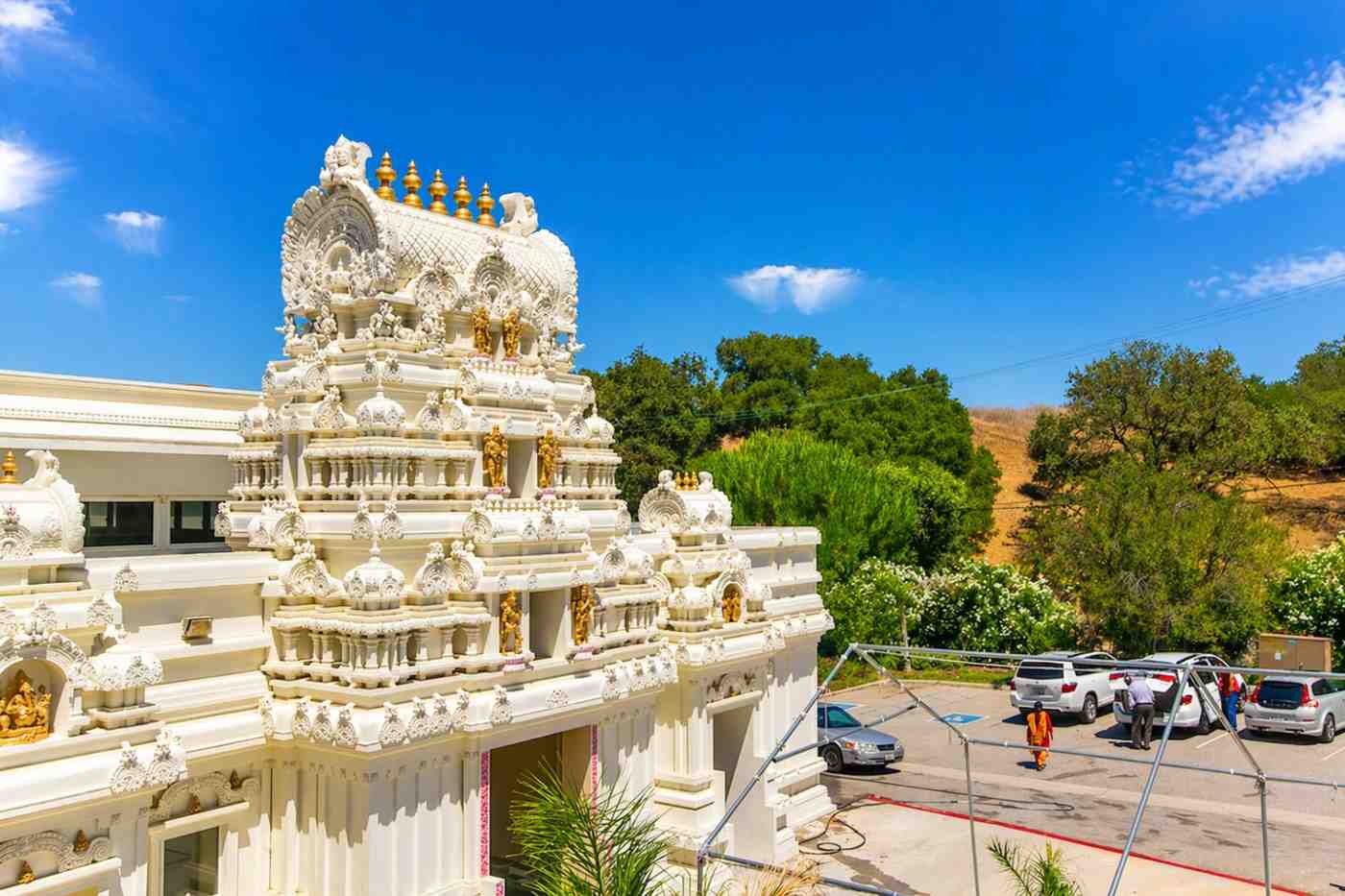
A First traditional Hindu temple built in North America whose origins stretch across centuries of Sanatana Dharma.
From a garage shrine to a Tirumala in Pennsylvania
The temple’s story began in 1968 when Alagappa Alagappan, a visionary diplomat and devotee of Venkateswara, proposed building a classical Hindu temple in America. By 1972, the Sri Venkateswara Temple Society was incorporated in Pittsburgh, and after extensive consultation with the Kanchi Kamakoti Peetham and TTD, the current Penn Hills site was acquired in 1975. The founders deliberately chose Pittsburgh for its large engineering and academic NRI community, most of whom had emigrated from Andhra Pradesh and Tamil Nadu in the first post-1965 wave.
Ground was broken on July 21, 1976 with the Bhoomi Puja performed by Sri Sannidhanam of Ahobila Mutt. Thirteen sthapathis from Mahabalipuram and Kanchipuram arrived with pre-carved granite panels; they trained local volunteers in traditional construction. The Kumbhabhishekam was performed on June 8, 1977 by TTD Agama acharyas, with a consecration fund raised almost entirely from individual $100 donations sent by NRI families across the US and Canada.
A model replicated across continents
In the years that followed, SV Pittsburgh served as technical consultant to virtually every major South Indian temple built in the US: SV Temple Bridgewater (NJ), Sri Ganesha Nashville, Hindu Temple Society of North America (Flushing, NY), Meenakshi Pearland (TX), and the Malibu Hindu Temple. The Pittsburgh priests have travelled widely to perform Kumbhabhishekam ceremonies, and its founders have authored the authoritative English-language manuals on Vaikhanasa Agama that most American temples still use.
The temple underwent major expansions in 1988 (adding the Padmavati shrine and community hall), 1996 (Ashtabandhanam punar-prathishtha), and 2018 (Samprokshanam and new vimanam gilding). Its endowment — now exceeding $25 million — funds priest salaries, free archana for the needy, Sanskrit and music schools, and community social work including the annual Tirumala pilgrimage assistance programme for first-time NRI visitors to Tirupati. Every year on June 8, the temple celebrates its Pratishtha Varshikotsavam with a full 11-day Brahmotsavam that draws over 20,000 devotees.
The Alagappan vision and the Kanchi Paramacharya’s blessing
The intellectual vision for SV Pittsburgh came from Alagappa Alagappan, an Indian diplomat at the United Nations who in 1968 wrote an influential pamphlet arguing that authentic Hindu worship in America required proper Agama-based stone temples, not generic "Indian cultural centres." He personally approached the Kanchi Paramacharya Sri Chandrashekarendra Saraswathi in 1972 for guidance, and the Paramacharya blessed the effort with the directive that the temple must follow full Vaikhanasa Agama procedures — including proper garbha-griha orientation, ashtabandhana sealing, and hereditary archaka lineage. This conversation is preserved in the Temple Archives and has become a foundational text for every authentic Hindu temple built in America since.
The temple's first chief priest was Archakaswamy Srinivasan, a 12th-generation Vaikhanasa trained at the Srirangam temple college. He arrived in Pittsburgh on H-1B visa status in 1977 — one of the earliest religious workers to enter America under the then-new provisions — and served for 38 years until his retirement in 2015. His successor archakas were all trained at the Tirupati Vaikhanasa school and sent under agreement with TTD. This lineage-based archaka tradition distinguishes SV Pittsburgh from most other American Hindu temples and has been key to its spiritual authenticity.
Historical Milestones
Temple Milestones
1968 — Alagappa Alagappan publishes his proposal for authentic Hindu temples in America.
1972 — Sri Venkateswara Temple Society of Greater Pittsburgh incorporated.
1975 — Penn Hills site acquired after consultation with the Kanchi Paramacharya.
1976 — Ground-breaking (bhumi pujan) performed on July 21, 1976.
1977 — Kumbhabhishekam (consecration) performed June 8, 1977 by TTD Agama acharyas.
1982 — First Annual Brahmotsavam held with full 11-day schedule.
1988 — Padmavati Devi shrine added; community hall opened.
1996 — Ashtabandhanam punar-prathishtha performed; samprokshanam.
2005 — Third samprokshanam performed on the 28th anniversary.
2018 — Fourth samprokshanam; new gilding of vimanam; community hall expanded.
2022 — 45th anniversary celebrated with 9-day Brahmotsavam attended by 25,000 devotees.
2024 — SV Foundation endowment crosses $25 million; scholarship programme expanded to 40 Hindu studies grants annually.