




Lighting 108 Diyas in the USA: Symbolism and Modern Adaptations
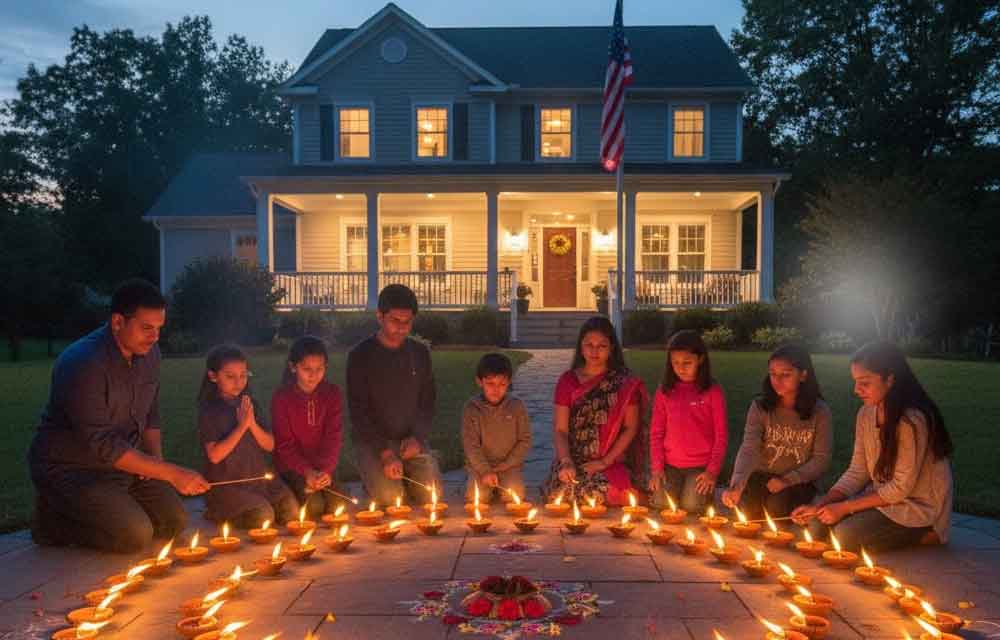
In a suburban home in Edison, New Jersey, Lakshmi Iyer carefully arranges 108 small clay lamps along her driveway as twilight descends. Her neighbors pause their evening walks, captivated by the river of light taking shape. “They always ask what it means,” she smiles, lighting each diya with a prayer. “I tell them: these aren’t just lamps. Each flame represents a step toward enlightenment.”
During Karthika Masam, the ancient practice of lighting 108 diyas has found new expressions in American homes, apartment balconies, and community centers—adapting to different climates, fire codes, and living situations while preserving its profound spiritual essence.
The Sacred Mathematics of 108
Before exploring how NRIs have reimagined this tradition, it’s essential to understand why this specific number holds such power in Hindu spiritual practice.
Cosmic Significance The number 108 appears repeatedly in Vedic cosmology and sacred mathematics:
- Astronomical alignment: The distance between Earth and Sun is approximately 108 times the Sun’s diameter
- Lunar connection: The average distance from Earth to Moon is 108 times the Moon’s diameter
- Chakra pathways: 108 energy lines (nadis) converge to form the heart chakra
- Sanskrit alphabet: 54 letters, each with masculine (Shiva) and feminine (Shakti) aspects, totaling 108
- Celestial bodies: Traditional Vedic astrology recognizes 27 nakshatras (lunar mansions) multiplied by 4 quarters each
Spiritual Architecture
- 108 beads on a traditional mala (prayer necklace)
- 108 sacred texts in some Hindu traditions
- 108 Upanishads in the Muktika canon
- 108 holy sites (divya desams) of Vaishnavism
- 108 names (ashtottara) for each deity
- 108 earthly desires in Buddhist philosophy
- 108 lies humans tell according to certain teachings
- 108 delusions of the mind
When you light 108 diyas during Karthika Masam, you’re not simply following a ritual—you’re engaging with a numerological framework that ancient rishis believed mirrored the structure of consciousness itself.
The Karthika Connection
During Karthika Masam, lighting lamps holds special potency. According to the Skanda Purana, Lord Shiva appeared as an infinite pillar of light during this month, and lighting lamps is considered a way to honor that cosmic illumination.
The 108 Lamps Ritual traditionally involves:
- Lighting all diyas simultaneously at dusk
- Reciting mantras or prayers with each lighting
- Offering the light to the divine
- Keeping them burning for as long as possible
- Performing this daily throughout the month
The practice symbolizes dispelling 108 types of darkness—ignorance, negative karma, ego, attachments, and various mental afflictions.
American Adaptations: When Tradition Meets Reality
For NRIs maintaining this practice in the United States, creativity becomes devotion’s partner.
Challenge #1: Fire Safety and Apartment Living
The Traditional Way (When Possible): Homeowners with yards or large patios can create stunning traditional displays using clay diyas and oil, especially during milder November weather in southern states.
Modern Alternatives:
LED Flameless Diyas
- Battery-operated replicas with realistic flicker effects
- Completely safe for apartments and condos
- Can be used indoors without smoke alarms triggering
- Environmentally sustainable and reusable
- Available in sets specifically designed for 108-lamp arrangements
“At first, I felt guilty using LED diyas,” admits Rajesh Menon, a software engineer in Seattle. “But my apartment complex prohibits open flames. My priest reminded me that the true light is the consciousness we bring to the practice, not the fuel source. Now I meditate on each LED diya as I switch it on, and the devotion feels just as real.”
Tea Lights and Votives
- Enclosed glass containers meeting most fire codes
- Can use traditional ghee or oil wicks in glass votives
- Safer for balconies and supervised indoor use
- Creates similar ambiance to traditional diyas
Hybrid Approaches Many families use a combination:
- A few traditional oil diyas in safe, supervised locations
- LED diyas for the majority of the 108 count
- One central brass diya with ghee flame as the “seed” lamp
- All other lights radiating from this central flame symbolically
Challenge #2: Weather Conditions
The Midwest Winter Problem: By late October and November, states like Minnesota, Wisconsin, and Michigan face freezing temperatures and early snow.
Creative Solutions:
Indoor Light Installations
- Arranging 108 diyas along staircase railings
- Creating mandala patterns on flame-safe trays in the living room
- Using window sills to display lights visible from outside
- Basement or garage setups for traditional clay diyas
Covered Outdoor Spaces
- Enclosed porches decorated with weather-resistant lamps
- Heated garages with doors open for ventilation
- Gazebo setups in the backyard
- Protected entrance areas and alcoves
Community Solutions: “Our Chicago Telugu association rents a banquet hall for the entire month,” explains Priya Desai, a community organizer. “Every evening, families take turns lighting 108 diyas together. Children learn to do it properly, we sing bhajans, and nobody has to worry about wind or snow.”
Challenge #3: Sourcing Traditional Materials
Finding Authentic Diyas:
- Indian grocery stores stock clay diyas, especially before Diwali
- Online retailers like Amazon and specialty shops carry bulk orders
- Temple bookstores often sell traditional supplies
- Some NRIs order directly from India through family
Oil and Wick Alternatives: Traditional sesame oil or ghee can be expensive and hard to find in bulk.
What Works in America:
- Sesame oil from health food stores or Asian markets
- Mustard oil (when available)
- Organic ghee from Indian stores
- Coconut oil as a widely available alternative
- Vegetable oil mixed with ghee for extended burning
- Pre-waxed cotton wicks from craft stores
- Traditional cotton wicks rolled from fabric
DIY Diya Movement: Some communities have organized clay diya-making workshops, teaching children to create lamps from air-dry clay or even salt dough, decorated with traditional patterns.
Modern Ritual Frameworks
The Mindful 108 Practice
Time-Compressed Version (for Busy Weekdays): Not everyone can spend an hour lighting 108 individual lamps each evening.
Adapted Approaches:
- The Representative Method: Light 9 actual diyas (9 x 12 = 108 in spiritual mathematics) while mentally dedicating each to 12 aspects of life
- The Countdown Practice: Light 108 diyas on weekends, maintain 27 daily during the week
- The Family Division: Each family member lights a portion, totaling 108 collectively
- The Weekly Culmination: Build up from fewer lights daily, reaching 108 on Mondays (Karthika Somavaram)
The Meditation Integration: Many NRIs have enriched the practice with structured meditation:
- Lighting each diya while releasing a specific attachment or negative thought
- Pairing each flame with a gratitude statement
- Reciting 108 names of the deity with each lighting
- Using a mala to count while lighting, combining two practices
Digital Age Documentation
The Instagram Effect: The aesthetic beauty of 108 lamps has made this practice highly photogenic, leading to:
- Detailed time-lapse videos of the lighting process
- Virtual darshan opportunities for distant family
- Community challenges encouraging participation
- Artistic interpretations inspiring others
- Preservation of traditional arrangements for future generations
“My daughter in California FaceTimes us every evening during our lamp lighting,” shares Kamala Reddy in Austin. “She lights her 108 LED diyas while watching us light ours. Technology has made our practice more connected, not less.”
Creative Arrangement Ideas
Traditional Patterns Adapted for American Spaces
The Kolam Base:
- Draw or tape a traditional rangoli pattern on a flame-safe surface
- Place diyas at intersection points and along curves
- Popular designs: lotus, OM symbol, swastika (Hindu symbol of auspiciousness)
The Spiral Galaxy: Arrange 108 diyas in a spiral formation, symbolizing:
- The cosmic dance of creation
- The journey from outer confusion to inner clarity
- The path of spiritual evolution
The Tree of Light: For those with yard space:
- Create a tree-like formation with lamps ascending branches
- The trunk represents the spiritual path
- 108 branches of possibility and divine attributes
The Threshold Tradition:
- Line doorways and entrances
- Create pathways of light through the home
- Symbolizes inviting divine grace into living spaces
The Mandala Method:
- Concentric circles of lamps
- Mathematical precision in placement
- Center represents the divine, outer rings represent manifest creation
Family-Friendly Practices
Involving Children
The Learning Opportunity: Each diya becomes a teaching moment:
- Count together in Sanskrit or Telugu
- Discuss the symbolism of light over darkness
- Share stories of divine luminosity
- Explain the science behind the number 108
Age-Appropriate Participation:
- Ages 3-6: Help arrange LED diyas, learn counting
- Ages 7-12: Light tea lights under supervision, learn prayers
- Teens: Research and present different aspects of the tradition, create social media content for documentation
- Everyone: Collectively maintain the practice throughout the month
The Wish Diya Tradition: Some families designate specific diyas among the 108 for:
- Each family member’s personal prayer
- Deceased ancestors’ remembrance
- Friends and extended family
- Community well-being
- Global peace
Community Innovations
Temple Collaborations
Many Hindu temples in America have created special Karthika Masam programs:
Group 108 Diya Lighting:
- Weekly or daily gatherings
- Families sponsor specific counts
- Professional setup of traditional arrangements
- Priests guide proper mantras and mudras
Take-Home Kits: Temples distribute:
- Pre-counted diya sets
- Oil and wick supplies
- Printed mantras and instructions
- Photographs of proper arrangements
- WhatsApp group support for questions
Neighborhood Integration
The Cultural Bridge: The visual beauty of 108 lamps has become a conversation starter.
“Our neighbors started asking if they could participate,” says Anand Kumar in Portland. “Now, on Fridays during Karthika Masam, we invite them to light one diya each and make a wish. They love the ritual, we love sharing our culture, and the kids see their tradition being honored in their American context.”
Interfaith Appreciation:
- Churches and synagogues sometimes display 108 lamps during their own celebrations
- Workplace diversity events featuring the practice
- School cultural presentations explaining the symbolism
- Community festivals incorporating the tradition
Environmental and Safety Considerations
Eco-Conscious Adaptations
Sustainable Materials:
- Biodegradable clay diyas that can return to earth
- Organic, locally-sourced oils
- Natural cotton wicks without chemicals
- Reusable brass or copper lamps for permanent home shrines
Carbon Footprint Awareness: Some eco-conscious devotees calculate:
- Offset programs for oil consumption
- Solar-powered LED alternatives
- Minimal packaging for supplies
- Composting clay diya remnants
The Outdoor Release Question: Traditional practice involved lighting diyas and releasing them on rivers. In America:
- Most waterways prohibit this practice
- Temple water features or home pools used symbolically instead
- Biodegradable floating diyas created for contained water features
- Virtual releases through animations for environmental protection
Safety Protocol for Traditional Flames
Essential Guidelines:
- Never leave burning diyas unattended
- Keep away from curtains, papers, and flammable materials
- Use flame-resistant trays or plates underneath
- Have fire extinguisher or water source nearby
- Inform household members about the practice
- Check local fire codes and HOA regulations
- Ensure adequate ventilation for indoor lighting
- Keep away from children and pets
- Have a plan for early extinguishing if needed
- Clean up wax/oil residues promptly
The Deeper Purpose: Beyond the Physical Act
108 as Internal Transformation
Spiritual teachers emphasize that the external lighting mirrors an internal process:
Each Diya Represents:
- A quality to cultivate (compassion, patience, wisdom)
- A limitation to release (anger, jealousy, fear)
- A divine attribute to embody (love, truth, courage)
- A life blessing to acknowledge (health, family, opportunity)
The Month-Long Practice: Lighting 108 diyas daily for the entire Karthika Masam creates:
- Approximately 3,240 individual lamp lightings
- A meditation practice of profound consistency
- Muscle memory of devotion
- Family ritual that marks time spiritually
- A container for transformation over 30 days
The Symbolic Journey
Week 1: Purification – lighting lamps to cleanse mental space Week 2: Illumination – awareness of inner shadows and wisdom Week 3: Integration – balancing light and shadow aspects Week 4: Radiance – embodying the light you’ve cultivated
Personal Testimonials
From Darkness to Light: “I started the 108 diyas practice during a difficult divorce,” shares Meena Patel from New Jersey. “Every evening, lighting each lamp became a meditation. By the end of Karthika Masam, I felt genuinely lighter. My LED diyas are now my therapy.”
Generational Transmission: “My grandmother in India sent me a video of her lighting 108 diyas,” says Aditya Sharma, a college student in Michigan. “I bought cheap clay diyas and did the same in my dorm hallway with permission. My American roommates were mesmerized. One now joins me every evening. That’s when I understood—this practice transcends culture. It speaks to something universal.”
The Grief Ritual: “After my father passed away, I couldn’t pray. Words felt empty,” explains Krishna Murthy from California. “But I could light diyas. One hundred eight silent flames. No mantras I didn’t feel. Just light. Just showing up. By the end of the month, I could pray again. The lamps had kept my devotion alive when I couldn’t.”
Practical Step-by-Step Guide
For First-Timers in America
Week Before Karthika Masam:
- Decide on diya type (traditional, LED, or hybrid)
- Purchase supplies (108 diyas, oil/batteries, wicks, lighter)
- Identify safe lighting location
- Inform family members and get everyone involved
- Research arrangement patterns
- Set up a dedicated space
Daily Practice:
- Clean the area where diyas will be placed
- Arrange all 108 diyas in chosen pattern
- Fill oil diyas (if using) or test LED diyas
- Begin at dusk (traditionally between 6-7 PM)
- Light central diya first with a prayer
- Light remaining diyas one by one with intention
- Sit in meditation or prayer while lamps burn
- Sing bhajans or listen to devotional music
- Safely extinguish when ready (or let burn completely)
- Clean and prepare for next day
Monthly Progression:
- Start simply if new to the practice
- Increase numbers gradually if 108 feels overwhelming
- Build consistency over perfection
- Photograph your arrangements to track evolution
- Journal about insights and experiences
The American Innovation
What makes the NRI practice of lighting 108 diyas unique is not the adaptation of form but the deepening of understanding. Removed from India where the practice might be routine, surrounded by a culture that needs explanation, devotees have been forced to articulate why this matters.
In explaining to curious neighbors and American-born children, NRIs have reconnected with the profound symbolism many Indians in India might perform habitually without contemplation.
The Meta-Teaching: Distance from homeland has created:
- Deeper research into tradition’s meaning
- More conscious transmission to next generation
- Cross-cultural dialogue enriching the practice
- Innovation within boundaries of respect
- Documentation for future practitioners
Conclusion: 108 Bridges Between Worlds
When Lakshmi Iyer lights her driveway lamps in Edison, and thousands of other NRIs illuminate their American homes during Karthika Masam, they’re creating more than beautiful displays. They’re building bridges:
- Between ancient wisdom and modern life
- Between Eastern spirituality and Western pragmatism
- Between immigrant parents and American-born children
- Between different faith traditions watching with appreciation
- Between the physical act and the metaphysical meaning
The number 108 reminds us that sacred mathematics transcends geography. Whether the flames burn with ghee on the banks of the Godavari or with batteries in a Chicago apartment, the symbolism remains: consciousness itself is the ultimate light, and this practice is our way of honoring that eternal flame.
In adapting the tradition of 108 diyas to American soil, NRIs aren’t diluting it—they’re proving its universality. Light, after all, illuminates wherever it appears. And devotion, like those ancient 108 energy pathways converging at the heart, needs no translation.
#108Lamps #LightOfFaith #NRITraditions #KarthikaMasam #DiyasInUSA #SpiritualPractice #HinduTraditions #NRILife #ConsciousLiving
One hundred eight flames. One thousand miles from home. One eternal truth: the light we seek has always been within.
Related posts:
 Srisailam: The Must-Visit Shiva Temple in Karthika Masam 2025
 How Ujjain Will Celebrate Karthika Masam 2025: The Sacred Month at Mahakaleshwar Jyotirlinga
 Karthika Pournami 2025: The Full Moon’s Divine Glow in Karthika Masam 🌕
 Karthika Masam Pournami: Celebrating the Full Moon Energy Across the World
 Connecting with Other NRIs During Karthika Masam: Building a Devotional Circle
 The Story of Lord Shiva and Vishnu During Karthika Masam


 ︎
︎

