



The Sacred Importance of Tuesday in Hinduism: Essential Rituals for Mangalvar Vrat, Hanuman Puja, and How NRIs Can Perform Devotion to Bajrang Bali with Unwavering Faith
Posted on Hindutone.com | Devotional Series | By Hindutone Editorial Team
In the vibrant mosaic of Hindu dharma, where each day of the week is a divine invitation to connect with a specific deity, Tuesday — known as Mangalvar — shines with the fiery energy of courage, protection, and unwavering devotion. This day is eternally linked to Lord Hanuman, the devoted vanara bhakt of Lord Rama, whose name alone dispels fear and infuses the heart with strength. As the planet Mangal (Mars) rules Tuesday, bringing qualities of valor, action, and sometimes challenges, devotees turn to Hanuman ji — the one who can tame Mangal’s fierce influence — to seek removal of obstacles, protection from negativity, and the granting of boons related to health, progeny, and victory over adversities.
At Hindutone.com, we celebrate the timeless bhakti that binds devotees across continents. Whether you are in the sacred lanes of Hyderabad or far away in a distant land, the chant of “Jai Shri Ram” and “Hanuman Chalisa” echoes the same devotion. In this heartfelt, devotional guide exceeding 3000 words, we explore:
- The profound mythological and spiritual significance of Tuesday (Mangalvar)
- The must-perform rituals and puja vidhi for Hanuman devotees
- The powerful Mangalvar Vrat, including stories (katha) that inspire surrender
- Practical, soul-nourishing ways for Non-Resident Indians (NRIs) to uphold these traditions abroad
Come, let us offer our salutations to Pawan Putra Hanuman, the embodiment of bhakti, bal, and buddhi, and make every Tuesday a day of divine triumph.
The Divine Significance of Tuesday: Mangalvar and the Grace of Lord Hanuman
O devotees of strength and devotion, envision the mighty Hanuman leaping across the ocean to Lanka, carrying the Sanjeevani mountain to save Lakshmana, his eyes blazing with loyalty to Rama. Tuesday, or Mangalvar, draws its name from Mangal Graha (Mars), the planet of energy, courage, aggression, and leadership. In Vedic astrology, an afflicted Mangal in one’s horoscope can cause Mangal Dosha, delays in marriage, conflicts, or health issues. Yet, Lord Hanuman is revered as the supreme pacifier of Mangal’s malefic effects — for he alone possesses the power to channel Mars’ raw force into positive action, fearlessness, and protection.
Hindu scriptures and traditions declare Mangalvar as the day specially dedicated to Hanuman ji, celebrated as his birthday or the day when his devotion reaches its peak. Worship on this day is believed to:
- Remove Mangal Dosha and mitigate planetary afflictions
- Grant courage to face challenges, success in endeavors, and victory over enemies
- Bestow physical and mental strength, protection from black magic, evil eye, and negative energies
- Fulfill desires for progeny (especially sons), marital harmony, and family well-being
- Instill bhakti, discipline, and moral integrity, drawing one closer to Lord Rama
In many regions, Tuesday is also associated with Lord Ganesha (for obstacle removal), Goddess Durga, and Kali (for protection). However, the most widespread and heartfelt practice is Hanuman worship. Devotees fast, recite the Hanuman Chalisa 7, 11, or 108 times, offer sindoor and laddoos, and seek Bajrang Bali’s blessings to overcome life’s battles.
A timeless Mangalvar legend speaks of a childless Brahmin couple devoted to Hanuman ji. The wife observed strict Tuesday fasts, praying fervently for a child. One day, while her husband was away, Hanuman ji, pleased by her sincerity, blessed her with a divine son named Mangal. When the husband returned and doubted her fidelity, the wife appealed to Hanuman ji, who appeared and revealed the truth, restoring harmony and proving that true devotion conquers all suspicion and sorrow. Such kathas remind us that Hanuman ji not only grants boons but safeguards dharma and family bonds.
In today’s world of uncertainties, Mangalvar sadhana acts as a spiritual armor, building resilience and faith. Whether facing career hurdles, health concerns, or emotional storms, turning to Hanuman on Tuesday brings the assurance that “Bhoot Pisaach Nikat Nahi Aave, Mahavir Jab Naam Sunave.”
Must-Performed Rituals on Tuesday: Step-by-Step Guide to Mangalvar Puja and Vrat
Beloved bhaktas, as the sun rises on Mangalvar, let your heart awaken with the resolve to honor Hanuman ji. The rituals are straightforward yet profound, rooted in purity and love.
- Early Morning Awakening and Purification Rise during Brahma Muhurta (before sunrise). Take a holy bath, preferably with cool water. Wear red or saffron clothes — colors dear to Hanuman ji and symbolic of energy and devotion. If possible, apply sindoor on the forehead.
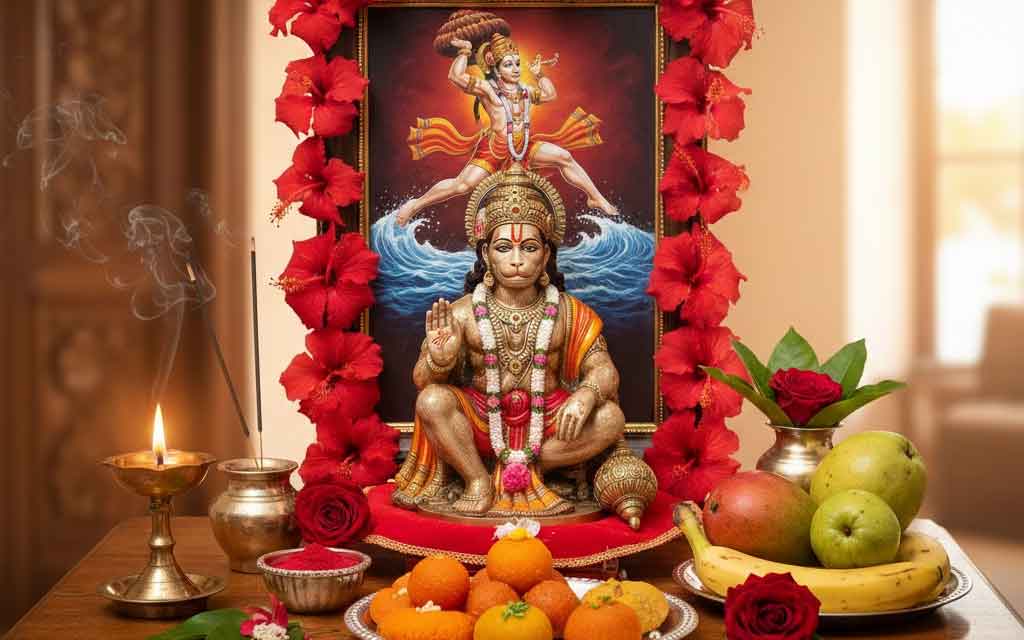
- Preparing the Puja Altar Cleanse your home mandir. Place a murti or framed picture of Lord Hanuman (in Veer posture or with Rama). Keep red flowers (hibiscus or roses), sindoor, laddoos (besan or motichoor), fruits, betel leaves, and a ghee diya ready. A small red cloth can be offered.
- Sankalpa and Ganesha Puja Begin by invoking Lord Ganesha (as Tuesdays honor him too) to remove obstacles. Then take sankalpa: “Om Hanumate Namah… I observe this Mangalvar Vrat to please Lord Hanuman and seek his protection and blessings for [state your wish].”
- Hanuman Puja and Offerings Light the ghee lamp and incense. Offer sindoor to Hanuman ji (apply on his image or murti). Present red flowers, garlands, and sweets like laddoos as bhog. Chant mantras:
- “Om Han Hanumate Namah” (108 times or more)
- Recite Hanuman Chalisa fully (multiple times for greater merit)
- Mool Mantra: “Om Aim Hreem Kleem Chamundayai Vicche” (if including Durga/Kali aspects)
- Abhishekam and Aarti If you have a Hanuman murti, perform simple abhishekam with water, milk, or panchamrit. Perform aarti with camphor: Sing “Aarti Keeje Hanuman Lala Ki…” or “Bajrang Baan.” Wave the lamp clockwise, feeling Hanuman ji’s presence.
- Mangalvar Vrat Katha Read or listen to the Tuesday fast story (one popular version: the Brahmin couple’s blessing of a son through Hanuman’s grace, resolving doubt and bringing prosperity). Narrate it to family for shared blessings.
- Fasting Guidelines Observe a strict or partial fast: Many take only one meal in the evening, preferably wheat-based food with jaggery (no salt in strict observance), fruits, milk, or sabudana. Avoid non-veg, onion, garlic, and tamasic items. Break the fast after sunset puja or Hanuman temple visit.
- Evening Worship and Conclusion Repeat aarti in the evening. Offer prayers for family protection. Distribute prasad to all.
Consistency in these rituals, especially for 11, 21, or 40 Tuesdays, amplifies results. Many observe it lifelong for ongoing protection.
The Transformative Mangalvar Vrat: Stories, Rules, and Lifelong Benefits
For deeper sankalpa — such as overcoming Mangal Dosha, seeking a child, or gaining immense strength — devotees undertake extended Mangalvar Vrat, often 21 consecutive Tuesdays.
Rules include: Strict vegetarianism, celibacy, daily Hanuman Chalisa recitation, avoiding red meat/oil-heavy foods, and temple visits. On conclusion, perform udyapan with grand puja and donations.
The core Mangalvar Katha inspires millions: A devoted wife fasted Tuesdays despite hardships. Hanuman ji blessed her with a son, resolved family discord, and brought eternal joy. Another version tells of a merchant saved from ruin through Tuesday devotion.
Benefits: Fearlessness, health recovery, obstacle removal, progeny blessings, and spiritual elevation. Hanuman ji’s grace turns Mangal’s fire into illuminating light.
How NRIs Can Faithfully Observe Tuesday Rituals Abroad
Far from Bharat’s temples, Hanuman ji’s devotion remains borderless. NRIs can adapt Mangalvar practices seamlessly:
- Follow local sunrise/sunset for timing.
- Set up a small altar with Hanuman picture (order online). Use available fruits, milk, and besan for laddoos.
- Chant Hanuman Chalisa via apps or YouTube; join virtual temple streams from global Hanuman mandirs.
- For fasting: Prepare simple sattvic meals; partial fast if work demands.
- Community: Connect with local Hindu groups or temples in your city for group aarti.
- Donations: Offer online to Hanuman temples in India as part of udyapan.
Many NRIs share that Tuesday rituals keep cultural roots alive, bring family unity, and provide strength in foreign lands.
Closing: Jai Bajrang Bali – Let Tuesday Be Your Day of Victory
O mighty Hanuman, remover of fears, protector of devotees, accept our Tuesday offerings. May your strength flow through us, banishing all negativity.
Jai Shri Ram! Jai Hanuman!
Har Har Mahadev! Bajrang Bali Ki Jai! May Lord Hanuman bless every reader with courage, devotion, and peace on every Mangalvar. Visit Hindutone.com for more sacred guides.
Related posts:
 The Importance of Chanting the Maha Mrityunjaya Mantra on Maha Shivaratri
 Why is Wednesday (Budhwar) Important in Hinduism?
 Do Hindus Worship Idols? The Symbolism Behind Murti Puja
 Hindu Mantras to Chant Before Karthika Deepam
 The Power of Silence and Fasting on Amavasya: A Sacred Path to Inner Divinity
 The Mystical Connection Between Ganga and Lord Shiva in Kashi
 Why Does ISKCON Celebrate Vaikuntha Ekadashi for Two Days? Complete Guide
 Phalguna Masam 2026: Complete Guide to Dates, Significance & Vedic Importance
