The Power of Silence and Fasting on Amavasya: A Sacred Path to Inner Divinity
Introduction: The Sacred Night of Amavasya Amavasya, the new moon night, holds a profound significance in Hindu spirituality.
Introduction: The Sacred Night of Amavasya Amavasya, the new moon night, holds a profound significance in Hindu spirituality.
Introduction: The Sacred Night of Amavasya
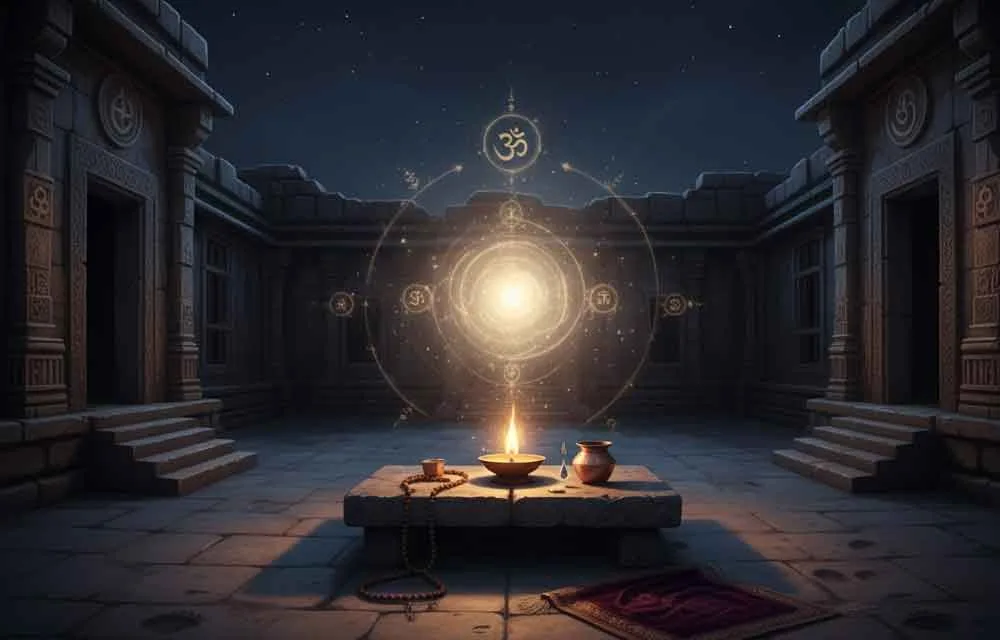
Amavasya, the new moon night, holds a profound significance in Hindu spirituality. It is a time when the moon withdraws its light, symbolizing the inward journey of consciousness. On this sacred day, ancient Vedic traditions prescribe two powerful spiritual practices: Mauna (observance of silence) and Upavas (fasting). These practices are not mere rituals but transformative tools that connect the devotee with their inner self and the divine consciousness.
The darkness of Amavasya represents the void from which all creation emerges—a time to retreat from the external world and dive deep into the ocean of self-awareness. When combined with silence and fasting, this day becomes a gateway to spiritual awakening and divine communion.
Understanding Mauna: The Eloquence of Silence
What is Mauna?
Mauna, derived from the Sanskrit root "muni" (sage), refers to the practice of maintaining silence. However, true Mauna transcends merely refraining from speech—it encompasses silencing the mind's incessant chatter, the ego's demands, and the sensory distractions that pull us away from our divine nature.
The Manusmriti emphasizes: "Silence is the ornament of the ignorant in the assembly of the wise, and the treasure of knowledge for the wise."
The Spiritual Significance of Silence on Amavasya
On Amavasya, when the moon's energy is withdrawn, our mental energies naturally turn inward. Observing Mauna on this day amplifies this introspective process. The Garuda Purana states:
"Mauna sarva sadhananam uttamam" — "Silence is the supreme among all spiritual practices."
When we cease external communication, we create space for inner dialogue with the divine. The mind, usually scattered across countless thoughts and words, begins to settle like sediment in still water, revealing the clear consciousness beneath.
Benefits of Observing Mauna on Amavasya
- Conservation of Energy: Speech dissipates vital energy (prana). Silence conserves this energy for spiritual elevation.
- Mental Purification: The constant stream of thoughts begins to slow down, allowing deeper awareness to emerge.
- Enhanced Meditation: With reduced mental noise, meditation becomes naturally deeper and more profound.
- Karmic Purification: On Amavasya, ancestors (pitrs) are particularly receptive to our spiritual efforts. Silence helps us connect with ancestral energies and seek their blessings.
- Divine Communication: As the Skanda Purana teaches: "In silence, the devotee hears the voice of the Supreme; in stillness, the divine reveals itself."
Understanding Upavas: The Sacred Science of Fasting
What is Upavas?
Upavas literally means "dwelling near" (upa = near, vas = to dwell)—dwelling near the divine. Fasting is not about deprivation but about redirecting our focus from physical nourishment to spiritual sustenance.
The Garuda Purana eloquently describes: "Upavasa sarvapapa prasamanam" — "Fasting destroys all sins and purifies the soul."
Why Fast on Amavasya?
Amavasya is considered a day when the veil between the material and spiritual worlds is thinnest. The moon's absence creates a unique energetic environment conducive to spiritual practices. Fasting on this day serves multiple purposes:
- Physical Detoxification: The body gets rest from digestion, allowing cellular repair and detoxification.
- Mental Clarity: As digestive processes slow down, mental fog lifts, creating clarity and focus.
- Spiritual Elevation: With less energy devoted to physical processes, consciousness naturally rises to higher chakras.
- Ancestral Connection: The Brahma Purana states that fasting on Amavasya pleases the ancestors and brings their blessings upon the family lineage.
Types of Fasting on Amavasya
Complete Fast (Nirjala Upavas): Abstaining from food and water from sunrise to sunrise the next day. This is the most austere form and recommended for advanced practitioners.
Fruit and Milk Fast (Phalahar): Consuming only fruits, milk, and water. This is suitable for most devotees and maintains energy while providing spiritual benefits.
Single Meal Fast (Ekadasi Vrat): Taking only one sattvic (pure) meal during the day, preferably after sunset prayers.
The Skanda Purana advises: "Even a partial fast observed with devotion on Amavasya brings merit equal to thousands of elaborate rituals."
The Divine Connection: How Silence and Fasting Unite the Soul with God
The Inner Journey
When we observe both Mauna and Upavas together on Amavasya, we create optimal conditions for spiritual transformation. The Garuda Purana beautifully explains this synergy:
"Kayena manasa buddhya atmanadriyen va, prakriteh swabhavat karomi yad yad sakalam parasmai narayanaya samarpayami"
"Whatever I do with my body, mind, intellect, or senses, I offer all to the Supreme Lord Narayana."
Breaking the Cycle of External Dependency
Our daily existence revolves around:
- Speaking to validate our thoughts
- Eating to satisfy sensory cravings
- Seeking external stimulation
Silence and fasting break these dependencies, revealing a startling truth: we are complete within ourselves. The divine presence we seek externally has always resided within.
Activating the Subtle Energy Body
According to yogic science, speech and digestion consume significant portions of our prana (life force). By conserving this energy through Mauna and Upavas, we:
- Awaken dormant chakras: Especially the Anahata (heart) and Ajna (third eye) chakras
- Purify nadis: The subtle energy channels become clear
- Raise kundalini: The dormant spiritual energy begins its upward journey
The Shiva Purana states: "When the senses are withdrawn like a tortoise withdrawing its limbs, and the mind rests in the self, that is true yoga."
The Mirror of Self-Reflection
Amavasya symbolizes the dark night of the soul—a time when we face ourselves without external distractions. Combined with silence and fasting, this introspection becomes transformative.
The Garuda Purana teaches: "As the moon wanes to darkness and is reborn, so too must the spiritual seeker experience the death of ego to be reborn in divine consciousness."
Scriptural Wisdom: Ancient Texts on Amavasya Observances
From the Garuda Purana
The Garuda Purana extensively discusses Amavasya observances:
"Amavasya tithi sarvesham pitrinam priyakari" — "The Amavasya tithi (lunar day) is most beloved to all ancestors."
"Mauna vratena yo martyo upavasen ca bhaktitah, sa prapnoti param sthanam yatra deva maharsayah" — "The mortal who observes the vow of silence and fasts with devotion attains the supreme abode where gods and great sages reside."
From the Skanda Purana
The Skanda Purana reveals the cosmic significance:
"Amavasya dinе yе janah upavasa kurvanti, tе sarva papa mukta bhavanti" — "Those who fast on Amavasya are freed from all sins."
"Tushnim bhava, antarmukha bhava, atma drishtim kuru" — "Remain silent, turn inward, and perceive the Self."
From the Brahma Vaivarta Purana
"Ekadasha amavasya vratam yastu samacaret, sa sarva tirtha snana phalam avapnuyat" — "One who observes fasting on eleven Amavasyas obtains the merit of bathing in all holy places."
Wisdom from the Bhagavad Gita
Though not specifically about Amavasya, Lord Krishna's words illuminate the purpose of these practices:
"Yuktahara viharasya yukta ceshtasya karmasu, yukta svapnavabodhasya yogo bhavati duhkha-ha" (6.17)
"For one who is moderate in eating, recreation, work, sleep, and wakefulness, yoga destroys all sorrows."
Practical Guidelines for Observing Mauna and Upavas on Amavasya
Preparation (One Day Before)
- Mental Preparation: Set your intention clearly—why are you undertaking this practice?
- Physical Preparation: Eat light, sattvic food the day before
- Inform Family: Let household members know you'll be observing silence
- Arrange Workspace: If working, inform colleagues or take a day off
The Day of Amavasya
Morning Rituals (Brahma Muhurta - 4:00 AM to 6:00 AM)
- Wake up early and take a ritual bath
- Light a lamp before your deity or altar
- Apply kumkum or sandalwood paste to the forehead
- Chant the Amavasya prayer: "Om Pitru devabhyo namah" (Salutations to ancestral deities)
- Begin your vow of silence
Daytime Practices
- Engage in reading sacred texts like Bhagavad Gita, Ramayana, or Puranas
- Practice pranayama (breath control) exercises
- Perform japa (mantra repetition) mentally—recommended mantras include:
- Om Namah Shivaya
- Om Namo Narayanaya
- Gayatri Mantra
- Meditate for extended periods
- Offer water (tarpana) to ancestors
Evening Observances
- Light lamps and incense at sunset
- Perform aarti to your chosen deity
- Sit in meditation during the exact Amavasya moment (check panchang for timing)
- Offer food to ancestors (shraddha) before eating
Breaking the Fast
- Break your fast only after moonrise on the next day, or after sunrise if observing a full-day fast
- Begin with water, followed by light fruits
- Offer gratitude to the divine and ancestors
- Break silence gradually, speaking softly and mindfully
The Transformative Power: Benefits Beyond the Physical
Spiritual Benefits
- Karmic Cleansing: Amavasya fasting burns accumulated karmic impressions
- Ancestral Blessings: Pitrs bestow prosperity, health, and spiritual progress
- Divine Grace: Attracts the attention and grace of celestial beings
- Increased Intuition: The subtle senses awaken, enhancing intuitive capabilities
- Soul Evolution: Accelerates spiritual growth and consciousness expansion
Psychological Benefits
- Mental Discipline: Develops willpower and self-control
- Emotional Balance: Reduces reactivity and emotional turbulence
- Stress Reduction: Silence naturally calms the nervous system
- Enhanced Focus: Sharpens concentration and mental clarity
- Self-Awareness: Deepens understanding of thought patterns and behaviors
Physical Benefits
- Digestive Rest: Allows the digestive system to heal and rejuvenate
- Cellular Autophagy: Fasting triggers cellular repair mechanisms
- Hormonal Balance: Regulates insulin, growth hormone, and other hormones
- Detoxification: Eliminates accumulated toxins from tissues
- Increased Energy: Paradoxically, fasting often increases vitality after initial adjustment
Common Obstacles and How to Overcome Them
Physical Challenges
Hunger Pangs: Drink water frequently; remember that true hunger is different from habitual eating patterns
Weakness: Rest more; avoid strenuous activities; practice gentle yoga
Headaches: Often due to caffeine withdrawal or detoxification; apply cooling sandalwood paste to forehead
Mental Challenges
Restlessness: The mind resists silence; engage it with sacred texts or mantra repetition
Boredom: This reveals our addiction to stimulation; observe it without judgment
Self-Doubt: Remember that discomfort is temporary; spiritual growth often requires stepping outside comfort zones
Social Challenges
Family Resistance: Educate family members about the spiritual significance; request their support
Work Obligations: Plan your observance on a day off or weekend Amavasya
Social Invitations: Politely decline, explaining your spiritual commitment
The Skanda Purana encourages: "Obstacles on the spiritual path are tests of devotion; those who persist with faith receive divine support."
The Science Behind Silence and Fasting
Modern Research Validates Ancient Wisdom
Contemporary science increasingly validates what ancient rishis knew intuitively:
Neurological Benefits of Silence:
- Silence stimulates brain growth, particularly in the hippocampus (memory center)
- Reduces stress hormone cortisol
- Enhances default mode network activity, improving self-reflection
Biological Benefits of Fasting:
- Activates autophagy (cellular cleanup and repair)
- Reduces inflammation markers
- Improves mitochondrial health
- Enhances neuroplasticity
Circadian Alignment: Amavasya represents the new moon phase, which affects:
- Melatonin production
- Sleep quality
- Hormonal rhythms
- Electromagnetic sensitivity
Amavasya Across Different Traditions
Regional Variations in India
North India: Focus on pitru tarpana (ancestral offerings) and visiting sacred rivers
South India: Emphasis on performing shraddha rituals and visiting temples
Western India: Special prayers to Lord Shiva and observance in pilgrimage sites
Eastern India: Connection with Kali worship and Tantric practices
Special Amavasyas
Mahalaya Amavasya: Most important for ancestral rites (before Navaratri)
Kartik Amavasya: Known as Diwali; celebrated with lamps to dispel darkness
Shravana Amavasya: Sacred for performing tarpana during monsoon season
Magha Amavasya: Ideal for bathing at sacred confluences (sangams)
Each of these Amavasyas carries special significance, but the practice of Mauna and Upavas remains consistent across all.
Stories of Transformation
The Story of Sage Kaushika
The Skanda Purana narrates how Sage Kaushika, despite his extensive knowledge of Vedas, remained spiritually unfulfilled. On the advice of his guru, he observed complete silence and fasting on twelve consecutive Amavasyas. Through this practice, his intellectual knowledge transformed into experiential wisdom, and he attained self-realization.
The Tale of Queen Damayanti
In the Matsya Purana, Queen Damayanti, separated from her husband Nala, observed Amavasya vows with unwavering devotion. Her silence and fasting created such spiritual merit that the gods themselves intervened to reunite the royal couple and restore Nala's kingdom.
These stories illustrate a timeless truth: sincere spiritual practice on Amavasya yields miraculous results.
Creating a Personal Amavasya Sadhana
Beginner Level (First Three Months)
- Partial fast with fruits and milk
- Observe silence for 6-8 hours
- Simple meditation practice (20-30 minutes)
- Basic prayers and mantras
Intermediate Level (3-12 Months)
- Complete food fast (water allowed)
- Silence for 12-18 hours
- Extended meditation (1-2 hours)
- Study of scriptures
- Pranayama practice
Advanced Level (After One Year)
- Nirjala (waterless) fast
- Complete Mauna for 24 hours
- Deep meditation (3-4 hours)
- Extended japa (mantra repetition)
- Contemplation on profound spiritual truths
The Garuda Purana assures: "One who consistently observes Amavasya vrats with devotion for twelve years becomes free from the cycle of birth and death."
Integration with Daily Life
The practices of Amavasya shouldn't remain confined to one day per month. The insights gained should permeate daily existence:
Daily Mini-Fasts: Practice intermittent fasting regularly
Moments of Silence: Create periods of silence daily, even if just 15 minutes
Mindful Eating: Approach all meals with awareness and gratitude
Regular Meditation: Establish a consistent meditation practice
Ancestral Remembrance: Honor your lineage regularly, not just on Amavasya
Conclusion: The Path of Light Through Darkness
Amavasya, the darkest night of the lunar month, paradoxically illuminates the path to spiritual enlightenment. Through the twin practices of Mauna and Upavas—silence and fasting—we withdraw from the external world to discover the infinite universe within.
As the Mundaka Upanishad declares: "Satyameva jayate nanritam" — "Truth alone triumphs, not falsehood."
The truth we seek is not found in constant speaking or constant consumption, but in the sacred space of silence and simplicity that Amavasya provides. In this emptiness, we discover fullness; in this darkness, we find illumination; in this withdrawal, we experience union with the divine.
The Garuda Purana offers this final blessing:
"Sarve bhavantu sukhinah, sarve santu niramayah, sarve bhadrani pashyantu, ma kaschit duhkha bhag bhavet"
"May all be happy, may all be healthy, may all experience auspiciousness, may none suffer."
May your observance of Mauna and Upavas on Amavasya bring you closer to your true nature—the eternal, blissful consciousness that is your birthright.
Final Invocation
Om Shanti Shanti Shanti Om Pitru devabhyo namah Om Tat Sat
Frequently Asked Questions
When is The Power of Silence and Fasting on Amavasya?
The Power of Silence and Fasting on Amavasya is observed on its traditional tithi in the Hindu lunar calendar; refer to the year's panchang for the exact date in your region.
What is the significance of The Power of Silence and Fasting on Amavasya?
Introduction: The Sacred Night of Amavasya Amavasya, the new moon night, holds a profound significance in Hindu spirituality. It is a time when the moon withdraws its light, symbolizing the inward journey of consciousness.
How is The Power of Silence and Fasting on Amavasya celebrated?
Devotees observe it with puja, fasting or special offerings, visiting temples, chanting mantras, and gathering with family. Customs vary by region and tradition.
What should devotees do on The Power of Silence and Fasting on Amavasya?
Take a sacred bath, perform the day's puja and charity (dana), observe any prescribed fast, and chant mantras with sincere devotion.
You might also like
Akshaya Tritiya and Lakshmi – How to Invite Wealth & Prosperity Into Your Life

Kartika Amavasya: Significance, Importance & Must-Perform Rituals for Spiritual Blessings
Karthika Mahatmya – Sacred Stories from Skanda Purana