Why Lighting a Diya on Amavasya Removes Darkness Within: Ancient Wisdom for Modern Times

Introduction: The Sacred Night of New Moon Amavasya, the night of the new moon, holds profound spiritual significance in Hindu tradition. When the moon completely disappears from the sky, darkness prevails both in the heavens and symbolically within our consciousness.
Introduction: The Sacred Night of New Moon
Amavasya, the night of the new moon, holds profound spiritual significance in Hindu tradition. When the moon completely disappears from the sky, darkness prevails both in the heavens and symbolically within our consciousness. Yet, it is precisely on this darkest night that the simple act of lighting a diya (oil lamp) becomes a powerful spiritual practice that transcends mere ritual.
For thousands of years, Hindus have maintained the sacred tradition of lighting diyas on Amavasya night. But why? What ancient wisdom lies behind this practice, and how does a small flickering flame possess the power to dispel not just physical darkness, but the darkness within our souls?
The Symbolic Meaning of Lighting Lamps on Amavasya Night
Understanding Amavasya: The Moonless Night
Amavasya represents the complete absence of the moon's light. In Vedic astrology and Hindu philosophy, the moon governs our mind, emotions, and inner peace. When the moon is absent, our mental and emotional energies are at their most vulnerable. This is why Amavasya is considered a time when:
- Negative energies are more active
- The mind becomes more restless and prone to confusion
- Ancestral spirits are believed to visit the earthly realm
- Spiritual practices yield enhanced benefits
The Diya: More Than Just a Lamp
The traditional diya is not merely a source of light. Each component carries deep symbolic meaning:
The Clay Base: Represents the human body made from the five elements (Pancha Mahabhutas). It reminds us of our earthly nature and humility.
The Ghee or Oil: Symbolizes our negative tendencies, ego, and karmic impressions that must be burned away for transformation.
The Cotton Wick: Represents the atman (soul) or our inner consciousness that must remain steady despite challenges.
The Flame: Embodies divine consciousness, knowledge, and the light of awareness that dispels ignorance.
Why Lighting Diyas on Amavasya is Essential
When we light a diya on Amavasya night, we perform a sacred act that operates on multiple levels:
Physical Level: The lamp provides actual light in darkness, creating a warm, welcoming atmosphere in the home.
Energy Level: The flame generates positive vibrations that cleanse the environment of negative energies that accumulate during the moonless night.
Psychological Level: The act of lighting a lamp is a conscious affirmation of hope, determination, and faith despite surrounding darkness.
Spiritual Level: The diya becomes an offering to the divine, honoring ancestors, and inviting divine grace into our lives.
The Diya as a Symbol of Inner Illumination and Hope
Conquering Inner Darkness
Just as Amavasya represents external darkness, we all experience periods of inner darkness—times of:
- Depression and despair
- Confusion and lack of direction
- Fear and anxiety
- Anger and negative emotions
- Spiritual disconnection
- Ignorance and delusion
The diya on Amavasya night serves as a powerful metaphor for overcoming these internal struggles. When you light a lamp, you make a declaration: "Even in the darkest moment, I choose light over darkness, hope over despair, knowledge over ignorance."
The Philosophy of "Tamaso Ma Jyotirgamaya"
The ancient Vedic prayer states: "Tamaso ma jyotirgamaya" (Lead me from darkness to light). This isn't just about physical darkness—it's a profound spiritual plea for enlightenment.
Lighting a diya on Amavasya embodies this prayer in action. You're not passively waiting for the moon to return or for external circumstances to improve. Instead, you're actively creating light, taking responsibility for dispelling your own darkness.
Hope Amidst Adversity
The symbolism is particularly powerful: on the darkest night, when the moon offers no light, we don't surrender to darkness. We light our own lamps. This teaches a vital life lesson—when external support systems fail, when the world seems bleak, we must kindle our own inner light.
The diya reminds us that:
- Light always conquers darkness, never the reverse
- Even a small flame can illuminate a vast space
- One person's light can inspire others to light their own lamps
- Darkness is merely the absence of light, not a force in itself
How Lighting a Diya Balances Energies at Home and in Mind
Vastu Shastra and Energy Flow
According to Vastu Shastra (the ancient Indian science of architecture and energy), lighting diyas on Amavasya has specific energetic benefits:
Removes Negative Energy: The flame acts as a purifying agent, burning away stagnant and negative energies that accumulate in corners and enclosed spaces.
Activates Positive Zones: When placed in the northeast (Ishanya) corner, diyas enhance spiritual energy. In the southeast, they strengthen health and vitality.
Creates Energy Balance: The five elements (earth, water, fire, air, space) require balance. The diya's flame represents the fire element, which is often deficient on Amavasya, creating imbalance.
Attracts Prosperity: Traditional belief holds that Goddess Lakshmi visits well-lit homes on Amavasya, especially when diyas are lit with devotion.
Psychological and Mental Benefits
Modern psychology recognizes what ancient wisdom always knew—our environment profoundly affects our mental state:
Reduces Anxiety: The warm, gentle light of a diya creates a calming effect, reducing cortisol (stress hormone) levels and promoting relaxation.
Enhances Focus: Unlike harsh electric lights, the soft flame of a diya doesn't strain the eyes and actually helps improve concentration during meditation or prayer.
Establishes Routine: The ritual of lighting a diya on Amavasya creates a beneficial routine that provides structure and meaning, particularly important for mental health.
Symbolic Empowerment: The act of lighting a lamp gives you a sense of control and agency, combating feelings of helplessness that often accompany difficult times.
Balancing the Mind-Body-Spirit Connection
Lighting a diya on Amavasya creates a holistic balance:
For the Body: The warmth and light regulate circadian rhythms disrupted by the moon's absence, potentially improving sleep quality.
For the Mind: The meditative act of preparing, lighting, and watching the diya promotes mindfulness and present-moment awareness.
For the Spirit: The ritual connects you to centuries of tradition, to your ancestors, and to the divine, providing a sense of belonging and purpose.
Scientific Perspective: Light Therapy
Modern science validates ancient practice through light therapy research:
- Exposure to warm light in evening hours can help regulate mood
- The act of focusing on a flame induces alpha brain waves associated with relaxation
- Ritual behavior provides psychological comfort and reduces existential anxiety
- Fire has been shown to lower blood pressure and promote social bonding
Practical Guide: How to Light a Diya on Amavasya
Traditional Method
Materials Needed:
- Clay diya (preferably handmade)
- Pure ghee or sesame oil
- Cotton wick
- Matchbox or lighter
Best Time: After sunset, during Pradosh Kaal (twilight period), ideally after bathing and wearing clean clothes.
Best Location:
- Northeast corner (Ishanya) for spiritual growth
- Entrance/main door to welcome positive energy
- Puja room or altar
- All four corners of the house for complete protection
Procedure:
- Clean the area where you'll place the diya
- Fill the diya with ghee or oil, leaving some space
- Place the wick, ensuring part of it is soaked in oil
- Light the diya while chanting: "Om Deepajyotihi Parambrahma, Deepa Sarva Tamopahaha, Deepen Sarvam Jyotihi, Deepo Narayanaya Namah" (Salutations to the Lord in the form of light that removes all darkness)
- Sit near the diya for a few moments in prayer or meditation
- Let the diya burn completely if possible; if not, extinguish it respectfully
Duration
Ideally, the diya should burn throughout the night, especially on special Amavasyas like Mahalaya Amavasya or Diwali Amavasya. If this isn't possible, keep it lit for at least 30 minutes to one hour.
Special Amavasyas and Their Significance
Mahalaya Amavasya (Pitru Paksha)
The most significant Amavasya for ancestor worship. Lighting diyas on this day honors departed souls and seeks their blessings. The lamp guides their spirits and provides them peace.
Diwali Amavasya
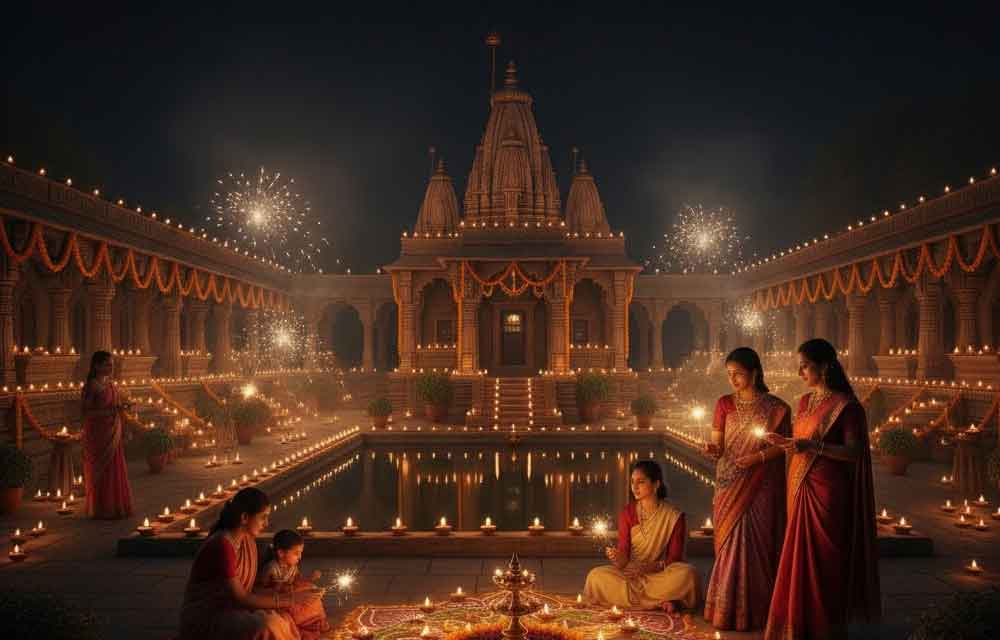
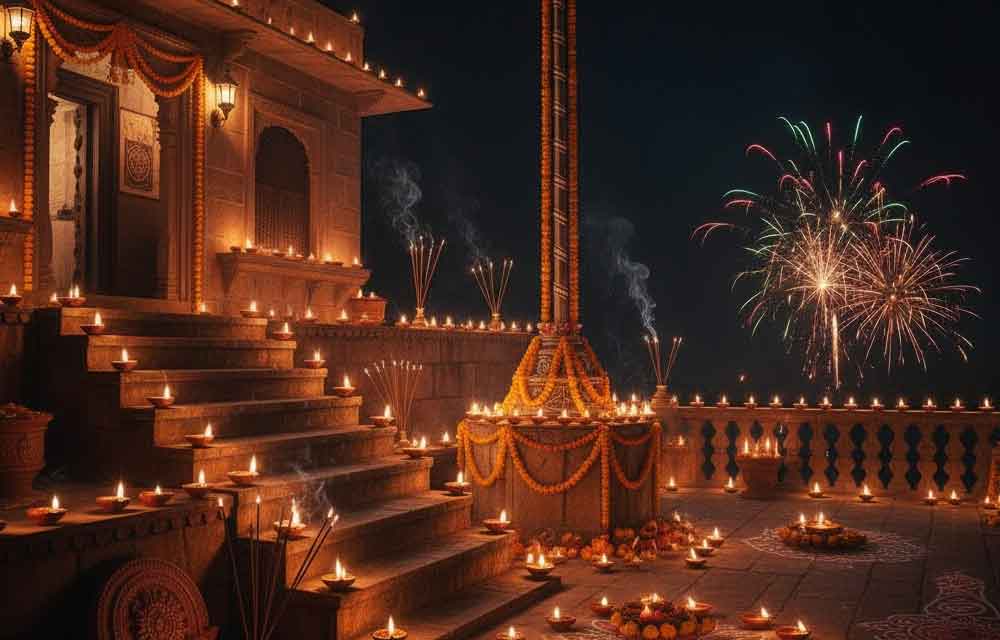
On this night, entire neighborhoods illuminate with countless diyas, symbolizing the victory of light over darkness, good over evil, and knowledge over ignorance. This is when Goddess Lakshmi is worshipped with lamp lighting.
Vat Savitri Amavasya
Celebrated by married women who fast for their husbands' longevity. Lighting diyas under the banyan tree symbolizes the eternal flame of married life.
Regular Monthly Amavasya
Every month's Amavasya is auspicious for spiritual practices, meditation, and lighting lamps to maintain positive energy flow throughout the lunar cycle.
Common Mistakes to Avoid
- Using artificial electric lights instead of traditional diyas: While convenient, they lack the spiritual and energetic benefits of real flames
- Forgetting to clean the area first: A clean space is essential for positive energy
- Using poor quality oil or wicks: This causes the flame to sputter, which is considered inauspicious
- Lighting with wrong intention: The mental attitude matters as much as the physical act
- Extinguishing the diya carelessly: Always extinguish respectfully, not by blowing but by covering with a small cup or using a wetting agent
Benefits of Regular Amavasya Diya Lighting
Spiritual Benefits
- Enhanced meditation and prayer effectiveness
- Stronger connection with ancestors
- Accelerated spiritual growth
- Protection from negative energies
- Increased divine grace
Mental and Emotional Benefits
- Reduced anxiety and stress
- Greater inner peace
- Improved emotional stability
- Enhanced clarity of thought
- Sense of purpose and connection
Material Benefits (as per tradition)
- Prosperity and abundance
- Removal of obstacles
- Harmony in relationships
- Success in endeavors
- Overall well-being of family
Conclusion: Embracing the Light Within
The tradition of lighting a diya on Amavasya is far more than an empty ritual—it's a profound spiritual practice that addresses the deepest human needs for light, hope, and meaning. In an age where mental health challenges are rising and many feel disconnected from tradition and purpose, this simple act offers a bridge between ancient wisdom and modern needs.
When you light a diya on Amavasya night, you're not just illuminating a room; you're affirming your commitment to inner growth, honoring your ancestors, connecting with the divine, and declaring that no matter how dark the night, you possess the power to create light.
The external flame is merely a reflection of the eternal light within you—the consciousness that can never be extinguished, the soul that remains luminous even in life's darkest moments. By lighting a diya, you remember and awaken this inner light.
As we face our own Amavasyas—those dark nights of the soul when hope seems distant—may we remember the wisdom of this ancient practice. May we have the courage to light our own lamps, to be the light for others, and to trust that darkness, no matter how deep, is always temporary. Light is our true nature, and every diya we light reminds us of this eternal truth.
This Amavasya, don't just light a lamp—ignite the eternal flame of consciousness within. Let the diya be not just a ritual object, but a daily reminder that you carry light within you, capable of dispelling any darkness you encounter.
Tamaso Ma Jyotirgamaya – Lead me from darkness to light.
Experience the transformative power of Amavasya rituals and deepen your spiritual practice. Visit HinduTone.com for more insights into Hindu traditions, astrology, and spiritual wisdom.