The Mystical Connection Between Ganga and Lord Shiva in Kashi
The Divine Descent: How Ganga Came to Earth In the celestial realms of Hindu mythology, the story of Ganga's descent to earth is one of the most profound tales…
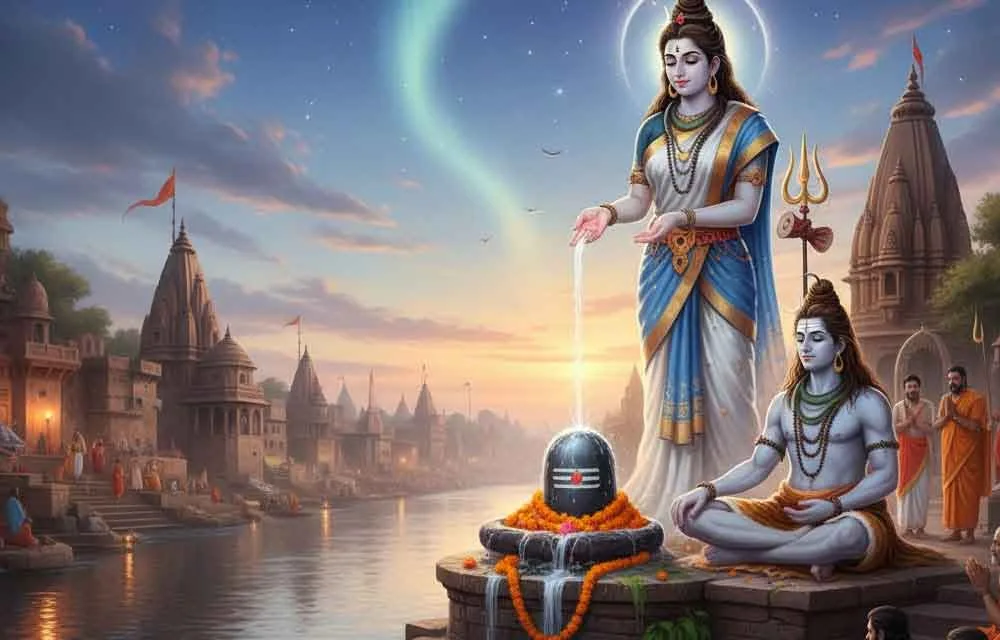
The Divine Descent: How Ganga Came to Earth
In the celestial realms of Hindu mythology, the story of Ganga's descent to earth is one of the most profound tales of divine intervention, penance, and salvation. This sacred narrative intertwines the destinies of the holy river Ganga, Lord Shiva, and the ancient city of Kashi (Varanasi), creating an eternal bond that promises liberation to all who seek it.
The Origin Story: King Bhagiratha's Penance
Long ago, King Sagara of the Ikshvaku dynasty performed the Ashwamedha Yagna (horse sacrifice) to establish his supremacy. Indra, the king of gods, feeling threatened by Sagara's growing power, stole the sacrificial horse and hid it in the ashram of Sage Kapila, who was deep in meditation.
King Sagara sent his 60,000 sons to search for the horse. When they found it near the meditating sage, they mistakenly accused him of theft and disturbed his penance. The enraged Sage Kapila opened his eyes, and the fierce energy released from his gaze reduced all 60,000 princes to ashes instantly.
Without proper funeral rites, the souls of these princes were condemned to wander without peace. Generations passed, and it fell upon King Bhagiratha, a descendant of King Sagara, to find a solution. Through years of intense penance and meditation, Bhagiratha pleased Lord Brahma, who granted him a boon: the celestial river Ganga would descend to earth to purify the ashes of his ancestors and grant them moksha (liberation).
Shiva's Divine Intervention: Catching Ganga in His Locks
However, there was a problem. Ganga, flowing in the heavens with tremendous force, would cause catastrophic destruction if she fell directly onto earth. The planet could not withstand the mighty force of her descent. Bhagiratha realized he needed divine intervention to break Ganga's fall.
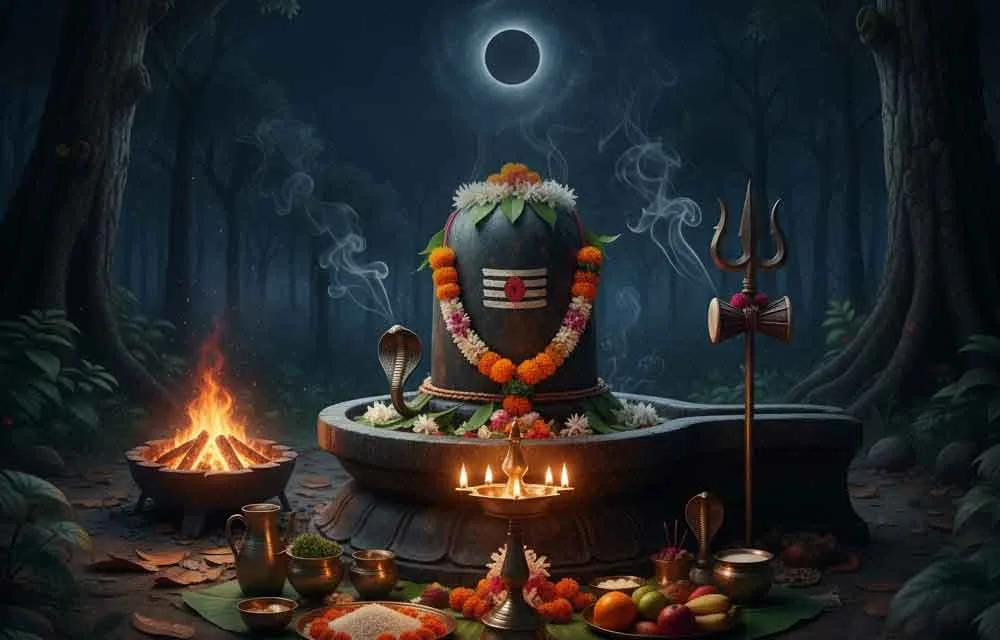
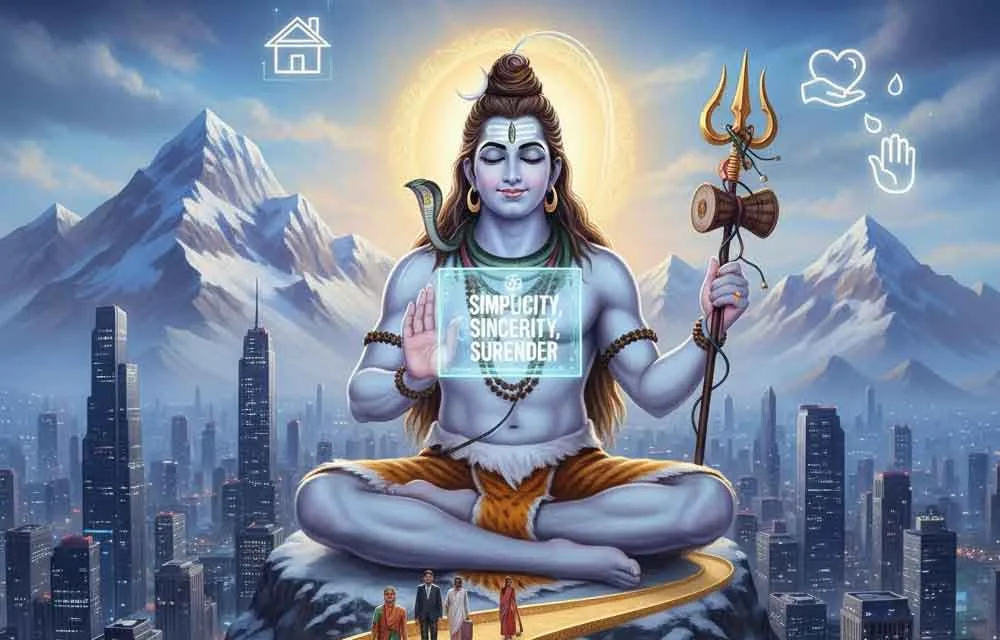
He turned to Lord Shiva, the supreme ascetic dwelling in Mount Kailash, and performed severe penance to win his favor. Moved by Bhagiratha's devotion and determination, Lord Shiva agreed to help. He positioned himself on earth and let the mighty Ganga fall upon his head.
Ganga, proud of her power, thought she would sweep away even the great Shiva with her force. But Shiva, understanding her pride, trapped her in his matted locks (jata). Ganga struggled and flowed through the labyrinth of Shiva's hair, unable to reach earth. Humbled and purified of her ego, Ganga requested Shiva's forgiveness.
Pleased with her transformation, Shiva released Ganga in seven gentle streams. Bhagiratha led one stream across the plains of northern India to the place where his ancestors' ashes lay. The sacred waters touched the ashes, and the 60,000 souls were finally liberated. This stream became the earthly Ganga, and Bhagiratha's effort gave her another name: Bhagirathi.
Ganga's Sacred Role in Varanasi (Kashi)
Why Kashi is Called Shiva's City
Varanasi, known as Kashi, is considered the eternal abode of Lord Shiva on earth. The city is believed to rest on Shiva's trident and is therefore beyond the cycle of creation and destruction. Even during the cosmic dissolution (pralaya), Kashi is said to remain protected by Shiva himself.
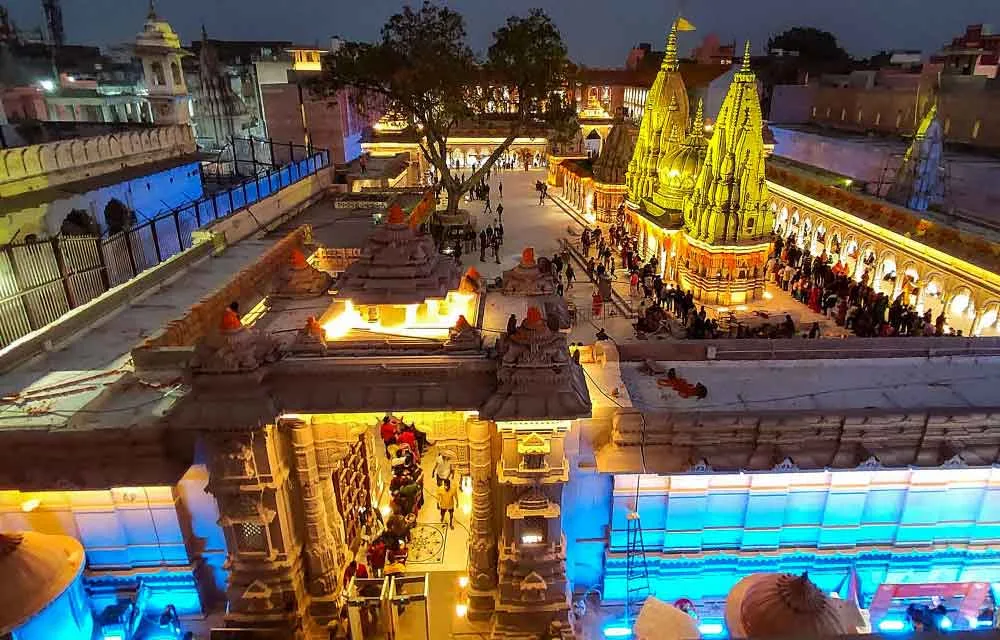
The presence of both Ganga and Shiva in Kashi creates a unique spiritual energy. Ganga flows here as a tangible form of divine grace, while Shiva resides as the presiding deity in the Kashi Vishwanath Temple. This convergence makes Kashi the most powerful tirtha (pilgrimage site) for attaining moksha.
The Ghats: Where Heaven Meets Earth
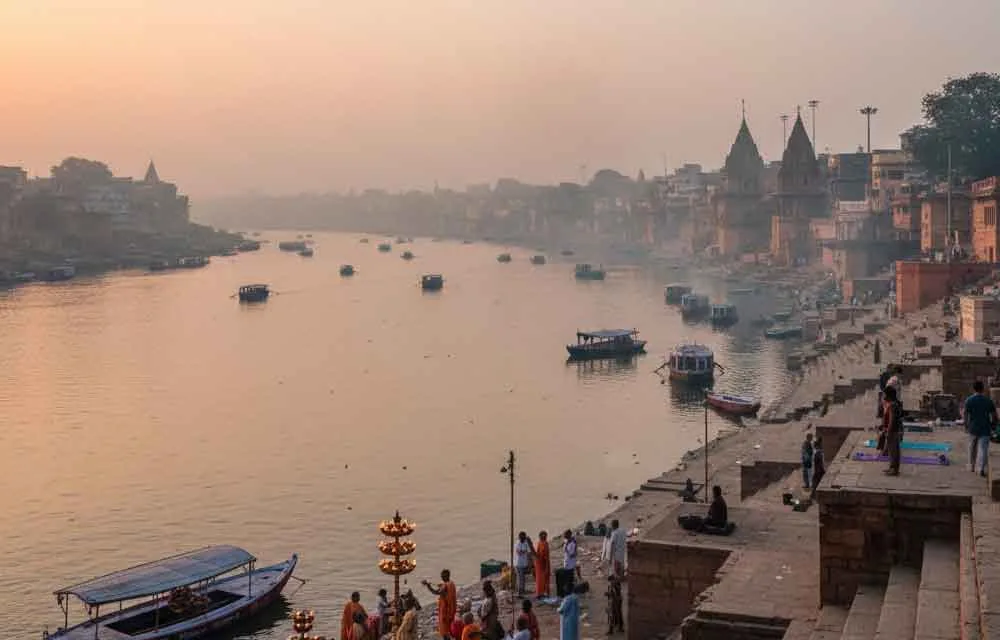
The ghats of Varanasi are not merely steps leading to the river—they are spiritual thresholds where the mortal realm meets the divine. There are 88 ghats along the Ganga in Varanasi, each with its own significance and story.
Dashashwamedh Ghat, the most famous of all, is where Lord Brahma is said to have performed ten (dash) horse sacrifices (ashwamedh) to welcome Shiva. The evening Ganga Aarti here is a spectacular display of devotion, with priests offering fire, flowers, and prayers to the river goddess.
Manikarnika Ghat is the primary cremation ghat, where the sacred fire is believed to have been burning continuously for thousands of years. According to legend, Shiva and Parvati witnessed the creation of the universe from this spot, and Parvati's earring (manikarnika) fell here, creating a sacred kund (pool).
Assi Ghat marks the confluence of the Assi River with the Ganga, where pilgrims come to worship a Shiva lingam beneath a peepal tree. Other significant ghats include Panchganga, Harishchandra, Kedar, and Tulsi Ghat, each associated with different deities, saints, and spiritual practices.
The Ganga Aarti: A Living Prayer
The Ganga Aarti performed at Dashashwamedh Ghat every evening is a profound spiritual experience. As the sun sets, seven young priests dressed in saffron robes stand on elevated platforms and perform synchronized rituals with large brass lamps, conch shells, incense, and flowers.
The aarti is an expression of gratitude to Ganga for sustaining life, purifying sins, and providing a path to liberation. The chanting of mantras, the sound of bells, and the sight of countless diyas (oil lamps) floating on the river create an atmosphere where devotees feel the presence of the divine. This ritual symbolizes the eternal connection between Ganga, Shiva, and humanity's spiritual aspirations.
Why Immersing Ashes in Kashi Ensures Moksha
The Spiritual Science Behind Moksha in Kashi
In Hindu philosophy, moksha is the liberation of the soul from the cycle of birth, death, and rebirth (samsara). The soul transcends all karmic bonds and merges with the ultimate reality (Brahman). While moksha is the goal of all spiritual practice, it is believed that dying or having one's ashes immersed in Kashi provides a direct path to this liberation.
Shiva's Promise: The Taraka Mantra
According to sacred texts, Lord Shiva made a solemn promise regarding Kashi. He declared that anyone who dies within the sacred boundaries of Kashi, or whose ashes are immersed in the Ganga here, will receive the Taraka Mantra whispered into their ear by Shiva himself.
The Taraka Mantra is the ultimate mantra of liberation. When Shiva whispers this sacred knowledge into the ear of the departing soul, all ignorance is destroyed, all karmas are dissolved, and the soul attains instant enlightenment. This is why Kashi is called "Mahashamshana" (the great cremation ground) and why countless people throughout history have wished to breathe their last breath here.
The Purifying Power of Ganga in Kashi
Ganga herself is considered a goddess—Ma Ganga or Ganga Devi—who descended to earth specifically to purify and liberate souls. Her waters carry a spiritual potency beyond the physical, capable of washing away sins accumulated over countless lifetimes.
When ashes are immersed in the Ganga at Kashi, several spiritual processes occur simultaneously:
- Purification through Ganga: The sacred waters purify the subtle body (sukshma sharira) of the deceased, removing karmic impressions that bind the soul to the material world.
- Shiva's Grace: Being in Shiva's city, the soul receives the direct blessing and protection of the destroyer of ignorance. Shiva, as the ultimate yogi and lord of destruction, destroys the ego and false identifications that prevent liberation.
- Sacred Geography: Kashi exists simultaneously in the physical and spiritual realms. When ashes are immersed here, the soul transitions through this sacred portal with divine guidance.
- Accumulated Merit: The very act of reaching Kashi, whether in life or death, demonstrates the accumulated good karma (punya) of the soul, making it receptive to the grace needed for liberation.
The Ritual of Asthi Visarjan (Immersion of Ashes)
The ritual of immersing ashes in Kashi is performed with great reverence. Families bring the ashes (asthi) of their loved ones, often after cremation elsewhere, to complete this sacred rite. The ritual involves:
- Taking a purifying bath in the Ganga
- Offering prayers to Lord Shiva at Kashi Vishwanath Temple
- Performing rituals with the assistance of panda priests (hereditary priests who serve pilgrims)
- Reciting mantras and prayers for the peace of the departed soul
- Immersing the ashes at an auspicious time and place along the ghats
- Offering pinda daan (rice balls) and tarpan (water offerings) for ancestral peace
The Eternal Trinity: Ganga, Shiva, and Kashi
The relationship between Ganga, Shiva, and Kashi represents the perfect union of divine elements necessary for human salvation:
Ganga represents the flow of divine grace, compassion, and purification. She descended from heaven to help humanity, embodying the principle that liberation is accessible to all who seek it sincerely.
Shiva represents the ultimate reality, the destroyer of ignorance, and the embodiment of consciousness itself. His presence in Kashi as the eternal guardian ensures that souls receive the knowledge necessary for transcendence.
Kashi represents the sacred space where the physical and spiritual worlds intersect, where time and eternity meet, and where the ordinary rules of existence are suspended to allow for extraordinary spiritual transformation.
Together, this trinity creates what is known as the "Avimuktam"—the place that is never forsaken by Shiva. The name Kashi itself means "the luminous one" or "the city of light," referring to the spiritual illumination that awaits all who come here.
The Living Tradition Today
Thousands of years after these divine events, the tradition continues with unbroken devotion. Every day, millions of pilgrims come to Kashi to bathe in the Ganga, worship at the Vishwanath Temple, and seek the blessings that lead to moksha. The elderly and ill still come to spend their final days in Kashi, hoping to die in the city of liberation.
The Ganga flows as powerfully in the faith of devotees as she does through the ancient ghats. The morning aarti, the evening aarti, the continuous cremations at Manikarnika and Harishchandra Ghats, the ringing of temple bells, and the chanting of "Har Har Mahadev" and "Ganga Mata ki Jai" create an atmosphere where the sacred is not just believed—it is experienced.
Conclusion: The Path of Eternal Liberation
The mystical connection between Ganga and Lord Shiva in Kashi is not merely mythology—it is a living spiritual reality that continues to transform lives and liberate souls. The story teaches us about divine grace, the importance of humility, the power of devotion, and the promise that liberation is not only possible but assured for those who seek it in the right spirit and place.
Whether one believes in the literal truth of these stories or sees them as profound spiritual metaphors, the essence remains the same: Kashi offers a unique opportunity for the soul's journey toward ultimate freedom. The Ganga's waters, blessed by their journey through Shiva's locks, carry more than just the physical substance of water—they carry hope, grace, and the promise of moksha.
In the words of an ancient Sanskrit verse:
"Kashyam maranam muktih"
"Death in Kashi is liberation."
This is not superstition but a sacred trust passed down through millennia—a promise that in the city of Shiva, on the banks of the holy Ganga, every soul can find its way home to the infinite.
Frequently Asked Questions
How did Ganga come down to earth in Hindu mythology?
As commonly told, King Bhagiratha performed penance to bring Ganga down to free his ancestors. Shiva caught her in his matted locks to break her fall and released her in seven gentle streams.
Why is the river called Bhagirathi?
As commonly told, Bhagiratha led one of the streams across northern India to the ashes of his 60,000 ancestors, the sons of King Sagara. His effort gave the earthly Ganga the name Bhagirathi.
What is the Taraka Mantra in Kashi?
It is the mantra of liberation that Shiva is believed to whisper into the ear of anyone who dies in Kashi or whose ashes are immersed in the Ganga there. It is said to dissolve karmas and grant moksha.
What does the Asthi Visarjan ritual in Kashi involve?
Families bring a loved one's ashes, often after cremation elsewhere, bathe in the Ganga and pray to Shiva at Kashi Vishwanath Temple. With panda priests they recite mantras, immerse the ashes, and offer pinda daan and tarpan.
Where can I see the Ganga Aarti in Varanasi?
The Ganga Aarti takes place every evening at Dashashwamedh Ghat. At sunset, seven young priests in saffron robes perform rituals with brass lamps, conch shells, incense and flowers.
How many ghats does Varanasi have, and which are the best known?
Varanasi has 88 ghats along the Ganga. Dashashwamedh is the most famous, Manikarnika is the primary cremation ghat, and Assi Ghat marks the confluence of the Assi River with the Ganga.
Share this with family and friends
Send it on WhatsApp, post it, or copy the link.
More from Spirituality
- Chilkur Balaji 'Visa Balaji' Temple: The 11 and 108 Pradakshina Custom Explained for NRIs
- Ekagrata (One-Pointedness): Yoga Concentration and Samyama Glossary
- Complete MBBS Once in Life: The Spiritual Meaning of Mahabharata, Bhagavatam, Bhagavad Gita & Ramayana
- Sri Medha Dakshinamurthy Swami Dhyanam | Meditation Sloka for Intelligence, Eloquence & Self-Realization
- What Is True Poverty? | Dharma Is the Greatest Wealth | Sanatana Dharma