
Neem Karoli Baba: The Saint Who Touched Julia Roberts, Steve Jobs, Ram Dass and Millions – The Eternal Love of Maharaj-ji
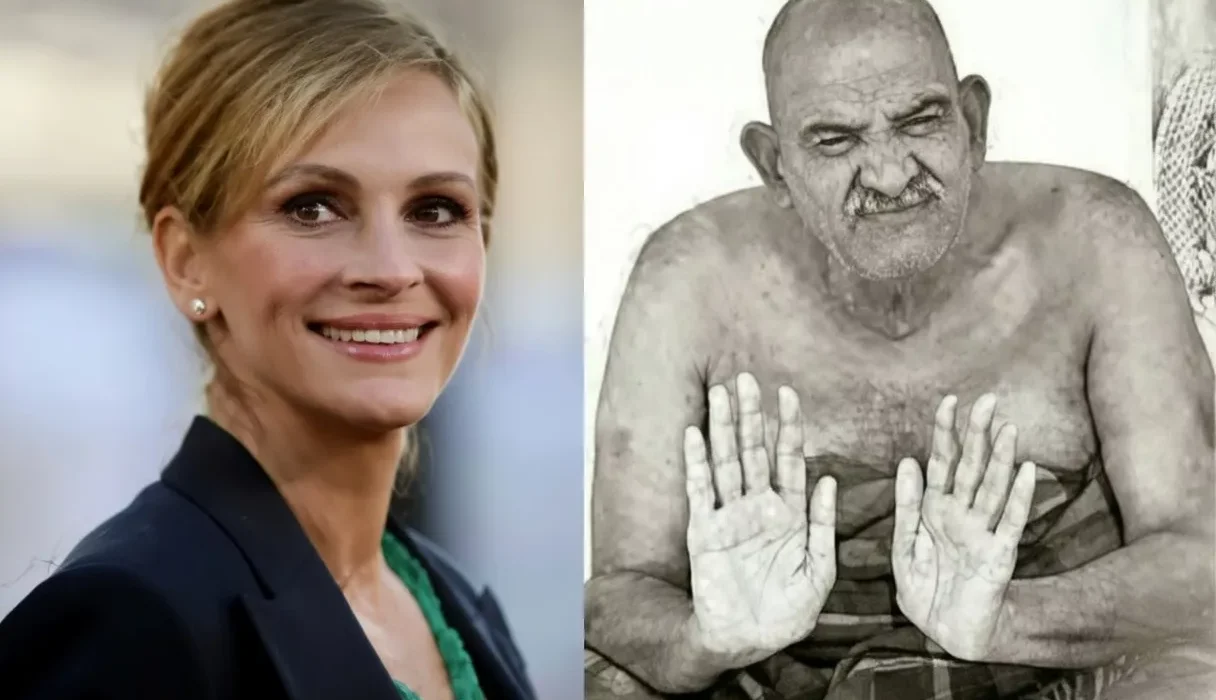
In the serene hills of Uttarakhand and the holy dust of Vrindavan, a simple man wrapped in a blanket radiated such immense love that even decades after leaving his physical body in 1973, his presence continues to heal, guide, and awaken millions. Neem Karoli Baba, lovingly called Maharaj-ji, was not a conventional guru who delivered long lectures or built massive empires. He taught through silence, laughter, miracles, and an ocean of unconditional love. His message was straightforward yet profound: “Love everyone, serve everyone, remember God, and tell the truth.”
Today, in 2026, as seekers from Hollywood to Silicon Valley and ordinary homes across India and abroad turn to him, Maharaj-ji’s grace feels more alive than ever. Whether it is Julia Roberts declaring herself a practicing Hindu after being drawn to his photograph, Steve Jobs carrying his influence into the tech world, or countless devotees experiencing miracles at Kainchi Dham, the saint who embodied Hanuman Ji’s bhakti continues to change hearts.
This comprehensive guide (over 2800 words) explores his life journey, divine miracles, timeless teachings, famous devotees, ashrams, and how you can connect with Maharaj-ji even today.
Early Life and Spiritual Awakening of Neem Karoli Baba
Neem Karoli Baba was born around 1900 in Akbarpur village (present-day Ambedkar Nagar district, Uttar Pradesh) into a wealthy Brahmin family as Lakshman Narayan Sharma (also referred to as Lakshmi Narayan Sharma in some accounts). Following the custom of the time, he was married at the tender age of 11. Yet, the pull of spirituality was stronger than worldly life.
As a young boy, he showed signs of divine inclination. He left home and wandered as a sadhu, spending years in Gujarat under the guidance of a Vaishnav saint who named him Lakshman Das. He lived an ascetic life with minimal possessions – often just a kamandal (water pot made of gourd) – and practiced intense penance.
Check Our Recent ” Sri Rama Temples Around the World: Complete Guide to 30+ Sacred Shrines “
The name Neem Karoli Baba (or Neeb Karori Baba) originated from a famous incident. While traveling on a train without a ticket, he was asked to get down at the Neem Karoli railway station in Uttar Pradesh. When authorities tried to remove him, miraculous events unfolded – the train reportedly refused to move until he was allowed to stay or blessed the situation. This incident spread his fame, and people began calling him Neem Karoli Baba, the saint of Neem Karoli.
He wandered across India, living simply, often on the streets or in remote places. Devotees recall him as “Kambal Wale Baba” (the blanket-wearing Baba) because he was usually seen with a simple blanket. He rarely stayed in one place for long during his early years, constantly moving to avoid fame and to serve wherever needed.
The Birth of Asrams and Kainchi Dham – The Heart of Maharaj-ji’s Leela
In the 1960s, Maharaj-ji’s presence began attracting more devotees. Two main ashrams took shape during his lifetime:
- Kainchi Dham (near Nainital, Uttarakhand): Established in 1962-1964 on the banks of the Kosi River in the Kumaon hills. The name “Kainchi” means “scissors” or “two sharp bends,” referring to the shape of the hills. The first Hanuman temple here was inaugurated on 15 June 1964. Maharaj-ji spent the last decade of his life here. The ashram houses temples dedicated to Hanuman Ji, Lakshmi-Narayan, and other deities. Every year on 15 June, thousands gather for the grand Kainchi Dham Mela (foundation day celebration).
- Vrindavan Ashram (Uttar Pradesh): In the holy city of Krishna, another ashram was built. Maharaj-ji chose this sacred place to leave his body.
Over time, more than 100 temples and ashrams dedicated to him have emerged across India and abroad. Kainchi Dham remains the most visited, drawing global pilgrims seeking peace, blessings, and a glimpse of Maharaj-ji’s living energy.
Maharaj-ji Leaves His Body – Yet His Presence Grows Stronger
On 11 September 1973, while returning from Agra to Kainchi, Maharaj-ji suffered chest pain and was taken to a hospital in Vrindavan. He slipped into a diabetic coma and left his physical body around 1:15 a.m. His last words, repeated several times, were “Jaya Jagadish Hare” (Hail to the Lord of the Universe).
Devotees cremated his body on a sandalwood pyre at the Vrindavan ashram on Ananta Chaturdashi. A samadhi shrine was built there. Many felt his departure was not an end but a beginning – his leela (divine play) continued and even intensified after 1973. Stories of visions, healings, and guidance from Maharaj-ji in dreams or subtle forms multiplied in the decades that followed.
Famous Miracles of Neem Karoli Baba – Stories That Defy Logic
Maharaj-ji was known as “Chamatkari Baba” (Miracle Baba) because of countless divine interventions:
- Healing the Sick and Taking Karmas: He often absorbed devotees’ sufferings. In one story, a devotee was in pain; Maharaj-ji pushed him down, screamed in agony for minutes as if taking the karma, then smiled and blessed him, saying the suffering was gone.
- Appearing in Multiple Places: Devotees reported seeing him simultaneously in different locations – a hallmark of siddhis (spiritual powers) while he remained detached.
- Protecting Devotees: He calmed storms, saved lives during accidents, and resolved impossible situations. One famous account involves a man who committed a grave mistake; Maharaj-ji guided him toward lifelong penance and family service instead of mere punishment.
- Feeding Thousands: With limited resources, he would miraculously ensure prasad (blessed food) was enough for everyone who came. His simple instruction: “Feed people.”
- Changing Hearts: He whispered to a devotee, “I do not know anything. I just know how to change hearts.” Anger, ego, and negativity dissolved in his presence.
Even after leaving the body, miracles continue – from sudden recoveries to life-changing coincidences reported by devotees at Kainchi Dham or while chanting his name.
Timeless Teachings of Maharaj-ji – Simple Yet Revolutionary
Neem Karoli Baba rarely gave formal discourses. His teachings flowed naturally through conversations, actions, and silence:
- “Love all, serve all, feed all.” – The core mantra. He emphasized seeing God in every being.
- “Love everyone, serve everyone, remember God, and tell the truth.” – This encapsulates dharma in daily life.
- “Sub Ek” (All is One) – Beyond caste, religion, or background, everything is divine.
- Forgiveness as the Greatest Weapon: “Forgiveness is the greatest weapon, because a saint so armed is unperturbable… he can give up anger immediately.”
- Cleanse the Mirror of Your Heart: To see God, purify your inner self.
- Hanuman Bhakti: Every line of the Hanuman Chalisa is a mahamantra. Maharaj-ji was a profound devotee of Lord Hanuman and often directed seekers toward Ram bhakti.
- Trust the Process: Keep faith even in difficulties; Maya (illusion) distracts, but God’s plan is perfect.
He discouraged rigid rituals or ego-driven spirituality. Instead, he promoted seva (selfless service), smaran (remembrance of God), and living with an open heart. He once said the worst punishment is to throw someone out of your heart.
How Neem Karoli Baba Touched Julia Roberts
One of the most beautiful modern connections is with Hollywood icon Julia Roberts. In interviews (including on Good Morning America), Julia revealed that her interest in Hinduism began after seeing a photograph of Neem Karoli Baba. She felt an inexplicable, strong pull toward the image even though she never met him – he had left his body years earlier.
Julia shared: “I was so drawn to this picture of this person and I did not know who he was or what he was about but felt a very strong interest.” During the filming of Eat Pray Love in India, her spiritual exploration deepened. She has openly called herself a practicing Hindu, credits Sanatan Dharma for the gifts of the Gita, Vedas, Yoga, Meditation, and Ayurveda, and has given her children Hindu-inspired names (including references to Laxmi and others). She visits temples with her family and finds profound peace in the tradition Maharaj-ji embodied.
Julia’s story shows Maharaj-ji’s grace transcends time and geography – a single photograph was enough to awaken a global star’s heart.
Influence on Western Seekers and Tech Icons
Ram Dass (Richard Alpert): The Harvard psychologist met Maharaj-ji in 1967. The encounter transformed him completely. Maharaj-ji gave him the name Ram Dass and inspired the counterculture classic Be Here Now. Ram Dass spent months with him and carried the teachings back to the West, influencing generations through love, service, and presence.
Krishna Das: The Grammy-nominated kirtan singer found his voice and path through Maharaj-ji. His devotional music continues to spread Maharaj-ji’s love worldwide.
Steve Jobs: The Apple co-founder visited India in the 1970s, inspired by Be Here Now. He went to Kainchi Dham seeking Maharaj-ji (who had already left the body) but the journey left a deep impression. A picture of Neem Karoli Baba reportedly hung in Steve Jobs’ bedroom until his last days. Some believe the simplicity, intuition, and “think different” ethos echoed Maharaj-ji’s influence. Steve later advised Mark Zuckerberg to visit Kainchi Dham.
Mark Zuckerberg: Following Steve Jobs’ suggestion, Zuckerberg visited Kainchi Dham and spoke about the experience.
Other notable influences include Larry Brilliant (who helped eradicate smallpox), Daniel Goleman (Emotional Intelligence), and many musicians and seekers who found purpose through Maharaj-ji.
How to Connect with Neem Karoli Baba Today
You do not need to travel far to feel Maharaj-ji’s presence:
- Visit Kainchi Dham or Vrindavan Ashram: Experience the living energy during the June mela or any time.
- Chant and Remember: Simply repeat “Maharaj-ji” or “Jai Hanuman” with love. Read Miracle of Love by Ram Dass – a beautiful collection of stories.
- Practice His Teachings: Feed someone in need, serve selflessly, speak truth, and see God in all.
- Home Altar: Keep his photo, offer flowers, fruits (especially apples – he loved distributing them), or chant the Hanuman Chalisa.
- Daily Remembrance: Before starting work or facing challenges, invoke his grace with faith.
Devotees report that sincere calls are always answered – sometimes through unexpected help, inner peace, or clear guidance.
Why Maharaj-ji’s Legacy Endures in 2026 and Beyond
In an age of materialism and division, Neem Karoli Baba’s message of universal love feels revolutionary yet simple. He showed that spirituality is not about renouncing the world but infusing it with compassion. He loved everyone – rich or poor, Hindu or from any faith, believer or skeptic.
His life proved that true power lies in humility, service, and unwavering remembrance of the Divine. Even after leaving the body, his blanket of grace covers millions. As one devotee beautifully put it: “Maharaj-ji is more alive now than ever.”
Final Thoughts: Come as You Are to Maharaj-ji
Whether you are a celebrity like Julia Roberts seeking deeper meaning, a tech visionary like Steve Jobs searching for intuition, or an ordinary person facing daily struggles – Maharaj-ji welcomes you exactly as you are. No qualifications needed. Just an open heart.
“Love all, serve all, remember God.”
Jai Maharaj-ji! Jai Hanuman! Jai Shri Ram!
May the unconditional love of Neem Karoli Baba fill your life with peace, strength, miracles, and endless blessings in 2026 and always.
For hindutone Readers Share this post if Maharaj-ji’s story touched your heart! Comment below: Have you visited Kainchi Dham or experienced Maharaj-ji’s grace? Which teaching inspires you the most?
Subscribe for more stories of Sanatan saints, celebrity spiritual journeys, Hanuman bhakti, and positive energy content. Follow @hindutone on Instagram for daily inspiration and Maharaj-ji photos/quotes.
Related posts:
 Goa Temple Stampede: Tragedy at Lairai Devi Jatra 2025
 Raja Rammohan Roy Jayanthi: Celebrating the Visionary Reformer of India
 Ancient Wisdom in Water Management: The Ingenious Systems of Hindu Temples
 Yulla Kanda: Divine Darshan at the World’s Highest Shri Krishna Temple in Himachal Pradesh
 In the Future, Everyone Will Follow Hinduism: A Global Spiritual Awakening
 History, Symbols & Values | Sacred Geometry of Hinduism: Yantras, Sri Chakra & Their Cosmic Blueprints
 Why Hindu Dharma Never Needed a Conversion System: The Timeless Strength of Sanatan Dharma
 Ghatotkacha: The Unsung Hero of the Mahabharata