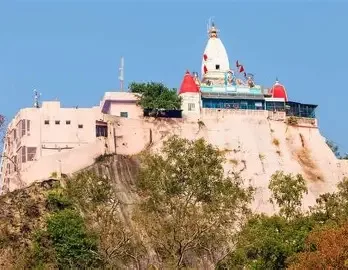
Goa Temple Stampede: Tragedy at Lairai Devi Jatra 2025
A devastating stampede at the Sree Lairai Devi Temple in Shirgao, Goa, during the annual Lairai Jatra festival on May 3, 2025, has left the nation in mourning.
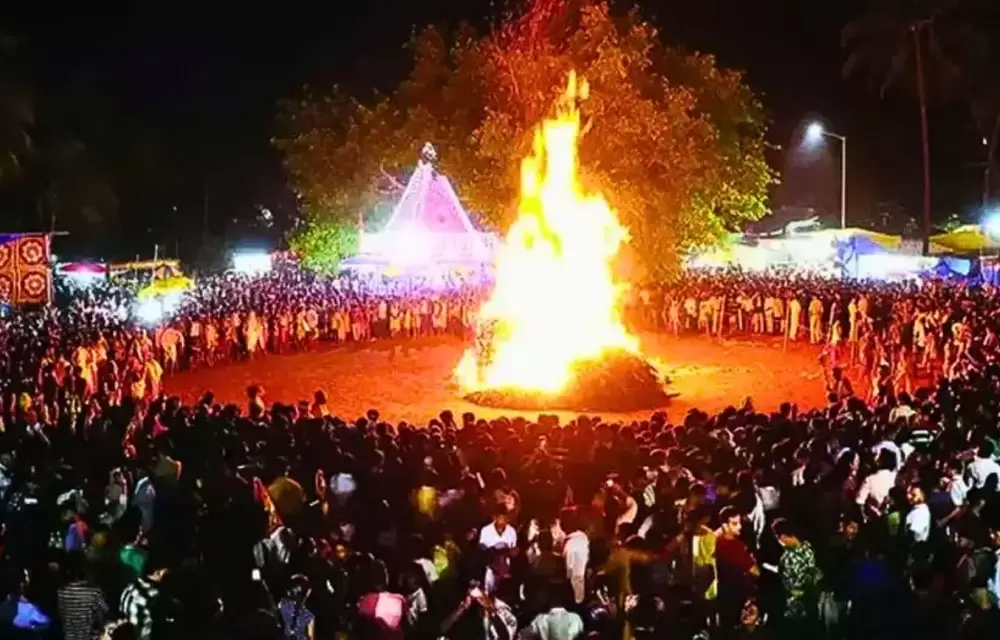
A devastating stampede at the Sree Lairai Devi Temple in Shirgao, Goa, during the annual Lairai Jatra festival on May 3, 2025, has left the nation in mourning. The tragedy claimed at least six lives and injured over 80 devotees, shedding light on ongoing concerns regarding crowd management at large religious gatherings.
What Happened at the Lairai Devi Temple?
The stampede occurred at around 3:30 AM, as tens of thousands of devotees congregated for the revered Shri Lairai Zatra, famed for its fire-walking ritual. Eyewitness reports estimate 30,000 to 50,000 pilgrims from Goa, Maharashtra, and Karnataka were present.
The chaos reportedly began on a narrow, poorly lit slope near the temple, when a few devotees stumbled and fell. One unconfirmed account suggests that a devotee received an electric shock from a lighting fixture, triggering panic and a domino effect.
Casualties and Emergency Response
- 6 fatalities
- 80+ injuries
- 10 critically injured (admitted to Goa Medical College)
Emergency services, police forces, and volunteers acted swiftly to evacuate the injured and control the crowd.
The Lairai Jatra Festival
The Shri Lairai Zatra is a major Hindu festival dedicated to Goddess Lairai, an incarnation of Parvati. Held annually in April or May, the highlight is a fire-walking ceremony, where devotees walk barefoot over burning embers in a display of devotion.
The festival is deeply woven into Goa’s cultural and spiritual fabric, but the 2025 tragedy has deeply overshadowed this year’s celebrations.
Official Response and Investigation
- Goa Chief Minister Pramod Sawant visited the injured at North Goa District Hospital (Mapusa) and announced:
- A magisterial inquiry
- Financial aid for affected families
- Public release of the inquiry report
- Prime Minister Narendra Modi offered condolences and central government support
- All state-sponsored events have been canceled for three days as a mark of respect
Security Gaps Noted
- 1,000 police personnel were deployed, but the crowd size was overwhelming
- North Goa SP Akshat Kaushal mentioned possible rumors triggered panic
- Drones and riot-control vehicles were present, but infrastructure issues persisted
Recurring Crowd Management Challenges
The stampede is part of a disturbing pattern at Indian religious events, where large gatherings in restricted spaces often result in tragedy.
Eyewitness Concerns:
- Inadequate lighting
- Poor slope control
- Lack of timely communication and direction
Despite prior incidents like the 2025 Maha Kumbh stampede, implementation of effective safety protocols remains inconsistent.
Moving Forward: Safety Imperatives
To prevent such tragedies, authorities must act decisively:
- ✅ Enhanced Crowd Monitoring: Use real-time surveillance and clear directional signage
- ✅ Better Infrastructure: Improve lighting, widen narrow paths, and manage bottlenecks
- ✅ Emergency Readiness: Establish on-site medical response and evacuation systems
- ✅ Devotee Education: Publicize safety guidelines and build crowd awareness
Conclusion
The Goa temple stampede at Lairai Devi Jatra 2025 is a painful reminder of the fragility of large religious gatherings without proper planning. While the nation grieves, Hindutone urges swift action to ensure such avoidable tragedies are never repeated.
Who is Goddess Lairai and What Does She Represent in Sanatana Dharma?
Goddess Lairai is venerated as a fierce yet protective manifestation of Shakti, widely identified with Parvati or, in some local traditions, with Shantadurga. Her name is rooted in the Konkani linguistic tradition, and her worship predates the Portuguese colonial period in Goa, making her one of the oldest continuously venerated deities on the Konkan coast. She is regarded as the kuladevata — the ancestral clan deity — of numerous Gaud Saraswat Brahmin, Kunbi, and Gawda communities spread across Goa, coastal Maharashtra, and northern Karnataka.
The Sree Lairai Devi Temple at Shirgao, in the Bicholim taluka of North Goa, is considered her principal pitha, or sacred seat. Theologically, she embodies the principle of agni shakti — the divine power of fire — which explains why the fire-walking ritual, known locally as 'divli' or 'dhond,' stands at the heart of her festival worship. This sacred relationship between the goddess and fire is also echoed in Vedic thought, where Agni is described in the Rigveda (1.1.1) as the divine intermediary who carries offerings between the human and celestial realms.
The Spiritual Significance of the Fire-Walking Ritual at Lairai Jatra
The fire-walking ceremony at the Lairai Jatra, performed in the early hours before dawn, is not mere spectacle but a rigorous act of tapasya — austerity and devotional surrender. Participating devotees, known as 'dhonds,' observe strict fasting and ritual purity for days beforehand, abstaining from meat, alcohol, and conjugal relations. This period of preparation mirrors the concept of diksha described in the Kularnava Tantra and other Shakta agamic texts, where the aspirant purifies body and mind before approaching the goddess.
The act of walking across burning embers is understood within the tradition as a demonstration that intense bhakti — devotion — grants the devotee protection from harm, with the goddess herself said to cool the coals for her sincere worshippers. This belief finds a parallel in the Devi Bhagavata Purana, which repeatedly describes the Goddess as one who removes all obstacles and suffering from those who take complete refuge in her. The pre-dawn timing of the ritual is also deliberate: the brahma muhurta hour, roughly between 3:00 AM and 5:00 AM, is considered the most auspicious window for intense worship and divine communion in Hindu tradition.
Historical Context of Crowd Tragedies at Indian Religious Gatherings
Large-scale stampedes at sacred Hindu gatherings are a tragic and recurring concern in India. Notable incidents include the 2013 Madhya Pradesh stampede on the Ratangarh Mata temple bridge in Datia, which claimed over 100 lives, and the 2008 Naina Devi temple stampede in Himachal Pradesh. Each tragedy has prompted government committees, judicial inquiries, and crowd-management reforms, yet implementation at the local festival level has often remained inconsistent.
The Supreme Court of India has in various rulings emphasized the duty of state governments and temple trusts to conduct safety audits before permitting mass gatherings. Expert bodies such as the National Disaster Management Authority (NDMA) have published detailed guidelines on pilgrim crowd management, specifying requirements for entry and exit channelization, adequate lighting, medical stations, and real-time crowd density monitoring. The 2025 Shirgao tragedy, occurring on a narrow, poorly lit slope with an estimated crowd of up to 50,000 persons, demonstrates that these guidelines had not been adequately operationalized on the ground.
What Reforms Can Protect Devotees at Future Jatras and Yatras?
Temple management scholars and public safety experts have long advocated for a tiered entry system using token-based crowd flow, similar to the model successfully employed at the Tirumala Tirupati Devasthanams in Andhra Pradesh, where electronic token allocation and timed-entry darshan slots have dramatically reduced dangerous crowding. For nocturnal festivals like the Lairai Jatra, specific provisions must include high-intensity flood lighting on all approach paths, anti-slip matting or railings on slopes, and clearly marked one-way pedestrian corridors to separate incoming and outgoing crowds.
The Goa government's announcement of a magisterial inquiry is a necessary first step, but accountability must extend to structural infrastructure upgrades. Permanent crowd-management infrastructure — not just temporary barriers erected on festival day — is essential for events that attract tens of thousands annually. Additionally, real-time crowd density monitoring using CCTV analytics, already deployed at the Kumbh Mela in Prayagraj in recent years, should be considered for major Goa temple festivals. Faith communities and temple trusts can play a decisive role by collaborating with civil authorities well in advance of each festival calendar cycle.
How Devotees and the Wider Hindu Community Are Responding
Across Goa and the Konkan region, the immediate response has been one of collective grief combined with an affirmation of faith. Many devotees have expressed that the tragedy in no way diminishes their devotion to Goddess Lairai; rather, they see it as a call to approach her worship with greater care and humility. Several community organizations connected to the temple have announced plans to organize relief drives for the families of the deceased and to provide ongoing support to the critically injured receiving treatment at Goa Medical College.
At the national level, Hindu religious organizations and scholars have called for a standardized 'temple safety protocol' to be adopted voluntarily by major mandirs and festival organizing committees. The tragedy has reignited the conversation around balancing the organic, community-led nature of traditional jatras — which are living expressions of grassroots bhakti — with the non-negotiable demands of public safety in an era of rapidly growing pilgrim numbers. The memory of those who lost their lives at Shirgao on May 3, 2025, is being held with deep sorrow by devotees who pray that such a loss may never recur at the feet of the Divine Mother.
Also read: Hindu temple safety tips for devotees and families.
Frequently Asked Questions
Where is Goa Temple Stampede located?
A devastating stampede at the Sree Lairai Devi Temple in Shirgao, Goa , during the annual Lairai Jatra festival on May 3, 2025 , has left the nation in mourning. The tragedy claimed at least six lives and injured over 80 devotees , shedding light on ongoing concerns regarding crowd management at large religious gatherings .
Who is the presiding deity of Goa Temple Stampede?
The presiding deity is Goddess Durga.
What are the timings and how do I reach Goa Temple Stampede?
Temples typically open early morning and evening; confirm current darshan timings before visiting. The nearest airport, railway station and road routes are covered in the guide above.
What is the best time to visit Goa Temple Stampede?
Major festival days and the cooler months are popular, though weekday mornings offer a calmer darshan. Plan around the temple's key festivals for the most vibrant experience.
Share this with family and friends
Send it on WhatsApp, post it, or copy the link.
More from Hinduism
- AI and the Sanskrit Revival in 2026: Language Models, Manuscript OCR, Translation Tools and What AI Still Gets Wrong
- Can a Robot Perform Puja? Robot Aarti, AI in Rituals and What Hindu Tradition Says
- GitaGPT and AI Bhagavad Gita Chatbots: How Accurate Are They, and What Does Hindu Tradition Say?
- Robotic Elephants and AI in Hindu Temples: Kerala's Mechanical Tuskers, Tirumala's AI Command Centre and the Debate
- Quantum Computing Explained for Hindus: Qubits, Superposition and Entanglement, with Vedanta Analogies (Not Equivalences)
You might also like
The Divine Love Story of Meenakshi Amman Temple, Madurai: The Temple of the Fish-Eyed Goddess and Her Cosmic Wedding

Tuesday Rituals in Hinduism: Must-Perform Mangalvar Puja, Vrats & Temples for NRIs Worldwide
Tragedy Strikes Haridwar: Six Dead in Stampede at Mansa Devi Temple