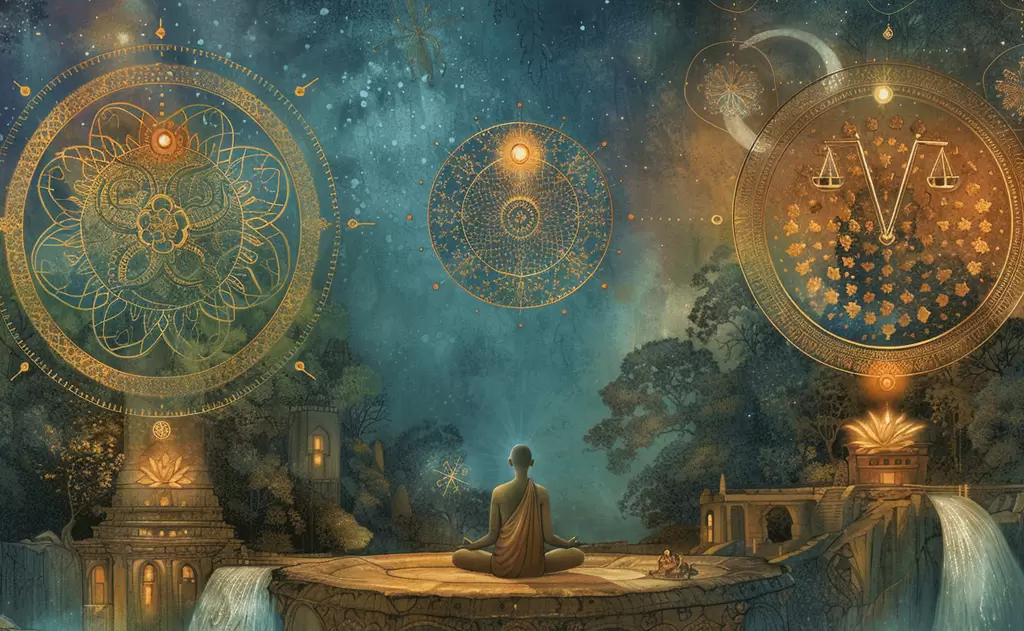
In the Future, Everyone Will Follow Hinduism: A Global Spiritual Awakening
Introduction: In a world increasingly driven by technology, stress, and materialism, many are turning inward for peace and purpose.
Introduction:
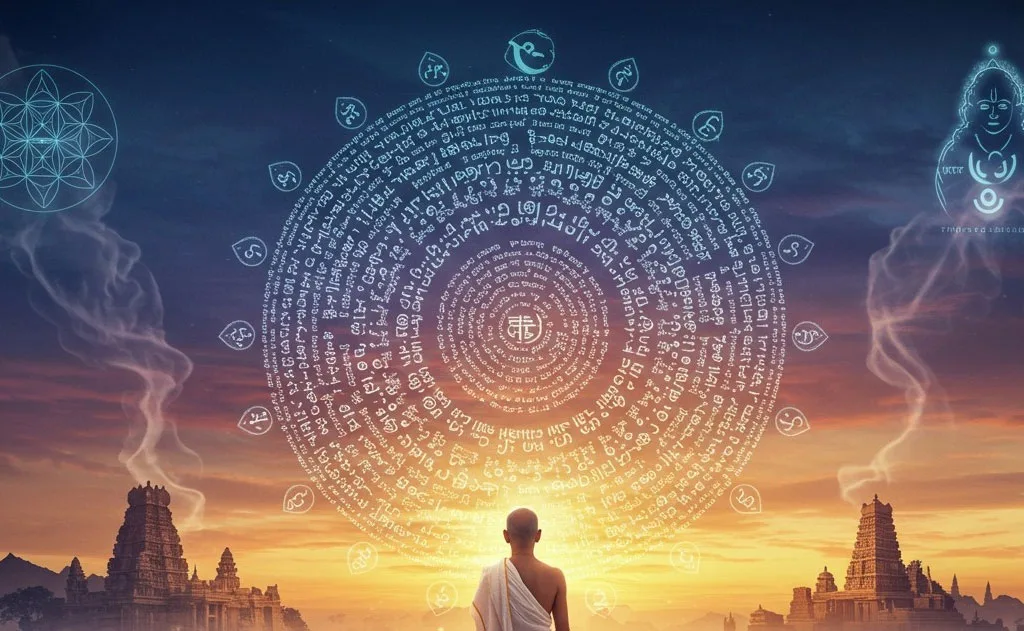
In a world increasingly driven by technology, stress, and materialism, many are turning inward for peace and purpose. One ancient tradition—Hinduism—is quietly spreading across the globe, not by force or conversion, but by inspiration. With its deep wisdom, scientific philosophy, and universal values, Hinduism is fast becoming a guiding light for those seeking balance, spirituality, and connection. Could the future be Hindu?
1. Why Hinduism Resonates Globally
Hinduism is not just a religion—it’s a way of life. Its emphasis on non-violence (Ahimsa), truth (Satya), karma, reincarnation, yoga, and meditation appeals to people across continents, regardless of race or nationality.
Fact: Over 300 million non-Indians practice yoga globally—a spiritual gift from Hinduism.
2. Spiritual Science Meets Modern Curiosity
Hinduism doesn’t ask you to “believe”—it invites you to “experience.” Practices like:
- Meditation (Dhyana)
- Chanting of mantras
- Ayurveda and lifestyle alignment (Dinacharya)
- Temple architecture and energy zones
…are now being validated by modern science. The West is already embracing Hindu tools to manage stress, heal trauma, and live mindfully.
3. Rise of Sanatan Dharma in the West
From Hollywood celebrities chanting “Om” to universities offering courses in the Bhagavad Gita, the foundational texts of Hinduism are now part of mainstream curiosity and respect.
The Gita, Upanishads, and Vedas are among the most translated spiritual texts in the world.
4. Sustainable Living and Hindu Values
As climate change and ecological destruction increase, Hindu concepts like:
- Vasudhaiva Kutumbakam (The world is one family)
- Reverence for nature (Prakriti)
- Cow protection and vegetarianism
…are seen as essential for sustainable living.
5. No Conversion, Only Transformation
Unlike many belief systems, Hinduism does not convert—it uplifts. Its universalism teaches that “Truth is one, paths are many” (Ekam Sat Vipra Bahudha Vadanti). That openness makes Hinduism uniquely suited for a global future.
6. Technology, AI & Sanatan Dharma
Even in the age of Artificial Intelligence, Hinduism’s timeless wisdom remains unmatched. Concepts like:
- Consciousness (Chaitanya)
- Karma as universal law
- Soul (Atman) as eternal energy
…are now subjects of serious philosophical and even quantum exploration.
7. Predictions & Prophecies
Ancient Hindu texts hint at a time when Sanatan Dharma will guide the world during periods of darkness. The revival of ancient temples, interest in Sanskrit, and return to Vedic practices indicate we are at the beginning of this shift.
Conclusion:
The world is slowly awakening—not to a new religion, but to an eternal truth that has always existed. In the future, it won’t be surprising if everyone follows Hinduism—not as a religion, but as a path to inner peace, universal harmony, and cosmic awareness.
What Do the Vedas and Puranas Say About a Future Age of Dharma?
Hindu cosmology divides time into four great cycles — Satya Yuga, Treta Yuga, Dvapara Yuga, and Kali Yuga — collectively forming one Mahayuga. The Srimad Bhagavata Purana (12.2) describes Kali Yuga as an age of moral decline, shortened lifespans, and spiritual forgetfulness. Yet the same text promises that at the junction of Kali and the next Satya Yuga, a renewed epoch of Dharma will naturally arise, not through conquest, but through a collective shift in human consciousness.
The Kalki Purana further elaborates that Dharma, depicted symbolically as a bull standing on all four legs, will be fully restored when humanity rediscovers its inner connection to the Eternal. This is not a prediction of religious monopoly, but rather a vision of universal ethical awakening — precisely what modern seekers across cultures are beginning to articulate in their own languages. The Vedic seers, known as Rishis, saw time as cyclical rather than linear, meaning the return of Dharmic values is not wishful thinking but a structural feature of cosmic order.
How the Bhagavad Gita Became the World's Most Cross-Cultural Spiritual Manual
The Bhagavad Gita, set within the great epic Mahabharata, is a dialogue between the warrior Arjuna and his charioteer Sri Krishna on the battlefield of Kurukshetra. Its eighteen chapters cover Karma Yoga (the path of righteous action), Jnana Yoga (the path of knowledge), and Bhakti Yoga (the path of devotion) — offering a complete framework for navigating any human dilemma, whether personal, professional, or existential. Philosophers from Adi Shankaracharya to Bal Gangadhar Tilak and Sri Aurobindo have written landmark commentaries on it.
Outside India, the Gita found admirers as varied as Ralph Waldo Emerson, Henry David Thoreau, and Carl Jung, all of whom drew from its teachings in their own intellectual traditions. Today, institutions like the Bhaktivedanta Institute and ISKCON centers in over 110 countries distribute the Gita in more than 80 languages, making it arguably the most actively distributed philosophical text of the modern era. Its central teaching — Nishkama Karma, or action without attachment to results — is increasingly cited in leadership training, psychotherapy, and conflict resolution programs worldwide.
Why Advaita Vedanta Appeals to Scientists and Philosophers Today
Advaita Vedanta, the non-dual school of philosophy systematized by Adi Shankaracharya in the 8th century CE, holds that individual consciousness (Atman) and universal consciousness (Brahman) are ultimately identical. This is not mysticism divorced from reason — Shankara's Vivekachudamani and his commentaries on the Brahma Sutras present rigorous logical arguments for the non-dual nature of reality. The statement 'Aham Brahmasmi' (I am Brahman), one of the four Mahavakyas drawn from the Upanishads, encapsulates this teaching.
Modern physicists exploring quantum mechanics, the observer effect, and the nature of consciousness have found surprising resonance with Vedantic ideas. Erwin Schrödinger, one of the founders of quantum theory, explicitly acknowledged the Upanishads in his writings on consciousness and identity. While no formal scientific equivalence should be claimed, the conceptual parallel — that the observer and the observed are not truly separable — has made Advaita Vedanta a serious subject of inquiry at interdisciplinary conferences linking philosophy of mind with physics.
Which Living Temple Traditions Are Drawing International Pilgrims?
The living temple tradition of Hinduism is one of its most tangible expressions of spiritual science. Temples are not merely places of worship — according to Agama Shastra, the ancient canonical text governing temple construction, a consecrated temple (one in which Prana Pratishtha, or ritual consecration, has been performed) functions as a concentrated field of spiritual energy. The Brihadeeswara Temple in Thanjavur, the Meenakshi Amman Temple in Madurai, and the Kashi Vishwanath Temple in Varanasi are among the oldest continuously functioning sacred spaces on Earth.
International visitors to temples like the Swaminarayan Akshardham in New Delhi and the Tirumala Venkateswara Temple in Andhra Pradesh now include significant numbers of non-Indian pilgrims and researchers. The BAPS Swaminarayan Sanstha has constructed major temples across the United States, the United Kingdom, and Australia, each built according to traditional Vastu Shastra and Shilpa Shastra principles, employing master craftsmen trained in classical Indian stone-carving. These structures serve simultaneously as cultural embassies and as living proof that ancient Dharmic architecture is fully viable in the 21st century.
How Yoga and Ayurveda Became the Entry Points for a Deeper Hindu Understanding
For millions of global seekers, the journey into Hindu thought begins not with scripture but with the body. Yoga — codified by the sage Patanjali in the Yoga Sutras approximately 2,000 years ago — describes an eight-limbed path (Ashtanga) beginning with ethical restraints (Yamas and Niyamas) and culminating in Samadhi, the state of meditative absorption. What the world currently practices as 'yoga' is largely the third limb, Asana, but teachers trained in classical lineages increasingly introduce students to the full philosophical framework, drawing them naturally into Vedantic inquiry.
Ayurveda, the ancient system of medicine documented in the Charaka Samhita and Sushruta Samhita, approaches health as the balance of three biological energies — Vata, Pitta, and Kapha — within the individual, and sees disease as a disruption of this harmony. Wellness retreats in Kerala's Thrissur and Thiruvananthapuram districts now attract patients from Europe, Japan, and the Americas seeking Panchakarma treatments and herbal protocols that have no direct equivalent in allopathic medicine. As practitioners engage more deeply with Ayurveda, they invariably encounter its philosophical roots in Samkhya and Yoga Darshana, two of Hinduism's six classical schools of thought (Shad Darshanas).
What Role Does the Concept of Dharma Play as a Universal Ethical Framework?
The Sanskrit word Dharma resists simple translation. It encompasses cosmic order, individual duty, ethical conduct, and the sustaining principle of the universe simultaneously. The Mahabharata states 'Dharmo rakshati rakshitah' — 'Dharma protects those who protect it' — expressing the idea that ethical living is not merely morally desirable but cosmically self-reinforcing. Unlike legal codes that impose rules from outside, Dharma calls upon each individual to discern right action through conscience, context, and wisdom.
In a world grappling with moral relativism, algorithmic decision-making, and geopolitical instability, the Dharmic framework offers something rare: an ethical vocabulary that is simultaneously personal and universal. The concept of Rita — the cosmic order underlying both natural law and moral law — appears in the Rigveda, one of humanity's oldest surviving texts, suggesting that the idea of a universal ethical order is not a modern invention but a perennial human intuition. As global institutions struggle to agree on shared values, Dharma's flexible yet principled structure is attracting serious attention from scholars of international ethics, environmental law, and political philosophy.
Frequently Asked Questions
Why is Hinduism attracting seekers around the world?
Its emphasis on ahimsa, satya, karma, yoga and meditation appeals across continents, regardless of race or nationality. It invites people to experience rather than merely believe.
Does Hinduism try to convert people?
No. Hinduism does not convert but uplifts, teaching that truth is one and paths are many (Ekam Sat Vipra Bahudha Vadanti).
How do yoga and Ayurveda lead people to deeper Hindu thought?
Many seekers begin with the body. Yoga, codified by Patanjali, is an eight-limbed path, and what the world practises is largely Asana, the third limb. Teachers increasingly introduce the full philosophical framework.
What does Advaita Vedanta teach?
Systematized by Adi Shankaracharya in the 8th century CE, it holds that Atman and Brahman are ultimately identical. 'Aham Brahmasmi' (I am Brahman) is one of the four Mahavakyas from the Upanishads.
Are there traditional Hindu temples outside India for the diaspora?
Yes. BAPS Swaminarayan Sanstha has built major temples across the United States, the United Kingdom and Australia, following Vastu Shastra and Shilpa Shastra principles.
What does the Srimad Bhagavata Purana say about the future of Dharma?
It describes Kali Yuga as an age of moral decline, yet says a renewed epoch of Dharma arises at the junction with the next Satya Yuga, through a shift in human consciousness rather than conquest.
Share this with family and friends
Send it on WhatsApp, post it, or copy the link.
More from Hinduism
- AI and the Sanskrit Revival in 2026: Language Models, Manuscript OCR, Translation Tools and What AI Still Gets Wrong
- Can a Robot Perform Puja? Robot Aarti, AI in Rituals and What Hindu Tradition Says
- GitaGPT and AI Bhagavad Gita Chatbots: How Accurate Are They, and What Does Hindu Tradition Say?
- Robotic Elephants and AI in Hindu Temples: Kerala's Mechanical Tuskers, Tirumala's AI Command Centre and the Debate
- Quantum Computing Explained for Hindus: Qubits, Superposition and Entanglement, with Vedanta Analogies (Not Equivalences)