

Hartalika Teej Vrat Katha — The Story of Parvati's Tapasya, Her Aalika Friends & Shiva's Boon
The traditional Hartalika Teej Vrat Katha — Parvati's severe tapasya, her aalika friends who "kidnapped" her from her father's house to help her win Shiva, and their forest-cave wedding on Bhadrapada Shukla Tritiya.
The traditional Hartalika Teej Vrat Katha — Parvati's severe tapasya, her aalika friends who "kidnapped" her from her father's house to help her win Shiva, and their forest-cave wedding on Bhadrapada Shukla Tritiya.
The Hartalika Teej Vrat Katha is the sacred story recited on the evening of the vrat — the story of Parvati's extraordinary tapasya to win Shiva, with the help of her friends who "kidnapped" her from her father's house. Traditional retelling from Bhavishya Purana and Shiva Purana traditions.
The Story — as traditionally narrated
Long ago in the Himalayas, King Himavan had a daughter of unmatched beauty and devotion — Parvati. From childhood, Parvati had one wish only: to marry Shiva. She saw no other husband. She saw no other path. She lived, breathed, and dreamed of Shiva alone.
Parvati began severe austerities. She stood on one leg for years. She fasted for months at a time. She ate only bilva leaves that fell from Shiva's neck-garland. She endured summer's fire and winter's ice without shelter. Her body wasted; her tapasya grew.
When word of her devotion reached the sage Narada, he arrived at Himavan's palace and, seeing Parvati's state, advised the king: "Your daughter's austerities are unmatched. Vishnu himself has taken notice. Give her hand to Vishnu — she will be queen of Vaikuntha."
Himavan's heart soared at the thought. What better son-in-law than Vishnu, the preserver of the universe? He agreed at once and began wedding preparations, without asking Parvati.
When Parvati learnt of her father's plan, her world collapsed. She had performed her tapasya for Shiva alone. To marry another — even Vishnu — was to renounce every prayer she had ever offered.
That evening, Parvati sat alone weeping. Her closest friends — the aalikas — came to her and heard her grief. Without hesitation, they made a decision that gave this vrat its name.
"We will hide you," her friends said. "We will harit — kidnap you — from this house, and take you to a forest cave. There you will complete your tapasya. Shiva WILL come. He must."
That night the aalikas smuggled Parvati out of the palace, deep into a Himalayan forest, to a hidden cave beside a sacred spring. Parvati bathed in the spring. She built a small altar of river sand — a Shivalinga of pure sand. She began her final, most intense tapasya.
For days without number, Parvati sat before the sand-linga. She offered only bilva leaves and river water. She spoke only Shiva's name. Her friends brought no food; Parvati refused it. She entered a deep meditative state where hunger, thirst, heat and cold no longer existed. Only Shiva.
Meanwhile Himavan's palace was in uproar. The princess had vanished on the eve of her wedding to Vishnu. Search parties combed every hill and valley. Vishnu himself, aware of the truth, quietly withdrew his consent — he had never wished to marry a woman devoted to another. The wedding was cancelled.
At last, at the peak of Parvati's tapasya, on the third day of the bright half of the Bhadrapada month, Shiva appeared before her — not as the terrifying Rudra, not as the ash-covered ascetic — but as the young bridegroom, garlanded and smiling. He knelt before Parvati and said:
"Parvati, no soul has ever performed a tapasya as pure as yours. I accept you as my wife. Rise. We will be married."
The forest bloomed. The spring flowed sweeter. Parvati's friends danced with joy. Shiva and Parvati were married that same night in the forest cave, with the moon as witness and Brahma as priest.
This day — Bhadrapada Shukla Tritiya — is remembered as Hartalika Teej. Every year, married women observe the nirjala vrat to remember Parvati's devotion and pray for their own husband's long life. Unmarried girls observe it to receive a husband as devoted as Shiva was to Parvati.
Textual Sources — Where the Story Comes From
The Hartalika Teej katha as popularly narrated in North India draws primarily from:
- Bhavishya Purana — narrates the aalika-friends episode.
- Shiva Purana — parallel accounts of Parvati's tapasya at Kailash.
- Skanda Purana (Nagar Khand) — regional variant.
- Regional folk traditions — UP, Bihar, MP, Rajasthan, Uttarakhand each have variant retellings with local details.
The precise details vary between texts and regions — some traditions locate the tapasya on the banks of the Ganga; others in a Himalayan cave; the Nepalese tradition places it at Pashupatinath. All variants converge on the same essence: Parvati's devotion won Shiva.
When to Read the Katha
The Hartalika Teej Vrat Katha is traditionally read at pradosh kala — the sunset window on the vrat day (10 September 2026, ~6:30 PM to 8:45 PM IST). The order:
- Complete the shodashopachar puja of Shiva-Parvati-Ganesha.
- Sit in front of the altar; the family gathers.
- The senior married woman (or the person observing the vrat) reads the katha aloud.
- All present join hands and listen without interruption.
- At the end, everyone says "Bolo Shiva-Parvati ki jai!" three times.
- Aarti follows. Prasad is distributed.
Traditional variations
Different Hindu communities preserve slightly different versions of the katha:
- Nepal (Kathmandu Valley): Emphasises Pashupatinath as the site of Parvati's tapasya. Women visit Pashupatinath temple on the eve of the vrat.
- Bihar / Jharkhand: Includes the "chandrayan" episode — Parvati eating only what a chandrayan (single leaf per day) could hold.
- Rajasthan (Marwar tradition): Adds the story of Parvati creating Ganesha from her body-dust to guard the cave.
- Uttarakhand (Kumaoni): Local hill songs about the "aalika bhaginis" (aalika sisters) who helped Parvati.
Return to the pillar: Hartalika Teej 2026 — Complete Guide • Related: Hartalika Teej Puja Vidhi.
You might also like
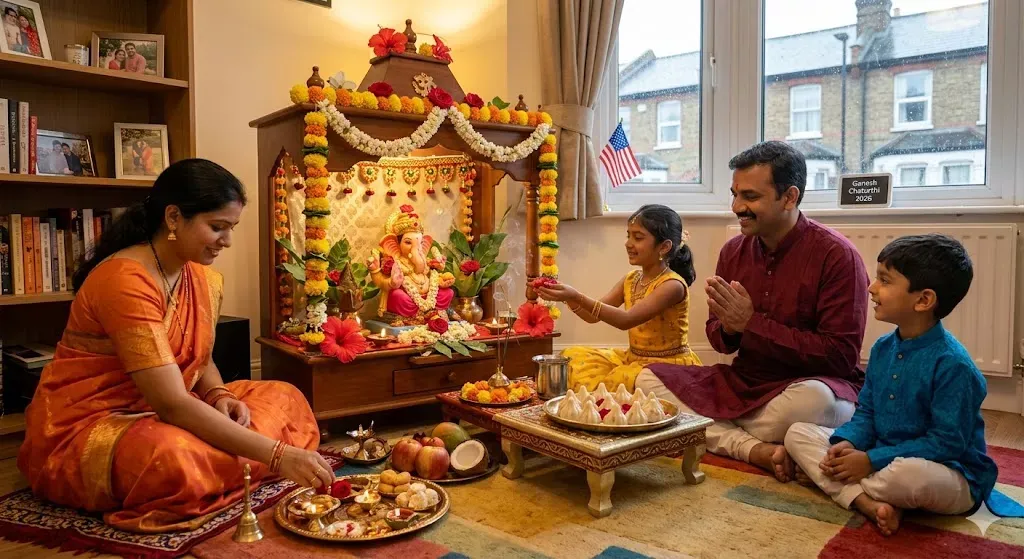
Ganesh Chaturthi 2026 in Fahaheel: Mandapam Ideas, Where to Buy & Visarjan
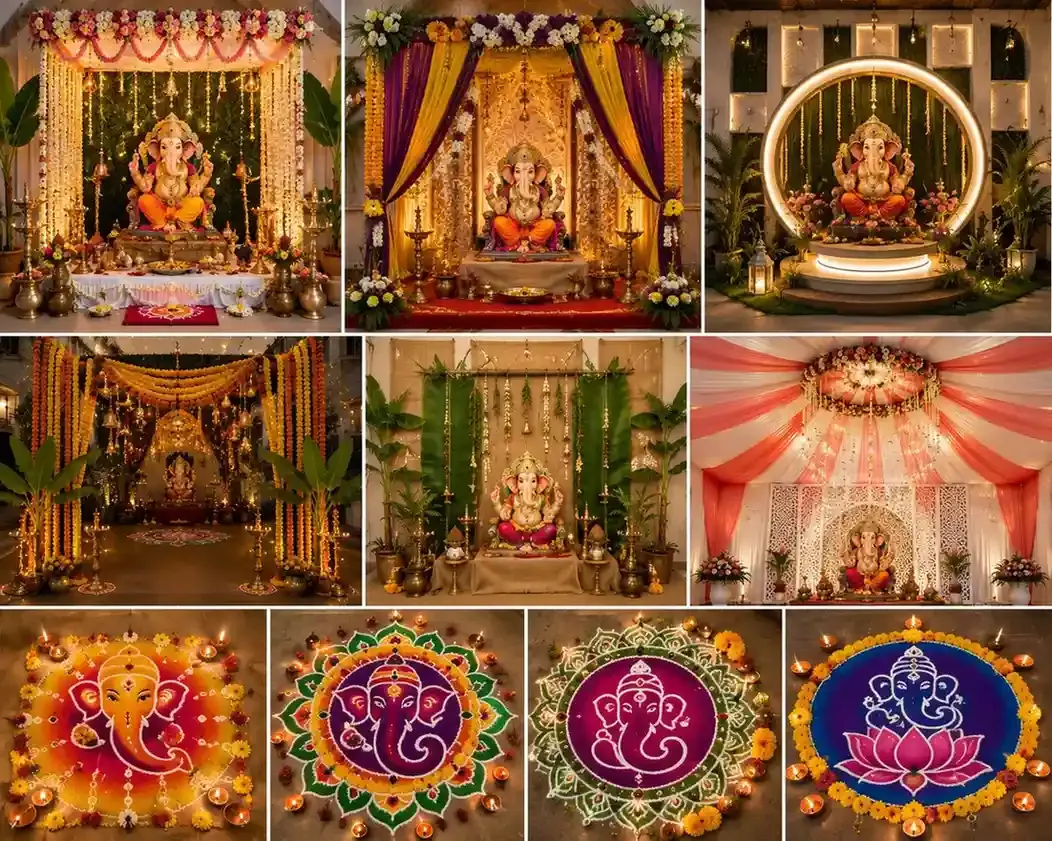
Ganesh Chaturthi 2026 in Abbasiya & Farwaniya: Mandapam Ideas, Where to Buy & Visarjan
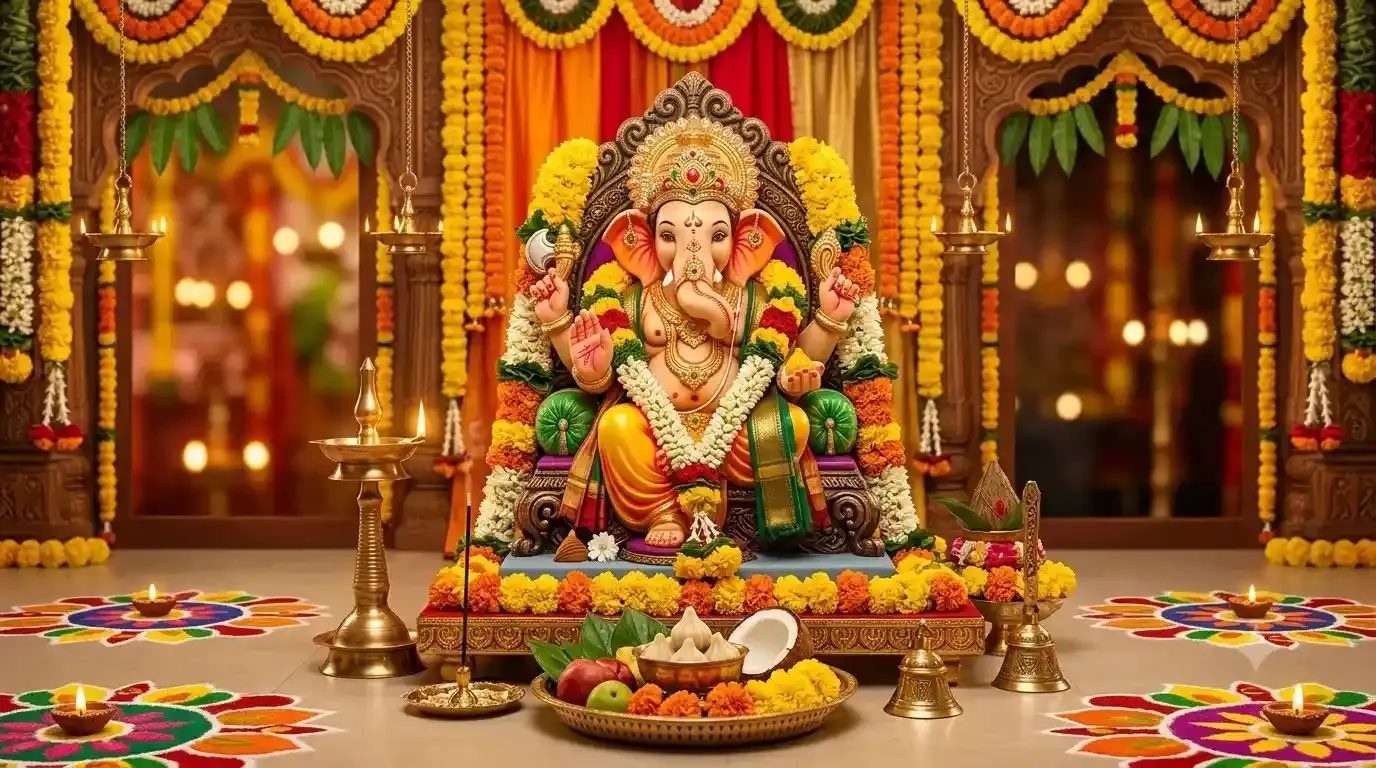
Ganesh Chaturthi 2026 in Salmiya: Mandapam Ideas, Where to Buy & Visarjan