Masik Shivaratri Nishita Kaal by City: November 2026 to January 2027 Dates, Puja Vidhi and NRI Guide
Nishita kaal (midnight puja) times for the next three Masik Shivaratris, 7 November 2026, 7 December 2026 and 5 January 2027, in 28 cities in India and abroad, where the date changes, a short night puja vidhi, the Lingodbhava story and fasting tips.

2027 dates: for the whole of 2027, see Masik Shivaratri 2027 dates.
Quick answer: the next Masik Shivaratris in India are Saturday 7 November 2026, Monday 7 December 2026 and Tuesday 5 January 2027. Nishita kaal, the midnight puja time, is about 11:39 PM–12:31 AM in Delhi on 7 November. Abroad the date can be a day earlier, so check your city below.
Last updated: 23 October 2026
Masik Shivaratri is the monthly night of Shiva, kept on the Chaturdashi (14th day) of the waning fortnight. The main puja is at nishita kaal, the middle of the night, so the date is the night on which Chaturdashi covers that midnight window in your city. This page first covered the Masik Shivaratri of Saturday 13 June 2026; it now gives the next three months for 28 cities.
Masik Shivaratri nishita kaal by city, November 2026 to January 2027
| City | Kartika Masik Shivaratri (Nov) | Margashirsha Masik Shivaratri (Dec) | Pausha Masik Shivaratri (Jan) |
|---|---|---|---|
| Delhi | Sat 7 Nov night, 11:39 PM–12:31 AM | Mon 7 Dec night, 11:46 PM–12:40 AM | Tue 5 Jan night, 11:59 PM–12:54 AM |
| Mumbai | Sat 7 Nov night, 11:57 PM–12:48 AM | Mon 7 Dec night, 12:04–12:56 AM | Tue 5 Jan night, 12:18–1:10 AM |
| Hyderabad | Sat 7 Nov night, 11:35 PM–12:25 AM | Mon 7 Dec night, 11:42 PM–12:33 AM | Tue 5 Jan night, 11:56 PM–12:47 AM |
| Chennai | Sat 7 Nov night, 11:28 PM–12:18 AM | Mon 7 Dec night, 11:35 PM–12:26 AM | Tue 5 Jan night, 11:49 PM–12:40 AM |
| Bengaluru | Sat 7 Nov night, 11:39 PM–12:28 AM | Mon 7 Dec night, 11:46 PM–12:36 AM | Tue 5 Jan night, 12:00–12:50 AM |
| Kolkata | Sat 7 Nov night, 10:55–11:46 PM | Mon 7 Dec night, 11:02–11:55 PM | Tue 5 Jan night, 11:16 PM–12:08 AM |
| New York | Sat 7 Nov night, 11:12 PM–12:08 AM | Sun 6 Dec night, 11:18 PM–12:17 AM | Tue 5 Jan night, 11:32 PM–12:31 AM |
| New Jersey (Edison) | Sat 7 Nov night, 11:14 PM–12:09 AM | Sun 6 Dec night, 11:20 PM–12:18 AM | Tue 5 Jan night, 11:34 PM–12:32 AM |
| Chicago | Sat 7 Nov night, 11:07–11:57 PM | Sun 6 Dec night, 11:12 PM–12:11 AM | Tue 5 Jan night, 11:27 PM–12:26 AM |
| Houston | Fri 6 Nov night, 11:39 PM–12:32 AM | Sun 6 Dec night, 11:45 PM–12:40 AM | Tue 5 Jan night, 12:00–12:55 AM |
| Dallas | Fri 6 Nov night, 11:45 PM–12:38 AM | Sun 6 Dec night, 11:51 PM–12:46 AM | Tue 5 Jan night, 12:05–1:01 AM |
| Bay Area (San Jose) | Fri 6 Nov night, 11:24 PM–12:19 AM | Sun 6 Dec night, 11:30 PM–12:28 AM | Tue 5 Jan night, 11:45 PM–12:42 AM |
| Los Angeles | Fri 6 Nov night, 11:10 PM–12:04 AM | Sun 6 Dec night, 11:16 PM–12:12 AM | Tue 5 Jan night, 11:31 PM–12:27 AM |
| Seattle | Fri 6 Nov night, 11:25 PM–12:22 AM | Sun 6 Dec night, 11:30 PM–12:32 AM | Tue 5 Jan night, 11:44 PM–12:46 AM |
| Toronto | Sat 7 Nov night, 11:34 PM–12:30 AM | Sun 6 Dec night, 11:39 PM–12:39 AM | Tue 5 Jan night, 11:53 PM–12:53 AM |
| Vancouver (BC) | Fri 6 Nov night, 12:28–1:25 AM | Sun 6 Dec night, 12:33–1:35 AM | Tue 5 Jan night, 12:47–1:49 AM |
| Calgary (AB) | Fri 6 Nov night, 12:51–1:50 AM | Sun 6 Dec night, 12:56–2:00 AM | Tue 5 Jan night, 1:10–2:14 AM |
| Edmonton (AB) | Fri 6 Nov night, 12:48–1:48 AM | Sun 6 Dec night, 12:53–1:58 AM | Tue 5 Jan night, 1:07–2:12 AM |
| Winnipeg (MB) | Fri 6 Nov night, 12:44–1:42 AM | Sun 6 Dec night, 12:49–1:51 AM | Tue 5 Jan night, 1:03–2:06 AM |
| London | Sat 7 Nov night, 11:15 PM–12:14 AM | Sun 6 Dec night, 11:20 PM–12:24 AM | Tue 5 Jan night, 11:34 PM–12:38 AM |
| Sydney | Sat 7 Nov night, 12:18–12:59 AM | Mon 7 Dec night, 12:27–1:06 AM | Wed 6 Jan night, 12:42–1:21 AM |
| Melbourne | Sat 7 Nov night, 12:43–1:24 AM | Mon 7 Dec night, 12:53–1:30 AM | Wed 6 Jan night, 1:07–1:45 AM |
| Auckland | Sat 7 Nov night, 12:44–1:25 AM | Mon 7 Dec night, 12:53–1:31 AM | Wed 6 Jan night, 1:08–1:46 AM |
| Dubai | Sat 7 Nov night, 11:37 PM–12:29 AM | Mon 7 Dec night, 11:44 PM–12:37 AM | Tue 5 Jan night, 11:58 PM–12:51 AM |
| Singapore | Sat 7 Nov night, 12:24–1:12 AM | Mon 7 Dec night, 12:32–1:20 AM | Tue 5 Jan night, 12:46–1:34 AM |
| Kuala Lumpur | Sat 7 Nov night, 12:33–1:21 AM | Mon 7 Dec night, 12:41–1:29 AM | Tue 5 Jan night, 12:55–1:43 AM |
| Frankfurt | Sat 7 Nov night, 11:40 PM–12:39 AM | Sun 6 Dec night, 11:45 PM–12:48 AM | Tue 5 Jan night, 11:59 PM–1:02 AM |
| Durban | Sat 7 Nov night, 11:18 PM–12:01 AM | Sun 6 Dec night, 11:27 PM–12:07 AM | Tue 5 Jan night, 11:42 PM–12:22 AM |
How to read the table: the date is the evening on which the Shivaratri night begins; a window such as 11:39 PM–12:31 AM runs past midnight into the next calendar morning. Nishita kaal is the eighth of the fifteen muhurtas of the night (sunset to next sunrise), cut to the part that falls in Chaturdashi.
Clocks used: every time is local clock time for that city. US cities and Toronto are on standard time from 1 November (EST, CST, PST). Under the new provincial rules, Vancouver stays on UTC−7, Calgary and Edmonton on UTC−6 and Winnipeg on UTC−5 all winter. Some apps, including Drik Panchang, still show Winnipeg an hour earlier; our Winnipeg times use UTC−5. London is on GMT, Frankfurt on CET, Sydney and Melbourne on AEDT and Auckland on NZDT. Dubai is GST, Singapore and Kuala Lumpur UTC+8, Durban SAST.
Where the Masik Shivaratri date differs by city
- November: Fri 6 Nov in Houston, Dallas, Bay Area (San Jose), Los Angeles, Seattle, Vancouver (BC), Calgary (AB), Edmonton (AB), Winnipeg (MB); Sat 7 Nov in Delhi, Mumbai, Hyderabad, Chennai, Bengaluru, Kolkata, New York, New Jersey (Edison), Chicago, Toronto, London, Sydney, Melbourne, Auckland, Dubai, Singapore, Kuala Lumpur, Frankfurt, Durban.
- December: Sun 6 Dec in New York, New Jersey (Edison), Chicago, Houston, Dallas, Bay Area (San Jose), Los Angeles, Seattle, Toronto, Vancouver (BC), Calgary (AB), Edmonton (AB), Winnipeg (MB), London, Frankfurt, Durban; Mon 7 Dec in Delhi, Mumbai, Hyderabad, Chennai, Bengaluru, Kolkata, Sydney, Melbourne, Auckland, Dubai, Singapore, Kuala Lumpur.
- January: Tue 5 Jan in most cities; Wed 6 Jan in Sydney, Melbourne, Auckland.
Chaturdashi tithi times
- November: Krishna Chaturdashi in India (IST) from 10:47 AM on 7 November to 11:27 AM on 8 November. New York: 12:17 AM on 7 November to 12:57 AM on 8 November.
- December: India (IST): 2:22 AM on 7 December to 4:12 AM on 8 December. New York: 3:52 PM on 6 December to 5:42 PM on 7 December.
- January: India (IST): 8:39 PM on 5 January to 11:13 PM on 6 January 2027. New York: 10:09 AM on 5 January to 12:43 PM on 6 January.
Tithi times are from Drik Panchang's Delhi and New York lists (checked 23 October 2026).
The Shivaratri story in short
The story most often told for Shivaratri night is Lingodbhava. As it is commonly told, Brahma and Vishnu once argued over who was greater, and an endless pillar of light appeared between them. Brahma flew upward and Vishnu dug downward, but neither found its end. Shiva then revealed himself from the pillar, and that midnight manifestation is remembered at nishita kaal. Other traditions connect Shivaratri with the marriage of Shiva and Parvati.
Masik Shivaratri puja vidhi in brief
- Day: keep a fast as your health allows; many take fruit, milk and water and avoid grains.
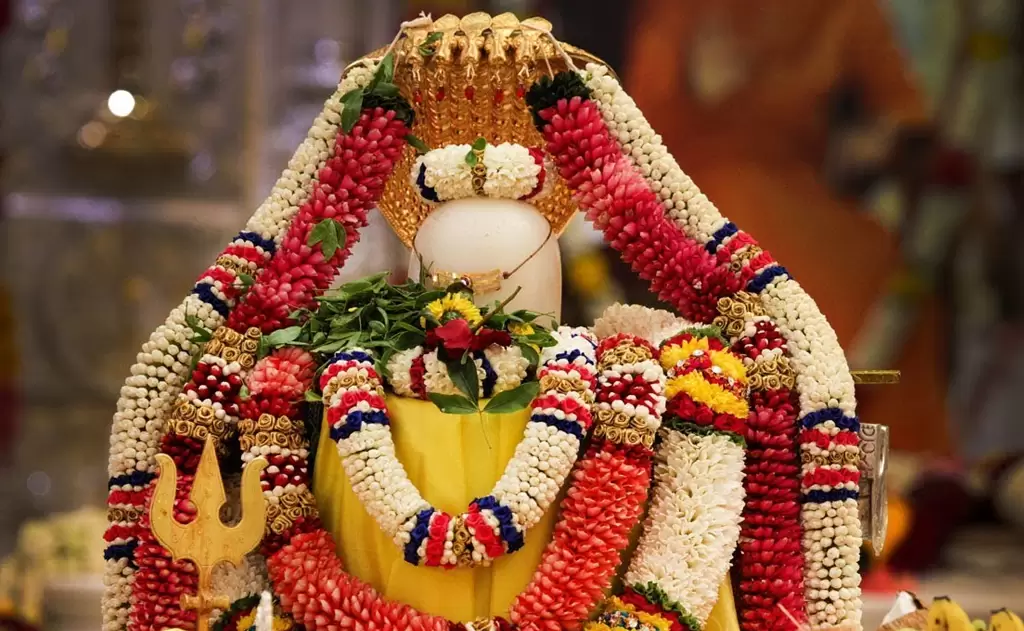
- Evening: light a lamp before the Shivalinga or a picture of Shiva and chant 'Om Namah Shivaya'.
- Nishita kaal: offer water or milk (abhishekam), bilva leaves and flowers, and chant the Mahamrityunjaya mantra or a Shiva stotram such as Lingashtakam.
- Next morning: end the fast after sunrise with a simple meal.
ॐ त्र्यम्बकं यजामहे सुगन्धिं पुष्टिवर्धनम्। उर्वारुकमिव बन्धनान्मृत्योर्मुक्षीय माऽमृतात्॥
oṃ tryambakaṃ yajāmahe sugandhiṃ puṣṭivardhanam| urvārukamiva bandhanānmṛtyormukṣīya mā'mṛtāt||
Meaning: we worship the three-eyed one, fragrant and nourishing; as a ripe cucumber is freed from its vine, may he free us from death, not from immortality (Rigveda 7.59.12).
For families abroad: if nishita kaal falls very late on a work night, a short puja at the start of the window, or an evening puja followed by a lamp left burning, is a sensible way to take part.
Health note: fasting is a personal discipline, not a test of endurance. Children, older people, pregnant or breastfeeding women and anyone with diabetes, low blood pressure, an eating disorder or regular medication should talk to a doctor first, and can keep a fruit-and-milk fast, a single simple meal or just the puja instead. Drink water unless your doctor is happy with a waterless fast, and stop fasting if you feel faint or unwell. Nothing here promises a particular result; the vrat is an offering of attention and devotion.
How we worked out these times
Dates and nishita windows come from HinduTone's panchang calculator, with Chaturdashi start and end times from Drik Panchang. We checked every date against Drik Panchang's Masik Shivaratri lists for Delhi and New York and Drik's day panchang for Hyderabad, Los Angeles, Toronto, London, Sydney and Dubai. All dates agreed and nishita windows were within a minute.
Frequently asked questions
When is Masik Shivaratri in November and December 2026?
In India, Masik Shivaratri is on Saturday 7 November 2026 (the night before Diwali's Narak Chaturdashi) and Monday 7 December 2026, which is also the Karthika Masa Shivaratri on the last Karthika Somavaram. The next one is Tuesday 5 January 2027. In much of North America the dates are 6 or 7 November, 6 December and 5 January.
What is the nishita kaal time for Masik Shivaratri?
Delhi: 11:39 PM–12:31 AM on the night of 7 November, 11:46 PM–12:40 AM on 7 December and 11:59 PM–12:54 AM on 5 January. New York: 11:12 PM–12:08 AM on 7 November, 11:18 PM–12:17 AM on 6 December and 11:32 PM–12:31 AM on 5 January. Times after midnight belong to the next calendar morning.
Why is Masik Shivaratri on 6 November in Houston but 7 November in Chicago?
The vrat follows Krishna Chaturdashi at nishita, the eighth of the fifteen muhurtas of the night. On 6 November Chaturdashi begins at 11:17 PM Central Time, which is before Houston's and Dallas's midnight window but after part of Chicago's, so Houston and Dallas keep 6 November and Chicago keeps 7 November.
Do I have to stay awake all night?
No. The core practice is a puja during nishita kaal. Some devotees keep a vigil (jagaran) with chanting through the night, but a short, focused puja is enough for most families.
How is Masik Shivaratri different from Maha Shivaratri?
Masik Shivaratri is the monthly Shivaratri on every Krishna Chaturdashi. Maha Shivaratri is the great annual one in Phalguna (Magha in the South Indian calendar); in 2027 it is on Saturday 6 March.
Editor's note
Editor's note (23 October 2026): this guide was upgraded in place. It first covered Masik Shivaratri on 13 June 2026 and now gives nishita kaal for 28 cities for November 2026 to January 2027, with the winter clock changes. Earlier claims we could not trace to a source were removed.
Also read: Sankashti Chaturthi moonrise by city · Pradosh Vrat and pradosh kaal by city · Ekadashi dates and parana by city · Purnima vrat dates and moonrise · Amavasya dates and tithi times · Karthika Masa Shivaratri 7 December 2026 · Maha Shivratri 2027 guide · November 2026 festival calendar · December 2026 festival calendar · Hindu festival calendar 2026-2027 · Makar Sankranti 2027
Share this with family and friends
Send it on WhatsApp, post it, or copy the link.
More from Festivals
- Sankashti Chaturthi 2027 Dates and Moonrise Times: Full List for India and Abroad
- Pradosh Vrat 2027 Dates: All 25 Pradosham Days, Pradosh Kaal Times and Dates Abroad
- Amavasya 2027 Dates: New Moon Days, Darsha Amavasya, Tithi Times and Dates Abroad
- Purnima 2027 Dates: Full Moon Vrat Days, Snan-Daan Days, Tithi Times and Dates Abroad
- Ekadashi 2027 List: All 25 Ekadashi Dates, Smarta and Vaishnava Days, Tithi Times and Dates Abroad
You might also like
Masik Shivaratri 2027 Dates: Monthly Shivaratri List, Nishita Kaal Times and Dates Abroad
Shiva Vrats of June 2026: Kalashtami (June 8) & Masik Shivaratri (June 13)

Masik Karthigai June 2026: Date, Deepam & Murugan Worship