Nirjala Ekadashi 2026: Date, Significance, Fasting Rules & NRI Guide
Nirjala Ekadashi on June 25, 2026 — the most powerful Ekadashi of the year. Bhim story, exact muhurat times globally, 4 fasting levels (strict to devotional), home puja vidhi, NRI adaptations for USA, UK, Canada, Australia, UAE.

Nirjala Ekadashi on Thursday, June 25, 2026 is the most spiritually powerful Ekadashi of the entire Hindu calendar — a 24-hour waterless fast that grants the cumulative merit of all 24 Ekadashis observed in a year, in a single observance. Falling within Adhik Maas 2026 (Purushottam Maas), this year's Nirjala Ekadashi carries an even greater multiplier — making it the most rewarding Vaishnava vrat of the decade.
This guide covers everything you need to prepare: the famous Bhim Ekadashi story, exact muhurat times across global time zones, the strict fasting rules and safe alternatives for those who cannot do nirjala, the home puja vidhi, and NRI-specific adaptations for USA, UK, Canada, Australia, UAE and Singapore.
What is Nirjala Ekadashi?
Nirjala Ekadashi (निर्जला एकादशी — "waterless Ekadashi") falls on the Shukla Paksha Ekadashi of Jyeshtha month — usually in May or June. It is the only Ekadashi of the year where devotees observe a complete waterless fast for 24 hours, from sunrise on Ekadashi day through to sunrise of Dvadashi (the next day).
It is also called "Bhim Ekadashi" or "Bhimseni Ekadashi" — after the famous Mahabharata story (below). It is also called "Pandava Nirjala" because all the Pandavas observed this single vrat to cover the merit of all 24 Ekadashis they had missed in their years of forest exile and war preparation.
The Bhim Story — Why Nirjala Ekadashi Exists
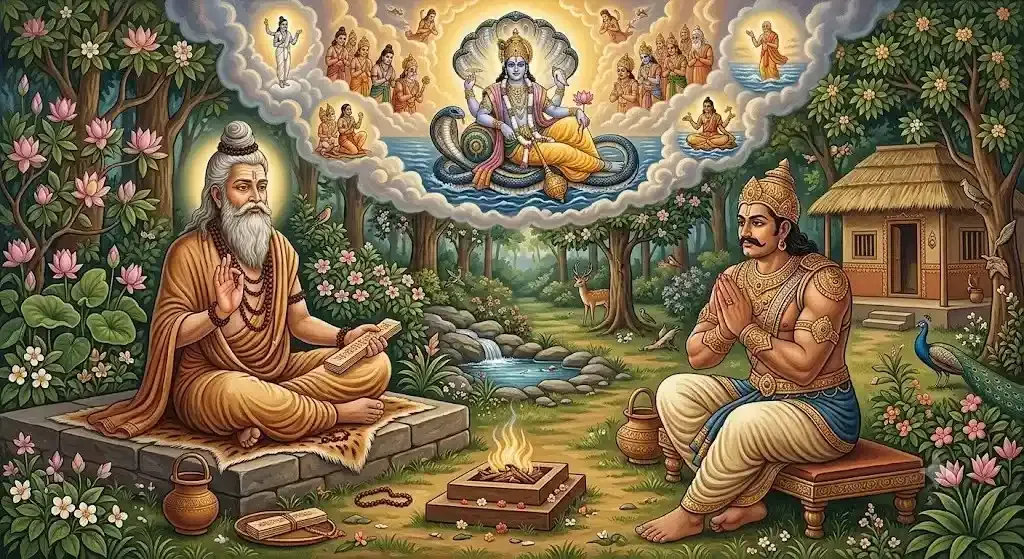
The Brahma Vaivarta Purana narrates the origin. Bhima, the second of the five Pandavas, was famous for his enormous appetite — he simply could not fast. Yet he watched his mother Kunti, his elder brothers Yudhishthir and Arjuna, and his wife Draupadi observe every Ekadashi with full devotion, gaining great spiritual merit. Bhima felt deep grief: was he denied this punya because of his appetite?
He approached sage Vyasa for guidance. Vyasa told him: "There is one Ekadashi in the year — Jyeshtha Shukla Ekadashi — where if a devotee observes a complete waterless fast for 24 hours, that single observance grants the merit of all 24 Ekadashis in the year." Bhima followed this advice with full devotion, and at the end of the vrat, he received the same punya as one who observed every Ekadashi. Since that day, this Ekadashi has been called Bhim Ekadashi — Vishnu's gift to those who cannot observe every Ekadashi.
This is profoundly relevant for working NRI families today: if life makes it hard to observe each monthly Ekadashi, observing this one with full sincerity grants the full year's merit.
Date & Muhurat — June 25, 2026 (Global Time Zones)
Ekadashi tithi begins: Wednesday, June 24, 2026 at approximately 11:15 PM IST. Ekadashi tithi ends: Friday, June 26, 2026 at approximately 02:48 AM IST. The Parana (breaking-fast) window on June 26 is approximately 05:42 AM to 08:32 AM IST.
For NRIs, observe the fast through the local sunrise-to-sunrise span when the tithi prevails at your local sunrise on June 25:
- India (IST): fast begins sunrise June 25, breaks sunrise June 26 within Parana window 05:42-08:32 AM
- USA East Coast (EDT): fast begins sunrise June 25 local (~5:24 AM), breaks sunrise June 26 local
- USA West Coast (PDT): fast begins sunrise June 25 local (~5:42 AM), breaks sunrise June 26 local
- UK (BST): fast begins sunrise June 25 local (~4:43 AM), breaks sunrise June 26 local
- UAE (GST): fast begins sunrise June 25 local (~5:32 AM), breaks sunrise June 26 local
- Singapore (SGT): fast begins sunrise June 25 local (~6:55 AM), breaks sunrise June 26 local
- Australia East (AEST): fast begins sunrise June 25 local (~6:35 AM), breaks sunrise June 26 local
Spiritual Benefits of Nirjala Ekadashi
From the Padma Purana, Brahma Vaivarta Purana, and Vishnu Dharmottara Purana:
- Merit equivalent to observing all 24 Ekadashis in the year — the single most efficient vrat in the calendar
- Liberation from all accumulated sins (past births inclusive)
- Granting of any single sincere wish related to dharma, artha, kama (within dharmic boundaries)
- Direct path to Vaikuntha for sincere observers; no further births required
- Protection from Yama (god of death) and the suffering of hellish realms
- Cure of long-standing chronic illness through the combination of physical purification and Vishnu's grace
- During Adhik Maas (June 2026): all the above benefits are multiplied. The Padma Purana specifies that Adhik Maas Ekadashi vrats grant 100x the merit of ordinary-month Ekadashis
Fasting Rules — Nirjala vs Safer Alternatives
Health disclaimer: The complete nirjala (waterless) fast is only safe for healthy adults under 65 with no diabetes, kidney disease, hypertension, pregnancy, or chronic medications. Do not attempt the strict version without consulting your doctor. Lord Vishnu specifies that intent (sankalpa) matters more than mechanical execution — choose the form that suits your health and observe it with full sincerity.
Level 1: Strict Nirjala (24-hour waterless)
From sunrise June 25 to sunrise June 26: no food, no water, no juice, nothing by mouth. Allowed: rinsing mouth with water (do not swallow), bathing. Only for healthy adults; consult your doctor.
Level 2: Modified Nirjala (water only)
From sunrise June 25 to sunrise June 26: only water; no food, no juice, no fruit. Suitable for relatively healthy adults who cannot do full nirjala.
Level 3: Phalahar (the most common form)
Only fruits, milk, vrat-approved foods (sabudana, kuttu, sendha namak). One sattvic meal in the evening after sunset puja. Skip rice, wheat, lentils, salt, onion, garlic, meat. Recommended for diabetics, working professionals, and seniors.
Level 4: Devotional (for the elderly, pregnant, or chronically ill)
Skip fasting; observe through Vishnu Sahasranama recitation, evening puja, mantra chanting, and donating in Lord's name. Vishnu accepts pure intention as the highest offering. Do NOT fast if you have diabetes, are pregnant, or have any condition that requires regular food/water.
Step-by-Step Home Puja Vidhi
- Wake before sunrise on June 25. Bath, sankalpa (intent) to observe Nirjala Ekadashi for the punya of all 24 Ekadashis.
- Set up a Vishnu/Krishna altar with deity picture, fresh flowers (tulsi if available — essential for Vishnu), incense, lamp.
- Morning puja: light lamp and incense. Recite Vishnu Sahasranama (1000 names of Vishnu) — the supreme text for Ekadashi. Or chant Om Namo Narayanaya 108 times.
- Read or listen to the Nirjala Ekadashi katha (story) — easily found on YouTube.
- Throughout the day, maintain a quiet sattvic mood. Avoid arguments, lying, harsh speech, sexual activity, anger.
- Evening puja at sunset: offer light, flowers, water (if applicable), and naivedya. Recite Vishnu Sahasranama again.
- Stay awake or wake before sunrise on June 26 for Parana (breaking-fast).
- Parana: break the fast at sunrise within the prescribed window (typically 05:42-08:32 AM IST equivalent in your local time). First sip warm water with a few tulsi leaves, then take prasad. Do not break fast outside the window.
NRI Adaptations
- Work scheduling: If June 25 is a workday, level 2 or 3 fast is more practical. Step away from your desk for 5-min Vishnu Sahasranama recitation during lunch break.
- Hot summer in USA/UAE: strict nirjala in 38-44°C heat is dangerous. Use level 2 (water-only) or level 3 (phalahar) to avoid dehydration.
- Family across time zones: each member observes on June 25 at their LOCAL sunrise. Synchronise a 30-min video Vishnu Sahasranama recitation when one family member is at sunset, for collective merit.
- Children: do not fast under age 10. Have them participate in the morning puja, offer flowers, listen to the Bhim story.
- Watching live Tirupati abhishekam: SVBC YouTube live stream from Tirumala makes the day particularly meaningful. Many NRI families plan a half-day off work to watch live and observe phalahar fast.
Frequently Asked Questions
Is Nirjala Ekadashi the same as Bhim Ekadashi?
Yes — Nirjala Ekadashi and Bhim Ekadashi (Bhimseni Ekadashi) are two names for the same Ekadashi. Both refer to the Shukla Paksha Ekadashi of Jyeshtha month (May-June). "Bhim" because of the Mahabharata story; "Nirjala" because of the waterless fast.
Can I observe Nirjala Ekadashi if I have diabetes or hypertension?
Strict nirjala is NOT recommended for diabetics, hypertensives, or those on medications. Use Level 3 (Phalahar) instead — eat fruits and milk through the day, monitor blood sugar carefully, and continue all medications. The merit comes from sincere intention plus the puja, not from the absence of food.
Can pregnant women observe Nirjala Ekadashi?
NO. Pregnant women should not fast at all. Observe Level 4 (Devotional) — full puja, Vishnu Sahasranama recitation, donations. The Padma Purana explicitly states that Vishnu accepts intention from pregnant devotees without the physical fast.
What is the correct Parana (breaking-fast) procedure?
Parana must be done at sunrise on Dvadashi (June 26) within the prescribed window — typically the first 2-3 hours after sunrise. Break the fast with warm water and a few tulsi leaves, then take prasad from your morning puja. Do not consume regular breakfast immediately — give your body 30 minutes to adjust.
Can I drink water if I feel dizzy during nirjala fast?
Yes — health comes before vrat technicality. If you feel dizzy, weak, or unwell, drink water immediately. Your sincere intention to observe is the merit; harming yourself is against dharma. The Yajnavalkya Smriti states that one should never put one's health at serious risk for a fast.
Why is Nirjala Ekadashi during Adhik Maas 2026 considered extra special?
Adhik Maas is dedicated to Lord Vishnu (Purushottam Maas — "the supreme month"). Any Vaishnava vrat including Ekadashi observed in Adhik Maas grants 100x the punya of ordinary months. Nirjala Ekadashi already grants merit of 24 Ekadashis — when multiplied by Adhik Maas 100x bonus, it grants merit of 2400 Ekadashis. Such an opportunity returns only every 32-33 months.
🕉 Om Namo Narayanaya. May Lord Vishnu bless your Nirjala Ekadashi vrat on June 25, 2026 with the merit of a thousand sacrifices and the protection of dharma. 🕉
Share this with family and friends
Send it on WhatsApp, post it, or copy the link.
More from Festivals
- Masik Shivaratri 2027 Dates: Monthly Shivaratri List, Nishita Kaal Times and Dates Abroad
- Sankashti Chaturthi 2027 Dates and Moonrise Times: Full List for India and Abroad
- Pradosh Vrat 2027 Dates: All 25 Pradosham Days, Pradosh Kaal Times and Dates Abroad
- Amavasya 2027 Dates: New Moon Days, Darsha Amavasya, Tithi Times and Dates Abroad
- Purnima 2027 Dates: Full Moon Vrat Days, Snan-Daan Days, Tithi Times and Dates Abroad
You might also like
Nirjala Ekadashi 2026: Vrat Rules, Benefits & Waterless Fast Guide (June 25)
Nirjala Ekadashi Significance | Sage Vyasa's Teaching to Bhimasena | Ekadashi Vrat Story

Nirjala Ekadashi June 25 2026 – The King of Ekadashis: Complete Guide with Bhima’s Story, Rituals, Mantras & Benefits