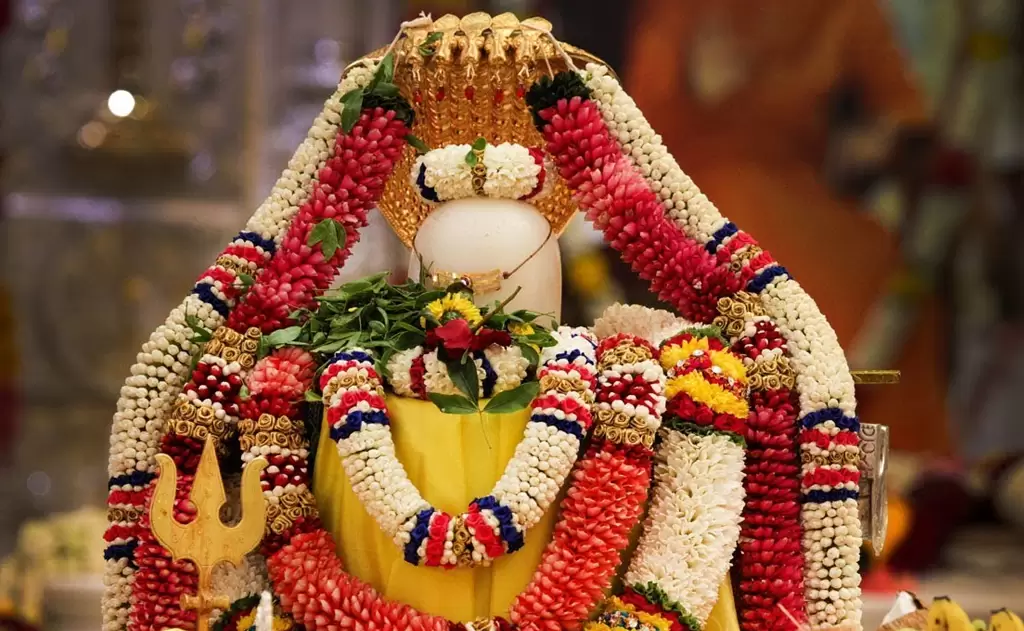
Shiva Worship Calendar for NRIs: Pradosh, Masik Shivratri, Sawan & Maha Shivratri (Local Timings)
Year-round Shiva calendar hub for NRI families. Pradosh (twice monthly), Masik Shivratri (monthly), Sawan / Karthika (annual), Maha Shivratri (annual), with local-time observance guidance for USA, UK, Australia, UAE, Singapore, NZ.
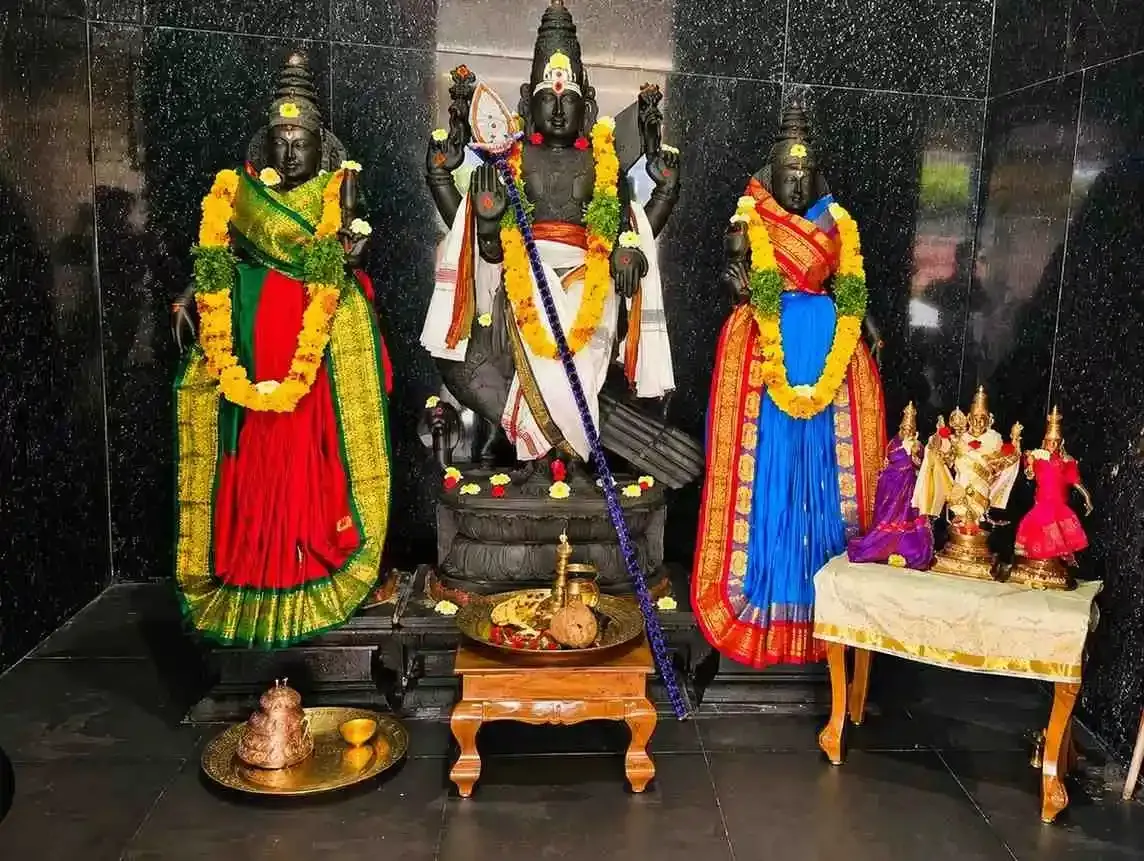
This is your year-round Shiva calendar reference hub for NRI Hindu families. Shiva worship has recurring observances at four different cadences: monthly (Masik Shivratri, Pradosh × 2), seasonal (Sawan, Karthika in South India), annual (Maha Shivratri), and ad-hoc (Solah Somvar, eclipse periods). Use this hub to plan and time your observances in your local timezone — bookmark for the year.
All Hindu dates follow the lunar calendar; the exact Gregorian date shifts each year and should be re-verified at the time. Diaspora rule: observe at YOUR local kaal (sunrise/sunset/midnight) — Hindu shastra explicitly accommodates local-kaal observance for devotees living outside India.
The Four Cadences of Shiva Worship
1. Pradosh Vrat — Twice Monthly
Pradosh Vrat falls on the trayodashi (13th lunar day) of both pakshas — twice per month. The Pradosh Kaal (90 minutes around sunset, from 45 minutes before to 45 minutes after) is when Shiva performs his Tandava — the supreme moment for Shiva worship. Each Pradosh grants the merit of all 12 Jyotirlinga darshans simultaneously.
- Shukla Paksha Pradosh (waxing moon): blessing for prosperity, marriage, progeny, material well-being
- Krishna Paksha Pradosh (waning moon): blessing for liberation, ancestral peace, removal of karmic debt
- Monday Pradosh (Som Pradosh): the most powerful — when Pradosh falls on a Monday, the merit is exponentially multiplied. Mark these specifically.
- Saturday Pradosh (Shani Pradosh): particularly potent for Shani-dosha relief
Local NRI observance: visit your local Shiva temple or perform home jalabhishek + Mahamrityunjaya at YOUR local sunset (Pradosh Kaal), not Indian sunset. A 20-30 minute window is shastra-complete.
2. Masik Shivratri — Once Monthly
Masik Shivratri falls on the Krishna Paksha Chaturdashi (14th waning-moon day) every month. The Nishita Kaal (midnight window) is the primary worship time — when Lord Shiva descends into the earthly plane as a Linga of pure light. Same four-prahar structure as Maha Shivratri, scaled down.
Adhika Masik Shivratri (when Adhik Maas falls — every 32-33 months) carries 12x merit. The next Adhika Masik Shivratri after 2026 will be in 2029.
Local NRI observance: at YOUR local midnight on the Masik Shivratri date. 30 minutes of focused Mahamrityunjaya + 108 Om Namah Shivaya is shastra-complete.
3. Sawan / Shravan — Annual Holy Month
The holiest month for Shiva. North India / Purnimanta calendar: ~30 July - 28 August 2026. South India / Amanta calendar (HinduTone primary): ~13 August - 11 September 2026. Four Sawan Somvars (Mondays) of jalabhishek and fasting. Hindi/Gujarati/Marathi/Nepali diaspora primarily; Tamil Shaivite families center on Karthika instead.
See our dedicated Sawan 2026 guides for full timing tables and regional NRI breakdown.
4. Maha Shivratri — Annual Cosmic Anniversary
Maha Shivratri 2027: Saturday, 6 March 2027. Nishita Kaal ~12:07 AM IST. The supreme Shiva festival of the year — four-prahar all-night abhishekam, fasting, jagran.
See our dedicated Maha Shivratri 2027 guide for full timings.
Adjacent / Tradition-Specific Shiva Observances
- Karthika Somavaram (South Indian, Oct-Nov): Karthika-month Mondays — equivalent intensity to Sawan in Telugu/Tamil/Kannada tradition. Karthika Deepam at Tiruvannamalai.
- Thiruvathirai (Tamil): Ardra Darshan — the night the Nataraja form is celebrated at Chidambaram. December-January.
- Aadi/Thai months (Tamil): special Shiva worship periods in Tamil tradition.
- Solah Somvar (16 Mondays): an extended Monday vrat sequence — 16 consecutive Mondays, often started in Sawan and continuing into the next.
- Mahalingashtaka: every 12 years, the Mahalingashtaka celebration at major Jyotirlingas.
Quick NRI Reference — Sample Local Times by Region
For a typical observance falling around 8 PM IST in India (when most Shiva pujas peak in temples), here's when to start your local puja:
- USA East Coast (EST): your sunset to ~9 PM local — start when you get home from work
- USA West Coast (PST): your sunset to ~9 PM local
- UK (GMT/BST): your sunset to ~10 PM local
- UAE (GST): roughly aligned with India — your evening
- Singapore (SGT): your sunset to ~10 PM local
- Australia (AEST/AEDT): your sunset to ~9 PM local
- New Zealand (NZST/NZDT): your sunset to ~9 PM local
12-Month Quick Calendar of Major Shiva Observances
The exact date shifts each year by ~10-11 days due to lunar drift. Verify against a live panchang. Approximate annual schedule:
- January-February: Mauni Amavasya Pradosh; Maha Shivratri (Feb-Mar window)
- March-April: post-Maha Shivratri Pradosh observances
- May-June: Nirjala Ekadashi (technically Vishnu, but Adhik Maas connections); Pradosh ×2
- July-August: Sawan Somvar peak month (4 Mondays of Sawan)
- August-September: Shravana month in South India; Janmashtami; Pradosh ×2
- October-November: Karthika Somavaram in South India; Diwali Pradosh (a particularly potent Pradosh on Diwali day in some years)
- December-January: Thiruvathirai (Ardra Darshan, Tamil tradition); year-end Pradosh observances
Sustained Daily Practice — The 7-Minute Minimum
For NRI families who want a baseline daily Shiva practice regardless of which observance is in the calendar, this 7-minute morning routine is shastra-complete:
- 1 minute: sankalpa (intention), light a lamp
- 2 minutes: jalabhishek with 21 Om Namah Shivaya chants
- 1 minute: offer bilva leaves (or a flower)
- 2 minutes: Mahamrityunjaya Mantra 11 times
- 1 minute: aarti, naivedya, prasad, close
Done daily, this builds a steady Shiva sadhana that sustains across years and time zones.
Frequently Asked Questions
Which Shiva observance should I start with as a beginner NRI?
Start with weekly Som Pradosh (Monday Pradosh Kaal) — short, low-commitment, immediately rewarding. Build from there to Masik Shivratri (monthly), then Sawan Somvar (annual), then Maha Shivratri (annual cosmic).
How do I know when Pradosh falls each month?
Pradosh is the trayodashi (13th lunar day) — twice per month. Any standard Hindu panchang app or HinduTone's panchangam pages will show you the date. Set a recurring calendar reminder for the dates as they fall.
Tamil family — do I need to observe Sawan?
Sawan is primarily a North Indian / Hindi-belt / Nepali tradition. Tamil Shaivite families center on Maha Shivratri, Pradosham, Thiruvathirai, and the Aadi/Thai months. You can observe Sawan if you wish (Shiva is universal), but it's not the traditional Tamil emphasis. Karthika is the closer Tamil equivalent.
Can I observe just one or two of these annually and skip the others?
Yes — the Hindu tradition prizes sincerity over completeness. If you can only do Maha Shivratri, do that fully. If you can only do Sawan Mondays, that's also valid. Any sincere observance accumulates merit; do not let perfectionism prevent you from any practice.
Do I need to physically be at a temple?
No — home observance is fully shastric for all of these. Temple visits are valued but optional. The Linga Purana, Skanda Purana, and Shiva Purana all describe home Shivling worship as equally meritorious when done with sincere bhava.
Can I do these while traveling?
Yes — carry a small brass Shivling or even a smooth stone designated by sankalpa for the duration of your travel. The fast/puja can be done in any hotel room. Lord Shiva is omnipresent.
🕉 Om Namah Shivaya. Whatever your time zone, whatever your work calendar, Lord Shiva's grace is one mantra away. Build your year-round practice from this hub. Har Har Mahadev. 🕉
Share this with family and friends
Send it on WhatsApp, post it, or copy the link.
More from Festivals
- Mirabai Jayanti 2026: A Living Symbol of Krishna Bhakti – Life, Significance and Bhajans
- Sankashti Chaturthi 2027 Dates and Moonrise Times: Full List for India and Abroad
- Pradosh Vrat 2027 Dates: All 25 Pradosham Days, Pradosh Kaal Times and Dates Abroad
- Amavasya 2027 Dates: New Moon Days, Darsha Amavasya, Tithi Times and Dates Abroad
- Purnima 2027 Dates: Full Moon Vrat Days, Snan-Daan Days, Tithi Times and Dates Abroad
You might also like
Shiva Temples in Canada for Karthika Masam 2026: Where to Worship on the Five Somavarams
Shiva Temples in Europe for Karthika Masam 2026: Where to Worship, Dates and Etiquette
Shiva Temples in Singapore for Karthika Masam 2026: Where to Worship and Key Dates