



Buddhism vs Hinduism: A Comprehensive Comparison
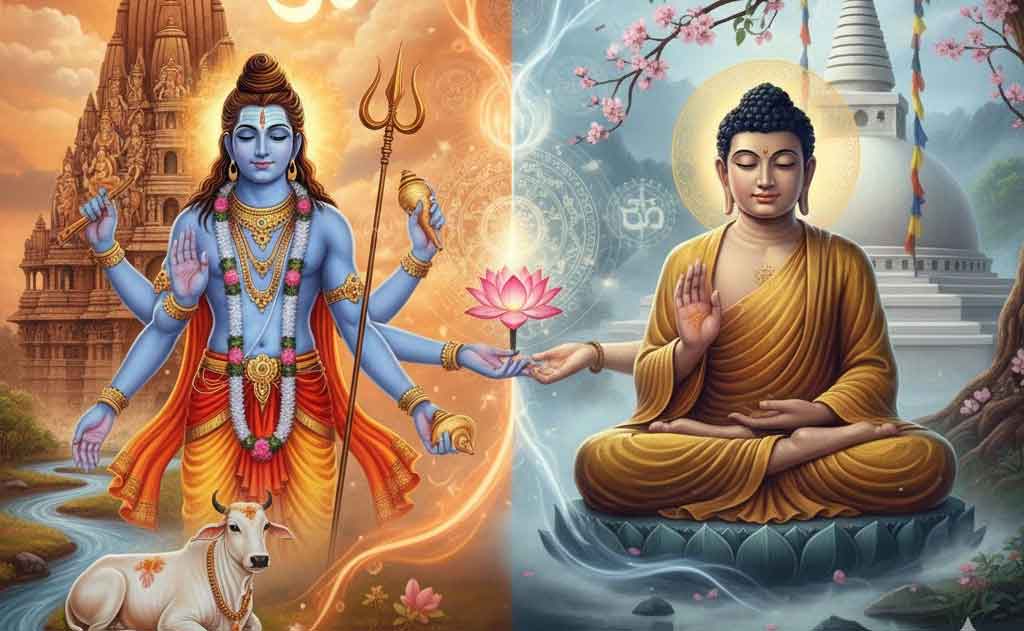
Buddhism and Hinduism are two of the world’s oldest religions, both originating in the Indian subcontinent. While they share common historical roots and certain philosophical concepts, they differ significantly in their beliefs, practices, and approaches to spiritual liberation. This article explores the similarities and differences between these two profound spiritual traditions.
Historical Origins
Hinduism
Hinduism is one of the oldest religions in the world, with roots extending back over 4,000 years. It evolved gradually from the Vedic traditions of ancient India, developing through various philosophical schools and incorporating diverse practices and beliefs. Hinduism has no single founder and emerged organically from the cultural and spiritual practices of the Indian subcontinent.
Buddhism
Buddhism was founded by Siddhartha Gautama, known as the Buddha (the Enlightened One), around the 6th century BCE in northern India (present-day Nepal). Born as a prince, Siddhartha renounced his luxurious life at age 29 to seek answers to human suffering. After years of spiritual practice, he attained enlightenment under the Bodhi tree and spent the rest of his life teaching the path to liberation.
Core Beliefs and Philosophy
The Concept of God
Hinduism: Hinduism is diverse in its understanding of the divine. It encompasses monotheistic, polytheistic, and non-theistic perspectives. Most Hindus believe in Brahman, the ultimate reality or supreme cosmic power, which manifests in various forms as different deities like Vishnu, Shiva, and Devi. The concept includes both personal gods (Saguna Brahman) and the formless absolute (Nirguna Brahman).
Buddhism: Buddhism is generally non-theistic. The Buddha did not deny the existence of gods but considered the question of a creator God irrelevant to the path of enlightenment. Buddhism focuses on personal spiritual development and understanding the nature of reality rather than devotion to a supreme deity. Some later Buddhist traditions incorporated deity-like figures, but these are understood differently than the creator God concept.
The Self and Soul
Hinduism: Hindus believe in the Atman, the eternal, unchanging soul or self that exists within every being. The Atman is considered identical to Brahman, and the goal of spiritual practice is to realize this unity. The famous Vedantic teaching “Tat Tvam Asi” (Thou art That) expresses this fundamental identity.
Buddhism: Buddhism teaches Anatta (non-self), rejecting the concept of a permanent, unchanging soul. The Buddha taught that what we consider the “self” is actually a collection of five aggregates (form, sensation, perception, mental formations, and consciousness) that are constantly changing. Clinging to the illusion of a permanent self is seen as a primary cause of suffering.
Karma and Rebirth
Hinduism: Hindus believe in karma (the law of cause and effect) and samsara (the cycle of birth, death, and rebirth). Actions in this life determine circumstances in future lives. The ultimate goal is moksha, liberation from this cycle, achieved through various paths including devotion, knowledge, and righteous action.
Buddhism: Buddhism also accepts karma and rebirth but interprets them differently. Since there is no permanent self, what continues through rebirth is not a soul but a stream of consciousness influenced by karma. The goal is nirvana, the extinction of suffering and liberation from the cycle of rebirth, achieved by eliminating ignorance, craving, and attachment.
Suffering and Its Cause
Hinduism: Hinduism acknowledges suffering as part of worldly existence but sees it as arising from ignorance of one’s true nature and attachment to the material world. Different Hindu schools offer various explanations and solutions.
Buddhism: The Four Noble Truths form the foundation of Buddhist teaching:
- Life involves suffering (dukkha)
- Suffering arises from craving and attachment (samudaya)
- Suffering can cease (nirodha)
- The path to end suffering is the Eightfold Path (magga)
Sacred Texts
Hinduism: Hindu scriptures are divided into Shruti (heard/revealed) and Smriti (remembered) texts:
- Shruti: The Vedas (Rigveda, Samaveda, Yajurveda, Atharvaveda) and Upanishads
- Smriti: The Bhagavad Gita, Mahabharata, Ramayana, Puranas, and various sutras
Buddhism: Buddhist texts are organized into three collections called the Tripitaka (Three Baskets):
- Vinaya Pitaka (monastic rules)
- Sutta Pitaka (Buddha’s teachings)
- Abhidhamma Pitaka (philosophical analysis) Different Buddhist traditions have additional texts, such as Mahayana sutras and Tibetan tantras.
Paths to Liberation
Hinduism: The Four Paths
- Karma Yoga: The path of selfless action and duty
- Bhakti Yoga: The path of devotion and love for God
- Jnana Yoga: The path of knowledge and wisdom
- Raja Yoga: The path of meditation and mental discipline
Buddhism: The Noble Eightfold Path
- Right Understanding
- Right Intention
- Right Speech
- Right Action
- Right Livelihood
- Right Effort
- Right Mindfulness
- Right Concentration
Religious Practices
Hinduism:
- Puja (worship rituals) at home and temples
- Meditation and yoga
- Festivals celebrating various deities and events
- Pilgrimages to sacred sites
- Reading and reciting sacred texts
- Observing samskaras (life-cycle rituals)
Buddhism:
- Meditation practices (vipassana, samatha)
- Chanting and recitation
- Following the Five Precepts (ethical guidelines)
- Taking refuge in the Three Jewels (Buddha, Dharma, Sangha)
- Mindfulness in daily activities
- Supporting the monastic community
Social Structure
Hinduism: Traditionally associated with the caste system (varna), which divides society into four main groups: Brahmins (priests), Kshatriyas (warriors), Vaishyas (merchants), and Shudras (laborers). While the rigid caste system has been legally abolished in modern India, its social influence persists in some communities.
Buddhism: The Buddha rejected the caste system and taught that spiritual advancement is available to all regardless of birth. Buddhist communities have historically been more egalitarian, though social hierarchies have developed in some Buddhist cultures.
Major Branches and Schools
Hinduism:
- Vaishnavism (devotion to Vishnu)
- Shaivism (devotion to Shiva)
- Shaktism (devotion to the Goddess)
- Smartism (worship of multiple deities)
Buddhism:
- Theravada (the “Way of the Elders,” prevalent in Southeast Asia)
- Mahayana (the “Great Vehicle,” found in East Asia)
- Vajrayana/Tibetan Buddhism (incorporating tantric practices)
- Zen (emphasizing meditation and direct experience)
Key Similarities
Despite their differences, Buddhism and Hinduism share several important features:
- Origin: Both emerged in the Indian subcontinent
- Karma and Rebirth: Both accept the concepts of karma and samsara
- Liberation: Both seek liberation from the cycle of rebirth
- Meditation: Both emphasize meditation as a spiritual practice
- Ethics: Both teach compassion, non-violence (ahimsa), and ethical living
- Impermanence: Both recognize the changing nature of worldly existence
- Multiple Lives: Both believe consciousness continues beyond a single lifetime
Key Differences
- Supreme Being: Hinduism worships a supreme God/gods; Buddhism is non-theistic
- Soul: Hinduism affirms the eternal Atman; Buddhism teaches Anatta (no-self)
- Vedas: Hinduism accepts Vedic authority; Buddhism rejects it
- Caste System: Hinduism traditionally supported it; Buddhism rejected it
- Goal: Hindu moksha emphasizes union with Brahman; Buddhist nirvana emphasizes cessation of suffering
- Founder: Hinduism has no single founder; Buddhism was founded by Buddha
- Ritual: Hinduism emphasizes elaborate rituals; Buddhism generally has simpler practices
- Deities: Hinduism has a rich pantheon of gods; Buddhism focuses on the Buddha’s teachings rather than deity worship
Modern Practice and Global Influence
Hinduism remains primarily practiced in India and Nepal, with significant diaspora communities worldwide. It has influenced yoga, meditation, and wellness practices globally. Modern Hinduism continues to evolve while maintaining ancient traditions.
Buddhism has spread across Asia and gained significant following in Western countries. Its meditation techniques, particularly mindfulness, have been widely adopted in secular contexts. Buddhism has adapted to various cultures while maintaining core teachings.
Conclusion
Buddhism and Hinduism represent two distinct yet historically connected spiritual traditions. While Hinduism offers diverse paths within a theistic framework emphasizing the eternal soul and its union with the divine, Buddhism presents a non-theistic approach focused on eliminating suffering through understanding the nature of reality and the absence of a permanent self.
Both religions have profoundly influenced Asian philosophy, culture, and spirituality for millennia. They continue to offer millions of practitioners pathways to meaning, ethical living, and spiritual development. Understanding both traditions enriches our appreciation of the diverse approaches humanity has developed to address fundamental questions about existence, suffering, and liberation.
Whether one is drawn to the devotional richness and philosophical diversity of Hinduism or the meditative clarity and practical psychology of Buddhism, both traditions offer timeless wisdom relevant to contemporary spiritual seekers.
Frequently Asked Questions (FAQs)
1. Can you practice both Buddhism and Hinduism?
While it’s possible to appreciate and learn from both traditions, practicing both simultaneously can be challenging due to fundamental philosophical differences, particularly regarding the concept of self (Atman vs. Anatta) and the nature of ultimate reality. However, many practitioners incorporate practices like meditation and ethical living from both traditions into their spiritual life.
2. Did Buddhism come from Hinduism?
Buddhism emerged within the cultural context of ancient India where Hindu traditions were dominant, and the Buddha was born into a Hindu society. However, Buddhism developed as a distinct tradition with unique teachings that challenged several Hindu concepts. It’s more accurate to say both religions share common roots in ancient Indian spiritual traditions rather than Buddhism being a branch of Hinduism.
3. Which is older: Hinduism or Buddhism?
Hinduism is older than Buddhism. Hindu traditions date back over 4,000 years to the Vedic period, while Buddhism was founded by the Buddha around 2,500 years ago (6th century BCE).
4. Do Buddhists believe in Hindu gods?
Buddhism does not deny the existence of gods (devas) mentioned in Hindu traditions, but these beings are also considered trapped in samsara (cycle of rebirth) and are not objects of ultimate refuge. In some Buddhist cultures, local Hindu deities have been incorporated into Buddhist practice, but they are subordinate to the Buddha’s teachings.
5. What is the main difference between moksha and nirvana?
Moksha in Hinduism typically refers to the liberation of the soul (Atman) and its realization of unity with Brahman, the ultimate reality. Nirvana in Buddhism refers to the cessation of suffering and the extinguishing of craving, achieved by realizing the truth of no-self (Anatta). Moksha affirms the soul’s eternal existence, while nirvana is based on the absence of a permanent self.
6. Do Buddhists perform puja like Hindus?
While both traditions have devotional practices, they differ significantly. Hindu puja involves elaborate rituals offering worship to deities. Buddhist practices focus more on paying respect to the Buddha as a teacher (not as a god), making offerings as acts of generosity, and cultivating mindfulness. Some Mahayana Buddhist traditions have developed more elaborate devotional practices.
7. Why did Buddha reject the Vedas?
The Buddha rejected the authority of the Vedas because he emphasized direct experience and personal verification of truth over scriptural authority. He also disagreed with Vedic concepts like the eternal soul (Atman) and found some Vedic rituals and the caste system to be obstacles to spiritual development.
8. Is yoga Hindu or Buddhist?
Yoga has roots in ancient Indian spiritual traditions that predate both religions in their current forms. It was systematized in Hindu philosophy, particularly in Patanjali’s Yoga Sutras. Buddhism adopted meditation techniques but generally doesn’t emphasize the physical postures (asanas) that are central to modern yoga. Today’s popular yoga practices derive primarily from Hindu traditions but have been adapted globally.
9. Can you reach enlightenment in Hinduism without believing in God?
Yes, certain Hindu philosophical schools, particularly Advaita Vedanta and Samkhya, offer paths to liberation that focus on knowledge and self-realization rather than devotion to a personal god. These traditions emphasize understanding the true nature of reality and the self.
10. Which religion has more followers: Buddhism or Hinduism?
Hinduism has more followers globally, with approximately 1.2 billion adherents, making it the world’s third-largest religion. Buddhism has approximately 500-600 million followers, making it the fourth-largest religion. Hinduism is concentrated primarily in India and Nepal, while Buddhism is more geographically dispersed across Asia.
11. Do Buddhists believe in reincarnation?
Buddhists believe in rebirth, which is slightly different from the Hindu concept of reincarnation. Reincarnation typically implies a soul or self that transmigrates from one body to another. Buddhism teaches that there is no permanent self, so what continues is a stream of consciousness shaped by karma, not a soul. This is sometimes described as “rebirth without a soul.”
12. What is the Buddhist view on the caste system?
The Buddha explicitly rejected the caste system, teaching that a person’s spiritual worth is determined by their actions and character, not by birth. He accepted disciples from all castes into the Sangha (monastic community), which was revolutionary in his time. Buddhism maintains that all beings have equal potential for enlightenment.
13. Are meditation practices the same in both religions?
While both religions practice meditation, their goals and techniques can differ. Hindu meditation often aims at realizing the true Self (Atman) and union with Brahman, using practices like mantra repetition and visualization. Buddhist meditation focuses on developing insight into the nature of reality, particularly impermanence and no-self, using practices like mindfulness (vipassana) and concentration (samatha).
14. Can Hindus visit Buddhist temples and vice versa?
Yes, members of both religions are generally welcome to visit each other’s sacred sites. Many Hindus regard the Buddha as an avatar of Vishnu or as a great sage, and respect Buddhist teachings. Buddhists often respect Hindu traditions as part of their cultural heritage. Such visits are common, especially in India and Nepal where both communities coexist.
15. Which religion is better for beginners interested in meditation?
Both offer valuable meditation practices. Buddhism might be more accessible for beginners because it provides systematic, practical instructions focused specifically on meditation techniques. However, Hinduism offers greater diversity in approaches, allowing practitioners to find paths that suit their temperament—whether through devotion, knowledge, or meditation. The choice depends on individual preferences and goals.
Related posts:
 How Social Media Influencers Can Promote Hinduism Worldwide
 Social Media and the Perception of Hinduism
 Margasira Lakshmi Vratam: Rituals and Benefits
 The Importance of Revising History Books to Promote True Hindu Heroes and Preserve Cultural Heritage
 Chaturdashi: Unveiling Its Spiritual Significance and Rituals in Hinduism
 A Guide to Hindu Samskaras: The 16 Sacred Rites of Passage from Womb to Tomb




 ︎
︎

