Āchāṇḍālādikaprāpyadvarakānidhikoṭikṛt
Āchāṇḍālādikaprāpyadvarakānidhikoṭikṛt (आचाण्डालादिकप्राप्यद्वारकानिधिकोटिकृत्) is a Sanskrit-origin Hindu boy-name meaning “Maker of Dvārakā's infinite treasure accessible to all, even the Cāṇḍāla”. Find pronunciation, origin, deity association, popularity and similar Hindu baby names.
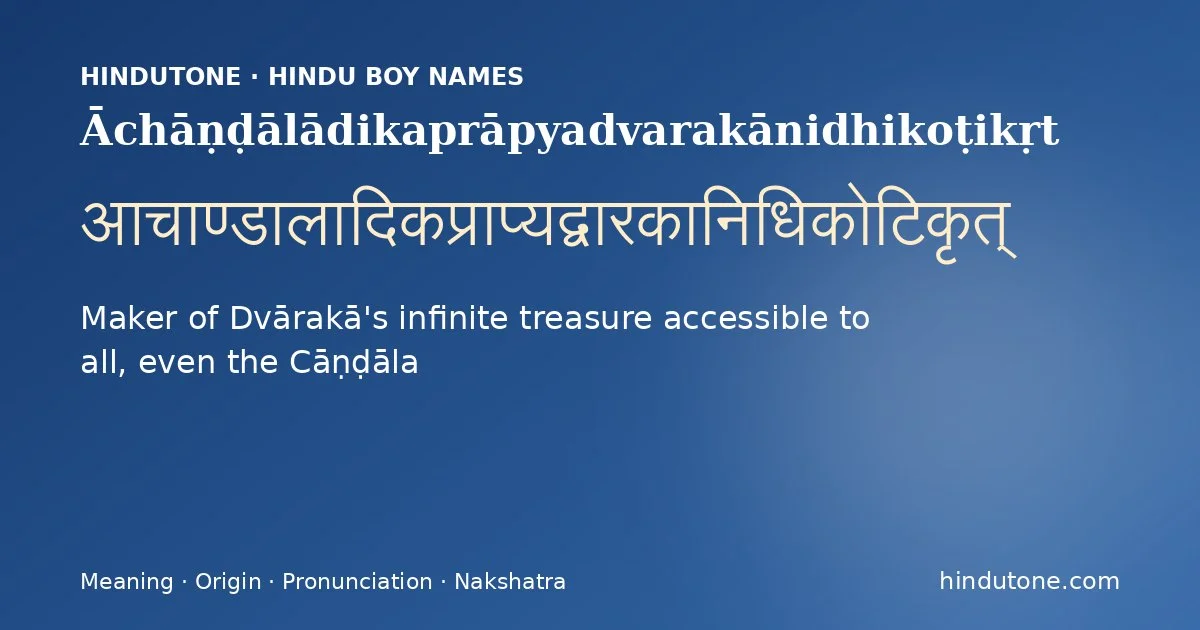
Āchāṇḍālādikaprāpyadvarakānidhikoṭikṛt (आचाण्डालादिकप्राप्यद्वारकानिधिकोटिकृत्) is a Sanskrit-origin Hindu boy-name meaning “Maker of Dvārakā's infinite treasure accessible to all, even the Cāṇḍāla”. Find pronunciation, origin, deity association, popularity and similar Hindu baby names.
Āchāṇḍālādikaprāpyadvarakānidhikoṭikṛt (आचाण्डालादिकप्राप्यद्वारकानिधिकोटिकृत्, IAST: Ācāṇḍālādikaprāpyadvarakānidhikoṭikṛt) is a Sanskrit-origin Hindu boy-name meaning “Maker of Dvārakā's infinite treasure accessible to all, even the Cāṇḍāla”. This compound — ā ('down to, even unto'), cāṇḍāla (the lowest social rank), ādika (and others beginning from), prāpya (to be obtained, accessible), dvārakā (the divine city), nidhi (treasure, jewel), koṭi (crore, infinite multitude), kṛt (maker, doer) — celebrates Vishnu as the one who made Dvārakā's boundless spiritual treasures available to all beings without distinction of birth or status.
Meaning, etymology & significance
The name encodes a radical egalitarian theology: the grace of Dvārakā — whether understood as a physical city, a sacred tīrtha, or the spiritual state of proximity to Krishna — extends 'from the highest to the very Cāṇḍāla,' a phrase that echoes the Gītā's declaration that all varṇas are equally dear to the Lord when devoted. The koṭi ('crore') of treasures speaks to the inexhaustible nature of divine blessing. This name is thus a charter of universal spiritual access.
This expansive epithet of Krishna appears in the devotional literature surrounding the Vishnu Sahasranāma and is meditated upon in tīrtha-māhātmya contexts relating to Dvārakā. Its extraordinary length makes it unsuitable as a given name but precious as a theological summary statement.
Scriptural source
Āchāṇḍālādikaprāpyadvarakānidhikoṭikṛt appears in the Vishnu Sahasranama, among the sacred names of Vishnu.
Āchāṇḍālādikaprāpyadvarakānidhikoṭikṛt — Name Facts
- Meaning
- Maker of Dvārakā's infinite treasure accessible to all, even the Cāṇḍāla
- Gender
- Hindu boy name
- Nakshatra
- Krittika
- Rashi
- Mesha (Aries)
- Numerology
- 9
Frequently asked questions
What does the name Āchāṇḍālādikaprāpyadvarakānidhikoṭikṛt mean?
Āchāṇḍālādikaprāpyadvarakānidhikoṭikṛt is a Sanskrit-origin Hindu boy name meaning “Maker of Dvārakā's infinite treasure accessible to all, even the Cāṇḍāla”.
Is Āchāṇḍālādikaprāpyadvarakānidhikoṭikṛt a boy or girl name?
Āchāṇḍālādikaprāpyadvarakānidhikoṭikṛt is traditionally a Hindu boy name.
Which nakshatra and rashi suit the name Āchāṇḍālādikaprāpyadvarakānidhikoṭikṛt?
By the first-syllable rule of Vedic naming, Āchāṇḍālādikaprāpyadvarakānidhikoṭikṛt aligns with the Krittika nakshatra, under the Mesha (Aries) rashi.
What is the numerology number of Āchāṇḍālādikaprāpyadvarakānidhikoṭikṛt?
The Chaldean name number of Āchāṇḍālādikaprāpyadvarakānidhikoṭikṛt is 9.
Explore more: Krittika nakshatra names · Mesha rashi names · Hindu boy names with A · All Hindu names A–Z