Brahmaadikaamyasaannidhyasanaathiikritadaivata
Brahmaadikaamyasaannidhyasanaathiikritadaivata (ब्रह्मादिकाम्यसान्निध्यसनाथीकृतदैवत) is a Sanskrit-origin Hindu boy-name meaning “The deity who blessed Brahma and the gods with His longed-for presence”. Find pronunciation, origin, deity association, popularity and similar Hindu baby names.
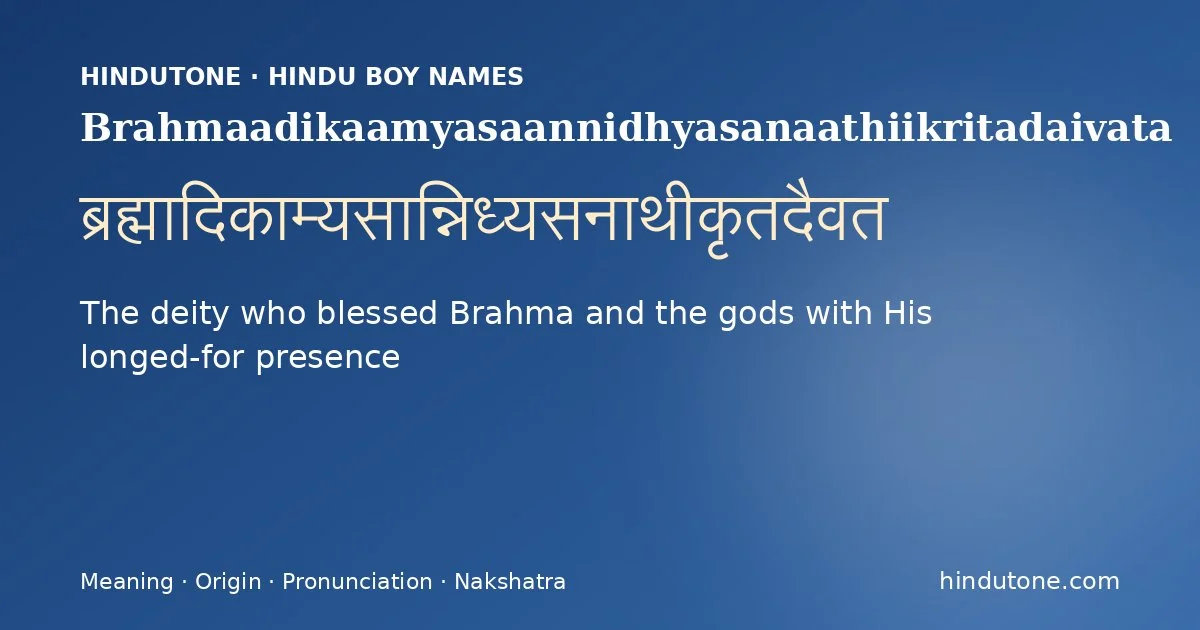
Brahmaadikaamyasaannidhyasanaathiikritadaivata (ब्रह्मादिकाम्यसान्निध्यसनाथीकृतदैवत) is a Sanskrit-origin Hindu boy-name meaning “The deity who blessed Brahma and the gods with His longed-for presence”. Find pronunciation, origin, deity association, popularity and similar Hindu baby names.
Brahmaadikaamyasaannidhyasanaathiikritadaivata (ब्रह्मादिकाम्यसान्निध्यसनाथीकृतदैवत, IAST: Brahmādikāmyasānnidhyasanāthīkṛtadaivata) is a Sanskrit-origin Hindu boy-name meaning “The deity who blessed Brahma and the gods with His longed-for presence”. This majestic compound — from Brahmā (the creator), ādi (beginning with, and others), kāmya (longed-for, desired), sānnidhya (proximity/presence), sanāthīkṛta (made endowed with a lord/protector), and daivata (the divine one) — exalts Viṣṇu as the supreme God whose eagerly sought nearness makes all deities themselves complete and protected.
Meaning, etymology & significance
The word kāmya derives from √kam (to desire) and indicates what is earnestly wished for; sānnidhya (from sanni + √dhā) means nearness or divine presence; sanāthīkṛta means 'made to have a lord' or 'provided with a protector', and daivata refers to a divine being. Together they declare that even Brahmā and the host of devas are made whole and sheltered only when Viṣṇu's yearned-for presence graces them. This name encodes the Vaiṣṇava theological conviction that Viṣṇu is the refuge and lord of all gods.
This extremely extended theological compound belongs to the highest liturgical registers of the extended Viṣṇu Sahasranāma and is never used as a personal name; it is a devotional statement of Viṣṇu's absolute supremacy. Recite it slowly in worship, honoring each semantic unit: Brah-mā-di-kā-mya-sān-ni-dhya-sa-nā-thī-kṛ-ta-dai-va-ta.
Scriptural source
Brahmaadikaamyasaannidhyasanaathiikritadaivata appears in the Vishnu Sahasranama, among the sacred names of Vishnu.
Brahmaadikaamyasaannidhyasanaathiikritadaivata — Name Facts
- Meaning
- The deity who blessed Brahma and the gods with His longed-for presence
- Gender
- Hindu boy name
- Nakshatra
- Rohini
- Rashi
- Vrishabha (Taurus)
- Numerology
- 9
Frequently asked questions
What does the name Brahmaadikaamyasaannidhyasanaathiikritadaivata mean?
Brahmaadikaamyasaannidhyasanaathiikritadaivata is a Sanskrit-origin Hindu boy name meaning “The deity who blessed Brahma and the gods with His longed-for presence”.
Is Brahmaadikaamyasaannidhyasanaathiikritadaivata a boy or girl name?
Brahmaadikaamyasaannidhyasanaathiikritadaivata is traditionally a Hindu boy name.
Which nakshatra and rashi suit the name Brahmaadikaamyasaannidhyasanaathiikritadaivata?
By the first-syllable rule of Vedic naming, Brahmaadikaamyasaannidhyasanaathiikritadaivata aligns with the Rohini nakshatra, under the Vrishabha (Taurus) rashi.
What is the numerology number of Brahmaadikaamyasaannidhyasanaathiikritadaivata?
The Chaldean name number of Brahmaadikaamyasaannidhyasanaathiikritadaivata is 9.
Explore more: Rohini nakshatra names · Vrishabha rashi names · Hindu boy names with B · All Hindu names A–Z