Ibheshvara
Ibheshvara (इभेश्वर) is a Sanskrit-origin Hindu boy-name meaning “Lord of elephants; sovereign over the elephant host”. Find pronunciation, origin, deity association, popularity and similar Hindu baby names.
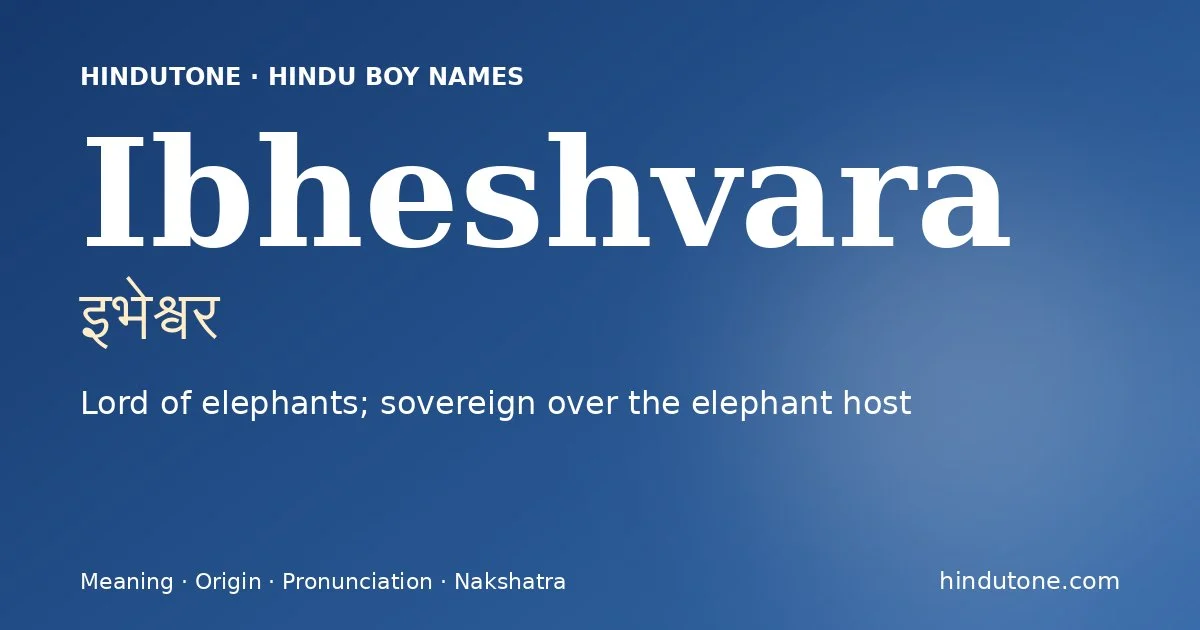
Ibheshvara (इभेश्वर) is a Sanskrit-origin Hindu boy-name meaning “Lord of elephants; sovereign over the elephant host”. Find pronunciation, origin, deity association, popularity and similar Hindu baby names.
Ibheshvara (इभेश्वर, IAST: Ibheśvara) is an Sanskrit-origin Hindu boy-name meaning “Lord of elephants; sovereign over the elephant host”. From ibha (elephant) and īśvara (lord, master), Ibheśvara proclaims Viṣṇu as the supreme ruler over all elephants and, by sacred extension, over the royal dignity and power they embody.
Meaning, etymology & significance
Ibha is the Sanskrit word for elephant, a creature revered in Hindu tradition for its wisdom, strength, and auspiciousness; īśvara, from the root īś (to rule), means 'lord' or 'master.' As Ibheśvara, Viṣṇu is celebrated as the ultimate sovereign over the noble race of elephants — an epithet that resonates with His famous rescue of Gajendra, the elephant king, in the celebrated Gajendra-mokṣa episode of the Bhāgavata Purāṇa. The name thus evokes both cosmic lordship and the Lord's tender compassion for His devoted creatures.
Lord Viṣṇu wears this epithet in the Vishnu Sahasranāma, recalling His glorious act of saving Gajendra from the grip of a crocodile. Pronounced ib-HESH-va-ra, it is a rare but meaningful masculine name for devotees who cherish the Gajendra-mokṣa narrative.
Scriptural source
Ibheshvara appears in the Vishnu Sahasranama, among the sacred names of Vishnu.
Ibheshvara — Name Facts
- Meaning
- Lord of elephants; sovereign over the elephant host
- Gender
- Hindu boy name
- Nakshatra
- Krittika
- Rashi
- Vrishabha (Taurus)
- Numerology
- 4
Frequently asked questions
What does the name Ibheshvara mean?
Ibheshvara is a Sanskrit-origin Hindu boy name meaning “Lord of elephants; sovereign over the elephant host”.
Is Ibheshvara a boy or girl name?
Ibheshvara is traditionally a Hindu boy name.
Which nakshatra and rashi suit the name Ibheshvara?
By the first-syllable rule of Vedic naming, Ibheshvara aligns with the Krittika nakshatra, under the Vrishabha (Taurus) rashi.
What is the numerology number of Ibheshvara?
The Chaldean name number of Ibheshvara is 4.
Explore more: Krittika nakshatra names · Vrishabha rashi names · Hindu boy names with I · All Hindu names A–Z