Sudhāvṛṣṭimṛtāśeṣasvasainojjīvanaikakṛt
Sudhāvṛṣṭimṛtāśeṣasvasainojjīvanaikakṛt (सुधावृष्टिमृताशेषस्वसैनोज्जीवनैककृत्) is a Sanskrit-origin Hindu boy-name meaning “Sole doer of revival of all slain allies through a rain of nectar”. Find pronunciation, origin, deity association, popularity and similar Hindu baby names.
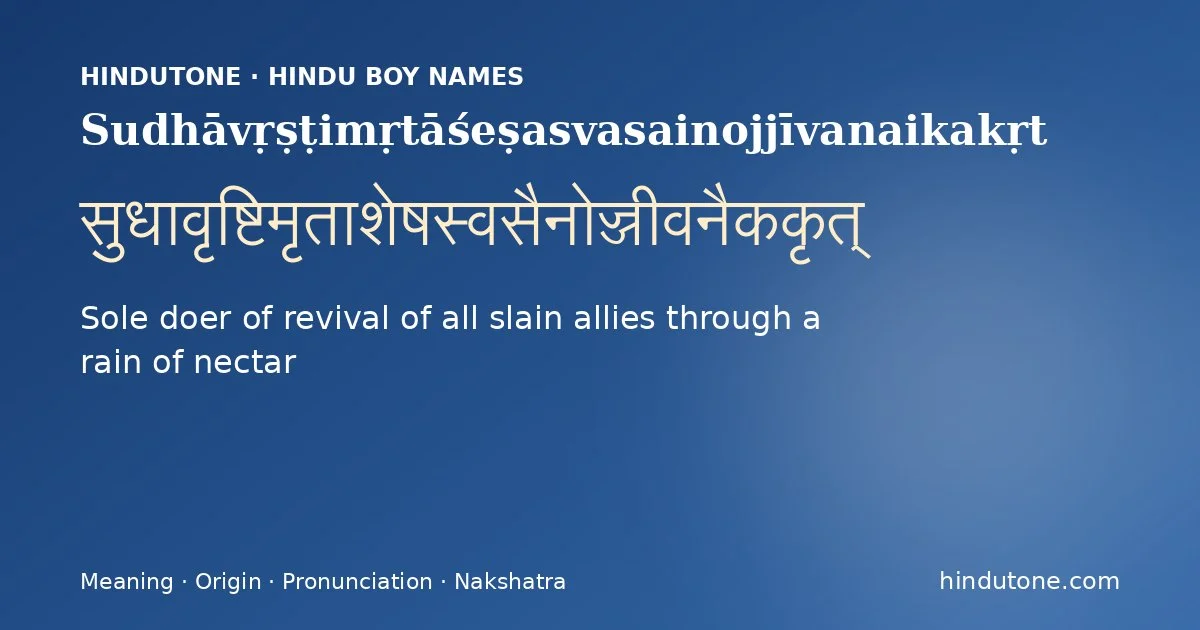
Sudhāvṛṣṭimṛtāśeṣasvasainojjīvanaikakṛt (सुधावृष्टिमृताशेषस्वसैनोज्जीवनैककृत्) is a Sanskrit-origin Hindu boy-name meaning “Sole doer of revival of all slain allies through a rain of nectar”. Find pronunciation, origin, deity association, popularity and similar Hindu baby names.
Sudhāvṛṣṭimṛtāśeṣasvasainojjīvanaikakṛt (सुधावृष्टिमृताशेषस्वसैनोज्जीवनैककृत्, IAST: Sudhāvṛṣṭimṛtāśeṣasvasainojjīvanaikakṛt) is a Sanskrit-origin Hindu boy-name meaning “Sole doer of revival of all slain allies through a rain of nectar”. This majestic compound — sudhā (divine nectar), vṛṣṭi (shower, rain), mṛta (dead), aśeṣa (all, without remainder), sva-sainya (own army), ujjīvana (resuscitation), eka-kṛt (sole agent) — celebrates Vishnu's miraculous restoration of the entire fallen army through an outpouring of amṛta.
Meaning, etymology & significance
Sudhā (सुधा) is ambrosia or the nectar of immortality; vṛṣṭi (वृष्टि) evokes a rain or torrential shower of that grace. The compound declares that He — and no other — accomplished the complete (aśeṣa) revival (ujjīvana) of His own fallen army (sva-sainya) through this divine downpour. This event, drawn from the Ramayana, underscores that Vishnu's grace is not partial: it restores entirely, leaving none behind.
The episode referred to involves the divine sanjeevani or amṛta-based revival of Rama's monkey army after the devastating battle with Ravana's forces, attributed ultimately to Vishnu's sovereign grace. This name is a profound theological statement in compound form and is intended for stotra recitation rather than personal use.
Scriptural source
Sudhāvṛṣṭimṛtāśeṣasvasainojjīvanaikakṛt appears in the Vishnu Sahasranama, among the sacred names of Vishnu.
Astrology — nakshatra, rashi & numerology
By the standard Vedic correspondence between a name’s first syllable and the lunar mansion, Sudhāvṛṣṭimṛtāśeṣasvasainojjīvanaikakṛt aligns with the Shatabhisha nakshatra, under the Kumbha rashi (Moon sign). Its Chaldean name-number is 1.
Sudhāvṛṣṭimṛtāśeṣasvasainojjīvanaikakṛt — Name Facts
- Meaning
- Sole doer of revival of all slain allies through a rain of nectar
- Gender
- Hindu boy name
- Nakshatra
- Shatabhisha
- Rashi
- Kumbha (Aquarius)
- Numerology
- 5
Frequently asked questions
What does the name Sudhāvṛṣṭimṛtāśeṣasvasainojjīvanaikakṛt mean?
Sudhāvṛṣṭimṛtāśeṣasvasainojjīvanaikakṛt is a Sanskrit-origin Hindu boy name meaning “Sole doer of revival of all slain allies through a rain of nectar”.
Is Sudhāvṛṣṭimṛtāśeṣasvasainojjīvanaikakṛt a boy or girl name?
Sudhāvṛṣṭimṛtāśeṣasvasainojjīvanaikakṛt is traditionally a Hindu boy name.
Which nakshatra and rashi suit the name Sudhāvṛṣṭimṛtāśeṣasvasainojjīvanaikakṛt?
By the first-syllable rule of Vedic naming, Sudhāvṛṣṭimṛtāśeṣasvasainojjīvanaikakṛt aligns with the Shatabhisha nakshatra, under the Kumbha (Aquarius) rashi.
What is the numerology number of Sudhāvṛṣṭimṛtāśeṣasvasainojjīvanaikakṛt?
The Chaldean name number of Sudhāvṛṣṭimṛtāśeṣasvasainojjīvanaikakṛt is 5.
Explore more: Shatabhisha nakshatra names · Kumbha rashi names · Hindu boy names with S · All Hindu names A–Z