Mūlavigraharūpiṇī
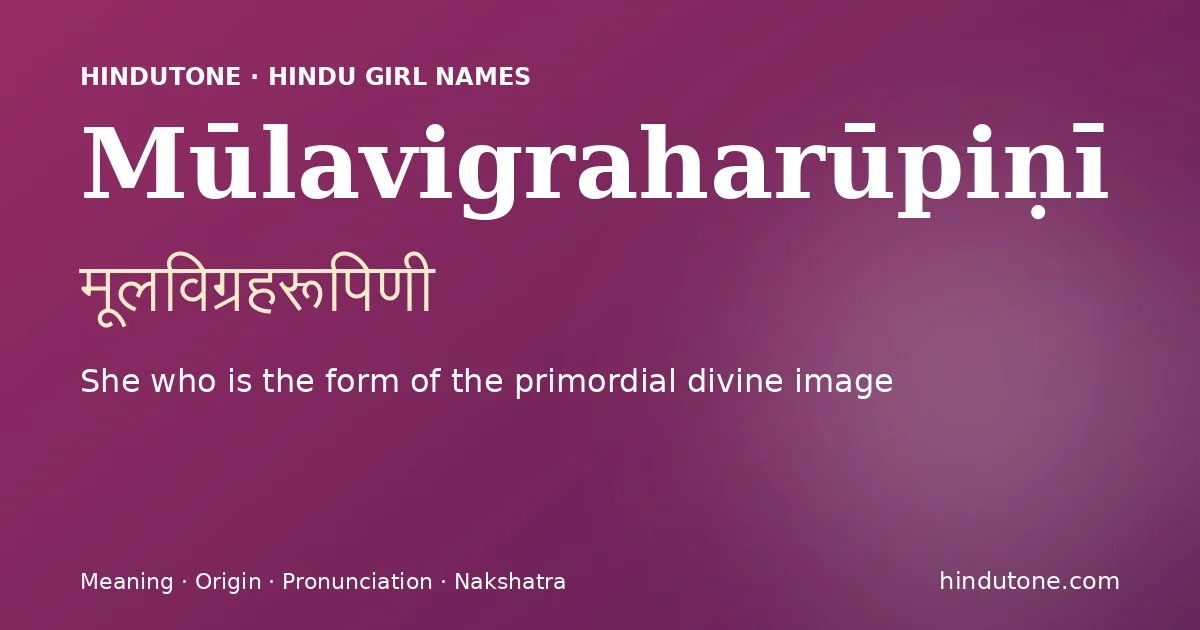
Mūlavigraharūpiṇī (मूलविग्रहरूपिणी) is a Sanskrit-origin Hindu girl-name meaning “She who is the form of the primordial divine image”. Find pronunciation, origin, deity association, popularity and similar Hindu baby names.
Mūlavigraharūpiṇī (मूलविग्रहरूपिणी) is a Sanskrit-origin Hindu girl-name meaning “She who is the form of the primordial divine image”. Find pronunciation, origin, deity association, popularity and similar Hindu baby names.
Mūlavigraharūpiṇī (मूलविग्रहरूपिणी, IAST: Mūlavigraharūpiṇī) is a Sanskrit-origin Hindu girl-name meaning “She who is the form of the primordial divine image”. From mūla ('root, primordial origin') + vigraha ('divine image, embodied form') + rūpiṇī ('she who possesses the form of'), this name declares the Goddess to be the original and ultimate embodiment of the divine, the root form from which all representations derive.
Meaning, etymology & significance
Mūla, meaning 'root' or 'original source,' joined with vigraha ('the divine form or body'), creates mūlavigraha — the primordial icon or the archetypal body of the deity from which all subsidiary manifestations branch. As Mūlavigraharūpiṇī, Lalitā is proclaimed the root-form of divinity itself: every sacred image, every consecrated idol, every divine vision is ultimately an expression of her supreme original body. This is both a cosmological and a liturgical affirmation, connecting temple worship to the highest philosophy.
In temple traditions, the mūlavigraha is the primary consecrated image in the innermost sanctum; this name honors Lalitā as the living reality of which every such image is a manifestation. Pronounced mū-la-vi-gra-ha-rū-pi-ṇī, it is a compound of significant theological richness but is too elaborate for practical use as a given name.
Scriptural source
Mūlavigraharūpiṇī appears in the Lalitha Sahasranama, among the sacred names of Lalitha.
Mūlavigraharūpiṇī — Name Facts
- Meaning
- She who is the form of the primordial divine image
- Gender
- Hindu girl name
- Nakshatra
- Magha
- Rashi
- Simha (Leo)
- Numerology
- 2
Frequently asked questions
What does the name Mūlavigraharūpiṇī mean?
Mūlavigraharūpiṇī is a Sanskrit-origin Hindu girl name meaning “She who is the form of the primordial divine image”.
Is Mūlavigraharūpiṇī a boy or girl name?
Mūlavigraharūpiṇī is traditionally a Hindu girl name.
Which nakshatra and rashi suit the name Mūlavigraharūpiṇī?
By the first-syllable rule of Vedic naming, Mūlavigraharūpiṇī aligns with the Magha nakshatra, under the Simha (Leo) rashi.
What is the numerology number of Mūlavigraharūpiṇī?
The Chaldean name number of Mūlavigraharūpiṇī is 2.
Explore more: Magha nakshatra names · Simha rashi names · Hindu girl names with M · All Hindu names A–Z