Darshan Suspended at Tirumala Temple During Lunar Eclipse
Key Highlights Temple closed today due to Lunar Eclipse Lord Venkateswara’s darshan suspended for nearly 12 hours Temple to reopen tomorrow at 3 AM TTD…
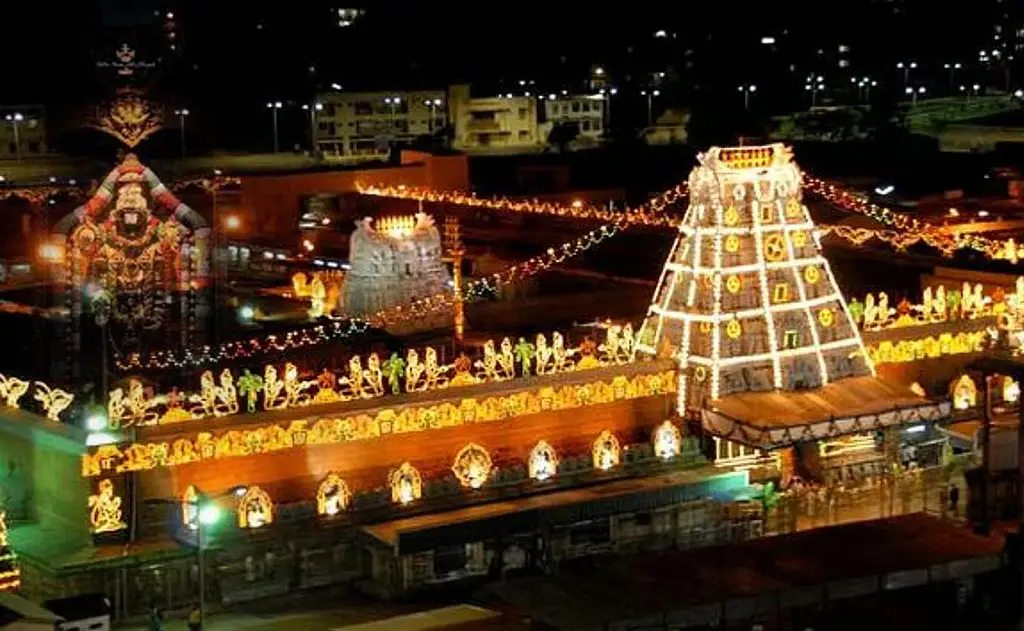
Key Highlights Temple closed today due to Lunar Eclipse Lord Venkateswara’s darshan suspended for nearly 12 hours Temple to reopen tomorrow at 3 AM TTD…
Key Highlights
- Temple closed today due to Lunar Eclipse
- Lord Venkateswara’s darshan suspended for nearly 12 hours
- Temple to reopen tomorrow at 3 AM
- TTD temporarily closed Laddu and Annadanam counters
- 50,000 Pulihora packets prepared for devotees
- 27,525 devotees had darshan today before closure
Temple Closure
Due to the lunar eclipse, the doors of the Tirumala Sri Venkateswara temple were closed on Sunday evening. As per the Agama traditions, soon after the Ekantha Seva, the golden main doors (Bangaru Vakili) were locked, marking the official closure of the temple.
As a result, darshan of the deity will remain suspended for more than 12 hours.
Reopening Time
According to Tirumala Tirupati Devasthanams (TTD):
- The temple will reopen on Monday at 3 AM.
- Rituals such as purification, Punyahavachanam and Samprokshanam will be performed.
- After completing the daily sevas privately, devotees will be allowed for darshan.
- For Sarva Darshan, devotees will be permitted into the queues from 2 AM onwards.
Other Temples & Prasadam
Along with the main temple, other sub-temples in Tirumala were also closed. In addition, the Laddu counters and Annadanam centers, which normally serve devotees continuously, have also been shut until the eclipse ends.
Special Arrangements for Devotees
To ensure devotees do not face inconvenience during the eclipse, TTD has made special arrangements:
- 50,000 Pulihora packets
- Biscuit packets
These were kept ready for distribution, officials confirmed.
Why Does a Lunar Eclipse Trigger Temple Closure According to Agama Shastra?
The closure of Tirumala's sanctum sanctorum during a lunar eclipse is not a modern administrative decision but a practice rooted in the Vaikhanasa Agama, the specific canonical tradition followed at Sri Venkateswara Temple. Agama texts classify a lunar eclipse (Chandra Grahana) as a period of cosmic impurity called Sutak or Grahana Dosha, during which the subtle energies surrounding a consecrated idol are considered susceptible to disturbance. The Vaikhanasa Agama prescribes that the deity's presence, maintained through Prana Pratishtha, must be shielded from these disturbances by closing the sanctum entirely.
The concept of Sutak holds that celestial events like eclipses create a window during which the boundary between material and subtle realms becomes porous. Temple priests and Agama scholars explain that the divine energy installed in an idol through rigorous consecration rituals can be adversely influenced during this period, making protective closure both a theological necessity and an act of devotional care toward the presiding deity, Sri Venkateswara himself.
What Are Punyahavachanam and Samprokshanam and Why Are They Performed After the Eclipse?
Punyahavachanam is a Vedic purification ritual in which consecrated water is prepared by chanting specific Suktas from the Rig Veda and Yajur Veda, then sprinkled throughout the temple premises. The word itself derives from 'Punya' (auspicious, meritorious) and 'Ahavana' (invocation), and the rite is essentially a formal declaration that the sacred space has been cleansed and rendered fit again for divine presence and devotee access.
Samprokshanam is the more elaborate re-consecration ceremony that follows, during which the idol, the Garbhagriha (inner sanctum), and the surrounding structures are ritually purified using Pancha Gavya (a mixture of five products of the cow) and specially prepared sacred water while priests chant Veda Mantras continuously. Together, these two rituals restore the Pavitrata (ritual purity) of the temple complex and signal a formal re-establishment of the divine order before regular darshan and sevas resume. At Tirumala, these procedures are conducted with great precision, often requiring several hours, which is why the 3 AM reopening follows an extended preparation window.
The Significance of Bangaru Vakili — Tirumala's Sacred Golden Doors
The Bangaru Vakili, or the golden doors of the main sanctum at Tirumala, are among the most revered structural elements of any temple in India. Positioned at the entrance to the Ananda Nilayam Vimana, these doors are plated with gold and bear intricate carvings depicting Dvara Palakas (celestial door guardians). Their closing during the eclipse is both a liturgical act and a deeply symbolic moment — the Lord, in the language of Agama tradition, is said to be 'retiring in divine seclusion.'
The closing of these doors is traditionally preceded by Ekantha Seva, a set of intimate late-night sevas that include Pavada Seva and Ashtadala Pada Padmaradhana, in which the deity is attended to privately before being left to 'rest.' The eclipse closure follows immediately after Ekantha Seva, making the transition seamless within the rhythm of the temple's daily liturgical schedule. This procedural continuity reflects the extraordinary care with which Tirumala Tirupati Devasthanams (TTD) maintains the integrity of ancient Agama practices.
Historical and Scriptural Basis for Grahana Observances in Vaishnavism
References to eclipse-related religious observances appear prominently in the Skanda Purana and the Vishnu Purana, both of which describe Grahana as occasions of heightened spiritual potency as well as ritual vulnerability. The Vishnu Purana specifically mentions that acts of worship, charity, and fasting performed during an eclipse yield results many times greater than those performed on ordinary days, a teaching that explains why large numbers of pilgrims often arrive at Tirumala in anticipation of such events.
The Mahabharata's Anushasana Parva similarly references the practice of ritual bathing in sacred rivers and lakes at the moment of Grahana Moksha, the eclipse's end, as a means of acquiring Punya. For temple worship, however, the tradition draws a clear distinction between a devotee's personal observance — which is encouraged — and the public access to a consecrated Murthi, which is suspended to protect the integrity of the installation. This scriptural distinction underlies TTD's practice of closing the temple to public darshan while continuing essential priestly functions in a protected, private format.
Pulihora as Sacred Prasadam — Its Place in Tirumala's Food Tradition
The decision to prepare 50,000 packets of Pulihora for distribution during the eclipse closure reflects a deeply rooted prasadam tradition at Tirumala. Pulihora — tamarind rice seasoned with mustard seeds, curry leaves, green chillies, and turmeric — is classified as one of the primary Naivedyam offerings at Sri Venkateswara Temple and carries the same sanctity as the more internationally famous Tirupati Laddu.
The choice of Pulihora during an eclipse period is also practically significant: unlike cooked rice or dal-based foods, Pulihora has a longer shelf life and can be prepared in bulk without quality degradation, making it ideal for large-scale distribution when normal kitchen operations like Annadanam are suspended. TTD's food preparation wing, which regularly manages feeding hundreds of thousands of pilgrims, treats the Pulihora recipe as a standardised sacred formula, ensuring consistency in taste and ritual quality across every batch prepared at Tirumala.
How Tirumala Manages Crowd Flow During Extended Darshan Suspensions
The figure of 27,525 devotees who completed darshan before the closure indicates the scale of logistics TTD manages on any given day. When a suspension of over 12 hours is announced, the primary concern shifts from facilitating entry to managing the holding capacity of Tirumala's queue complex, which includes the Vaikuntam Queue Complex 1 and 2, capable of accommodating tens of thousands of waiting pilgrims across covered, air-conditioned corridors.
TTD officials coordinate with Andhra Pradesh State Police and their own Vigilance Department to redirect incoming pilgrims at the foothills — at Alipiri and Srivari Mettu checkpoints — with real-time information about the reopening schedule. Devotees who hold pre-booked Sudarshana tokens or Special Entry Darshan slots are typically rescheduled or refunded through TTD's online portal. The 2 AM queue entry window for Sarva Darshan, announced ahead of the Monday reopening, gives pilgrims a structured timeline to plan their ascent, minimising both confusion and undue hardship on the sacred hill.
Frequently Asked Questions
Where is Darshan Suspended at Tirumala Temple During Lunar located?
Key Highlights Temple closed today due to Lunar Eclipse Lord Venkateswara ’s darshan suspended for nearly 12 hours Temple to reopen tomorrow at 3 AM TTD temporarily closed Laddu and Annadanam counters 50,000 Pulihora packets prepared for devotees 27,525 devotees had darshan today before closure Temple Closure Due to the lunar eclipse, the doors of the Tiruma
Who is the presiding deity of Darshan Suspended at Tirumala Temple During Lunar?
The temple's presiding deity and its significance are described in the guide above.
What are the timings and how do I reach Darshan Suspended at Tirumala Temple During Lunar?
Temples typically open early morning and evening; confirm current darshan timings before visiting. The nearest airport, railway station and road routes are covered in the guide above.
What is the best time to visit Darshan Suspended at Tirumala Temple During Lunar?
Major festival days and the cooler months are popular, though weekday mornings offer a calmer darshan. Plan around the temple's key festivals for the most vibrant experience.
You might also like
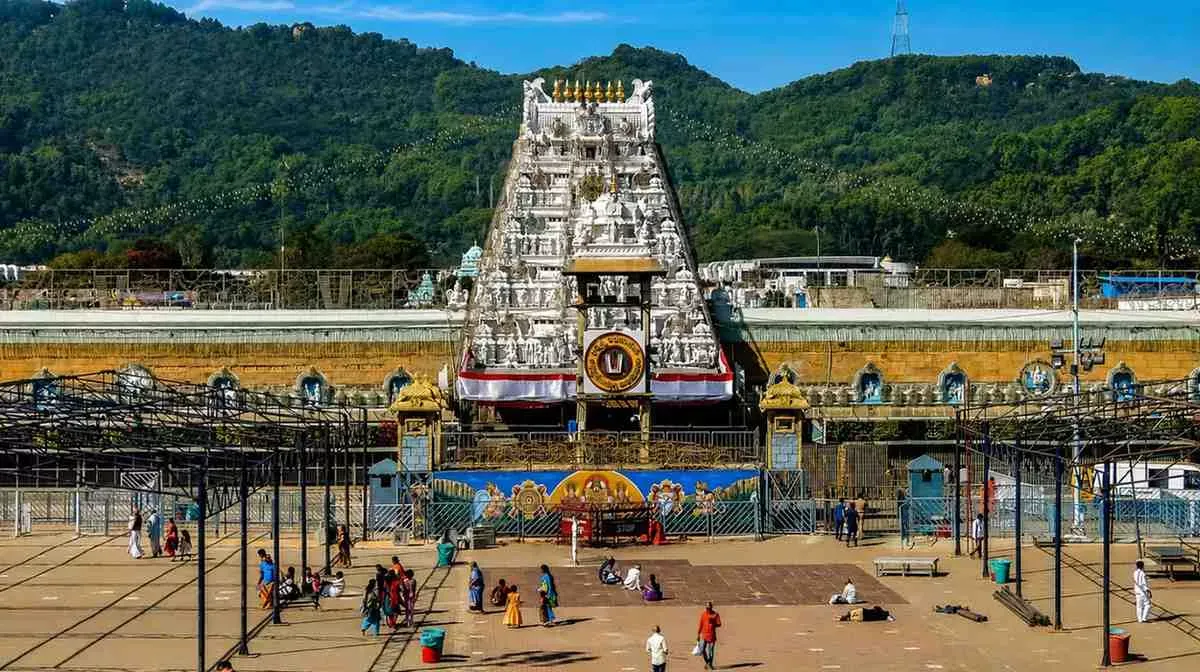
Tirumala Tirupati TTD — Complete Guide for NRIs (Darshan, Seva, Accommodation)
Anant Ambani Donates 25 Electric Buses to Tirumala TTD | ₹27.5 Crore Mahā Kānuka
Vishnu's Ten Avatars and the One Question Every NRI Child Eventually Asks