Kashi Ghats: The Complete History and Guide to All 84 Sacred Ghats of Varanasi
A complete history and guide to the sacred ghats of Kashi (Varanasi) — from Dashashwamedh and Manikarnika to Assi and Namo Ghat: their legends, royal patrons, spiritual significance and modern renewal.
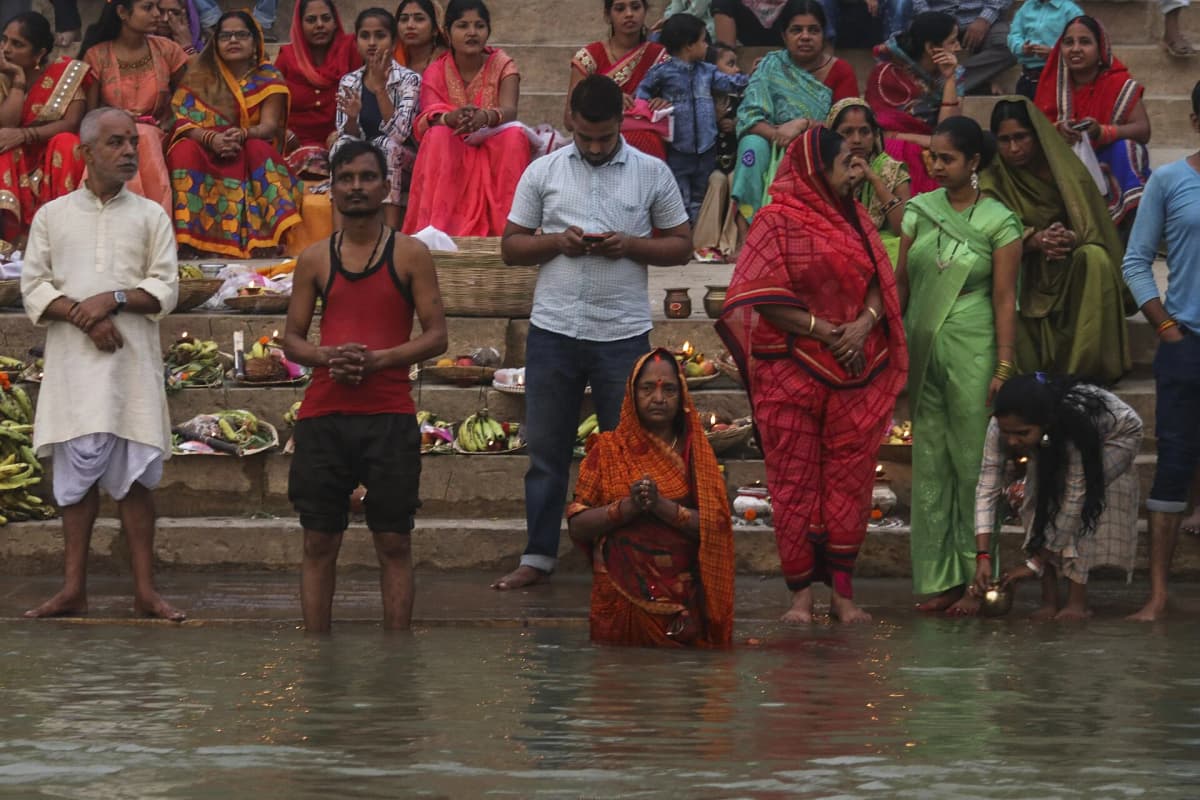
A complete history and guide to the sacred ghats of Kashi (Varanasi) — from Dashashwamedh and Manikarnika to Assi and Namo Ghat: their legends, royal patrons, spiritual significance and modern renewal.
Quick answer: The ghats of Kashi (Varanasi) are around 84 traditionally (about 88 by modern counts) stone stairways along roughly 6.5 km of the Ganga’s western bank, from Assi Ghat in the south to Adi Keshava in the north. Dashashwamedh (with its nightly Ganga Aarti) and the cremation ghat Manikarnika are the most sacred.
Few places on Earth carry the weight of unbroken sacred memory quite like the ghats of Kashi. Along a gentle curve of the Ganga’s western bank, stone steps descend into the river for nearly seven kilometres — each flight a threshold that Hindus have crossed for worship, purification and final rites for thousands of years. For the diaspora scattered across continents, the ghats of Varanasi remain one of the truest points of return.
This guide brings together the history, mythology and living significance of Kashi’s ghats — from the world-famous Dashashwamedh to the quieter steps that only locals still call by name.
Quick facts: the ghats of Kashi
| Fact | Detail |
|---|---|
| Also known as | Kashi, Banaras |
| River | Ganga (western bank only) |
| Traditional ghat count | 84 |
| Modern ghat count | ~88, and still growing |
| Waterfront length | Approximately 6.5 km |
| Southernmost / northernmost | Assi Ghat / Adi Keshava Ghat |
| Cremation ghats | 2 — Manikarnika and Harishchandra |
| Most famous ghat | Dashashwamedh Ghat |
| Signature daily ritual | Ganga Aarti, every evening at Dashashwamedh |
What does “ghat” mean?
The word ghat comes from Sanskrit and refers to a broad flight of stone steps leading down to a riverbank. In Kashi, however, a ghat is rarely just a staircase. Each one is a stage for ritual — where priests conduct puja at dawn, where families immerse the ashes of loved ones, where sadhus meditate through the afternoon heat, and where the evening aarti turns the riverfront into a wall of flame and chant.
The history of Kashi’s sacred ghats
Ancient and Vedic roots
Varanasi — known interchangeably as Kashi and Banaras — is regarded as one of the oldest continuously inhabited cities in the world, with a documented history reaching back well over 3,000 years. Hindu tradition holds that the city was founded by Lord Shiva himself, making it eternally sacred ground where even death is believed to grant moksha. Manikarnika Ghat appears in inscriptions from the Gupta period in the 5th century CE, and the riverfront is described at length in the Kashi Khand of the Skanda Purana.
The age of royal patronage
Much of what pilgrims see today — the long flights of sandstone steps, palaces, temples and towers — dates from a wave of rebuilding between the 17th and 19th centuries, as regional Hindu kingdoms competed to sponsor construction along the waterfront. Raja Man Singh of Jaipur built Man Mandir Ghat around 1600; the Peshwas of Pune rebuilt Manikarnika and Dashashwamedh; and royal houses from Gwalior, Indore, Bundi, Rewa and Mysore each commissioned their own stretch.
No single patron shaped Kashi’s ghats more than Maharani Ahilyabai Holkar of Indore, who in 1774 rebuilt Dashashwamedh Ghat in its present form, restored the Kashi Vishwanath Temple and funded repairs across the riverfront.
How many ghats does Kashi really have?
Ask ten people and you may get ten numbers — most commonly 84, though careful modern counts put the figure closer to 88, and redevelopment continues to add more. The number 84 has held special weight: Hindu tradition speaks of chaurasi lakh yoni, the 8.4 million forms of life a soul passes through before liberation, and many see an echo of that in the 84 ghats — though this belongs to folklore rather than record. The ghats form one continuous stretch of roughly 6.5 km, from Assi in the south to Adi Keshava in the north, near the Ganga–Varuna confluence that gave the city its name, Varanasi.
The major ghats of Kashi: names, legends and significance
1. Assi Ghat — where the pilgrimage begins
The southernmost of the major ghats, where the small Assi stream meets the Ganga. Legend traces its name to Goddess Durga, who flung her sword to the ground here after slaying Shumbha and Nishumbha. Today it is Varanasi’s most youthful and energetic ghat: mornings bring yoga, classical music and the Subah-e-Banaras programme.
2. Tulsi Ghat — the ghat of the Ramcharitmanas
Originally Lolark Ghat, it owes its present name to Goswami Tulsidas, who is believed to have composed portions of the Ramcharitmanas while living here. Nearby, the sacred Lolark Kund is still visited by couples seeking blessings for children.
3. Kedar Ghat — the southern Kedarnath
Described in the Kedara Khanda of the Skanda Purana, this ghat is home to the Kedareshwar Linga, regarded as a southern counterpart to the Kedarnath shrine. Its brightly painted steps and strong South Indian following make it visually distinctive.
4. Harishchandra Ghat — the ghat of eternal truth
One of only two cremation ghats, named after the legendary King Harishchandra, revered for his commitment to truth, who is said to have worked here as a cremator to keep his word. Smaller and quieter than Manikarnika, it remains an enduring symbol of dharma.
5. Dashashwamedh Ghat — the crown jewel of Kashi
Kashi’s most famous ghat takes its name from the Dashashwamedh Yajna, the ten-horse sacrifice Lord Brahma is said to have performed to welcome Shiva. Rebuilt in 1774 by Ahilyabai Holkar, it hosts the nightly Ganga Aarti — a roughly 45-minute ceremony of synchronised lamps, conch shells and chanting that is the single most recognisable image of Varanasi.
6. Manikarnika Ghat — the great cremation ground
The principal cremation ground and one of Kashi’s oldest sacred sites, the Mahashmashan, where pyres are said to have burned without interruption for centuries. Legend holds that Sati’s earring (manikarnika) fell here, and that Vishnu dug the Manikarnika Kund with his chakra. Hindus believe cremation here grants direct moksha; a 5th-century Gupta inscription already refers to the ghat.
7. Scindia Ghat — the sinking Shiva temple
Built by the Scindia rulers of Gwalior, it is instantly recognisable for its half-submerged Shiva temple, which began tilting into the Ganga soon after construction and still rests at a dramatic angle, partly underwater for much of the year.
8. Panchganga Ghat — where five rivers meet
Its name meaning “five rivers,” it marks where tradition holds the Ganga, Yamuna, Saraswati, Kirana and Dhupapapa converge. It has been sanctified by figures including Adi Shankaracharya, Sant Kabir, Tulsidas and Guru Nanak.
9. Man Mandir Ghat — Rajput splendour and the stars
Raja Man Singh of Jaipur built this ghat around 1600, with some of the finest Rajput architecture on the riverfront. In the 1730s, Sawai Jai Singh II added a Jantar Mantar observatory here, its instruments still visible today.
10. Chet Singh Ghat — the warrior’s ghat
Named for Raja Chet Singh, an 18th-century ruler of Varanasi; the ghat and its fort were the site of a dramatic 1781 confrontation with the British East India Company under Warren Hastings.
11. Ahilyabai Ghat — a queen’s legacy
Built under Ahilyabai Holkar between roughly 1778 and 1785, beside Dashashwamedh; a popular launching point for boat rides and some of the most photographed sunrise views of the waterfront.
12. Namo Ghat — Kashi’s newest chapter
The newest addition, built on the site formerly known as Khidkiya Ghat and completed in November 2024 under the Smart City programme, with a cruise-boat jetty, amphitheatre and sculptures — proof that Kashi’s waterfront is still being written.
Other notable ghats along the waterfront
- Raj Ghat and Adi Keshava Ghat — near the Ganga–Varuna confluence in the north
- Lalita Ghat and Jalasen Ghat — close to Manikarnika, linked by the Kashi Vishwanath Corridor
- Mir Ghat, Bhonsale Ghat and Darbhanga Ghat — built by regional royal families
- Rana Mahal Ghat and Munshi Ghat — known for palace-like architecture
- Trilochan Ghat and Gai Ghat — among the older, quieter ghats
- Shivala, Bhadaini and Ganga Mahal Ghats — extending south toward Assi; Rajendra Prasad Ghat by Dashashwamedh
Why the ghats matter: spiritual and cultural significance
For Hindus, the Kashi ghats are living sites of ritual. Bathing in the Ganga here is believed to cleanse sin; dying here is believed to grant moksha; and the daily rhythm — dawn puja, afternoon meditation, evening aarti and round-the-clock cremation at Manikarnika and Harishchandra — enacts the Hindu understanding of life, death and liberation in a single continuous scene. Many families, including in the diaspora, travel here specifically to perform pind daan and tarpan for their ancestors. Dev Deepawali on Kartik Purnima lights the whole waterfront with hundreds of thousands of lamps.
Kashi’s ghats in the modern era
The Shri Kashi Vishwanath Corridor, inaugurated in December 2021, cleared dense construction to create a direct pedestrian route linking the temple to the ghats at Lalita and Manikarnika. In November 2024, the historic Khidkiya Ghat reopened as Namo Ghat. In 2026, the Union Cabinet approved a further Ganga Elevated Corridor with a cable-stayed bridge to cut travel time to the ghats — signalling one of the waterfront’s most ambitious periods of renewal since the age of Ahilyabai Holkar.
Best time to visit the Kashi ghats
October to March offers the most comfortable weather for exploring the ghats on foot. Sunrise is widely considered the best time to experience the waterfront, and the evening Ganga Aarti at Dashashwamedh is the must-see ritual, best watched from the steps or a boat. Travellers planning pind daan or tarpan typically consult a local Kashi purohit in advance; a visit during Dev Deepawali (Kartik Purnima, usually November) offers a once-in-a-lifetime view of every ghat lit at once.
Frequently Asked Questions
How many ghats are there in Varanasi?
Traditionally, Varanasi is said to have 84 ghats, though modern counts range from about 84 to 88, with continuing redevelopment adding new ones such as Namo Ghat.
Which is the most famous ghat in Kashi?
Dashashwamedh Ghat is the most famous and most visited, largely because of its location next to the Kashi Vishwanath Temple and its nightly Ganga Aarti.
Why is Manikarnika Ghat considered so sacred?
Manikarnika is Kashi’s principal cremation ground, and Hindus believe that being cremated there grants moksha, liberation from the cycle of rebirth. It is also tied to legends involving Sati and Vishnu.
What is the best time to watch the Ganga Aarti?
The Ganga Aarti at Dashashwamedh Ghat begins around sunset — roughly 6 PM in winter and 7 PM in summer — and runs for about 45 minutes.
Can tourists visit the cremation ghats?
Yes, both Manikarnika and Harishchandra Ghats can be observed respectfully from a distance, but photography of cremations is not permitted, and visitors are expected to remain quiet and respectful.
Which is the oldest ghat in Varanasi?
Manikarnika Ghat is generally regarded as the oldest, referenced in a 5th-century Gupta-era inscription, though the riverfront itself has been a pilgrimage site since far earlier.
How are the ghats connected to the Kashi Vishwanath Temple today?
Since the completion of the Kashi Vishwanath Corridor in December 2021, a direct four-lane pedestrian path connects the temple to the ghats at Lalita and Manikarnika.
What are the two cremation ghats of Kashi?
The two cremation ghats are Manikarnika, the great Mahashmashan, and the smaller, quieter Harishchandra Ghat named after the truth-keeping king Harishchandra.
You might also like

Pahalgam Route Amarnath Yatra: A Complete Day-by-Day Pilgrim's Guide

Baltal Route Amarnath Yatra: A Complete Day-by-Day Pilgrim's Guide
Amarnath Yatra: A Complete Day-by-Day Itinerary for First-Time Pilgrims (Both Routes)