Ekadasa Rudrabhishekam: Complete Guide to Benefits, Procedure & Significance
What is Ekadasa Rudrabhishekam? Ekadasa Rudrabhishekam is a powerful Vedic ritual dedicated to Lord Shiva, where sacred abhishekam (ritual bathing) is…
What is Ekadasa Rudrabhishekam? Ekadasa Rudrabhishekam is a powerful Vedic ritual dedicated to Lord Shiva, where sacred abhishekam (ritual bathing) is…
What is Ekadasa Rudrabhishekam?
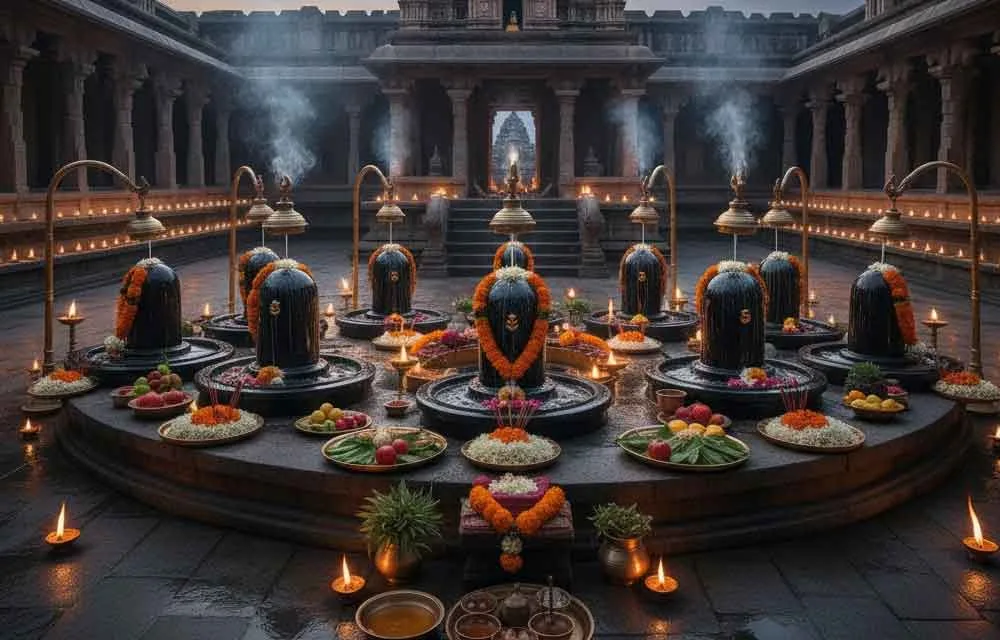
Ekadasa Rudrabhishekam is a powerful Vedic ritual dedicated to Lord Shiva, where sacred abhishekam (ritual bathing) is performed eleven times on the Shiva Lingam. The term "Ekadasa" means eleven in Sanskrit, and "Rudra" is a fierce form of Lord Shiva. This ancient ceremony is performed to invoke the divine blessings of the eleven Rudras, who are manifestations of Lord Shiva's cosmic energy.
This sacred ritual holds immense spiritual significance in Hindu tradition and is believed to remove obstacles, bestow prosperity, and grant peace to devotees. Performing Ekadasa Rudrabhishekam is considered one of the most auspicious ways to worship Lord Shiva and seek his divine grace.
The Eleven Rudras: Understanding Their Significance
According to Hindu scriptures, particularly the Vedas and Puranas, the eleven Rudras represent different aspects of Lord Shiva's divine power:
- Kapali - Destroyer of evil
- Pingala - The golden one
- Bhima - The terrifying
- Virupaksha - Of distorted eyes
- Vilohita - The blood-red one
- Shastra - Destroyer through weapons
- Ajapada - The unborn-footed
- Ahirbudhnya - Serpent of the deep
- Shambhu - The benevolent
- Chanda - The fierce
- Bhava - The existence
Each Rudra embodies specific cosmic energies and performing abhishekam to all eleven invokes complete divine protection and blessings.
Powerful Benefits of Ekadasa Rudrabhishekam
Spiritual Benefits
Removal of Negative Karma: The ritual helps cleanse past karmic debts and purifies the soul, creating a path for spiritual evolution and inner peace.
Enhanced Meditation Practice: Regular participation in this ceremony strengthens concentration and deepens meditation experiences, bringing devotees closer to divine consciousness.
Spiritual Protection: Creates a protective shield against negative energies, evil eye, and spiritual obstacles that hinder one's spiritual journey.
Inner Transformation: Awakens dormant spiritual energies within, leading to profound self-realization and connection with the higher self.
Material and Worldly Benefits
Prosperity and Wealth: Invoking Lord Shiva's blessings through this ritual attracts abundance, financial stability, and material success in life.
Career Success: Removes obstacles in professional life, brings recognition at work, and opens doors to new opportunities and growth.
Health and Healing: The sacred vibrations generated during the ceremony promote physical healing, mental wellness, and overall vitality.
Family Harmony: Resolves family disputes, strengthens relationships, and brings peace and unity to the household.
Protection from Enemies: Shields devotees from adversaries, legal troubles, and harmful intentions of others.
Specific Life Areas Improved
- Marriage and Relationships: Helps find suitable life partners and strengthens marital bonds
- Education: Enhances learning abilities, memory, and academic success
- Business Growth: Removes business obstacles and attracts customers
- Mental Peace: Reduces anxiety, stress, and depression
- Debt Relief: Assists in overcoming financial burdens and loans
Ekadasa Rudrabhishekam Procedure: Step-by-Step Guide
Pre-Ritual Preparations
1. Fasting and Purification: Devotees should observe a fast or eat sattvic (pure) food before the ceremony. Take a purifying bath early in the morning.
2. Sankalpa (Sacred Intention): Begin by taking a sankalpa, stating your name, gotra (lineage), and the specific purpose for performing the ritual.
3. Gathering Materials: Ensure all necessary items are arranged, including:
- Fresh water from sacred sources
- Milk, yogurt, honey, ghee, and sugar (Panchamrit)
- Flowers (especially white flowers and Bilva leaves)
- Sacred ash (Vibhuti)
- Sandalwood paste
- Fruits and coconut
- Incense and camphor
- Sacred thread and new cloth
The Main Ritual Process
Step 1: Invocation (Avahana) The priest begins by invoking Lord Ganesha to remove obstacles, followed by invoking the eleven Rudras and establishing their presence in the Shiva Lingam.
Step 2: Eleven Sacred Abhishekams Each of the eleven abhishekams is performed with specific sacred substances:
- Water Abhishekam: Purifies and cleanses all sins
- Milk Abhishekam: Grants purity and sattvic qualities
- Yogurt Abhishekam: Brings progeny and family prosperity
- Honey Abhishekam: Provides sweetness in speech and relationships
- Ghee Abhishekam: Bestows knowledge and victory
- Sugar/Jaggery Abhishekam: Removes enemies and obstacles
- Panchamrit Abhishekam: Grants all-round prosperity
- Coconut Water Abhishekam: Fulfills desires
- Fruit Juice Abhishekam: Provides health and longevity
- Sugarcane Juice Abhishekam: Brings happiness and joy
- Sacred Water Abhishekam: Final purification and blessings
Step 3: Rudrabhishekam Mantras Throughout the ceremony, the priest chants powerful Vedic mantras including:
- Rudra Sukta from Yajurveda
- Namakam and Chamakam
- Laghu Nyasam
- Maha Mrityunjaya Mantra
Step 4: Alankaram (Decoration) After abhishekam, the Shiva Lingam is decorated with fresh flowers, especially Bilva leaves, sandalwood paste, and sacred ash.
Step 5: Arati and Prasad Distribution The ritual concludes with arati (waving of lights), distribution of prasad (sanctified food), and blessings to all devotees present.
Best Days to Perform Ekadasa Rudrabhishekam
The ritual can be performed on any auspicious day, but certain days are considered especially powerful:
- Mondays: Lord Shiva's sacred day
- Pradosham Days: 13th day of lunar fortnight (twice monthly)
- Shivaratri: Monthly and Maha Shivaratri (most auspicious)
- Solar and Lunar Eclipses: Highly powerful times
- Shravan Month: Entire month sacred to Lord Shiva (July-August)
- Personal Birth Nakshatra Days: For specific personal benefits
Who Should Perform Ekadasa Rudrabhishekam?
This sacred ritual is beneficial for:
- Those facing repeated obstacles in life
- Individuals suffering from chronic health issues
- People experiencing financial difficulties
- Those seeking marriage or family harmony
- Students preparing for important examinations
- Business owners seeking growth and protection
- Anyone desiring spiritual growth and peace
- Those under the influence of malefic planetary positions
- Individuals seeking relief from ancestral curses (Pitru Dosha)
Cost and Duration
The duration of Ekadasa Rudrabhishekam typically ranges from 2 to 4 hours, depending on the complexity of the ritual and the number of priests involved.
The cost varies based on:
- Location and temple
- Number of priests (1 to 11 priests for elaborate ceremonies)
- Quality and quantity of materials used
- Additional rituals requested
Devotees can perform this ritual at home, in temples, or at sacred Shiva sites across India.
Famous Temples for Ekadasa Rudrabhishekam in India
- Kashi Vishwanath Temple, Varanasi - One of the twelve Jyotirlingas
- Rameshwaram Temple, Tamil Nadu - Sacred island temple
- Somnath Temple, Gujarat - First among the Jyotirlingas
- Mahakaleshwar Temple, Ujjain - Famous for its Bhasma Arti
- Kedarnath Temple, Uttarakhand - Himalayan abode of Shiva
- Srikalahasti Temple, Andhra Pradesh - Famous for Rahu-Ketu pooja
- Thiruvannamalai Temple, Tamil Nadu - Shiva as the element of fire
- Omkareshwar Temple, Madhya Pradesh - Sacred island Jyotirlinga
Frequently Asked Questions
Can Ekadasa Rudrabhishekam be performed at home? Yes, with proper guidance from a qualified priest and appropriate arrangements, this ritual can be performed at home using a Shiva Lingam or picture.
How often should one perform this ritual? It can be performed weekly, monthly, on special occasions, or as recommended by an astrologer based on individual horoscope.
Is it necessary to be physically present? While physical presence enhances the spiritual experience, many temples offer the option to perform the ritual on your behalf with your sankalpa.
What should devotees do after the ritual? Maintain a sattvic lifestyle, continue daily prayers, chant Shiva mantras, and practice meditation to sustain the positive energies invoked.
Conclusion: Embrace Divine Blessings Through Ekadasa Rudrabhishekam
Ekadasa Rudrabhishekam stands as one of the most powerful rituals in Hindu tradition for invoking Lord Shiva's complete blessings. Whether you seek spiritual enlightenment, material prosperity, health, or protection, this sacred ceremony offers a comprehensive path to divine grace.
The eleven-fold abhishekam creates tremendous positive vibrations that transform not just the individual but their entire environment. By surrendering to Lord Shiva through this ancient Vedic practice, devotees open themselves to infinite possibilities and divine intervention in all aspects of life.
For those seeking to deepen their spiritual practice or resolve challenging life situations, performing Ekadasa Rudrabhishekam under proper guidance can be a life-changing experience. The blessings of the eleven Rudras bring protection, prosperity, and peace that endure across lifetimes.
Om Namah Shivaya
For more information on Hindu rituals, festivals, and spiritual practices, visit www.hindutone.com - your complete guide to Hindu dharma and traditions.
Related Articles
- Maha Rudrabhishekam Complete Guide
- 108 Names of Lord Shiva (Ashtottara Shatanamavali)
- Shivaratri Vrat Katha and Rituals
- Benefits of Chanting Maha Mrityunjaya Mantra
- Significance of Bilva Patra in Shiva Worship
You might also like
Om Namah Shivaya: 108 Times Chanting Benefits & Method — Complete Panchakshara Mantra Guide

The Twelve Jyotirlingas of Lord Shiva: A Complete Pilgrim's Guide Across India
Bhaja Govindam: Adi Shankaracharya's Most Beloved Philosophical Hymn — Complete Guide to 31 Verses