Hartalika Teej: Celebrating Feminine Strength and Marital Bliss
Hartalika Teej is a vibrant Hindu festival celebrated with fervor, particularly in North India, to honor the divine union of Goddess Parvati and Lord Shiva.
Hartalika Teej is a vibrant Hindu festival celebrated with fervor, particularly in North India, to honor the divine union of Goddess Parvati and Lord Shiva. This sacred occasion, observed on the third day of the bright half of the lunar month of Bhadrapada (August or September), is a testament to feminine strength, devotion, and the sanctity of marriage. Married women observe fasts, perform rituals, and pray for the long life and prosperity of their husbands, while unmarried women seek blessings for a harmonious marital life. This article explores the legends, rituals, traditional attire, mehndi designs, and fasting recipes associated with Hartalika Teej, offering a comprehensive guide for devotees and enthusiasts.
The Legend of Hartalika Teej
The festival of Hartalika Teej is deeply rooted in Hindu mythology, centered around the unwavering devotion of Goddess Parvati to Lord Shiva. According to legend, Parvati, the daughter of King Himavat, was determined to marry Lord Shiva despite her father's wish for her to wed Lord Vishnu. To escape an unwanted marriage, Parvati sought the help of her friend, who hid her in a dense forest (the term "Hartalika" is derived from "Harat," meaning abduction, and "Aalika," meaning friend).
In the forest, Parvati performed severe penance to win Lord Shiva’s heart. She crafted a shivalinga from sand and worshipped it with utmost devotion, fasting and meditating for days. Moved by her dedication, Lord Shiva appeared before her and accepted her as his consort. This divine union symbolizes love, sacrifice, and perseverance, making Hartalika Teej a celebration of feminine strength and devotion.
Another tale associated with the festival highlights Parvati’s role as a symbol of marital bliss. It is believed that women who observe the Hartalika Teej fast with sincerity are blessed with a happy and enduring marriage, mirroring the eternal bond between Shiva and Parvati.
Rituals of Hartalika Teej
Hartalika Teej is marked by a series of rituals that reflect devotion, discipline, and community bonding. The key rituals include:
- Nirjala Fasting: Married women observe a strict fast without water or food (nirjala vrat) from sunrise to sunset, praying for their husband’s longevity and prosperity. Unmarried women also fast to seek a virtuous partner.
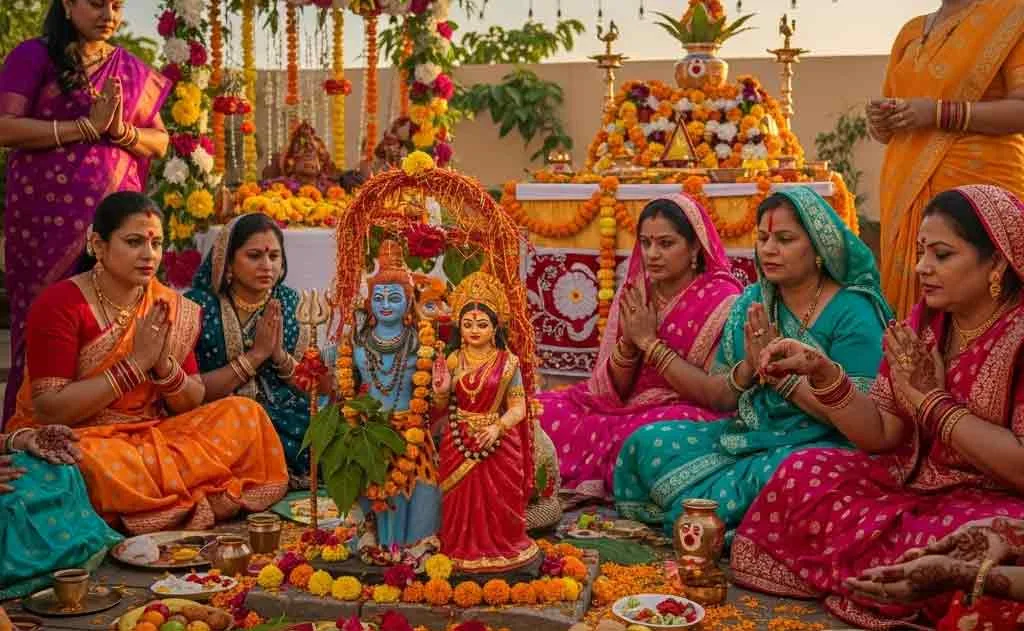
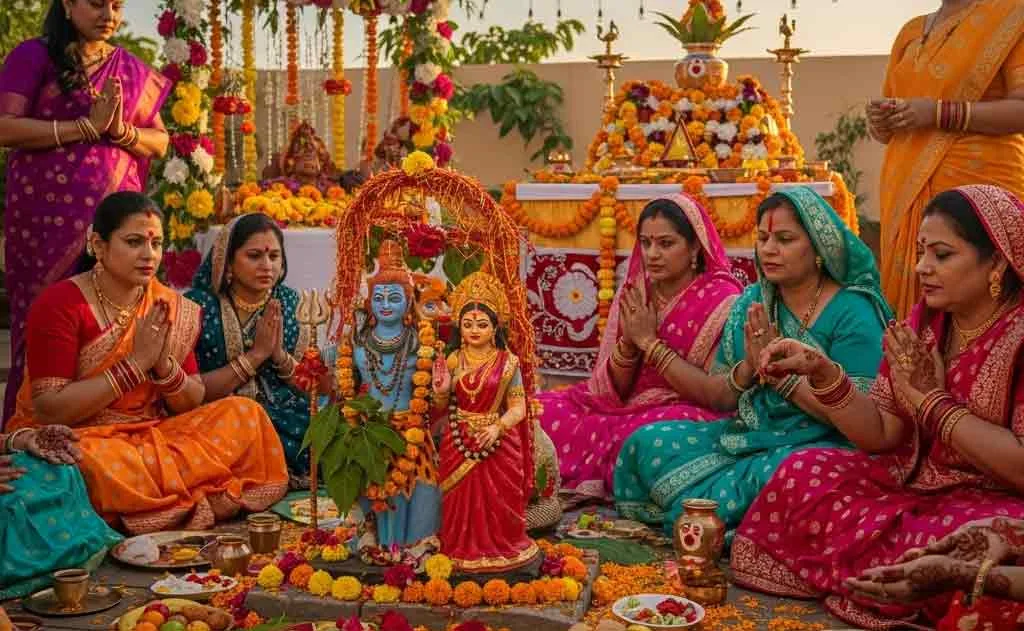
- Puja and Worship: Women wake up early, bathe, and wear traditional attire. They create a small shivalinga using clay or sand and offer prayers to Lord Shiva and Goddess Parvati. The puja includes offerings of flowers, fruits, sweets, and incense, accompanied by the recitation of the Hartalika Teej Vrat Katha (story).
- Community Gatherings: Women gather in groups to sing devotional songs, share stories, and apply mehndi. These gatherings strengthen social bonds and create a festive atmosphere.
- Breaking the Fast: The fast is broken after sunset, typically after performing the evening puja. Women offer food to the deities and share it with family members.
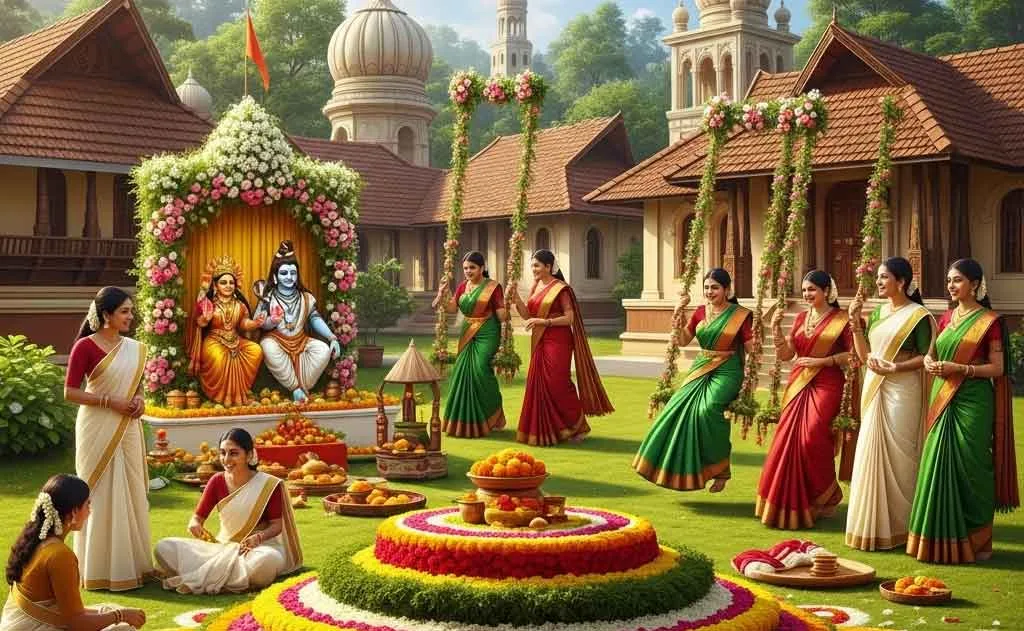
- Swing Rituals: Decorated swings (jhoolas) are set up, symbolizing joy and festivity. Women enjoy swinging while singing traditional Teej songs.
These rituals embody the spirit of devotion, sacrifice, and celebration, making Hartalika Teej a cherished occasion.
Traditional Attire for Hartalika Teej
Dressing up in traditional attire is an integral part of Hartalika Teej, as it enhances the festive spirit and pays homage to cultural heritage. Women adorn themselves in vibrant, elegant outfits that reflect the richness of Indian traditions. Here are some ideas for traditional attire:
- Sarees: A silk saree, such as a Banarasi, Kanjeevaram, or Chanderi, is a popular choice. Opt for bright colors like red, green, or gold, which symbolize prosperity and marital bliss. Embroidered sarees with zari or mirror work add a festive touch.
- Lehengas: A heavily embellished lehenga choli with intricate embroidery or sequins is ideal for younger women. Pair it with a matching dupatta and traditional jewelry for a regal look.
- Salwar Kameez: A richly decorated Anarkali suit or a traditional Punjabi suit in vibrant hues like pink, maroon, or turquoise complements the festive vibe.
- Accessories: Complete the look with gold or kundan jewelry, including jhumkas (earrings), maang tikka (forehead ornament), bangles, and anklets. A bindi and sindoor (vermilion) are essential for married women.
- Footwear: Embroidered juttis or mojris in metallic shades like gold or silver enhance the traditional ensemble.
The attire is often chosen to reflect regional styles, with women in Rajasthan favoring bandhani prints and those in Uttar Pradesh opting for chikankari embroidery.
Mehndi Designs for Hartalika Teej
Applying mehndi (henna) is a significant tradition during Hartalika Teej, symbolizing love, prosperity, and good fortune. Women adorn their hands and feet with intricate henna designs, often incorporating motifs that reflect the festival’s themes. Here are some popular mehndi design ideas:
- Traditional Indian Designs: These feature intricate paisley patterns, floral motifs, and peacock designs, which symbolize beauty and grace. The designs often extend from the fingertips to the forearms for a dramatic effect.
- Shiva-Parvati Motifs: To honor the divine couple, some women incorporate symbols like shivalingas, tridents, or Om symbols into their mehndi designs. These add a spiritual touch to the artwork.
- Arabic Mehndi: For a modern twist, Arabic-style mehndi with bold floral patterns and minimalistic designs is a popular choice. These designs are quicker to apply and suit women who prefer simpler patterns.
- Bridal-Style Mehndi: Elaborate bridal designs with detailed patterns covering the hands and feet are chosen by some women to celebrate the festival’s marital significance.
- Minimalist Designs: For those who prefer subtlety, simple circular patterns or small floral motifs on the palms or fingers create an elegant look.
To enhance the mehndi experience, women often gather in groups, sharing stories and singing Teej songs while professional artists apply the designs. Using natural henna cones ensures a rich, dark stain that lasts for days.
Fasting Recipes for Hartalika Teej
While the nirjala fast involves abstaining from food and water, women prepare light, sattvic (pure) meals to break their fast or for family members. These recipes are simple, nutritious, and adhere to the festival’s spiritual ethos. Here are some fasting-friendly recipes:
1. Sabudana Khichdi
A popular fasting dish made from sago pearls, this recipe is light yet filling.
Ingredients:
- 1 cup sabudana (sago pearls), soaked for 4-5 hours
- 1 medium potato, boiled and cubed
- 2 tbsp peanuts, roasted and coarsely ground
- 1 green chili, finely chopped
- 1 tsp cumin seeds
- 2 tbsp ghee
- Rock salt (sendha namak) to taste
- Fresh coriander leaves for garnish
Method:
- Drain the soaked sabudana and set aside.
- Heat ghee in a pan, add cumin seeds, and let them splutter.
- Add green chili and boiled potato cubes, sautéing for 2-3 minutes.
- Add sabudana and roasted peanuts, mixing gently.
- Cook on low heat for 5-7 minutes, stirring occasionally, until the sabudana turns translucent.
- Season with rock salt and garnish with coriander leaves. Serve warm.
2. Kuttu Ki Puri
Buckwheat flour puris are a staple during fasting, offering a crispy and flavorful option.
Ingredients:
- 1 cup kuttu ka atta (buckwheat flour)
- 1 medium potato, boiled and mashed
- Rock salt to taste
- Water as needed
- Ghee for frying
Method:
- In a bowl, mix kuttu ka atta, mashed potato, and rock salt.
- Gradually add water to form a firm dough.
- Divide the dough into small balls and roll them into puris.
- Heat ghee in a pan and fry the puris until golden and crisp.
- Serve with a fasting-friendly curry, such as aloo tamatar sabzi.
3. Fruit Salad with Yogurt
A refreshing and light option to break the fast, this fruit salad is both healthy and delicious.
Ingredients:
- 1 cup mixed fruits (banana, apple, pomegranate, etc.)
- 1 cup fresh yogurt
- 1 tbsp honey (optional)
- A pinch of rock salt
- A handful of chopped nuts (almonds, cashews)
Method:
- Chop the fruits into bite-sized pieces and place them in a bowl.
- Add yogurt and mix gently to coat the fruits.
- Drizzle honey (if using) and sprinkle rock salt for flavor.
- Garnish with chopped nuts and serve chilled.
These recipes are easy to prepare and align with the fasting guidelines, ensuring that women can break their fast with wholesome, sattvic food.
Conclusion
Hartalika Teej is a beautiful celebration of feminine strength, devotion, and the sacred bond of marriage. Through its legends, rituals, and traditions, the festival honors the divine love story of Goddess Parvati and Lord Shiva, inspiring women to embody resilience and dedication. By donning traditional attire, applying intricate mehndi designs, and preparing fasting-friendly recipes, women across India celebrate this auspicious occasion with joy and reverence. Whether you’re observing the fast or participating in the festivities, Hartalika Teej offers an opportunity to connect with cultural roots and celebrate the power of love and devotion.
For more insights into Hindu festivals and traditions, visit www.hindutone.com.
Frequently Asked Questions
When is Hartalika Teej observed?
It falls on the third day of the bright half of the lunar month of Bhadrapada, in August or September. The exact date follows the Hindu calendar, so check your local panchang.
Why is the festival called Hartalika Teej?
As commonly told, the name comes from Harat, meaning abduction, and Aalika, meaning friend. Parvati's friend hid her in a dense forest so she would not be married to Lord Vishnu against her wish.
How do women observe the Hartalika Teej fast?
Married women keep a strict nirjala fast, without food or water, from sunrise to sunset for their husband's longevity. Unmarried women also fast to seek a virtuous partner, and the fast is broken after the evening puja.
What is the puja ritual on Hartalika Teej?
Women wake early, bathe, wear traditional attire and make a small shivalinga from clay or sand. They offer flowers, fruits, sweets and incense to Shiva and Parvati and recite the Hartalika Teej Vrat Katha.
What can be eaten to break the Hartalika Teej fast?
Light sattvic dishes are prepared, such as sabudana khichdi, kuttu ki puri with aloo tamatar sabzi, and fruit salad with yogurt. Rock salt is used instead of regular salt.
Why do women apply mehndi and use swings on Teej?
Mehndi symbolizes love, prosperity and good fortune, and some designs include shivalingas, tridents or Om symbols. Decorated swings (jhoolas) symbolize joy, and women sing Teej songs while swinging.
Share this with family and friends
Send it on WhatsApp, post it, or copy the link.