
Hindu Priest Jobs Singapore 2026 — Pandit Vacancies at Sri Mariamman, Tank Road & Major Temples
Hindu priest jobs Singapore 2026 — Sri Mariamman, Tank Road, Sri Veeramakaliamman vacancies. Hindu Endowments Board hiring, S Pass religious worker, salaries.
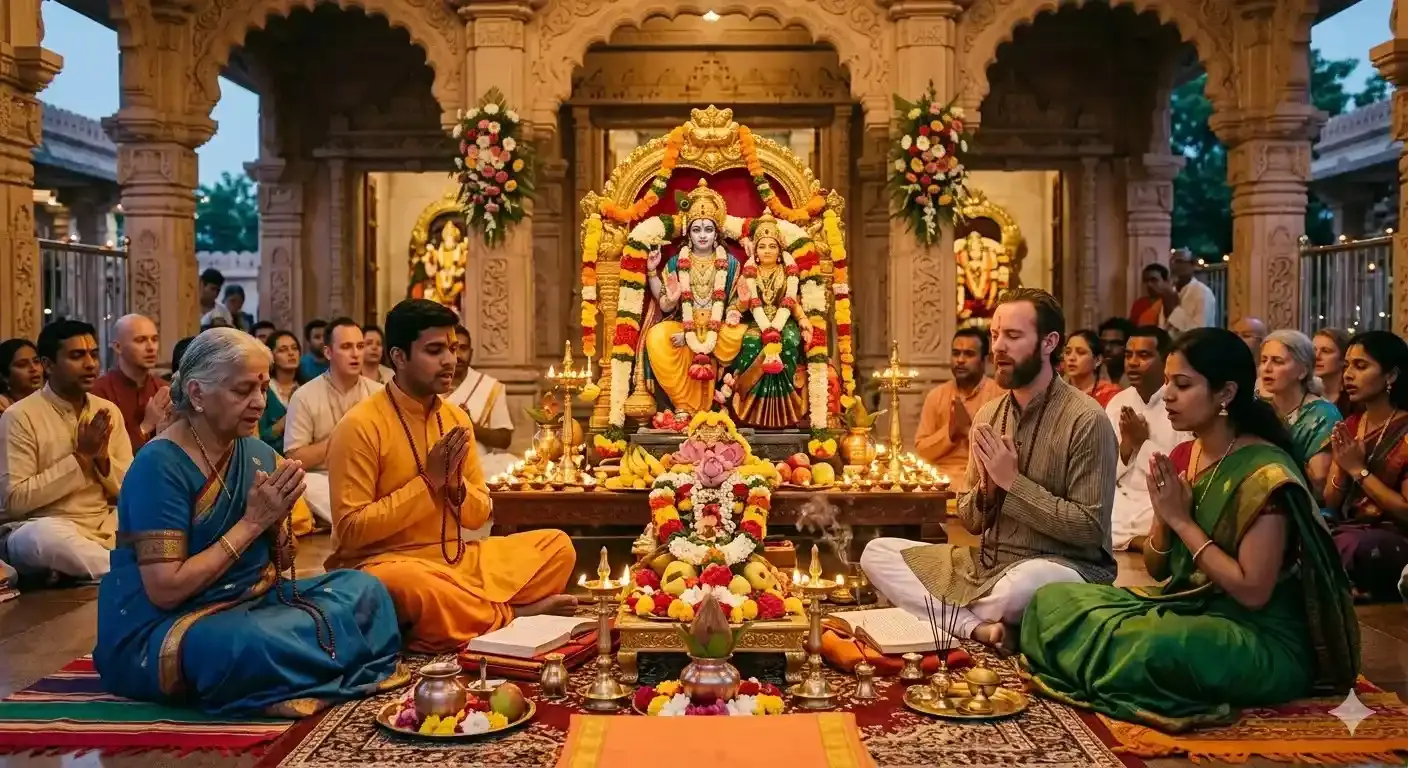
Hindu priest jobs Singapore 2026 — Sri Mariamman, Tank Road, Sri Veeramakaliamman vacancies. Hindu Endowments Board hiring, S Pass religious worker, salaries.
Quick Answer: Singapore has an established Hindu temple infrastructure managed substantially by the Hindu Endowments Board (HEB) — a Singapore government statutory board overseeing major Hindu temples. Active hiring of qualified priests occurs at Sri Mariamman Temple (Singapore's oldest, 1827), Sri Veeramakaliamman Temple, Sri Thendayuthapani Temple (Tank Road), Sri Srinivasa Perumal Temple, Sri Krishnan Temple, and other community temples. Annual salary typically ranges SGD 35,000-75,000 (gross), with high cost-of-living considerations. Singapore's religious-worker visa pathway is structured through Hindu Endowments Board sponsorship and Ministry of Manpower work pass systems. Tamil-tradition priests dominate the established positions; growing demand exists for Telugu, Hindi, and Bengali-tradition priests for the recent professional migrant community.
The Singapore Hindu Temple Infrastructure
Hindu Endowments Board (HEB) — Government-Managed Temples
Singapore's unique feature is that major Hindu temples are managed by HEB, a statutory board of the Singapore government. HEB-managed temples receive government funding and operational support; their priest positions are formally administered.
HEB-managed temples:
- Sri Mariamman Temple, South Bridge Road — National Monument; major hiring
- Sri Veeramakaliamman Temple, Serangoon Road — Little India anchor
- Sri Srinivasa Perumal Temple, Serangoon Road
- Sri Krishnan Temple, Waterloo Street
- Sri Vairavimadakali Amman Temple, Toa Payoh
Non-HEB Temples (Privately Managed)
- Sri Thendayuthapani Temple, Tank Road (Chettiars' Temple) — major Murugan temple, privately managed by Chettiar community
- Sri Sivan Temple, Geylang East
- Sri Murugan Temple, Sengkang
- ISKCON Singapore, Sembawang
- Multiple smaller Hindu temples across Singapore
Required Qualifications
Sanskrit / Tamil Vedic Training
- 5-10 years formal Vedapatashala or Tamil-specialist agama training
- Sanskrit fluency for puja recitation
- Tamil mother-tongue or fluency essential for traditional South Indian temple roles
- Major puja capability: Mariamman puja, Theemithi (fire-walking) preparation, Thaipusam rituals, Murugan worship, wedding ceremonies
Tradition-specific expertise
- Tamil Hindu temples: deep Tamil-Vaishnav or Tamil-Shaiva training expected
- North Indian temples / ISKCON: Vaishnava sampradaya training
- Multi-tradition community pujas: flexibility across regional Hindu practices
Language requirements
- Native Tamil fluency for Tamil temple positions
- Basic conversational English essential (Singapore is English-medium for civic life)
- Mandarin understanding helpful but not required
Personal qualifications
- Strong references from senior Indian/Sri Lankan teachers
- Clean background for Singapore work pass
- Cultural fit with Singapore Indian Hindu community (which includes Tamil, Telugu, North Indian, Bengali sub-communities)
- 5+ year commitment typically expected
Singapore Work Pass Pathway
Employment Pass (EP)
- For higher-skilled priests (senior priests, head priests with major qualifications)
- Minimum monthly salary SGD 5,500 (2026 threshold)
- 2-year initial, renewable
- Linked to specific employer
S Pass
- For mid-skilled priests
- Minimum monthly salary SGD 3,000+
- 2-year initial, renewable
Work Permit
- For lower-tier roles
- Various conditions
- Limited path to long-term residence
Religious Worker Specifics
Singapore does NOT have a specific "religious worker" visa category like the US R-1. Hindu priests typically enter on EP or S Pass — the Hindu Endowments Board's sponsorship facilitates this.
Path to Permanent Residence (PR)
- Singapore PR available after 2-5 years on work pass
- Highly competitive; not guaranteed
- Generally easier for those married to Singapore citizens
Path to Citizenship
- Available 2-3 years after PR
- Singapore does NOT allow dual citizenship — priests would need to renounce Indian citizenship
- Many priests remain PR rather than naturalising
Salaries and Benefits 2026
Annual gross salary (varies by temple size, role, qualifications)
- Junior priest: SGD 35,000-45,000
- Mid-career priest: SGD 45,000-60,000
- Senior priest / head priest at HEB temple: SGD 60,000-75,000+
Note: Singapore's high cost of living (housing especially) significantly affects take-home value of these salaries.
Benefits
- Accommodation — typically temple-provided or housing allowance
- Healthcare — Singapore's public healthcare system (MediShield) + temple-sponsored insurance
- Annual paid leave — 14-21 days standard
- Family — spouse and children: spouse needs separate Dependant Pass; children attend school
Festival income
- Thaipusam, Theemithi, Deepavali, Navarathri — substantial festival-period activity and bonus
- Wedding officiation — common; income varies SGD 800-3,000 per ceremony
- Home puja visits — SGD 200-500 per visit
Major events
- Thaipusam at Sri Thendayuthapani Temple Tank Road draws tens of thousands; priest team operates at maximum capacity
- Theemithi at Sri Mariamman Temple — fire-walking ceremony; major priest involvement
- Deepavali is a Singapore national holiday; major celebrations at all HEB temples
How to Get a Singapore Hindu Priest Job
Step 1: Build credentials in India / Sri Lanka
- Vedapatashala or sampradaya training
- Develop expertise in regional tradition specifics
- Build network connections to Singapore-based temple administrators
Step 2: Connect with Singapore temples
- HEB website lists job openings
- Independent temples (Tank Road, Sri Sivan) require direct contact
- Use family networks — Singapore Indian community is well-connected to India
- Some Singapore temples send priest-recruitment delegations to India
Step 3: Interview and offer
- Phone/video interview with temple committee
- Sometimes demonstration puja required
- Reference checks with Indian/Sri Lankan teachers
- Salary and benefits negotiation
Step 4: Visa processing
- Temple sponsors EP/S Pass
- Documentation processing (1-3 months typical)
- Travel to Singapore
Step 5: Settle and serve
- Singapore is famously efficient for immigrant integration
- Public services, housing, healthcare accessible
- Indian community provides cultural support
Cultural Context — Singapore Hindu Community
Tamil dominance
- ~80% of Singapore Indian community traces to Tamil heritage
- Tamil is one of Singapore's four official languages
- Major temples are Tamil-tradition focused
Growing diversity
- North Indian (Hindi, Gujarati, Punjabi) professional migration since 2010
- Telugu and Malayali tech professionals
- Demand emerging for non-Tamil-tradition priests
Festival visibility
- Deepavali is a national public holiday
- Thaipusam procession is a major national cultural event
- Singapore government supports major Hindu festivals
Inter-faith respect
- Singapore's multicultural ethos provides comfortable environment
- Hindu, Muslim, Buddhist, Christian, Sikh communities coexist with substantial mutual respect
FAQs
Q: How much do Hindu priests earn in Singapore?
A: SGD 35,000-75,000 annually depending on role and qualifications.
Q: Is Tamil fluency required?
A: For traditional Tamil Hindu temples (Mariamman, Veeramakaliamman, etc.), yes. For ISKCON, BAPS, and non-Tamil-tradition temples, Tamil is not required.
Q: Can I work in Singapore without family?
A: Yes — many priests come on individual EP/S Pass; family joins later via Dependant Pass.
Q: How does Singapore compare with USA/UK for priests?
A: Singapore: smaller market, established government-managed temples (HEB), good public services. USA: largest market, R-1 visa pathway, larger NRI community. UK: established multi-generational Hindu community, BAPS infrastructure.
Q: Is there a path from Hindu priest work to Singapore citizenship?
A: Yes — PR after 2-5 years; citizenship 2-3 years after PR. But Singapore does NOT allow dual citizenship — must renounce Indian citizenship for Singapore citizenship.
Q: Are female priests accepted in Singapore?
A: Limited but emerging. Specific Devi-tradition temples may accept female priests; major HEB temples are traditionally male-priest dominated.
Q: What's the demand outlook for 2026-2030?
A: Growing. Singapore's Hindu population is increasing; existing senior priests are retiring; younger Indian-trained priests in demand.
Final Words
For qualified Hindu priests from Tamil Nadu, Sri Lanka, or other South Indian regions, Singapore offers a uniquely accommodating environment: government-recognised Hindu Endowments Board manages temples, Deepavali is a national holiday, Tamil is an official language, and the Indian community is established at 9% of the population.
The compensation is competitive (though offset by Singapore's cost of living), the visa pathway is reasonable, the cultural respect for Hindu tradition is high, and the major temples are among Southeast Asia's most beautiful and well-functioning.
For Tamil-tradition priests in particular, Singapore is among the most desirable global destinations.
Sarve Bhavantu Sukhinah.
Vanakkam Singapore! Jai Sanatan Dharma! Hindu Singapore strong!
HinduTone Editorial Team · Tags: Hindu Priest Jobs Singapore 2026, Sri Mariamman Singapore, Sri Thendayuthapani Tank Road, Hindu Endowments Board, S Pass Singapore Religious, Tamil Priest Career
You might also like
Hindu Priest Jobs USA 2026 — Pandit Vacancies, Visa Sponsorship, Salaries, Best Temples & Complete Career Guide
Hindu Priest Jobs Germany 2026 — Frankfurt, Munich, Berlin Pandit Vacancies & Visa Guide
Hindu Priest Jobs Malaysia 2026 — Batu Caves, KL, Penang Vacancies & Tamil Hindu Career Guide