Mahasu Devta Temple
महासू देवता मंदिर
Hanol, Dehradun, Uttarakhand, India
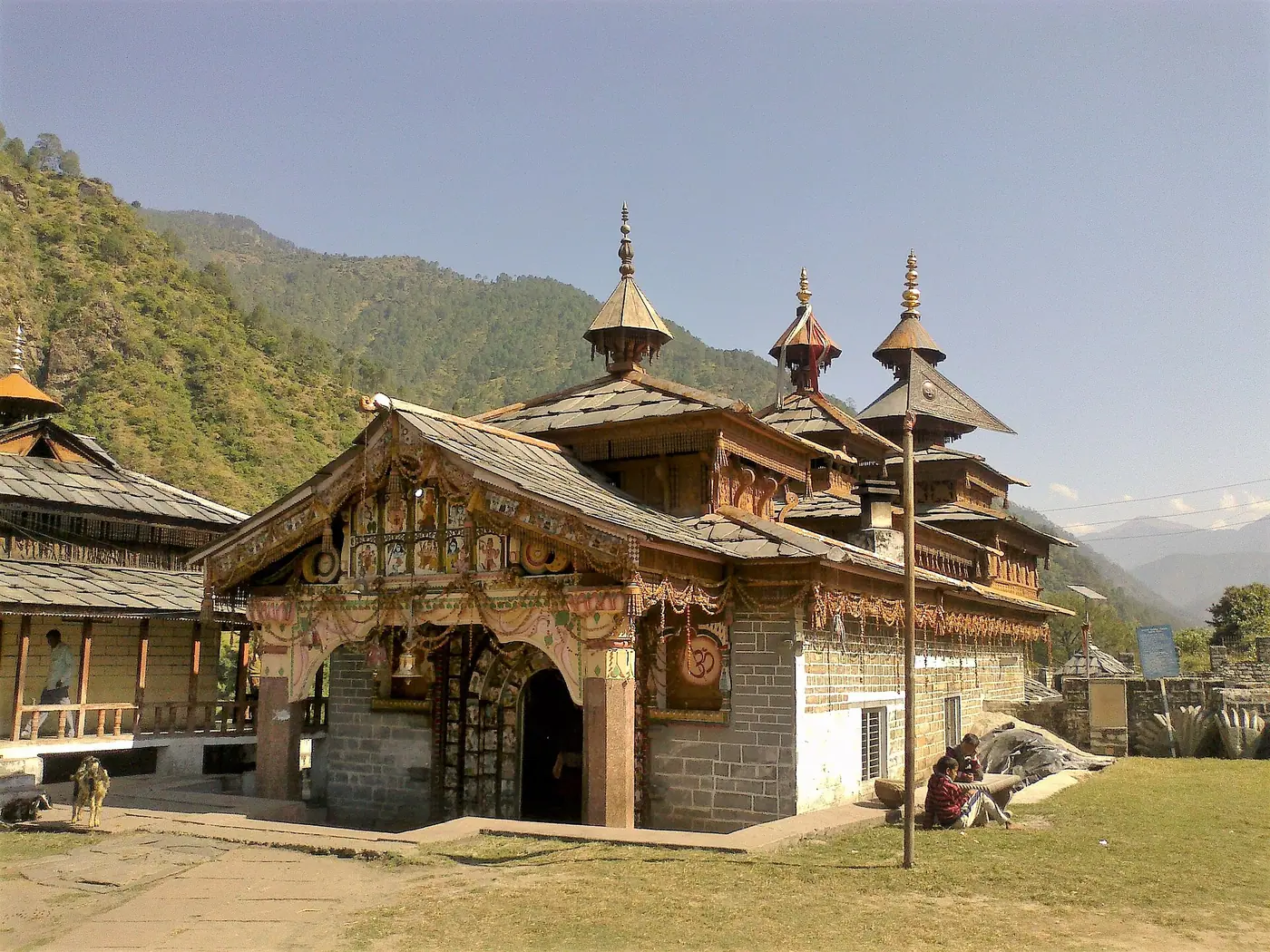
Photo: Gagandeepsinghddn · CC BY-SA 4.0 · via Wikimedia Commons
The Mahasu Devta Temple at Hanol, in Dehradun district of Uttarakhand, is the primary temple and main seat of Mahasu, the regional deity of the western Himalaya worshipped as four divine brothers (The Tribune). A September 2023 report describes the Siddha Peeth Mahasu Devta Temple at Hanol as the main pilgrimage site of Jaunsar-Bawar, visited by thousands of devotees every year (Garhwal Post).
The temple stands in Jaunsar-Bawar, west of the Yamuna, on the banks of the Tamasa, the river better known as the Tons (Swarajya). It is a centrally protected monument: a 2021 government list of monuments for illumination names the 'Temple sacred to Mahasu' at Hanol, Uttarakhand, under the Archaeological Survey of India's Dehradun Circle (Press Information Bureau).
Faith & Tradition
Religious Significance of Mahasu Devta Temple
Mahasu is a single collective deity who appears as four brothers, named in one account as Pabasik, Chalda, Bashik and Bautha, each with a distinct character (The Tribune). Devotees believe the deity speaks through an oracle known as the mali, and thousands serve him, including by carrying his palanquin over long distances (The Tribune). Mahasu has several other seats in Uttarakhand and Himachal Pradesh, which he visits from time to time, while Hanol remains the main one (The Tribune).
Anthropologist Lokesh Ohri describes the Mahasu cult as a little-studied strand of Hindu worship that has continued in the western Himalaya since medieval times, with four primary Mahasu deities installed in temples across the region and a travelling deity whose movements bind the wider territory into one politico-religious order (SUNY Press). His study identifies the village of Hanol as the geographical centre of this cult (SUNY Press).
The deity also carries social and political weight: the Tons, the largest tributary of the Yamuna, divides Mahasu's sacred lands between Uttarakhand and Himachal Pradesh, and a district in Himachal Pradesh was named after Mahasu until it ceased to exist in September 1972 (The Tribune).
Heritage
History of Mahasu Devta Temple
According to tradition, a demon named Kirmir once tormented the people of the region, and a devotee from Kashmir named Huna (or Una) Bhatt summoned the four brothers, who killed the demon and have been worshipped as Mahasu ever since (The Tribune). This is a sacred narrative rather than a dated historical record.
Lokesh Ohri's book traces the Mahasu cult back to medieval times (SUNY Press). A review of the book notes his argument that Mahasu obtained favourable treatment from Mughal rulers, colonial administrators and the present government, rather than surviving only because the hills were isolated (The Tribune).
In modern times the temple is protected by the Archaeological Survey of India, which lists it under its Dehradun Circle (Press Information Bureau). No founding date is given here because none of the sources consulted for this page states one.
Architecture and sacred features
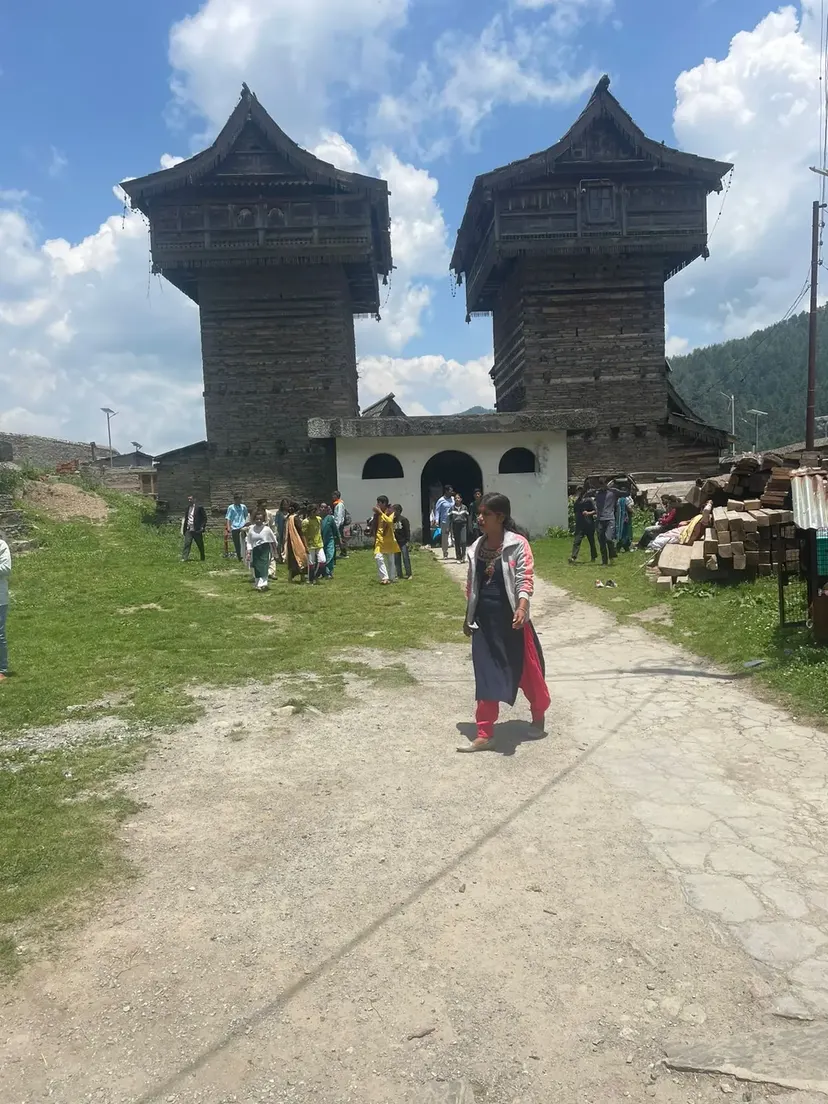
The temple combines stone and wood (Swarajya). Its shikhara follows the Nagara style and is decorated with finely carved wooden superstructures, while tiered conical canopies rise over slate-covered pent roofs and end in a kalash (Swarajya). Hanging friezes and bells at the corners complete the ornament (Swarajya).
Plan Your Visit
Darshan and Visitor Information
Festival days bring very large crowds: thousands of devotees attended the 2023 Jagra fair, and schools in the Kalsi, Chakrata, Purola and Mori blocks were given a holiday for it (Garhwal Post). Confirm current arrangements, access and any restrictions with the temple committee or the Dehradun district administration before travelling.
Timings and arrangements change with seasons and festivals. Confirm current details with the temple administration before travelling. Last reviewed 11 October 2026.
Sacred Calendar
Festivals at Mahasu Devta Temple
Mahasu Devta fair
The district administration lists an annual Mahasu Devta fair at Hanol in August, when the deity is taken out in procession and musical prayers go on for three days and nights (District Administration Dehradun). It is a local fair of the Jaunsari people and also draws participants from Tehri, Uttarkashi and Saharanpur districts (District Administration Dehradun).
Jagra
At the 2023 Jagra, devotees kept an all-night vigil at the temple with traditional dances and folk songs, and after the deity's ceremonial bath the idols were carried back into the sanctum to the sound of traditional musical instruments (Garhwal Post).
Location
How to Reach Mahasu Devta Temple
The Dehradun district administration places Hanol about 120 km along the Chakrata–Tiuni road (District Administration Dehradun). During the 2023 Jagra fair, buses ran to Hanol from Haridwar, from Dehradun via Vikasnagar, Damta, Barkot, Purola and Mori, from Uttarkashi, and from Shimla and Rodu in Himachal Pradesh (Garhwal Post). These were festival services, so check current routes with the Uttarakhand Transport Corporation before travelling.
Location: Hanol, Dehradun, Uttarakhand, India
More in Hindu temples in Uttarakhand
Questions
Mahasu Devta Temple: Frequently Asked Questions
Where is the Mahasu Devta Temple?
It is at Hanol in Jaunsar-Bawar, Dehradun district, Uttarakhand, on the banks of the Tons (Tamasa) river (Swarajya; The Tribune). The district administration places Hanol about 120 km along the Chakrata–Tiuni road (District Administration Dehradun).
Who is Mahasu Devta?
Mahasu is a collective deity of the western Himalaya who appears as four brothers, Pabasik, Chalda, Bashik and Bautha (The Tribune). Devotees believe he communicates through an oracle called the mali (The Tribune).
Why is Hanol important to Mahasu devotees?
Hanol is the primary temple and main seat of Mahasu (The Tribune), and Lokesh Ohri's study of the cult identifies the village as its geographical centre (SUNY Press).
Is the temple protected by the ASI?
Yes. A 2021 government list names the 'Temple sacred to Mahasu' at Hanol among monuments of the Archaeological Survey of India's Dehradun Circle (Press Information Bureau).
What is the legend behind Mahasu?
According to tradition, the four brothers were summoned by Huna (or Una) Bhatt from Kashmir to kill a demon named Kirmir who was troubling the people, and they have been worshipped as Mahasu since then (The Tribune).
When are the main festivals at Hanol?
The district administration lists a three-day Mahasu Devta fair at Hanol every August (District Administration Dehradun). The Jagra fair, with its night vigil and folk dances, was held in September in 2023 (Garhwal Post).
What does the temple look like?
It is built of stone and wood, with a Nagara-style shikhara, carved wooden superstructures and tiered conical canopies over slate pent roofs (Swarajya).
Sources and attribution
- © OpenStreetMap contributors — location data © OpenStreetMap contributors (ODbL)
- Wikidata Q6733462 — structured data (CC0)
- Wikipedia — Mahasu Devta Temple — text facts from Wikipedia, licensed CC BY-SA 4.0
- Press Information Bureau, Government of India — List of Monuments for Illumination (October 2021)
- District Administration Dehradun, Government of Uttarakhand — Fair & Festivals
- The Tribune — Lokesh Ohri explores the legend of Mahasu (review of Till Kingdom Come)
- Garhwal Post — Jagra Festival at Mahasu Temple in Hanol proves historic
- SUNY Press — Till Kingdom Come: Medieval Hinduism in the Modern Himalaya (Lokesh Ohri)
- Swarajya — Uttarakhand: Where The Devas Whisper To The Deodars
Further reading: Mahasu Devta Temple on Wikipedia (CC BY-SA 4.0).
Spotted an error? Write to info@hindutone.com — see our editorial policy.